
Alhambra
La Alhambra
Spain · Andalusia · Near Granada
Built 1238 · Nasrid Moorish
This page is part of an independent travel guide and is not affiliated with, endorsed by, or operated by Alhambra.
© Unsplash
Quick Facts
- Hours
- Daily 08:30–20:00
- Skip-the-line from
- €28
- Duration
- 3–4 hours
- Best time
- Spring
- Booking
- Required — book 60+ days ahead
- Nearest city
- Granada
Featured Tour
Granada: Alhambra and Nasrid Palaces Entry Ticket
Cancellation available · Instant confirmation
Highlights
- ✦The Nasrid Palaces — the most exquisite example of Moorish architecture outside North Africa
- ✦The Court of the Lions with its famous 12-lion marble fountain dating from 1377
- ✦Intricate stucco ceilings with muqarnas (stalactite vaulting) of extraordinary complexity
- ✦The Generalife gardens, a paradise of water channels, roses and cypress trees above the city
- ✦Panoramic views of Granada, the Sierra Nevada and the old Moorish quarter of the Albaicín
Skip the queue with a guided tour
Skip-the-line tickets & expert guides
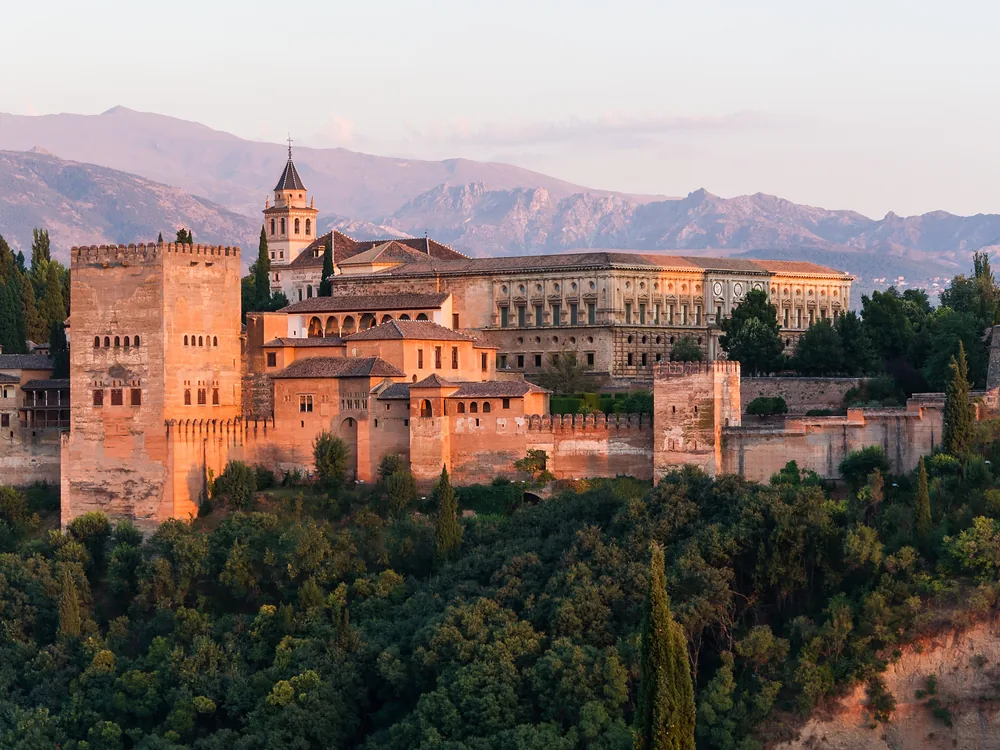
Perched on a red-earthed hill above Granada, the Alhambra is one of the most visited monuments on earth — and the most deserving of the title. No photograph prepares you for the experience of walking through the Nasrid Palaces: the way water moves through the architecture; the way light transforms carved plaster at different hours; the way geometric patterns repeat and change through arches, ceilings and courtyards with mathematical precision.
The complex is vast — 142,000 square metres of fortress, palace, gardens and towers. But its heart is the Nasrid Palaces, the residential apartments of the last Moorish kings of Granada, built primarily in the 14th century. Room after room reveals stucco carved to a delicacy that seems impossible in stone: Arabic calligraphy interweaves with geometric patterns, all rendered in a medium so fine it reads like lace. The Hall of the Ambassadors, the Court of the Myrtles, the Court of the Lions — each space is a masterwork.
The Generalife gardens, the sultans' summer retreat on an adjacent hill, offer something different: terraces of roses, water channels threading between cypress hedges, and views over the Alhambra that contextualise the whole complex against its landscape. Visit at dusk, when the light on the Sierra Nevada turns the hills behind Granada to amber.
Because the Nasrid Palaces are the most popular section and have a daily visitor limit, you must book your specific entry time slot months in advance. This is not optional — tickets genuinely sell out 60–90 days ahead in peak season.
History
The Alhambra's name comes from the Arabic al-qal'a al-hamra — 'the red fortress' — a reference to the reddish clay of the hill on which it stands. The site had been fortified since the 9th century, but the palace complex as it stands today was built primarily by the Nasrid dynasty, the last Muslim rulers of Iberia, between 1238 and 1492.
Mohammed I ibn Nasr founded the Nasrid emirate after the fall of Córdoba to Christian forces, choosing Granada as his capital and beginning construction on the hill. His successors — most notably Yusuf I and Mohammed V in the 14th century — built the palace apartments that survive. The Nasrid calligraphers who decorated the walls repeated one phrase so many times that it became the unofficial motto of the palace: 'There is no victor but God' — a piece of theological humility somewhat at odds with the extraordinary luxury of the rooms themselves.
The Christian Reconquista reached Granada on January 2, 1492. The last Nasrid sultan, Boabdil, surrendered the city to Ferdinand and Isabella and — according to legend — wept as he looked back at the Alhambra from a mountain pass ever since called 'El Suspiro del Moro' (The Moor's Sigh). Spain's golden year: within weeks, Columbus would set sail for the Americas with royal funding signed in these very rooms.
Ferdinand and Isabella used the Alhambra as a residence and added a new wing in a Gothic style. Their grandson Charles V began demolishing part of the Nasrid complex to build a massive Renaissance palace in 1527 — a work that remains unfinished to this day but whose circular courtyard is architecturally extraordinary. The Alhambra fell into neglect and near-ruin in the 18th and 19th centuries, its most famous modern champion being the American writer Washington Irving, who lived in its deserted rooms in 1829 and wrote Tales of the Alhambra, the book that made the palace famous to an English-speaking world.
How to Visit
Getting there: Granada is 3.5 hours from Madrid by AVE high-speed train and around 2.5 hours from Seville by bus or direct train. From Granada city centre, bus lines C3 and C4 run to the Alhambra entrance; the uphill walk through the Albaicín quarter takes 30–40 minutes. Taxis from the centre take around 10 minutes.
Tickets: Walk-up entry €19 adult, free child — but the Nasrid Palaces sell out 60–90 days ahead in peak season, so walk-up is rarely realistic from April to October. The GetYourGuide tour — timed-entry skip-the-line access including the Nasrid Palaces — is a reliable fallback when the official allocation is gone; book in advance. Official tickets directly at alhambra-patronato.es remain the cheapest route if you plan far enough ahead.
Practical tips: Your ticket carries a strict 30-minute timed entry window for the Nasrid Palaces — missing it forfeits palace access even with a valid ticket, so arrive 15 minutes early for that slot. Structure your visit to cover the Alcazaba first, then hit your timed slot, then finish in the Generalife. Friday and Saturday evening visits open the Nasrid Palaces with low-light atmospheric conditions and far fewer people — an entirely different experience, and also advance-booking only.
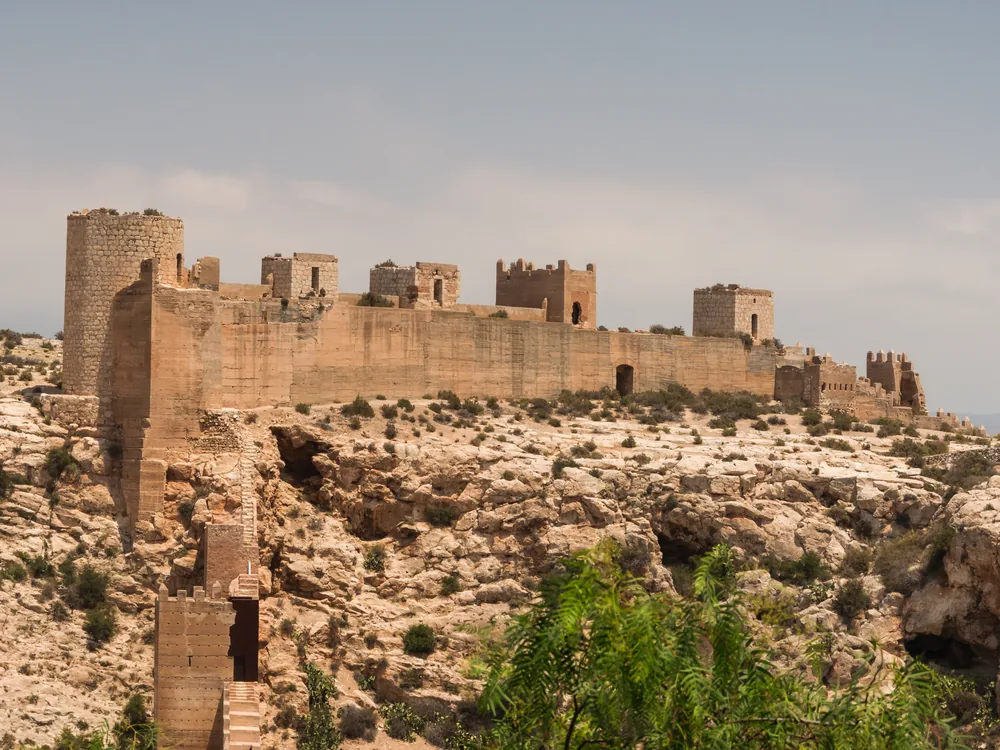
Combine with: Alcazaba of Almería for the military Umayyad fortress tradition that predates the Alhambra's palace refinement, or Castillo de Gibralfaro for a Moorish coastal fortress accessible within a few hours by road.
Frequently Asked Questions
Much further than most visitors expect. In peak season (April–September), tickets for the Nasrid Palaces sell out 60–90 days in advance. In shoulder season (March, October), book at least 2–3 weeks ahead. In winter (November–February), you may find same-week availability. Book directly at alhambra-patronato.es to avoid third-party fees.
Location
Calle Real de la Alhambra, s/n, 18009 Granada, Spain
Nearby Castles
Tours & Tickets
Powered by GetYourGuide
From
€28/ person