
Castillo de Gibralfaro
Castillo de Gibralfaro
Spain · Andalusia · Near Málaga
Built 1340 · Nasrid dynasty; rebuilt 1340 by Yusuf I of Granada on Phoenician foundations; connects to the Alcazaba below via a coracha (double-walled corridor); eight cylindrical towers; the castle withstood the siege of Ferdinand and Isabella for three months in 1487; panoramic views over the port and the Costa del Sol
This page is part of an independent travel guide and is not affiliated with, endorsed by, or operated by Castillo de Gibralfaro.
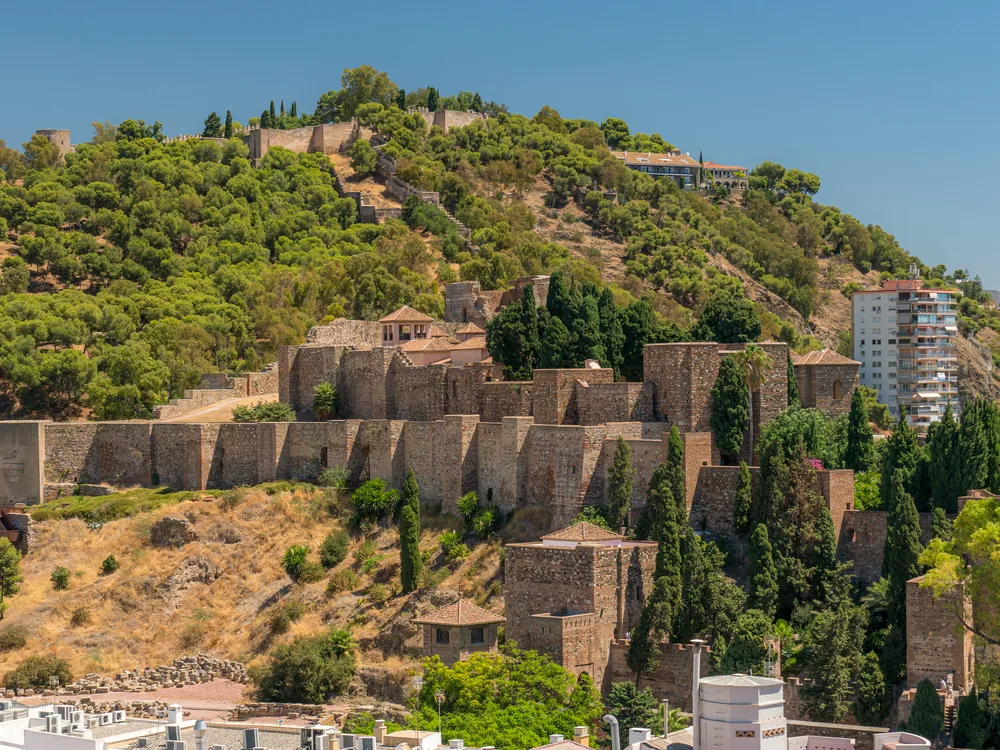
© Castles & Palaces
Quick Facts
- Hours
- Tue–Sun 09:00–18:00. Closed Mon
- Entry via GetYourGuide
- €21.84
- Duration
- 1–1.5 hours
- Best time
- October to May
- Nearest city
- Málaga
Featured Tour
Málaga: Admission to the Alcazaba and Castillo de Gibralfaro
Cancellation available · Instant confirmation
Highlights
- ✦Rebuilt in 1340 by Yusuf I of Granada on Phoenician foundations, as the highest point of the Nasrid coastal defence system protecting the Emirate of Granada
- ✦Connected to the Alcazaba palace-fortress below by the coracha, a double-walled defensive corridor linking the two fortifications into a single system
- ✦Withstood a three-month siege by Ferdinand and Isabella in 1487, an unusually long resistance for the period, ending only through starvation rather than military defeat
- ✦Eight cylindrical towers and a continuous patrol walkway, the ronda, circling the summit with panoramic views in every direction
- ✦Panoramic views extending from the Costa del Sol in the west across the Port of Málaga to the mountains of the Axarquía in the east
Skip the queue with a guided tour
Skip-the-line tickets & expert guides
Above Málaga, on the rocky hill of Mount Gibralfaro that rises sharply behind the city's historic centre, stands the castle that has defined the city's silhouette for seven hundred years. The Castillo de Gibralfaro was built in the 14th century as the highest point of the Nasrid dynasty's coastal defence system, a ring of fortifications that protected the Emirate of Granada from the Christian kingdoms advancing from the north. From the battlements, the panorama extends from the Costa del Sol stretching west toward Marbella, across the Port of Málaga and its cathedral, to the mountains of the Axarquía to the east. It is one of the most complete medieval fortifications on the southern Iberian coast and the finest viewpoint in Málaga.
The name Gibralfaro comes from the Arabic Jabal al-Faro, Rock of the Lighthouse, itself derived from the Greek pharos. The hill had been fortified since at least the Phoenician period, around 800 BC, when a lighthouse guided shipping into the protected harbour below. The Romans, the Visigoths, and the early Islamic rulers of Al-Andalus each maintained fortifications on the site in turn, and Phoenician and Roman remains have been partially excavated on the lower slopes, giving the hill a continuous defensive history stretching back nearly three thousand years before the castle visitors see today was built.
The castle in its current essential form was built by Yusuf I of Granada in 1340, who substantially rebuilt the existing fortress to defend against the growing Castilian threat from the north. Yusuf I connected Gibralfaro to the Alcazaba, the lower palace-fortress at the foot of the hill, via the coracha, a double-walled defensive corridor that allowed the upper and lower fortifications to function as a single integrated system rather than two separate strongholds. This connection remains one of the most distinctive features of the wider Málaga fortification complex, and a clear illustration of Nasrid military engineering at its most sophisticated.
In 1487, the Catholic Monarchs Ferdinand and Isabella besieged Gibralfaro as part of their final campaign against the Emirate of Granada. The castle was defended by its Nasrid garrison with exceptional stubbornness: the siege lasted three months, an unusually long resistance in a period when most Andalusian cities fell quickly to the advancing Christian armies. The eventual surrender came not through military defeat but through starvation, as the garrison's food supplies were exhausted. Ferdinand and Isabella entered Málaga in August 1487, completing their control of the Andalusian coast. Granada itself fell five years later, in 1492, bringing the centuries-long Reconquista to its end.
The castle today is defined by its eight cylindrical towers, which punctuate the irregular line of the outer wall around the summit. The patrol route, the ronda, a walkway running along the top of the outer wall, circles the entire castle and provides continuous panoramic views in all directions. The ascent of the individual towers, reached via internal spiral staircases, offers progressively higher viewpoints over the city, and the highest accessible point, at roughly 130 metres above sea level, is the most dramatic vantage in Málaga.
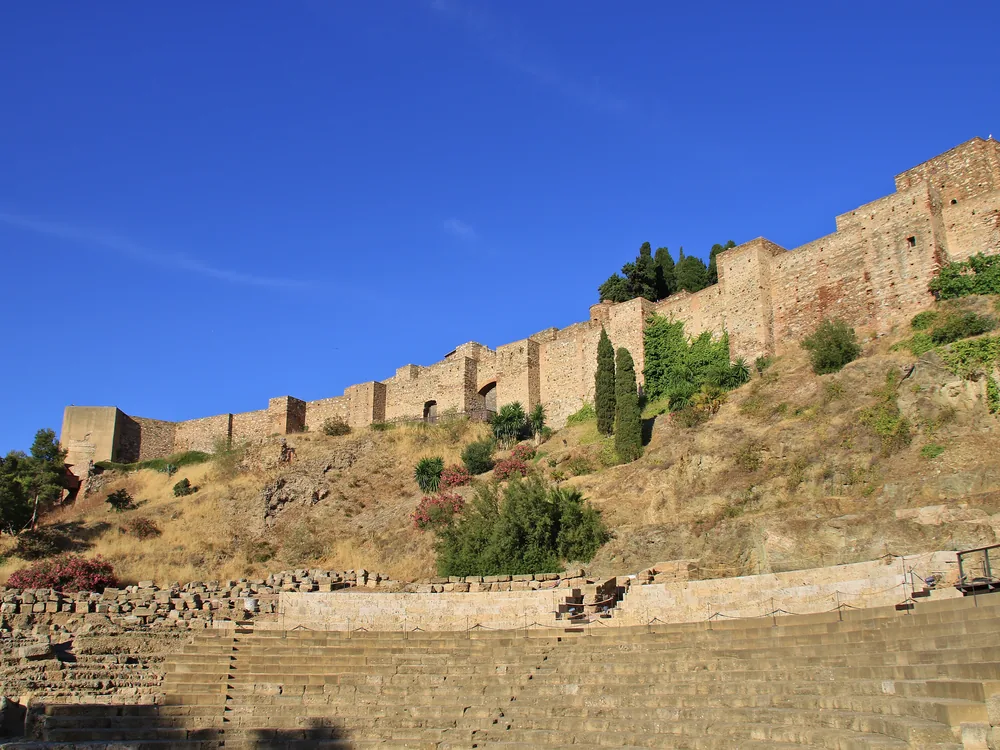
Most visitors combine Gibralfaro with the Alcazaba, the palace-fortress at the foot of the hill, built by the Hammudid dynasty in the 11th century and extensively modified by the Nasrids. The Alcazaba offers a different kind of experience, more intimate and more architectural, with garden courtyards and water channels in the established Nasrid palace tradition, in contrast to Gibralfaro's purely military character and sweeping outward views. Most visitors tour the Alcazaba first, since it sits on the lower slope, and then walk or drive up to Gibralfaro afterward, an order that builds naturally from intimate architecture toward open panorama.
History
Mount Gibralfaro has been fortified in some form since the Phoenician period, around 800 BC, when a lighthouse on the hill guided shipping into Málaga's harbour, with successive Roman, Visigothic and early Islamic rulers maintaining defensive structures on the same commanding site. Yusuf I of Granada rebuilt the castle substantially in 1340, connecting it to the Alcazaba palace-fortress below via the coracha, a double-walled corridor, to create a single integrated defensive system protecting the Emirate of Granada's Mediterranean coastline.
In 1487, the castle withstood a three-month siege by the Catholic Monarchs Ferdinand and Isabella, surrendering only after its garrison ran out of food rather than through direct military defeat. The fall of Málaga that year marked a decisive stage in the final Christian conquest of Granada, completed five years later in 1492. The castle subsequently passed out of active military use and has since been preserved and restored as one of the principal heritage sites of the city, paired in most visits with the Alcazaba immediately below it.
How to Visit
Getting there: From Málaga city centre, bus line 35 runs seasonally to the castle entrance — check the current schedule before relying on it. Taxis from the centre or from the Alcazaba at the foot of the hill take 5–10 minutes. The steep hillside path from the Alcazaba takes about 30 minutes on foot and is best avoided between June and August.
Tickets: Walk-up entry €19 adult, free child — a combined ticket covering both Gibralfaro and the Alcazaba below. The GetYourGuide listing provides official admission tickets for both sites delivered by email; present that emailed ticket at the gate, not the GetYourGuide voucher itself. Book in advance if visiting in peak season.
Practical tips: The castle is closed on Mondays — plan your visit day accordingly. The exposed hilltop becomes intensely hot from June to August, making an early-morning start essential in those months; October to May is the most comfortable window overall. The ronda patrol walkway circling the summit is mostly level, but the individual towers are reached only by internal spiral staircases with no lift access.
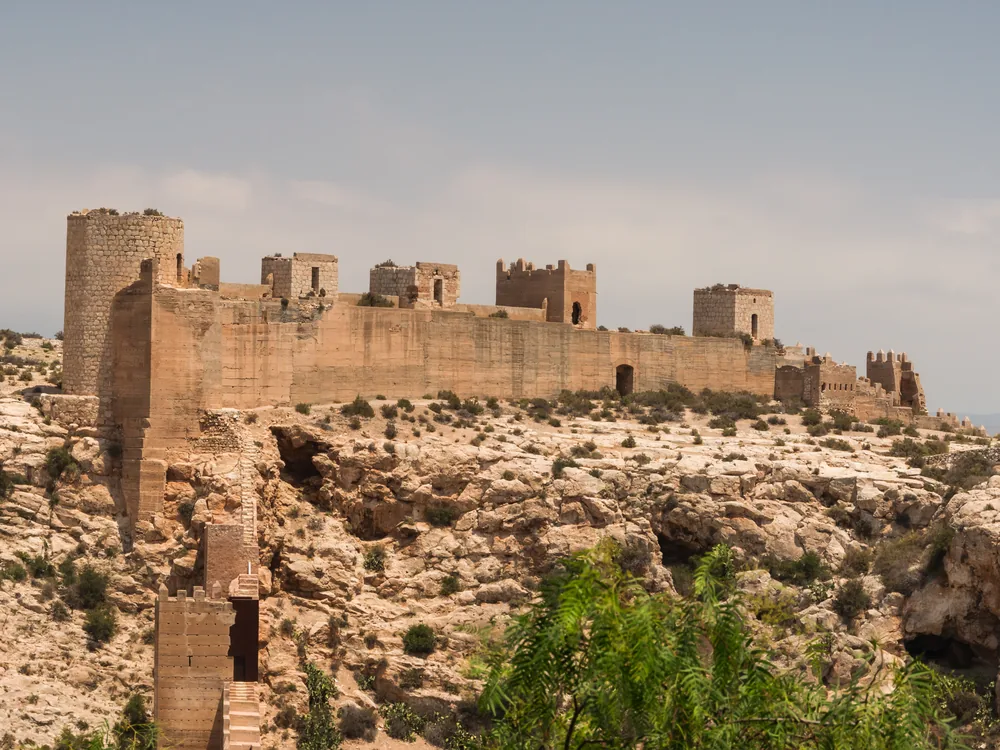
Combine with: Alcazaba of Almería for the other great Moorish fortress on Andalusia's Mediterranean coast, or Alhambra of Granada for the Nasrid dynasty's supreme palace achievement around two hours inland by road or rail.
Frequently Asked Questions
No, though they are closely connected. Gibralfaro is the upper fortress on the summit of Mount Gibralfaro, built primarily for military defence, while the Alcazaba is the separate palace-fortress at the foot of the hill, with a more intimate Nasrid palatial character. Yusuf I linked the two via the coracha, a double-walled corridor, so they functioned as a single defensive system historically, and most visitor tickets, including the GetYourGuide listing on this site, cover both locations together.
Location
Camino Gibralfaro, 11, 29016 Málaga, Spain
Nearby Castles
Tours & Tickets
Powered by GetYourGuide
From
€21.84/ person