
Alcazaba of Almería
Alcazaba de Almería
Spain · Andalusia · Near Almería
Built 955 · Umayyad Caliphate military architecture; three distinct walled enclosures built between 955 and 1091; Christian additions by Fernando and Isabel after the 1489 Reconquista conquest
This page is part of an independent travel guide and is not affiliated with, endorsed by, or operated by Alcazaba of Almería.
© Unsplash
Quick Facts
- Hours
- Mon–Sat 09:00–18:30. Sun 09:00–15:30
- Guided tour from
- €28
- Duration
- 1.5–2 hours
- Best time
- March to May, October to November
- Nearest city
- Almería
Featured Tour
Almería: Alcazaba Guided Tour
Cancellation available · Instant confirmation
Highlights
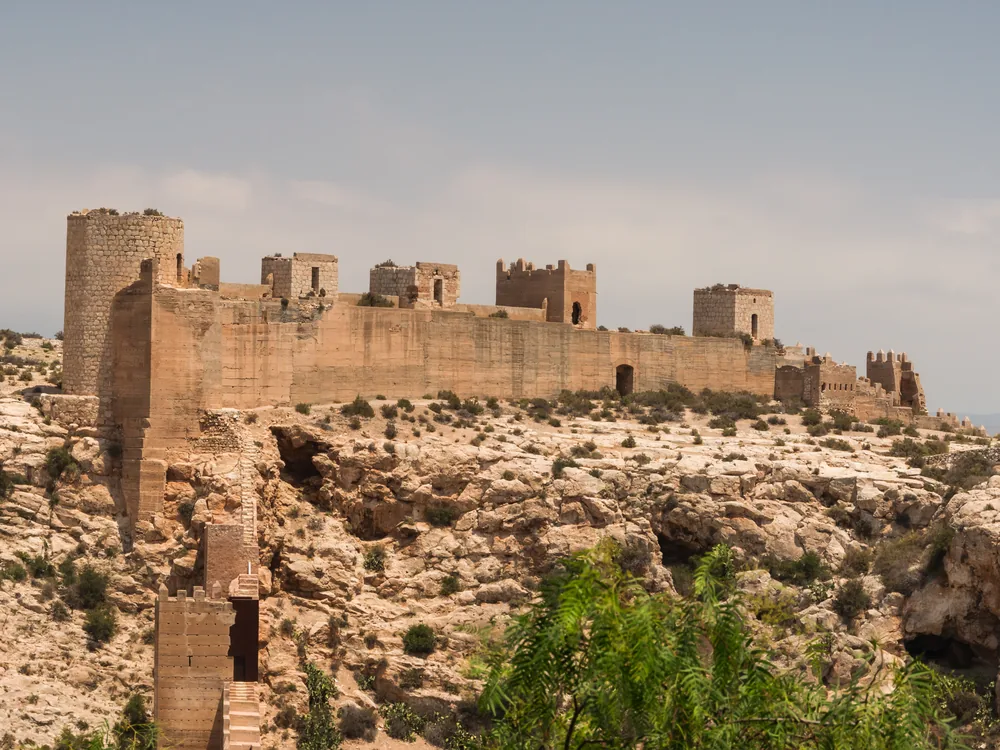
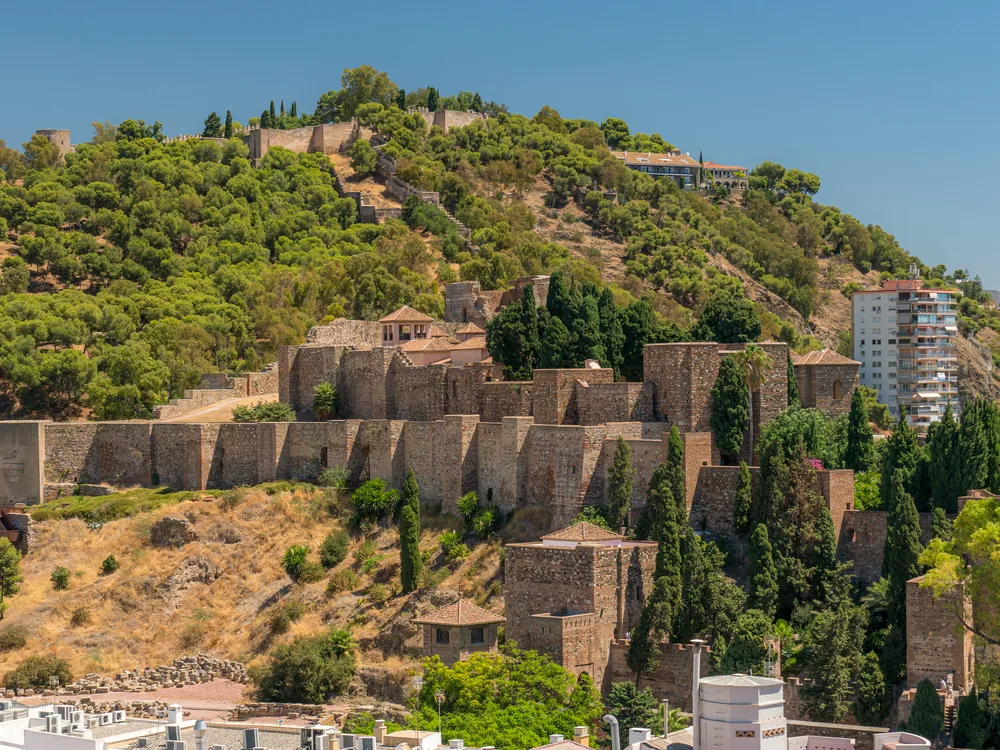
- ✦A fortified perimeter of roughly 4 hectares — comparable in scale to the entire Alhambra complex, but expressing military power through space and stone rather than the Alhambra's refined palace decoration
- ✦Built in 955 AD by Caliph Abd al-Rahman III to protect Almería, then the most important silk-trading port in al-Andalus
- ✦The first enclosure's reconstructed gardens — cypress, orange and rose trees around water channels and pools that once sheltered the entire city's population during sieges
- ✦The Palacio de Almotacín, an 11th-century Taifa-period palace with surviving decorated arches and carved plasterwork from one of al-Andalus's briefly most cultured small kingdoms
- ✦A third enclosure added by Fernando and Isabel after 1489 in pure Christian military style — square towers, a keep and crossbow arrow slits standing in direct, legible contrast to the Moorish sections below
Skip the queue with a guided tour
Skip-the-line tickets & expert guides
The Alcazaba of Almería is the most overlooked major Moorish fortress in Spain. Larger in fortified area than the Alhambra, built in the same golden decade of Umayyad power, and strategically commanding the best natural harbour on the entire Andalusian coast, it sits above a city that has never quite made the tourist circuits dominated by Seville, Córdoba and Granada. That obscurity is the visitor's gift: walking the Alcazaba's ramparts on a weekday means walking them largely alone.
Caliph Abd al-Rahman III built the Alcazaba in 955 AD to protect Almería, then the most important trading port in al-Andalus, its workshops exporting silk across the entire Mediterranean world. The fortress took shape as three distinct walled enclosures, each serving a different function. The first served as a refuge for the city's civilian population during sieges; the second housed the garrison and the emir's palace; the third, added later, functioned as a pure military strongpoint commanding the high ground.
The scale invites a direct comparison with the Alhambra, and the comparison is instructive precisely because the two sites diverge so completely in purpose. The Alcazaba's fortified perimeter covers roughly 4 hectares, a footprint comparable to the Alhambra's entire complex, but where the Alhambra contains palace interiors covered in some of the most refined decorative plasterwork ever produced in the Islamic world, the Alcazaba's power is architectural and spatial rather than decorative — two Umayyad masterworks from the same century, in the same region, expressing opposite poles of the same architectural tradition.
Today the first enclosure is a landscaped garden of cypress, orange and rose, reconstructed from archaeological evidence of the original palace gardens, its water channels and pools reflecting the hydraulic engineering that was as much a statement of power as a practical necessity in Moorish fortress design. It is worth remembering, walking through it now, that this was not a garden in the 10th century but an emergency camp — the space where the city's population sheltered when an enemy approached.
The second enclosure holds the remains of the Palacio de Almotacín, an 11th-century palace from the Taifa period that followed the Caliphate's collapse in 1031, when Almería briefly became one of the most cultured small kingdoms in al-Andalus under independent Taifa rule. Its decorated arches and carved plasterwork fragments are less spectacular than Granada's Alhambra, but the relative solitude in which they can be examined makes them memorable in a different way. After Fernando and Isabel conquered Almería in 1489, they added the third enclosure in an entirely Christian military style — square towers, a keep, and arrow slits built for crossbowmen — a fortress that, by the time it was finished, never saw serious combat, since the Reconquista was essentially complete.
History
Caliph Abd al-Rahman III of the Umayyad Caliphate of Córdoba ordered the construction of the Alcazaba in 955 AD, recognising Almería's position as the most valuable port on the Mediterranean coast of al-Andalus, with workshops exporting silk and other goods across the wider Mediterranean world. The fortress grew over the following decades into three distinct enclosures: a refuge for the civilian population during sieges, a garrison and palace quarter for the emir's household, and ultimately a military strongpoint securing the high ground above the city.
Following the collapse of the Caliphate of Córdoba in 1031, Almería became the seat of an independent Taifa kingdom, and during this period the Palacio de Almotacín was built within the Alcazaba's second enclosure — a palace whose surviving decorated arches and plasterwork reflect Almería's brief status as one of the wealthiest and most cultured of the Taifa successor states, sustained by its continuing role as a major trading port.
The Catholic Monarchs Fernando and Isabel completed the conquest of Almería in 1489, among the last Andalusian cities to fall before the final surrender of Granada in 1492. They added a third enclosure to the Alcazaba in a distinctly Christian military style, with square towers, a keep, and arrow slits designed for crossbowmen — fortifications that were never tested in serious combat, since organised Muslim resistance in the region had effectively ended by the time construction was complete. The Alcazaba has since been preserved and partially restored under Andalusian regional heritage management, with its gardens reconstructed from archaeological evidence of the original Moorish-era planting.
How to Visit
Getting there: Almería is served by direct trains from Madrid (AVE, around 3 hours) and Granada (around 2.5 hours), and by long-distance buses from Málaga and Seville. The Alcazaba sits on the hill above the old town — a 10-minute walk uphill from Almería city centre, or a short taxi ride from the train and bus stations.
Tickets: Walk-up entry €1.50 adult, free child. The GetYourGuide tour — a two-hour guided walkthrough covering the Taifa-period palace remains and the hydraulic engineering of the first-enclosure gardens in far more depth than the on-site panels — is worth booking in advance.
Practical tips: Arrive early morning: the south-west-facing upper ramparts become punishingly hot by midday from June to September. Note that Sunday closing is at 15:30 — significantly earlier than the 18:30 weekday cutoff — so plan your visit day accordingly. There are no refreshment facilities inside the enclosures, so carry water.
Combine with: Alhambra of Granada for the Umayyad decorative tradition at its absolute peak, or Castillo de Gibralfaro for another Moorish coastal fortress — both reachable within a few hours by road or rail.
Frequently Asked Questions
In fortified footprint, yes — the Alcazaba's perimeter covers roughly 4 hectares, comparable to the entire Alhambra complex. The difference is architectural purpose rather than scale: the Alhambra contains lavishly decorated royal palace interiors, while the Alcazaba is primarily a military fortress whose impact comes from its scale, siting and engineering rather than from decorative plasterwork.
Location
C. Almanzor, s/n, 04001 Almería, Spain
Nearby Castles
Tours & Tickets
Powered by GetYourGuide
From
€28/ person