
Château de Pierrefonds
Château de Pierrefonds
France · Picardy / Oise · Near Compiègne
Built 1393 · Medieval / Neo-Gothic restoration by Viollet-le-Duc
This page is part of an independent travel guide and is not affiliated with, endorsed by, or operated by Château de Pierrefonds.
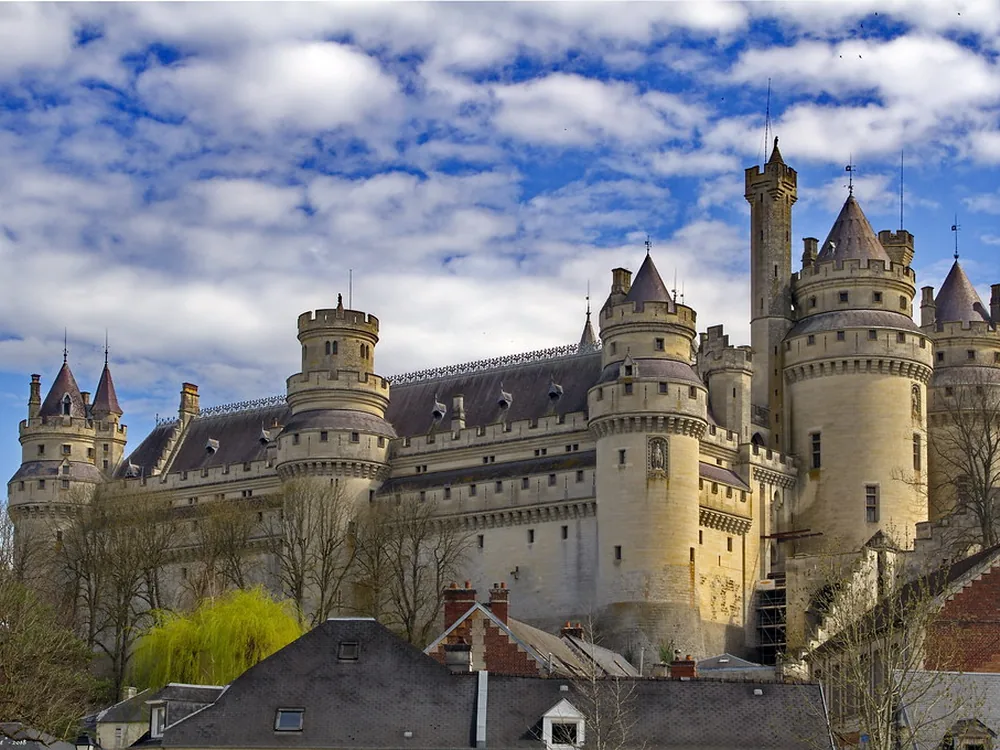
© Unsplash
Quick Facts
- Hours
- Tue–Sun 10:00–18:00. Closed Mon
- Entry via GetYourGuide
- €9
- Duration
- 1.5–2 hours
- Best time
- May to September
- Nearest city
- Compiègne
Featured Tour
Pierrefonds: Château de Pierrefonds Entry Ticket
Cancellation available · Instant confirmation
Highlights
- ✦Commissioned by Napoleon III as a personal retreat — a full-scale medieval castle restored from ruin
- ✦Restored by Eugène Viollet-le-Duc, the architect who also restored Notre-Dame and Carcassonne
- ✦The primary filming location for the BBC/French TV series Merlin (2008–2012)
- ✦The courtyard's sculpted gargoyles and towers were Viollet-le-Duc's personal vision of medieval chivalry
- ✦Set in the Compiègne forest, one of France's great royal hunting forests, within day-trip range of Paris
Tickets & tours
Book through GetYourGuide
Pierrefonds is one of the most useful places in Europe to understand what the 19th century thought the Middle Ages looked like — and why that matters. The original castle was built for Louis d'Orléans in 1393 and was a genuine medieval fortress of considerable power. Louis XIV had it partially demolished in 1617 to prevent its use as a rebel stronghold. Two centuries later, Napoleon III purchased the ruin for 3,000 francs and commissioned Eugène Viollet-le-Duc to restore it.
What Viollet-le-Duc built between 1857 and 1879 is not a restoration in the modern conservation sense but an interpretation: a 19th-century vision of what a perfect medieval castle should have looked like, combining genuine medieval fabric with invented towers, carved gargoyles, sculpted doorways and painted interiors that owe as much to Romantic imagination as to archaeological evidence. The result is extraordinary — internally coherent, architecturally refined, visually dramatic — and deeply educational in the gap it reveals between medieval reality and Victorian fantasy.
Viollet-le-Duc used the same approach at Notre-Dame (whose gargoyles he designed) and at the fortified city of Carcassonne. At Pierrefonds he had the unusual freedom of working essentially from scratch on a ruined shell, creating a medieval world from the inside out.
The British public knows Pierrefonds primarily as the primary filming location for the BBC series Merlin (2008–2012), which used the castle's courtyard and interior as the royal court of Camelot. The connection brings steady visitor traffic from series fans alongside the architectural tourism the castle would attract in any case.
History
Louis d'Orléans, brother of King Charles VI of France, built the original castle between 1393 and 1407 as a symbol of his power in the Valois family's internal power struggle. Louis was assassinated in 1407 — one of the political murders that triggered the Armagnac-Burgundian civil war — and the castle passed through various hands during the Hundred Years' War.
The castle subsequently served as a residence for various members of the French royal family, but its political independence made it suspect to the centralising Bourbon monarchy. Louis XIV ordered the partial demolition of Pierrefonds in 1617 as part of a systematic campaign against fortified nobles' castles that might serve as rebel strongholds. The main towers were blown up; the walls were breached.
Napoleon I purchased the romantic ruin in 1813, and his nephew Napoleon III acquired it from the state in 1861. Napoleon III had a vision of himself as the inheritor of medieval French kingship, and Pierrefonds — which he initially intended merely to stabilise as a picturesque ruin — gradually became a full restoration project. Viollet-le-Duc, who was simultaneously working on Notre-Dame and Carcassonne, began the project in 1857 and worked on it until his death in 1879, leaving the castle largely complete but with some interior rooms unfinished.
After Napoleon III's fall in 1870, the castle became state property and opened to the public. Viollet-le-Duc's theoretical writings about restoration — which defined the field for a century, for better and worse — drew heavily on his experience at Pierrefonds.
How to Visit
Getting there: From Paris Gare du Nord, take a train to Compiègne (50–70 min, hourly). From Compiègne, bus line 1 runs to Pierrefonds village in summer (30 min); alternatively, a taxi takes about 15 min (~€25). By car from Paris, take the A1 north then D973 — about 80 km, 1 hour.
Tickets: Walk-up admission is €9 for adults; children under 18 enter free. Tickets include access to the full castle interior and Viollet-le-Duc's original drawings and models. The GetYourGuide entry ticket covers standard admission and can be booked in advance to skip the queue.
Practical tips: Seek out Viollet-le-Duc's original drawings and architectural models displayed inside — they reveal exactly where medieval fabric ends and 19th-century invention begins, making this one of the most intellectually honest restoration visits in France. If you're visiting for the Merlin (BBC, 2008–2012) connection, the main courtyard and entrance gate are the principal filming locations; the throne room corridor is accessible on the standard tour.
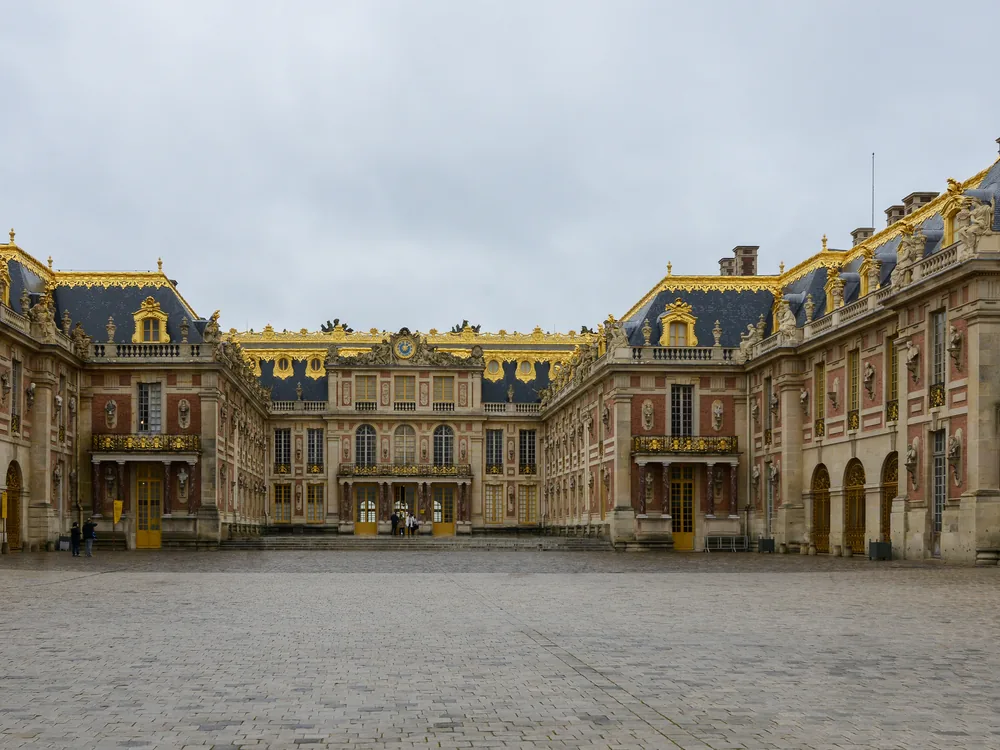
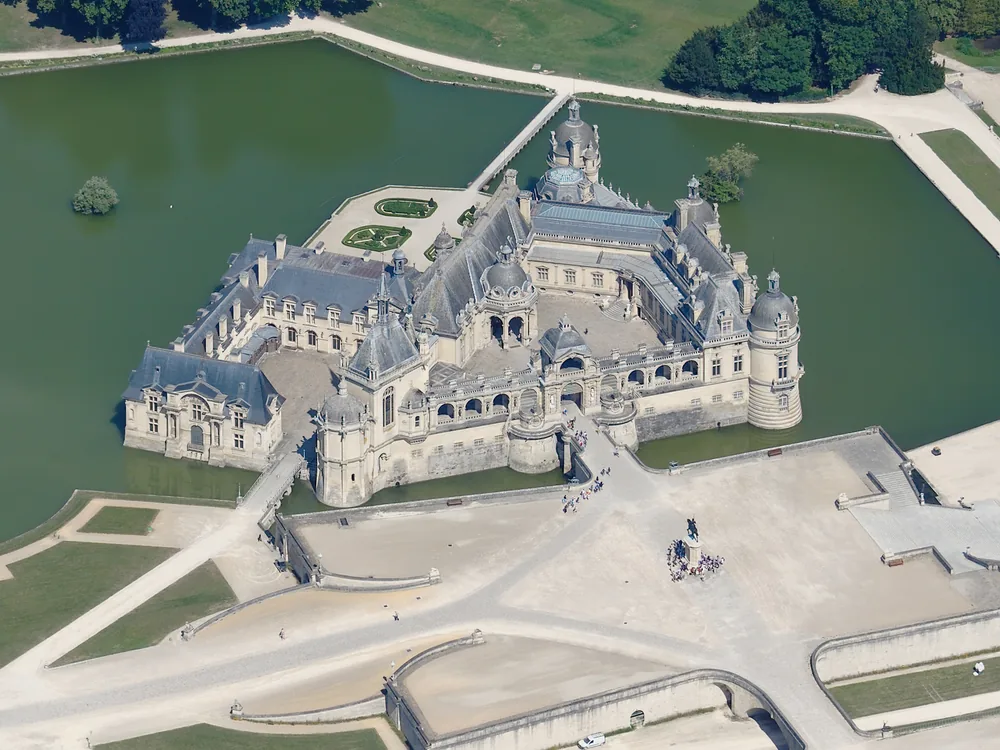
Combine with: Palace of Versailles makes a natural Paris-region pairing for a two-day itinerary, or stop at Château de Chantilly on the way back — it's between Pierrefonds and Paris on the same rail line.
Frequently Asked Questions
Partially. The original castle was built in 1393 and genuine medieval fabric survives within the walls. However, what visitors see today is largely a 19th-century reconstruction by architect Eugène Viollet-le-Duc, commissioned by Napoleon III between 1857 and 1879. Viollet-le-Duc rebuilt from a ruined shell, inventing towers, gargoyles and interiors that reflect Victorian-era imagination of the Middle Ages as much as historical evidence. It is a masterpiece of 19th-century architecture that tells you as much about 1870 as about 1400.
Location
2 Rue Viollet-le-Duc, 60350 Pierrefonds, France
Nearby Castles
Tours & Tickets
Powered by GetYourGuide
From
€9/ person