
Palace of Versailles
Château de Versailles
France · Île-de-France · Near Paris
Built 1661 · French Baroque
This page is part of an independent travel guide and is not affiliated with, endorsed by, or operated by Palace of Versailles.
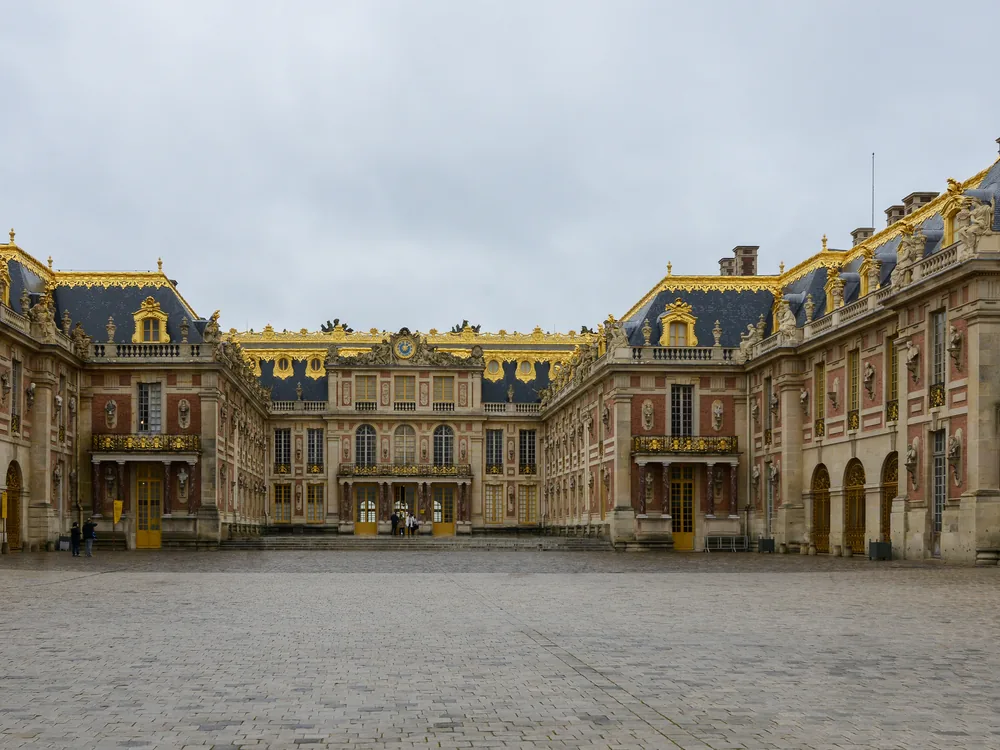
© Unsplash
Quick Facts
- Hours
- Tue–Sun 09:00–17:30. Closed Mon
- Entry via GetYourGuide
- €22
- Duration
- 4–6 hours
- Best time
- Weekday mornings in spring or autumn
- Booking
- Required — book 14+ days ahead
- Nearest city
- Paris
Featured Tour
Paris: Versailles Palace and Gardens Full Access Ticket
Cancellation available · Instant confirmation
Highlights
- ✦The Hall of Mirrors — 357 mirrors, 20,000 candles, and the ceiling of Louis XIV's triumph
- ✦The formal gardens stretch 800 hectares and contain 50 fountains
- ✦UNESCO World Heritage Site since 1979
- ✦Home to French kings for over a century, from Louis XIV to Louis XVI and Marie Antoinette
- ✦The Treaty of Versailles, ending World War I, was signed in the Hall of Mirrors in 1919
Tickets & tours
Book through GetYourGuide
There is no building in Europe that speaks more loudly about the nature of absolute power than the Palace of Versailles. What began as Louis XIII's modest hunting lodge was transformed by his son Louis XIV into the most extravagant royal residence ever constructed — a deliberate political statement in stone, gilt and glass, built to stun foreign ambassadors, subordinate the French nobility, and proclaim that France was the centre of the civilised world.
The numbers alone are staggering. The palace contains 2,300 rooms spread across 63,154 square metres. The Gardens cover 800 hectares, contain 50 fountains, 620 water jets and over 200,000 trees planted in perfect symmetry extending to the horizon. The Grand Canal alone is 1.6 kilometres long. At its peak, 20,000 people lived and worked in the palace complex.
But no statistic captures Versailles like walking into the Hall of Mirrors. The 73-metre gallery, with 357 mirrors reflecting 17 vast windows overlooking the gardens, was designed as the ultimate expression of French power and taste. Every arch is painted. Every surface reflects. Every detail is intended to overwhelm. Louis XIV received foreign ambassadors here, seated on a silver throne, the light and grandeur doing half his diplomatic work for him.
Today Versailles receives eight million visitors a year, making it the most visited monument in France after the Eiffel Tower. Come early, book ahead, and stay long — the gardens alone warrant a half-day, especially during the Grandes Eaux Musicales fountain shows on weekends.
History
The story of Versailles begins not with grandeur but with marshland. Louis XIII, who loved hunting in the Île-de-France forests, built a small brick hunting lodge here in 1623. His son Louis XIV inherited this retreat and, in 1661, made the decision that would change architectural history: he would build a palace of a scale never seen before, and he would move the entire French court there.
The construction lasted over fifty years, involving tens of thousands of workers and consuming a significant portion of France's annual tax revenues. The architects Jules Hardouin-Mansart and Louis Le Vau expanded the lodge into the vast complex that stands today, while landscape architect André Le Nôtre reimagined the surrounding marshland as the most geometrically perfect gardens ever created — a landscape that declared, visually and philosophically, that nature itself was subject to French royal will.
Louis XIV moved his court to Versailles in 1682. The move was strategic: by requiring the most powerful nobles to live at court, dependent on royal patronage, Louis neutralised the threat of aristocratic rebellion that had convulsed France during his childhood. Versailles became a gilded cage where the nobility competed for the honour of watching the king dress, competed for apartments closer to his chambers, competed for his attention — and had no time to plot against him.
The palace remained the seat of French royal government for over a century. Louis XV added the Petit Trianon; Marie Antoinette created her famous Hameau de la Reine, a fantasy farm village in the grounds. In October 1789, a mob of Parisian women marched to Versailles demanding bread and dragged the royal family back to Paris. The Revolution had begun, and Versailles was abandoned.
Napoleon used the palace sporadically. It fell into disrepair until King Louis-Philippe converted it into a museum of French history in 1837, the purpose it still partly serves today. Restoration has been ongoing ever since — the Hall of Mirrors itself was restored between 2004 and 2007.
How to Visit
Getting there: Take RER C from any central Paris station (Invalides, Saint-Michel, Austerlitz) to Versailles Château Rive Gauche — 35–40 minutes, every 15 minutes. The station is a 10-minute walk from the palace entrance. Alternatively, train from Paris Montparnasse to Versailles Chantiers (25 min). Avoid driving — parking is chaotic and expensive.
Tickets: Walk-up admission is €21 for adults; under 18 enter free. Online booking is strongly recommended — summer queues at the ticket office can exceed 2 hours; book at least 1–2 weeks ahead in summer. The GetYourGuide full access passport ticket covers the palace, gardens, Trianon palaces, and the Estate of Marie Antoinette. The Grandes Eaux Musicales fountain shows on weekends (April–October) require a separate €10 ticket.
Practical tips: Arrive at opening time on a Tuesday or Wednesday — the Hall of Mirrors is impossibly crowded by 11am in summer. Go to the Hall of Mirrors first, before tour groups arrive. The Trianon palaces (15 min walk) are far less crowded and contain some of the finest 18th-century interiors in France. The Hamlet of Marie Antoinette is 20 minutes further — strange, melancholy, and completely unlike the formal grandeur of the main palace.
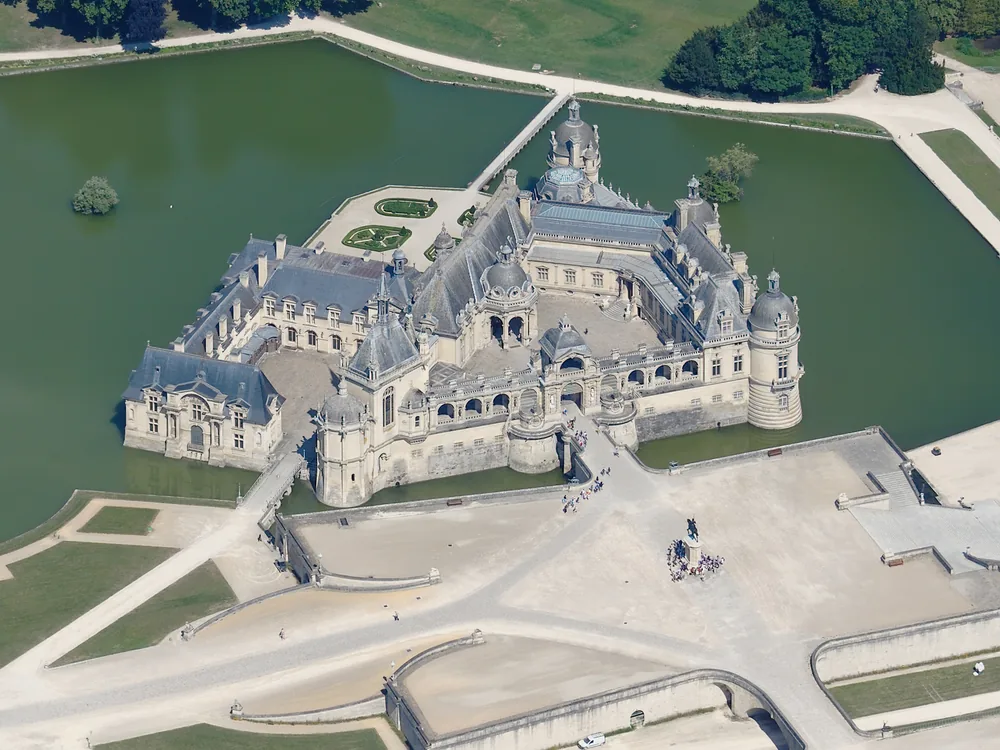
Combine with: Château de Chantilly and Château de Vincennes are the natural Île-de-France pairings — Vincennes for the medieval royal residence that preceded Versailles, Chantilly for the great rival princely estate. Château de Rambouillet adds the French presidential summer residence and Marie Antoinette's theatrical dairy for a second day southwest of Paris.
Frequently Asked Questions
Versailles is about 20km southwest of central Paris. The fastest and easiest route is the RER C train from central Paris stations (Invalides, Saint-Michel Notre-Dame, Austerlitz) to Versailles Château Rive Gauche — about 40 minutes, every 15–30 minutes. The station is a 10-minute walk from the palace entrance. Standard Navigo passes or single journey tickets work. Avoid driving — parking is expensive and traffic can be severe.
Location
Place d'Armes, 78000 Versailles, France
Nearby Castles
Tours & Tickets
Powered by GetYourGuide
From
€22/ person