
Château de Chambord
Château de Chambord
France · Loire Valley · Near Blois
Built 1519 · French Renaissance
This page is part of an independent travel guide and is not affiliated with, endorsed by, or operated by Château de Chambord.
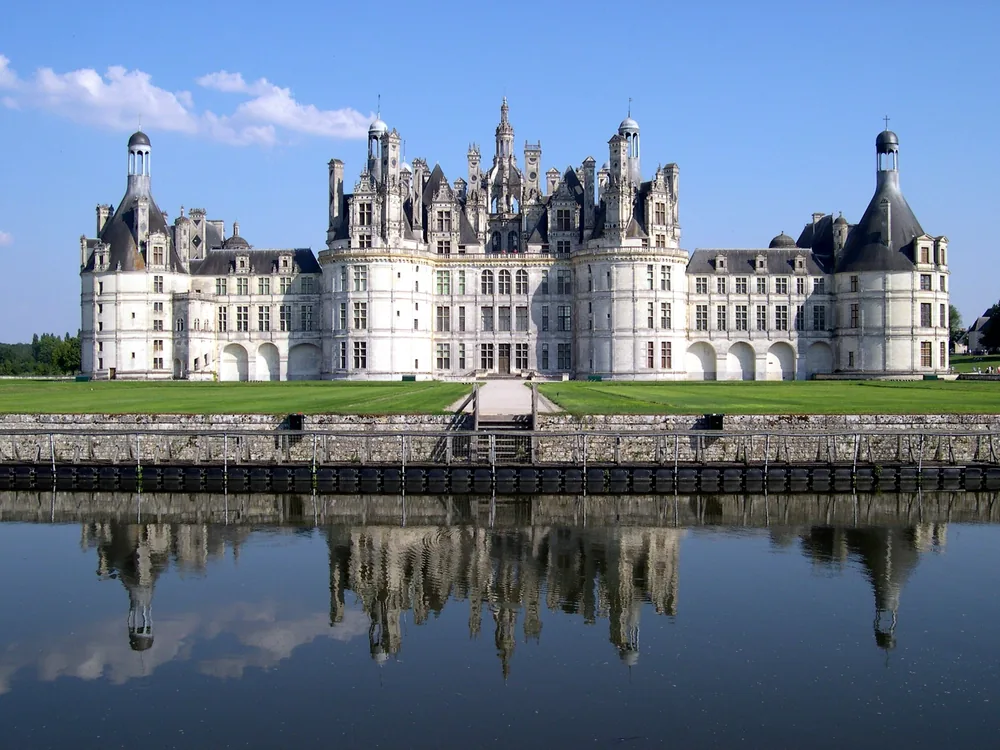
© Unsplash
Quick Facts
- Hours
- Daily 09:00–17:00
- Skip-the-line from
- €21
- Duration
- 2–3 hours
- Best time
- September and October
- Nearest city
- Blois
Featured Tour
Chambord: Entry Ticket to the Castle
Cancellation available · Instant confirmation
Highlights
- ✦The double-helix staircase — two spirals that never meet, possibly designed by Leonardo da Vinci
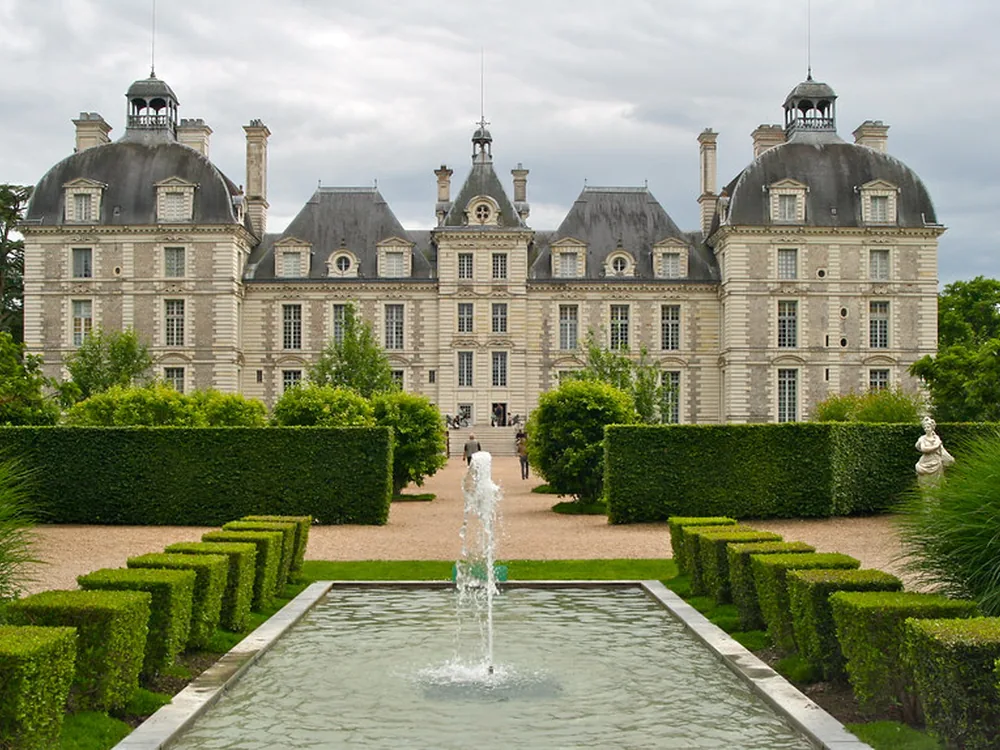
- ✦365 chimneys and towers create a roofscape unlike anything in European architecture
- ✦Set in France's largest walled forest — 5,440 hectares of ancient woodland
- ✦Built for a king who spent less than 40 days there — a pure architectural statement
- ✦The terrace roofline is designed to be walked, like a promenade above the forest canopy
Skip the queue with a guided tour
Skip-the-line tickets & expert guides
Chambord is the Loire Valley's most extreme creation: a château built not to live in but to astonish. François I, who commissioned it in 1519 at the height of his rivalry with Charles V of Spain, spent a total of less than 40 days here during his reign. The château was not a residence but an architectural manifesto — a declaration that France was the cultural centre of Europe and that its king could build anything.
The statistics are extravagant by any era's standards: 426 rooms, 365 chimneys, 800 sculpted capitals, and a roofline so complex — a forest of towers, lanterns and dormers that rises above the main bulk of the building — that it has been compared to an upended Istanbul skyline. But no statistic captures Chambord like the double-helix staircase at its core: two spiral ramps that wind around a shared central axis without ever touching, allowing people to ascend and descend simultaneously without meeting. The staircase's design has been attributed to Leonardo da Vinci, who spent his final years at the French court under François's patronage and died in Amboise in 1519 — the year Chambord's construction began.
The château's setting deepens its theatrical quality. It stands at the centre of France's largest walled forest — 5,440 hectares of woodland and meadow enclosed by 32 kilometres of stone wall, still home to wild boar, deer and migratory birds. In autumn, when the trees turn gold against the white stone of the towers, Chambord is one of the most photographed buildings in France.
History
François I came to the throne in 1515, fought the Battle of Marignano, and immediately began transforming France into a Renaissance monarchy to rival the Italian city-states he had just encountered. Chambord was the architectural expression of that ambition. Construction began in 1519, the same year François invited Leonardo da Vinci to France — the coincidence has fuelled centuries of speculation about Leonardo's involvement in the famous double-helix staircase, which appears in his notebooks but was never directly attributed.
Built on marshy ground in the Sologne forest, Chambord required the diversion of the Cosson river to stabilise its foundations. The construction employed up to 1,800 workers at its peak and consumed resources that alarmed even François's admirers. Holy Roman Emperor Charles V, who visited in 1539, reportedly called it 'a compendium of what human industry is capable of.'
François used Chambord as a hunting lodge — the Sologne forests were among the richest hunting grounds in France. His successors continued the tradition. Louis XIV, who preferred Versailles, nonetheless visited Chambord twelve times and commissioned Molière to perform two world-premiere plays in the château, including Le Bourgeois Gentilhomme in 1670.
The château passed through various hands during the Revolution and Empire periods, falling into disrepair. In the 19th century it was purchased for the exiled Bourbon Pretender and became a symbol of monarchist resistance to the French Republic — a political association that made public investment in its restoration controversial for decades. Today it is state-owned and one of France's most popular historic sites.
How to Visit
Getting there: Chambord has no train station. From Paris: TGV to Blois (1 hour from Paris Montparnasse), then taxi (~€25–30, 18 km, ~25 min) or summer shuttle bus from Blois station. By car from Paris: ~2.5 hours via the A10. The Loire à Vélo/EuroVelo 6 cycle route connects Blois to Chambord through forest (1.5–2 hours by bike; rental available in Blois).
Tickets: Adults €14, children free. The GetYourGuide skip-the-line ticket covers the château interior and roof terrace — also combines Chenonceau, Amboise, and Cheverny on the same day tour.
Practical tips: Don't skip the rooftop terrace — the most spectacular part of the visit, with views across the forest from among 365 chimneys. The classic reflection shot (château mirrored in the Cosson river) is taken from the stone bridge at the eastern end of the formal gardens; arrive 1 hour before sunset for golden light. Allow 1.5 hours inside and 30–45 minutes for the grounds.
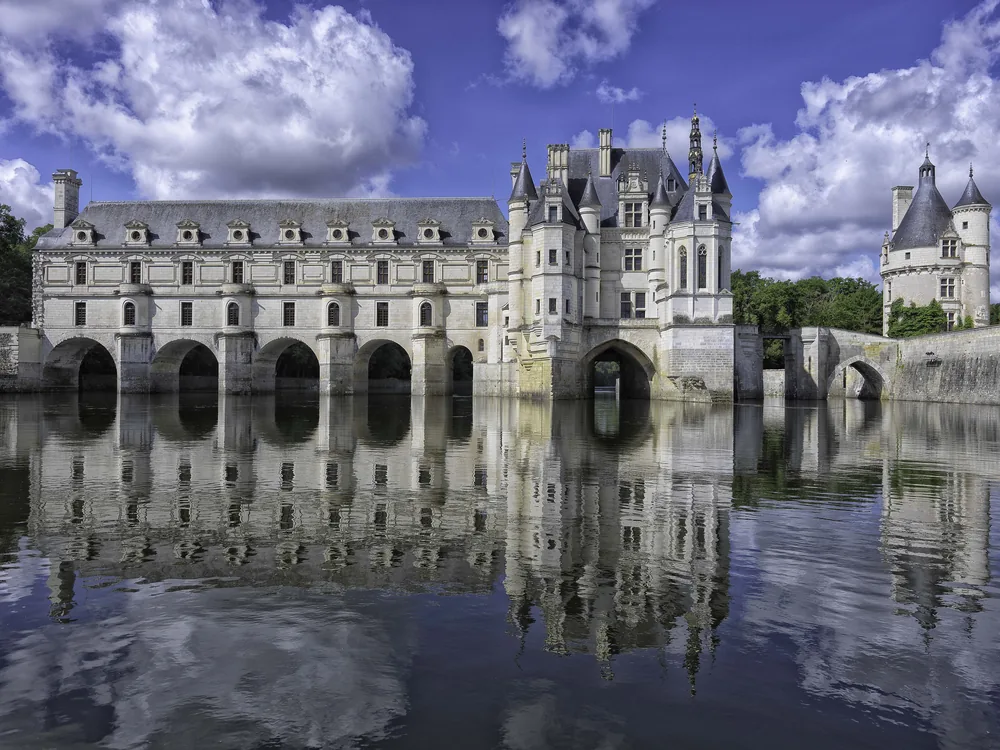
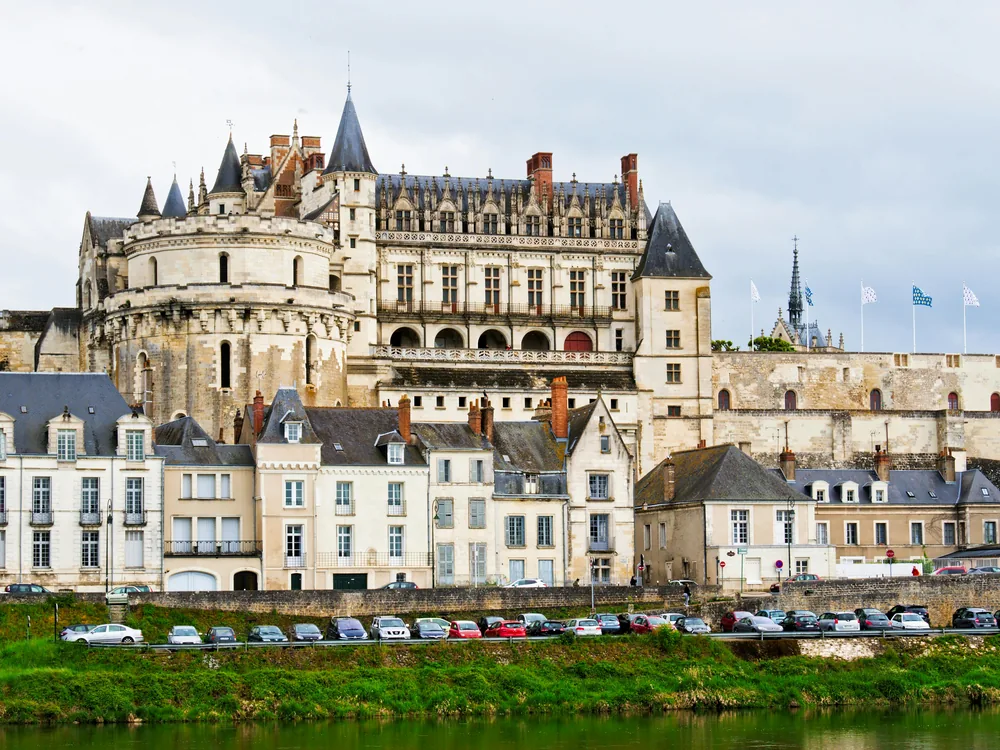
Combine with: Château de Cheverny (12 km south — the natural pairing), Château de Blois, Château de Chenonceau, and Château de Villandry on the Loire Valley circuit.
Frequently Asked Questions
The attribution to Leonardo is debated by historians but widely accepted as plausible. The double-helix staircase appears in Leonardo's notebooks, and he was working for the French court at the same time as Chambord's construction began in 1519 — the year Leonardo died. The staircase's mathematical complexity and departure from contemporary convention is consistent with Leonardo's design philosophy. No definitive documentary proof exists, but the circumstantial case is strong.
Location
41250 Chambord, France
Nearby Castles
Tours & Tickets
Powered by GetYourGuide
From
€21/ person