
Royal Castle of Villers-Cotterêts
Château Royal de Villers-Cotterêts — Cité Internationale de la Langue Française
France · Hauts-de-France — Aisne, Villers-Cotterêts, edge of the Retz Forest, between Paris and Reims · Near Soissons
Built 1532 · French Renaissance Royal
This page is part of an independent travel guide and is not affiliated with, endorsed by, or operated by Royal Castle of Villers-Cotterêts.
© Castles & Palaces
Quick Facts
- Hours
- Tue–Sun 10:00–18:00. Closed Mon
- Entry via GetYourGuide
- €9
- Duration
- 2 hours (château rooms + Cité exhibitions)
- Best time
- Year-round
- Nearest city
- Soissons
Featured Tour
Cité Internationale de la Langue Française: Entrance Ticket
Cancellation available · Instant confirmation
Highlights
- ✦The Ordinance of Villers-Cotterêts (1539) — signed here by François I, it established French as the sole official language of law and administration throughout France, the most consequential piece of linguistic legislation in French history
- ✦The Cité Internationale de la Langue Française, opened in 2023 after a comprehensive restoration under Macron's presidency, now one of France's leading cultural institutions dedicated to the French language and its global reach
- ✦The pure French Renaissance royal architecture of François I and Henri II — one of the finest surviving examples of 16th-century royal construction, largely unknown outside France compared with the Loire châteaux
- ✦The connection to Alexandre Dumas père, born in Villers-Cotterêts in 1802, whose novels — The Three Musketeers, The Count of Monte Cristo — form part of the château's cultural programming and exhibition narrative
- ✦The surrounding Retz Forest, one of the largest in northern France, which gave the château its original purpose as a royal hunting lodge and still frames it in extraordinary seasonal woodland
Skip the queue with a guided tour
Skip-the-line tickets & expert guides
Villers-Cotterêts is one of France's great overlooked royal monuments. Built for François I from 1532 and completed under Henri II, it ranks among the purest examples of French Renaissance royal architecture anywhere in the country — but because it sits in the Aisne rather than the Loire Valley, it receives a fraction of the scholarly and tourist attention lavished on Fontainebleau or Chambord. The restoration completed in 2023 has given it new purpose: the château now houses the Cité Internationale de la Langue Française, a cultural institution dedicated to the French language and its presence across the world, and the combination of architectural splendour and intellectual ambition gives the site a quality distinct from any other château in France.
The historical event for which Villers-Cotterêts will always be known took place not in stone or timber but on parchment. In August 1539, François I signed the Ordonnance de Villers-Cotterêts in these very rooms — a royal edict requiring all legal and administrative documents throughout France to be written in French rather than Latin or any regional language. The Ordinance did not simply standardise bureaucratic practice. It began the long process by which French replaced Latin as the language of intellectual and legal authority in Europe, established a form of linguistic nationalism that would define French cultural policy for five centuries, and made the French language itself a political instrument of state. The document signed here in 1539 is still occasionally cited in contemporary French debates about language preservation — its reach is extraordinary.
The château also bears a second literary connection. Alexandre Dumas père was born in Villers-Cotterêts in 1802, the grandson of a Haitian-born slave who became a general in the Revolutionary army and the son of one of Napoleon's most decorated officers. Dumas grew up in the town, spent his early years in the shadow of the château, and went on to write The Three Musketeers and The Count of Monte Cristo — two of the most widely read novels in any language. The Cité's exhibitions acknowledge his presence as part of the château's cultural story, and the town has its own Dumas museum a short walk away.
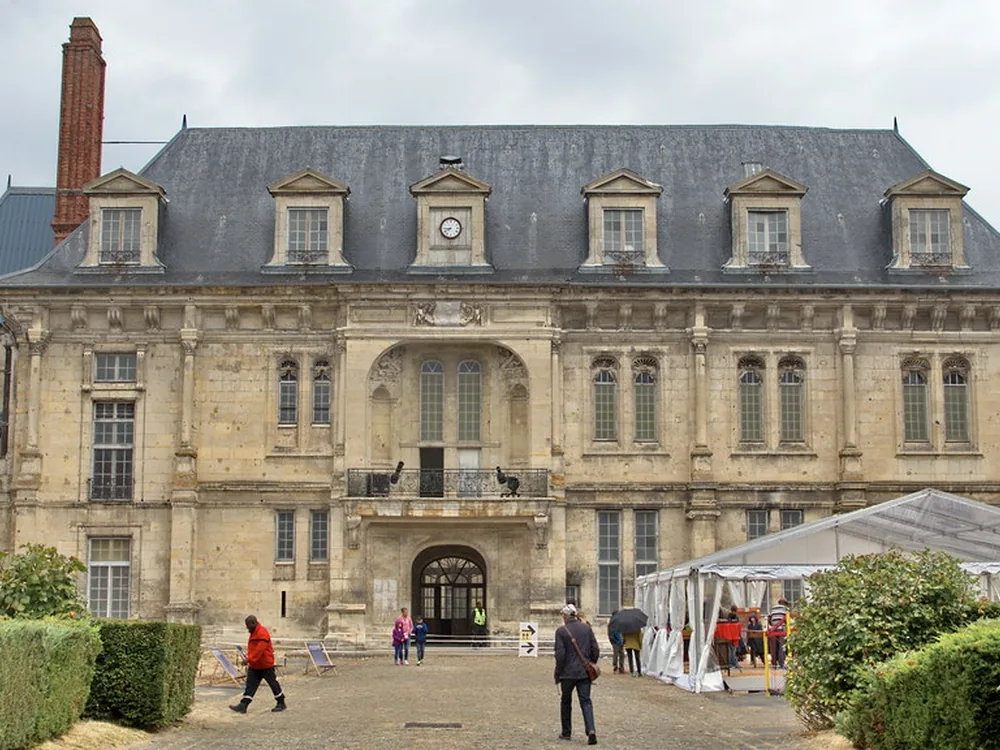
After centuries of neglect — the château served as a poorhouse and a rest home for much of the 19th and 20th centuries — the restoration carried out between 2018 and 2023 has returned the building to something approaching its original grandeur. The state apartments, the ceremonial staircase by Philibert de l'Orme, and the carved stone details of the courtyard facades are now legible again as the serious royal commission they always were. The Retz Forest, which surrounds the town and gave the château its original identity as a hunting lodge, remains one of the largest forests in northern France and is at its most spectacular in autumn.
History
François I came to the throne in 1515 with an ambition to reshape France as a Renaissance monarchy on the Italian model, and Villers-Cotterêts was one of the architectural expressions of that programme. Construction began in 1532 on the site of an earlier hunting lodge in the Retz Forest — a forest the French kings had prized for its game since the Carolingian period — and the new château was designed in the French Renaissance style that François was simultaneously deploying at Fontainebleau and, more grandly, at Chambord. The work was continued and largely completed under Henri II, whose monogram appears alongside that of his father in the carved decorative programme of the courtyard.
The defining event of the château's history occurred on 10 August 1539, when François signed the Ordonnance de Villers-Cotterêts, requiring all legal and administrative acts throughout France to be recorded in French rather than Latin or any regional language. The Ordinance was part of a broader assertion of royal authority over the legal system, but its linguistic consequences far outlasted its immediate administrative purpose, establishing French as a language of law and culture rather than merely of everyday speech.
Alexandre Dumas was born in Villers-Cotterêts in 1802 and grew up in the town. His presence as a native son connects the château to one of the most productive novelistic careers of the 19th century and adds a second layer of cultural significance to a building already weighted with political history.
After the Revolution stripped the château of its royal function, it fell into successive periods of repurposing — as a depot, a poorhouse, and eventually a rest home — that left the architecture in serious deterioration. President Macron designated the restoration of Villers-Cotterêts a national priority; the work was completed in 2023 with the opening of the Cité Internationale de la Langue Française.
How to Visit
Getting there: Villers-Cotterêts is 80 km northeast of Paris. By car from Paris, take the A1 or A4 motorway and then the N2 national road — the drive takes around 1 hour 20 minutes. By train from Paris Gare du Nord, regional trains run to Villers-Cotterêts in approximately 1 hour 10 minutes (change at Crépy-en-Valois on some services); the château is a 10-minute walk from the station. From Soissons (30 km east), by car via the D1 takes about 30 minutes.
Tickets: Adults €9, children free. No advance booking is required. The GetYourGuide entry ticket covers admission to the Cité's exhibitions and the château rooms with 1-day validity and can be purchased online in advance.
Practical tips: Allow the full two hours for the visit — the Cité's exhibitions are substantial and the architectural details of the restored interiors reward careful attention. The ceremonial staircase in the courtyard, designed by Philibert de l'Orme, is one of the finest pieces of 16th-century French stonework in the building and easy to walk past quickly. The Dumas museum in the town is a 10-minute walk from the château and makes a worthwhile addition for literary visitors.
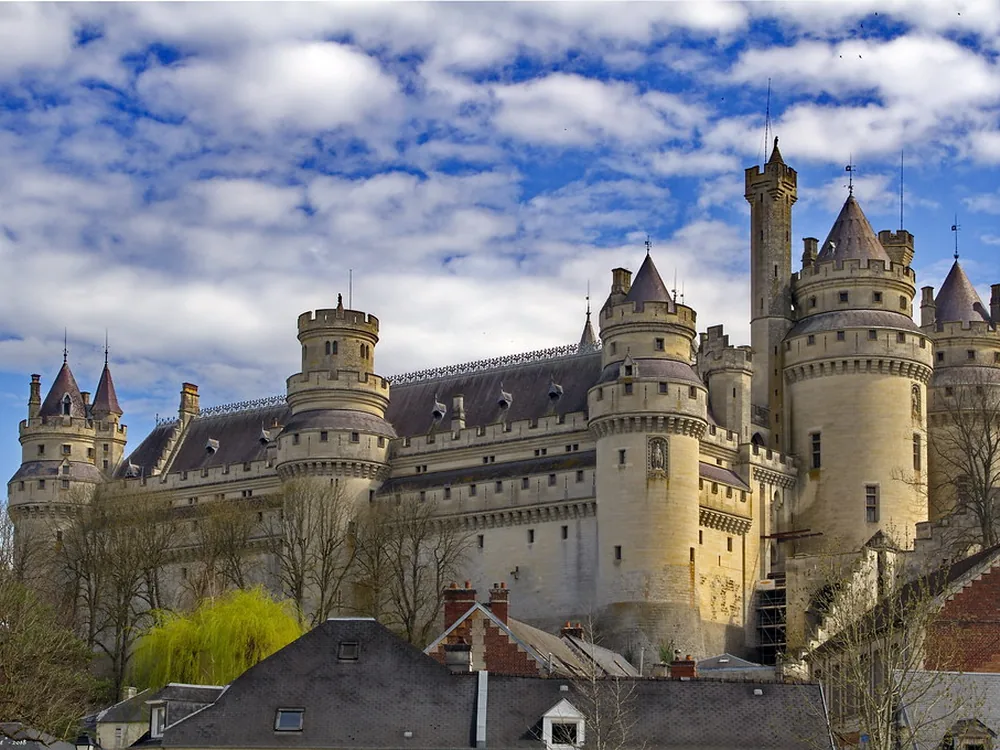
Combine with: Château de Pierrefonds (30 km east in Oise — the dramatic medieval fortress-castle comprehensively restored by Viollet-le-Duc for Napoleon III, set above the forest village of Pierrefonds; together with Villers-Cotterêts they form a compelling Aisne/Oise royal and medieval heritage circuit within the Retz Forest).
Frequently Asked Questions
The Ordonnance de Villers-Cotterêts, signed here by François I in August 1539, required all legal and administrative documents throughout France to be written in French rather than Latin or any regional language. It is the single most consequential linguistic legislation in French history: it established French as the official language of the French state, began the long displacement of Latin as the language of European law and scholarship, and created the basis for the French linguistic nationalism that has defined cultural policy in France ever since. The ordinance is still occasionally cited in contemporary French debates about the status of the French language.
Location
2 Rue du Château, 02600 Villers-Cotterêts, Aisne, France
Nearby Castles
Tours & Tickets
Powered by GetYourGuide
From
€9/ person