
Château Grand Barrail
Château Hôtel Grand Barrail
France · Nouvelle-Aquitaine — Saint-Émilion, Gironde · Near Bordeaux
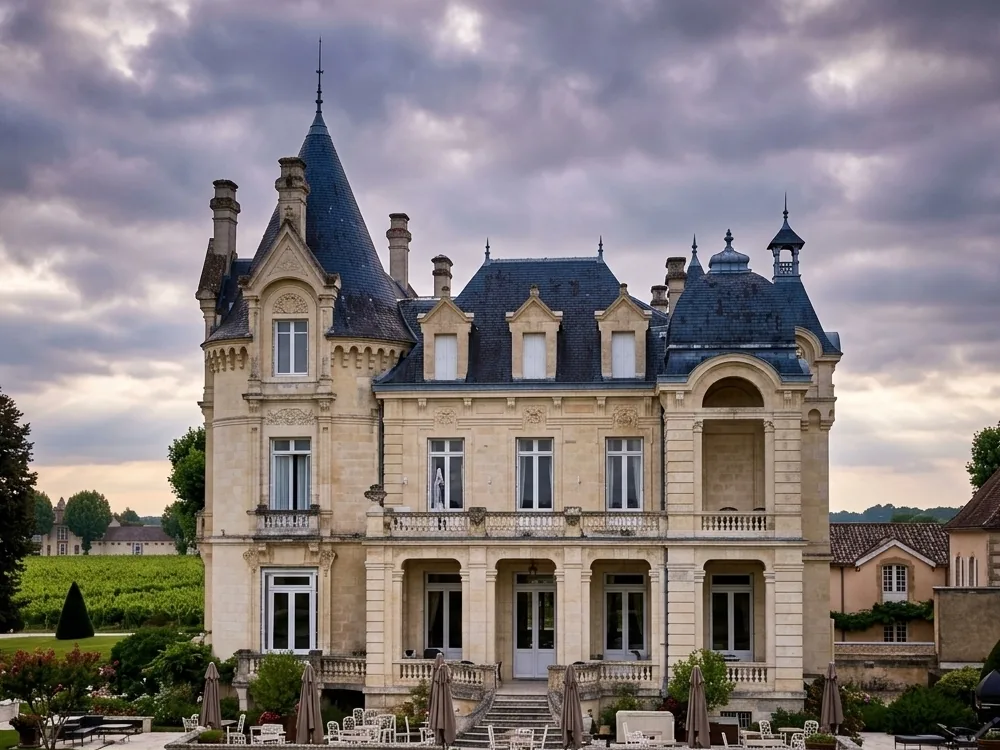
Built 1902 · Belle Époque residence built from 1902 on the site of a former 18th-century Carthusian monastery once owned by Château Figeac; designed by architect Louis-Marie Cordonnier for industrialist René Bouchart
This page is part of an independent travel guide and is not affiliated with, endorsed by, or operated by Château Grand Barrail.
© Castles & Palaces
Quick Facts
- Rooms from
- €200 / night
- Duration
- Overnight stay only
- Best time
- Year-round
- Nearest city
- Bordeaux
Stay Here
Château Hôtel Grand Barrail
Rooms are split between the historic building and a newer wing
Booked via Booking.com · Free cancellation on most rates
No confirmed independent day-visit product was found; access is primarily for hotel guests.
Highlights
- ✦Built from 1902 on the site of a former 18th-century Carthusian monastery once owned by Château Figeac
- ✦Designed by architect Louis-Marie Cordonnier, who also designed the Peace Palace in The Hague and the Lille Opera House
- ✦A member of Small Luxury Hotels of the World, set in a 7-acre park beside the Dordogne River
Stay in the castle itself
Book a room via Booking.com
Château Grand Barrail was built starting in 1902 on the site of a former 18th-century Bordeaux Carthusian monastery once owned by Château Figeac. Industrialist René Bouchart, a knight of the Legion of Honour, commissioned the building for his wife, Marie Godeau, hiring architect Louis-Marie Cordonnier — designer of the Peace Palace in The Hague and the Lille Opera House.
In 1992, new owners began restoring it into a hotel; it opened as a 4-star property in 1993. Today its 46 rooms and suites are spread across the château and its outbuildings, set in a 7-acre park beside the Dordogne River, roughly 3 km from Saint-Émilion village. It is a member of Small Luxury Hotels of the World.
The site's earlier history as a Carthusian monastery, once owned by the neighboring Château Figeac estate, connects Grand Barrail to Saint-Émilion's deep monastic and winemaking history, predating the current Belle Époque building by well over a century.
Architect Louis-Marie Cordonnier's involvement ties this Bordeaux château to a body of work that includes some of Europe's most significant civic buildings, an unusually prestigious architectural pedigree for a private residence of this scale.
The building's 1902 construction date makes it a genuinely different architectural period from the medieval fortresses found elsewhere in this collection — its appeal rests on Belle Époque grandeur and its Saint-Émilion vineyard setting rather than defensive castle history.
The surrounding Saint-Émilion wine appellation, a UNESCO World Heritage site for its medieval town and vineyard landscape, gives guests staying at Grand Barrail direct access to one of Bordeaux's most internationally recognized wine regions.
History
Château Grand Barrail was built from 1902 on the site of a former Carthusian monastery once owned by Château Figeac, commissioned by industrialist René Bouchart for his wife and designed by architect Louis-Marie Cordonnier. Restored into a hotel from 1992, it opened as a 4-star property in 1993. Today its 46 rooms and suites, a member of Small Luxury Hotels of the World, are spread across the château and its outbuildings within a 7-acre park beside the Dordogne River.
How to Stay
Getting there: About 3 km from Saint-Émilion village, in the heart of the Saint-Émilion wine appellation; Bordeaux is roughly 40 minutes by car.
Rooms & rates: 46 rooms and suites from €200/night, split between the historic château and its outbuildings, set in a 7-acre park by the Dordogne River.
On-site: Spa with jacuzzi, two saunas, two hammams, a fitness room, gastronomic restaurant, and outdoor pool.
Good to know: A Belle Époque building (1902), not a medieval fortress — the draw here is the architecture and the Saint-Émilion vineyard setting rather than a defensive castle history.
Combine with: Saint-Émilion's UNESCO-listed medieval town and its wine estates, a short drive away.
Frequently Asked Questions
No — it's a Belle Époque residence built from 1902, on the site of a former 18th-century Carthusian monastery. The draw is its architecture and Saint-Émilion setting, not a defensive castle history.
Location
Route de Libourne, 33330 Saint-Émilion, France
Nearby Castles
Rooms from
€200/ night