
Château Mangot
Château Mangot
France · Bordeaux — Gironde, Saint-Émilion Grand Cru Classé, Saint-Étienne-de-Lisse · Near Saint-Émilion
Built 1550 · 16th-century right-bank wine estate on the limestone plateau east of Saint-Émilion — the original stone construction from the estate's foundation survives in the tasting room, whose pale limestone walls are typical of the oldest working wine structures on the Gironde's right bank; the chai and barrel rooms represent the estate's working agricultural architecture, functional rather than palatial; the open limestone plateau setting of Saint-Étienne-de-Lisse, away from the more enclosed elevated terrain of Saint-Émilion town, gives the estate a different visual character from the most touristically developed classified properties at the appellation's centre; the biodynamic farming approach has had a visible effect on vineyard management — cover crops and hedgerows maintained as part of the biodynamic soil-health programme differentiate the estate's vine rows from those of its more conventionally farmed neighbours
This page is part of an independent travel guide and is not affiliated with, endorsed by, or operated by Château Mangot.
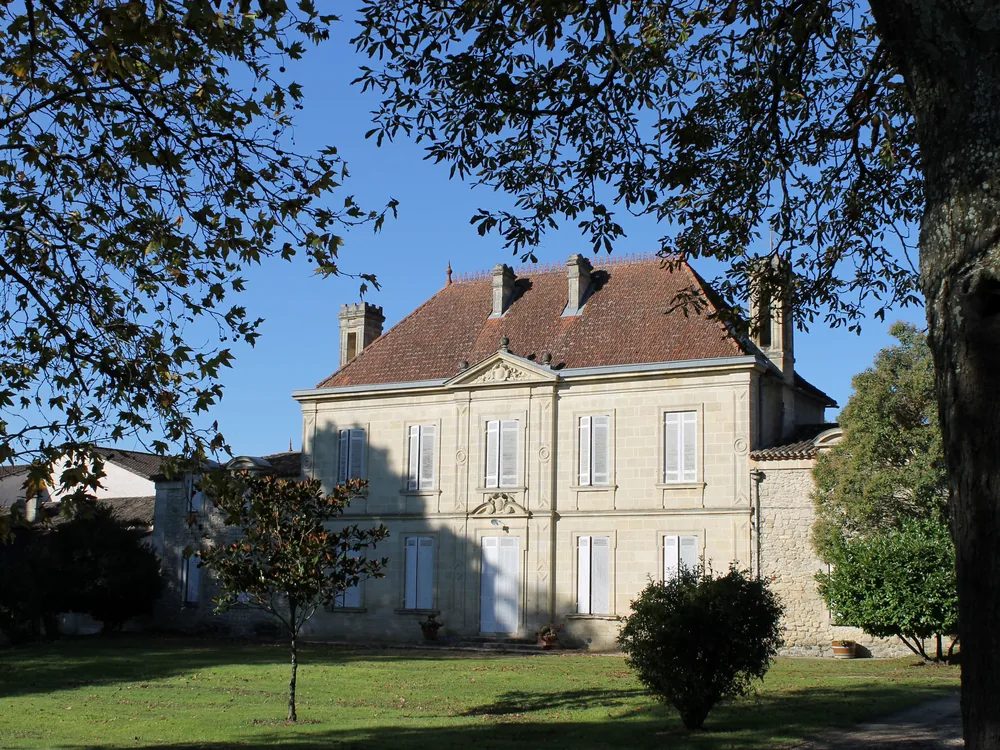
© Castles & Palaces
Quick Facts
- Hours
- Mon–Sat By appointment. Closed Sun
- Guided tour from
- €20
- Duration
- 1.5 hours (cellar + biodynamic explanation + tasting)
- Best time
- April to October
- Booking
- Required — book 1+ days ahead
- Nearest city
- Saint-Émilion
Featured Tour
Saint-Émilion Grand Cru Classé Discovery Tour
Cancellation available · Instant confirmation
Highlights
- ✦Biodynamic viticulture at Grand Cru Classé level — Château Mangot is one of a small number of classified Bordeaux estates to practice full biodynamic farming; the GetYourGuide discovery tour explains the biodynamic calendar and its principles as an integral part of the cellar visit, giving the wine a farming philosophy to contextualise it rather than presenting biodynamics as a marketing claim
- ✦The 16th-century tasting room — the estate's oldest surviving structure, in the original stone construction of the château's foundation, is the setting for the four-wine tasting at the end of the discovery tour; the room gives the wines their historical anchor without the polished visitor-centre format typical of more touristically developed Saint-Émilion estates
- ✦Saint-Émilion Grand Cru Classé status — classified within the formal Saint-Émilion hierarchy, whose rankings are reviewed and revised every ten years (and contested in French courts), Château Mangot's wines carry the appellation's most scrutinised quality designation; visiting the estate gives direct access to the terroir and production methods behind a classification that reflects current assessments of quality rather than a fixed 19th-century ranking
- ✦Right-bank limestone plateau terroir — the estate's position on the limestone plateau east of Saint-Émilion town shares the fundamental terroir conditions of the more celebrated classified crus to the west; free-draining pale stone beneath thin topsoil produces the structured, Merlot-dominant wines that define the appellation, and the biodynamic farming adds a layer of intentional terroir expression that its conventionally farmed neighbours do not match
- ✦Away from the Saint-Émilion tourist circuit — Saint-Étienne-de-Lisse is five kilometres from Saint-Émilion town and outside the concentrated visitor zone; Château Mangot receives visitors in a working winery environment with a quieter, more focused experience than is typical of the most visited estates within walking distance of the medieval town centre
Skip the queue with a guided tour
Skip-the-line tickets & expert guides
Château Mangot is a Saint-Émilion Grand Cru Classé estate in Saint-Étienne-de-Lisse, five kilometres east of Saint-Émilion town on the limestone plateau of the right bank Gironde. Its 16th-century origins place it among the more historically rooted wine properties in a region where the classification system — the Saint-Émilion Grand Cru Classé hierarchy — tends to attract more attention than the age or architectural character of the châteaux within it. The estate's most visible distinction among its classified neighbours is its practice of biodynamic viticulture: Château Mangot is one of the few Grand Cru Classé properties in Bordeaux to have adopted the full biodynamic farming approach, which governs vine management, harvest timing, and cellar operations according to a system that treats the vineyard as an integrated biological and cosmological unit rather than an agricultural input-output model.
The GetYourGuide discovery tour runs for approximately 1.5 hours and structures the visit around the three elements that most differentiate Mangot from a standard Saint-Émilion estate experience. The first is the cellar visit itself — a walk through the estate's working chai and barrel rooms, including the 16th-century tasting room whose stone construction represents the estate's oldest surviving architecture. The second is an explanation of biodynamic viticulture in practical terms: what the farming calendar requires, how it differs from organic and conventional approaches, and what difference the estate's winemakers understand it to make to the vineyard and the wine. The third is a tasting of four wines from the estate's range, in the stone tasting room that gives the wines their physical and historical context.
Saint-Étienne-de-Lisse sits on the outer ring of the Saint-Émilion zone, away from the tourist concentration of the medieval town and its celebrated classified neighbours. The distance from the town circuit is part of Mangot's appeal: the estate receives visitors in a working winery environment rather than in the polished visitor-centre format that many of the more centrally located Grand Cru properties have adopted. The limestone plateau terroir here is structurally continuous with the more celebrated plots of the appellation — free-draining, heat-retaining pale stone under thin topsoil — and the biodynamic approach means the estate's farming calendar is more demanding and more observationally intensive than most of its neighbours' operations.
For visitors approaching Bordeaux from a wine-interest angle, Château Mangot offers a specific and useful argument: that the right-bank Merlot terroir and the formal Saint-Émilion classification structure can be explored at close range, in a genuine working estate environment, without the formality and lead times required by the very top Grand Cru Classé properties. The classification means the wines are taken seriously within the appellation hierarchy; the biodynamic commitment means the visit carries an intellectual dimension that goes beyond the typical cellar-and-tasting format available at most classified Bordeaux properties open to visitors.
Saint-Émilion town is five kilometres northwest by car; the estate is not reachable by public transport but is an easy addition to any Saint-Émilion wine itinerary based in the town or departing from Bordeaux (approximately 40 km west on the A10).
History
Château Mangot's origins reach back to the 16th century, when the limestone plateau east of Saint-Émilion was already recognised as some of the finest Merlot-growing terrain on the Gironde's right bank. The estate's position in Saint-Étienne-de-Lisse, on the outer edge of the Saint-Émilion zone, reflects the geological continuity of the limestone plateau that gives the wider appellation its character: the same pale, free-draining stone that underlies the classified crus closest to the medieval town continues east into the commune's satellite villages, and Mangot's terroir shares the structural conditions that define the appellation's wines.
Over the following centuries the estate developed through the pattern of consolidation and succession that shaped most Bordelais wine properties across the early modern period, and by the 20th century it had accumulated its current standing as a Saint-Émilion Grand Cru Classé — a classification subject to review and revision every ten years, most recently in 2022. The estate's most distinctive modern development is its adoption of biodynamic viticulture, a commitment that makes it one of the few classified Bordeaux properties to have applied the full biodynamic farming calendar, which governs vine care, harvest timing, and cellar operations according to principles of soil health, lunar rhythm, and holistic agricultural management. This differentiation from its conventionally and organically farmed neighbours gives the discovery tour its intellectual backbone: the biodynamic explanation is not supplementary to the cellar visit but central to understanding what makes Château Mangot's approach to its classified Saint-Émilion terroir distinctive.
How to Visit
Getting there: Saint-Étienne-de-Lisse is approximately 40 km east of Bordeaux by car on the A10 and D670 via Saint-Émilion (approximately 45 minutes from central Bordeaux). From Saint-Émilion town: the estate is 5 km southeast by the D245 (approximately 10 minutes by car). Public transport to Saint-Étienne-de-Lisse is not available; a car is required.
Tickets: No walk-up entry — the estate is by guided tour only. The GetYourGuide Saint-Émilion Grand Cru Classé Discovery Tour covers a 1.5-hour guided visit including the chai, the 16th-century tasting room, a structured explanation of the estate's biodynamic farming approach, and a tasting of 4 wines from the estate's range. Book at least one day in advance and confirm current availability at chateaumangot.fr.
Practical tips: The biodynamic explanation is a structured and substantive part of the tour — arrive with questions about the farming calendar, about what distinguishes biodynamic practice from certified organic, and about what the estate's winemakers observe in their vineyard management; the guide is equipped to answer at whatever level of detail the group wants. The harvest period (September–October) adds working fermentation activity to the cellar visit and gives the biodynamic approach its most immediate practical context. Arrange transport home before the tasting.
Combine with: Château Saint Ahon (Médoc, Haut-Médoc — the Left Bank counterpart; visiting both Mangot on the Right Bank and Saint Ahon on the Left Bank in a single Bordeaux wine trip covers the two fundamentally different terroirs and winemaking traditions of the appellation).
Frequently Asked Questions
Biodynamic farming is an approach to agriculture that combines organic principles with a farming calendar keyed to lunar and cosmic cycles, soil health management through specific preparations, and a view of the vineyard as an integrated living system. At Château Mangot, biodynamic certification governs vine care, harvest timing, and winemaking interventions in the cellar. The GetYourGuide discovery tour explains the specific biodynamic practices applied at the estate and how they are understood to affect the wine's character, making this one of the few Bordeaux estate visits where the farming philosophy is explained as an integral part of the tasting, not a footnote to it.
Location
Saint-Étienne-de-Lisse, 33330 Saint-Étienne-de-Lisse, Gironde, France
Nearby Castles
Tours & Tickets
Powered by GetYourGuide
From
€20/ person