
Château du Taillan
Château du Taillan
France · Nouvelle-Aquitaine (Gironde), Haut-Médoc, Bordeaux · Near Bordeaux
18th century · Classical Médoc wine château (18th century); 16th-century underground barrel cellars (classified Monument Historique) and pink marble altarpiece terrace (classified Monument Historique) predating the current building
This page is part of an independent travel guide and is not affiliated with, endorsed by, or operated by Château du Taillan.
© Castles & Palaces
Quick Facts
- Hours
- Tue–Sat 10:00–17:00. Closed Mon, Sun
- Guided tour from
- €33
- Duration
- 1–1.5 hours (château, 16th-century cellars, marble terrace, and wine tasting)
- Best time
- March to October
- Booking
- Required — book 1+ days ahead
- Nearest city
- Bordeaux
Featured Tour
Taillan-Médoc: Château Visit and Wine Tasting in Bordeaux
Cancellation available · Instant confirmation
Highlights
- ✦16th-century underground cellars — built before the current 18th-century château and classified as a French Historic Monument (Monument Historique) for their age and architectural integrity; among the oldest surviving wine cellars in the Médoc
- ✦Pink marble altarpiece terrace — a second 16th-century structure, separately classified as a Monument Historique, whose original function within the early estate is historically uncertain
- ✦Four generations in the Cruse family — acquired by Henri Cruse in 1896, now operated by five sisters of the same family; one of the most striking examples of continuous family ownership in Bordeaux
- ✦Cru Bourgeois Exceptionnel (February 2020) — the top classification in the Cru Bourgeois system, awarded to fewer than 15 Médoc châteaux; a recognized quality signal comparable in market positioning to a Médoc Grand Cru
- ✦Médoc white wine — Taillan is one of the few Haut-Médoc estates producing a serious white wine alongside its classified red; an unusual position in a region dominated by red production
Skip the queue with a guided tour
Skip-the-line tickets & expert guides
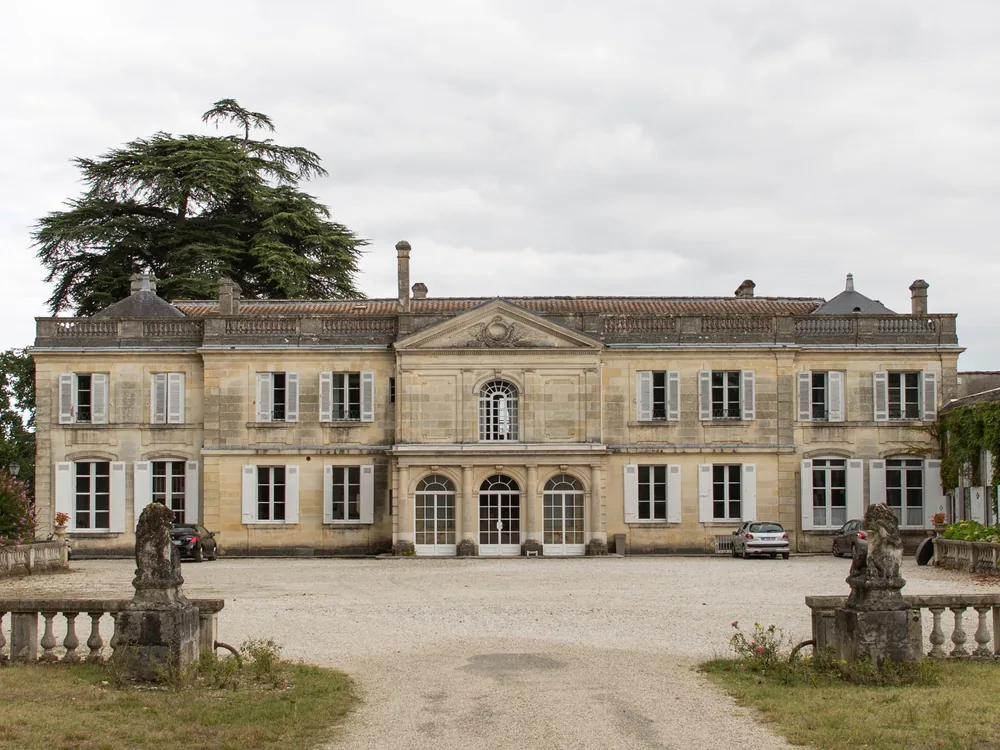
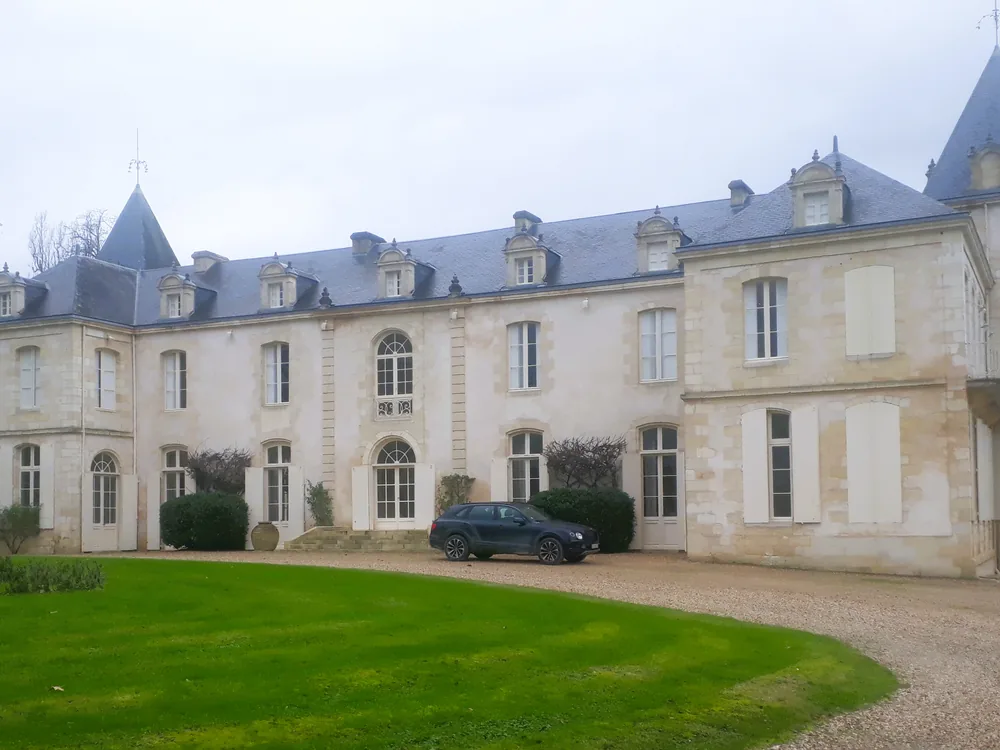
The Château du Taillan sits at the northern edge of the Bordeaux urban zone, where the suburbs of the Haut-Médoc transition to the vine-covered clay-limestone terroir that produces some of the Gironde's finest wines. The building that visitors arrive at today — a compact classical château of the 18th century, its stone facades organized around a central pavilion and flanking wings — is not the most historically significant structure on the estate. That distinction belongs to what lies beneath and beside it: a system of underground wine cellars dating from the 16th century, classified as a French Historic Monument, and a pink marble altarpiece terrace from the same period, also separately classified. The 18th-century château sits above these older structures, and the visit at Taillan is partly the discovery that the estate's most remarkable architecture is not the building you see on arrival.
The property's documented history begins in the 16th century, when the estate was developed as a wine-producing domain in the area that would become the Haut-Médoc. The underground cellars excavated in this period are built from the local limestone and designed with the vaulted barrel profiles standard in Bordelais cellar construction; their age relative to most Médoc cellars — which were built or rebuilt in the 18th and 19th centuries as the négociant trade expanded — makes them genuinely unusual in the region's viticultural heritage. The marble altarpiece terrace, whose exact architectural context within the original domain is not fully documented, was classified alongside the cellars as a heritage structure of national significance. Both are incorporated into the visitor tour.
The 18th-century château was built in a style consistent with the period's preference for restrained classical architecture in Bordeaux's wine estates — symmetrical, well-proportioned, and built for comfortable residential use. The estate passed through various owners through the 18th and early 19th centuries.
The story that matters for understanding what Château du Taillan is today begins in 1896, when Henri Cruse acquired the property. The Cruse family — one of the major Bordeaux négociant dynasties of the 19th century, whose trading house had been central to the Médoc wine market since the mid-1800s — brought their commercial and viticultural expertise to the estate. Taillan has been owned by the same family for four generations since Henri's acquisition and is now managed and operated by five of his great-great-granddaughters, making it one of the most striking examples of continuous female-led family ownership in Bordeaux viticulture. The consistency of estate management over 130 years is one of the factors behind the quality recognition the property has received.
The vineyard covers approximately 30 hectares of the clay-limestone terroir characteristic of the Médoc plateau. The red wine — made from Merlot, Cabernet Sauvignon, and Cabernet Franc in proportions that vary by vintage — was classified Cru Bourgeois Exceptionnel in the February 2020 reclassification, the top tier in the Cru Bourgeois system. Fewer than 15 châteaux received the Exceptionnel designation in 2020 out of the Médoc's several hundred classified estates; the classification recognizes both the quality consistency the Cruse family has maintained across recent decades and the specific terroir quality of the Taillan parcel.
Château du Taillan is unusual within the Médoc for a second reason beyond its heritage cellars: it produces a white wine alongside its red. The Médoc's appellation rules and market tradition strongly favour red production, and estates maintaining serious white wine programmes alongside their classified reds are a distinct minority. Taillan's white — made from Sémillon and Sauvignon Blanc — has developed its own following and is considered among the more interesting whites being produced in the Haut-Médoc by Bordeaux specialists.
The visit experience at Taillan is organized around the estate tour-and-tasting model that characterizes the premium Bordeaux wine château visit. The tour covers the 18th-century reception rooms of the château, the historic underground cellars (functioning both as the estate's working storage space and as its primary heritage attraction), the marble altarpiece terrace, and the working vinification and barrel ageing facilities. The tasting typically covers a selection of vintages of both the red and the white, with commentary from one of the family's estate team.
The GetYourGuide tour covers this full circuit — château, historic cellars, altarpiece terrace, and tasting — departing from the estate. The one-hour tour is conducted by the estate team in French, with English available on request. Because Taillan is a working wine estate rather than a public museum, visits outside scheduled times or GetYourGuide-booked slots require advance arrangement via the château's website.
The tasting at Taillan is structured to show both the red and the white wines across different vintages, with the guide drawing on the family's knowledge of their specific terroir and vinification choices. For visitors approaching Bordeaux wine tourism for the first time, Taillan's combination of classified-quality red, unusual white, and 16th-century heritage cellars provides more layers of interest than a typical single-AOC château visit. For experienced Bordeaux visitors, the white wine and the heritage cellars represent genuine points of distinction within the Haut-Médoc cluster.
Château du Taillan sits within a cluster of Bordeaux-area wine châteaux that have developed visitor programmes. Château Picque Caillou, in Pessac, and Château Olivier, in Léognan, are the most directly comparable in scale and visit format. Château de La Rivière and Château de Reignac, in the Fronsac and Entre-Deux-Mers areas, extend the circuit for visitors with a full day. Getting to Taillan from Bordeaux city centre: approximately 12 kilometres northwest by car via the Rocade ring road to the D209E. No direct public transport from the city; car or taxi is required.
History
16th-century underground wine cellars and pink marble altarpiece terrace (both classified French Monuments Historiques) predate the current building. 18th-century classical château built on the estate. Acquired by Henri Cruse in 1896 — the négociant dynasty brought the estate into Bordeaux's major wine trade. In the same Cruse family for four generations; now operated by five sisters. Cru Bourgeois Exceptionnel classification awarded February 2020.
How to Visit
Getting there: 12 km northwest of central Bordeaux via the Rocade (A630) to the D1209E; follow château signage from the Taillan-Médoc exit. No public transport; a car is required.
Tickets: Walk-up admission is €15 for adults; children enter free. Advance booking is required — visits outside scheduled slots need arrangement via the château website. The GetYourGuide château visit and wine tasting covers the 1-hour estate circuit including the 18th-century château, the 16th-century classified cellars, the pink marble altarpiece terrace, and a tasting of both the red and white wines.
Practical tips: The 16th-century underground cellars are the headline attraction — most Médoc cellars date from the 18th or 19th century, so this is genuinely unusual. Ask the guide to explain the Cru Bourgeois Exceptionnel classification in context; fewer than 15 châteaux received it in 2020 and the benchmark comparison helps frame the red wine quality. The estate white is worth tasting even if you come primarily for the red.
Combine with: Château Olivier in Léognan and Château Picque Caillou in Pessac are the closest Bordeaux wine-château pairings. Château de Reignac (right-bank Bordeaux, ~25 km east) completes a full Bordeaux wine-château day contrasting left and right-bank estates.
Frequently Asked Questions
The Cru Bourgeois classification covers Médoc estates not included in the 1855 Grand Cru system, organized into three tiers: Cru Bourgeois, Cru Bourgeois Supérieur, and Cru Bourgeois Exceptionnel. The top tier was reintroduced in the 2020 reclassification — fewer than 15 châteaux received the Exceptionnel designation from the several hundred Médoc estates assessed. It is a meaningful quality signal, broadly comparable in market positioning to a Médoc Cru Classé, though legally distinct from the 1855 classification.
Location
7 Avenue de la Châtaigneraie, 33320 Le Taillan-Médoc, France
Nearby Castles
Tours & Tickets
Powered by GetYourGuide
From
€33/ person