
Palais des Papes
Palais des Papes d'Avignon
France · Avignon, Vaucluse, Provence · Near Avignon
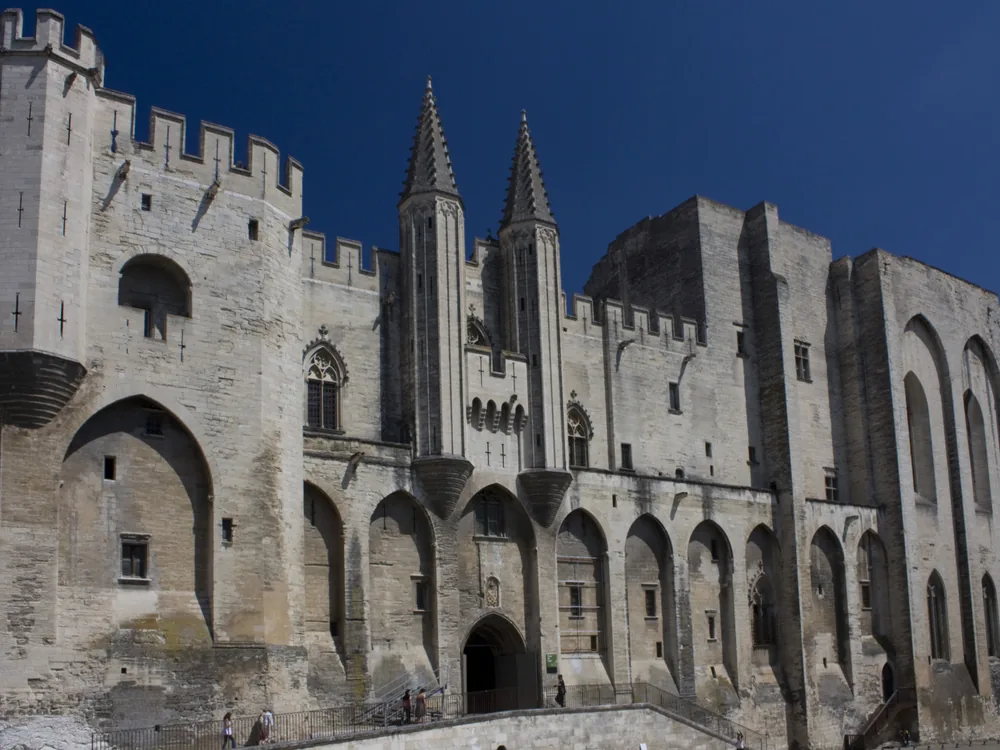
Built 1334 · Gothic — the largest Gothic palace in the world by volume; constructed in two phases: Old Palace (Palais Vieux, Benedict XII, 1334–1342) in austere Cistercian-influenced military Gothic; New Palace (Palais Neuf, Clement VI, 1342–1352) in more ornate Gothic with frescoed interiors; the ensemble covers 15,000 square metres with nine towers, the Grand Audience Hall (52m long), private apartments with Matteo Giovannetti frescoes, and the Chapel of St. Martial with the most complete surviving 14th-century fresco cycle
This page is part of an independent travel guide and is not affiliated with, endorsed by, or operated by Palais des Papes.
© Castles & Palaces
Quick Facts
- Hours
- Daily 09:00–19:00
- Guided tour from
- €69
- Duration
- 2–3 hours (self-guided with audioguide); the GetYourGuide guided tour includes approximately 2 hours inside the palace
- Best time
- April to June and September to October
- Nearest city
- Avignon
Featured Tour
Avignon: City Walking Tour with Popes Palace Guided Entry
Cancellation available · Instant confirmation
Highlights
- ✦The largest Gothic structure in the world by volume — 15,000 square metres across nine towers, built by two popes over two decades (1334–1352), making it the most ambitious Gothic secular construction project of the medieval period
- ✦UNESCO World Heritage Site — 'Historic Centre of Avignon: Papal Palace, Episcopal Ensemble and Avignon Bridge' (1995) recognises the palace as the extraordinary material legacy of the Avignon papacy's 70-year residence (1309–1377)
- ✦Matteo Giovannetti frescoes — the most significant cycle of 14th-century Gothic fresco painting in France, commissioned by Clement VI from the Italian master and preserved in the Chapel of St. Martial and the papal private apartments; the hunting and fishing cycle in the apartments is unusually secular for a papal commission
- ✦The Grand Audience Hall (La Grande Audience) — 52 metres long, with a painted Gothic vault, one of the largest unencumbered medieval interior spaces in France; used for major papal ceremonies and now for the Palace's main cultural events
- ✦Old Palace vs. New Palace — the contrast between Benedict XII's austere Cistercian military Gothic (bare walls, minimal ornament) and Clement VI's lavish New Palace (who reportedly said his predecessors had not known how to be pope) is one of the most readable architectural character contrasts in any Gothic building
- ✦GetYourGuide Avignon walking tour + priority palace entry (Certified by GetYourGuide) — 3.5 hours covering Avignon old town and approximately 2 hours inside the palace with an expert guide; includes a glass of Côtes du Rhône wine
Skip the queue with a guided tour
Skip-the-line tickets & expert guides
The Palais des Papes in Avignon is the largest Gothic palace in the world — not by height but by volume: the building's 15,000 square metres of interior space, distributed across nine towers, multiple great halls, chapels, and residential apartments, make it the most substantial Gothic secular structure ever completed, and one of the defining architectural achievements of 14th-century Europe. It is also among the most geographically surprising: a building of this scale, erected at enormous expense over four decades of continuous construction, sits not in Rome or Paris but in Avignon, a market town on the Rhône that found itself, between 1309 and 1377, the seat of the most powerful institution in Europe.
The circumstances of the Avignon papacy — what the Italian poet Petrarch famously called the 'Babylonian Captivity of the Church' — began with the election of Clement V in 1305. A French pope elected amid the bitter conflict between the papacy and the French crown that had culminated in the arrest and humiliation of Boniface VIII at Anagni in 1303, Clement preferred to remain in France rather than return to Rome's violent factional politics. The papacy settled in Avignon, then technically in the territory of the Kingdom of Arles (a papal fief, not directly under French sovereignty), and seven consecutive popes would rule from here over seven decades. The Avignon period produced not only this palace but much of the administrative structure of the modern Catholic Church: a centralised bureaucracy, a system of papal taxation, a college of cardinals that became a major force in European politics, and a tradition of papal engagement in secular governance that shaped European power structures for two centuries.
The palace was built in two clearly distinct phases. The Old Palace (Palais Vieux) was constructed by Pope Benedict XII between 1334 and 1342: a severe, almost military building in the Cistercian style, reflecting Benedict's own background as a Cistercian monk trained at Fontfroide Abbey. High blank walls, minimal ornament, functional towers, and a cloister of stark geometric elegance characterise his contribution. Benedict's building ethic was explicitly anti-luxurious. The New Palace (Palais Neuf), built by his successor Clement VI between 1342 and 1352, embodies a completely different papal sensibility. Clement (a Benedictine of French aristocratic background who reportedly said that his predecessors had not known how to be pope) spent lavishly, importing the Italian master Matteo Giovannetti from Viterbo to paint the palace's chapels and private apartments with fresco cycles that blend Italian influence with the local Avignon tradition. The contrast between the Old and New Palaces — visible in a single building — is one of the most readable architectural character debates in any medieval structure.
The frescoes are the palace's other major revelation. The Chapel of St. Martial retains the most complete cycle: a narrative presentation of the life of St. Martial with a compositional fluency and expressive range that was innovative for its date. The private apartments preserve fragments of a secular cycle — hunting and fishing scenes, deer in woodland, songbirds — that are strikingly unlike the religious iconography dominating most papal interiors and suggest a domestic sensibility quite different from Clement's public image. The whitewashing of the frescoes by the French army during the Revolutionary period paradoxically protected portions of what lay beneath; restoration since the 1960s has recovered these fragments, and the ongoing conservation work is still revealing new areas.
The palace's post-papal history is a story of successive indignities and recoveries. After Gregory XI returned the papacy to Rome in 1377, Avignon became the seat of the 'Avignon Obedience' during the Great Western Schism (1378–1417), when antipopes sponsored by France and other powers contested the legitimate papacy. The last antipope, Benedict XIII (Pope Luna), fled in 1403. Avignon was formally ceded to France in 1791 during the Revolution; the palace was stripped of its furnishings, whitewashed, and converted into a military barracks and prison — a use that continued until 1906. The building that emerged from a century of military occupation was architecturally intact but artistically denuded. The restoration and museumification since 1906 has been one of the major French heritage projects of the 20th century, and the palace's UNESCO inscription in 1995 recognised both the building and the documentary heritage of the Avignon papal period.
The GetYourGuide guided walking tour (Certified by GetYourGuide, 3.5 hours) covers Avignon's historic centre on foot with an expert guide and includes priority entry to the Palais des Papes with approximately 2 hours of guided access inside, plus a glass of Côtes du Rhône wine at the end. The guide provides the construction sequence, political context, and fresco interpretation that a self-guided audioguide visit, while competent, does not fully supply. The audioguide included in basic entry (from €12) is available in multiple languages and is professionally produced — but the building is complex enough, and the political history behind it layered enough, that guided context repays the additional cost.
History
Clement V begins papal residency in Avignon 1309 (initially at the Dominican priory). Benedict XII begins Old Palace construction 1334; completed 1342. Clement VI begins New Palace construction 1342; Giovannetti frescoes commissioned; completed 1352. Avignon papacy ends with Gregory XI's return to Rome 1377. Great Western Schism: antipopes in Avignon 1378–1417; last antipope Benedict XIII flees 1403. Avignon ceded to France 1791 during the Revolution. Palace stripped and converted to military barracks and prison 1791–1906. Major restoration begins early 20th century. UNESCO World Heritage inscription 1995 (Historic Centre of Avignon). Continuing fresco conservation and archaeological work.
How to Visit
Getting there: TGV from Paris Gare de Lyon (~2h40 to Avignon TGV station, 4 km from city centre). Regular TGV from Marseille Saint-Charles (~35 min). By car: A7 motorway, Avignon Sud exit. The Palais des Papes is in the walled centre, approximately 15 minutes' walk from either station.
Tickets: Walk-up admission is €12 for adults; children under 8 enter free, reduced rates for ages 8–17. Entry includes a multilingual audioguide. No advance booking required, though summer queues can be significant — arrive early. The GetYourGuide city walking tour with guided palace entry covers Avignon old town on foot before entering the palace with an expert guide for ~2 hours, and includes priority entry and a glass of Côtes du Rhône wine.
Practical tips: The contrast between Benedict XII's austere Old Palace and Clement VI's lavish New Palace — both in the same building — is most legible on a guided visit; the audioguide covers it but a guide provides better context for reading the walls. The Chapel of St. Martial's Giovannetti frescoes are the artistic highlight; prioritise these and the Grand Audience Hall. Avoid July if the Festival d'Avignon crowds and 35°C+ heat are not your preference — September is the better month.
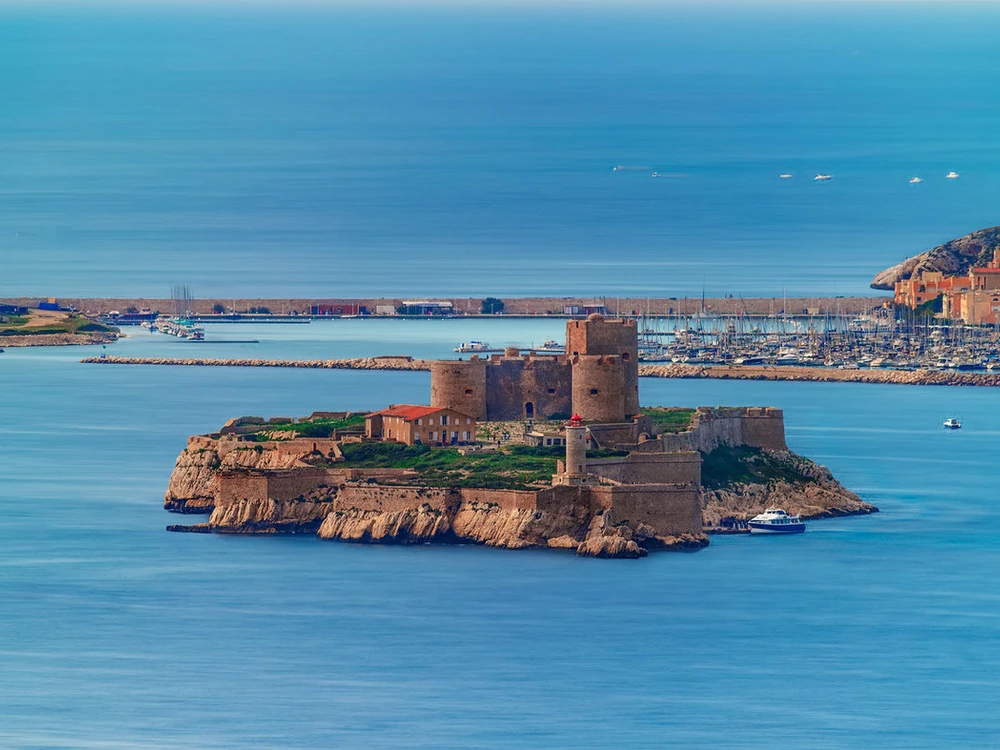
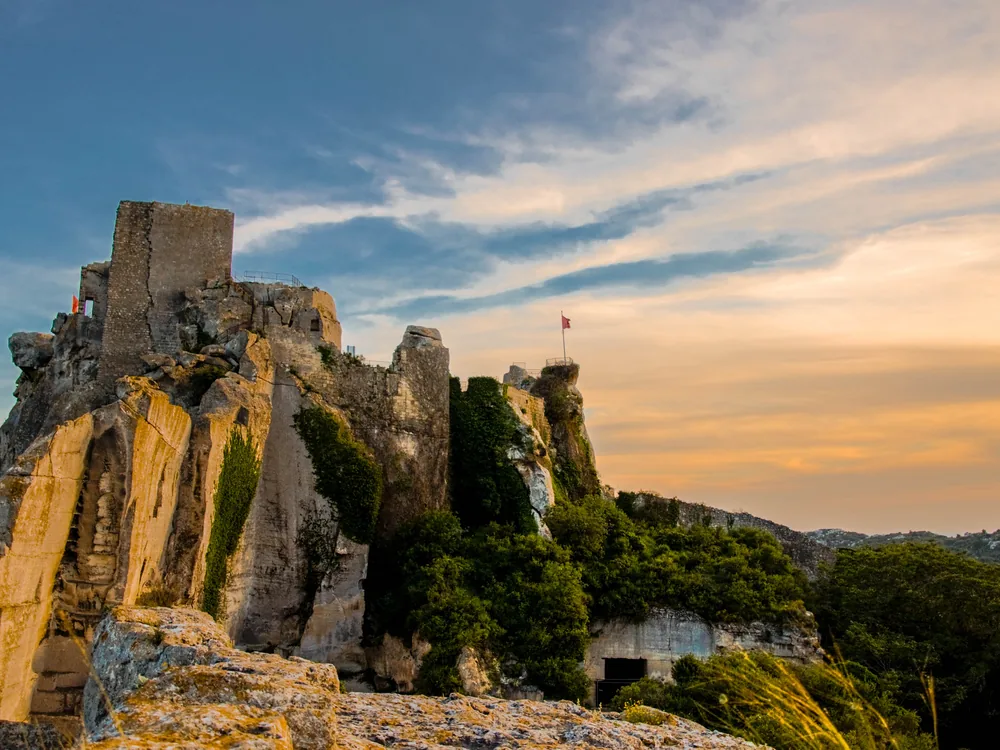
Combine with: Les Baux-de-Provence Castle is 30 km south in the Alpilles — dramatic medieval hilltop ruins that extend a Provence medieval day. Château d'If, the island fortress off Marseille (75 km southwest), is a strong thematic pairing on a wider Provence itinerary.
Frequently Asked Questions
The immediate trigger was the 1303 'Slap of Anagni' — when Philip IV of France arrested Pope Boniface VIII in a dispute over taxation of clergy, humiliating the papacy and contributing to Boniface's death. The subsequent French pope, Clement V, chose to remain in France amid Roman factional violence. Avignon, though technically in the Kingdom of Arles rather than France, was close enough to the French court to provide political protection. The papacy formally purchased Avignon in 1348 from Queen Joan I of Naples (who held feudal title) and it remained papal territory until 1791. The 70-year Avignon period was controversial: Petrarch called it a 'Babylonian Captivity'; defenders argued the popes were both physically safer and administratively more effective than in Rome.
Location
Place du Palais, 84000 Avignon, France
Nearby Castles
Tours & Tickets
Powered by GetYourGuide
From
€69/ person