
Old Fortress of Corfu
Παλαιό Φρούριο (Palaio Frourio)
Greece · Corfu Town, Ionian Islands · Near Corfu Town
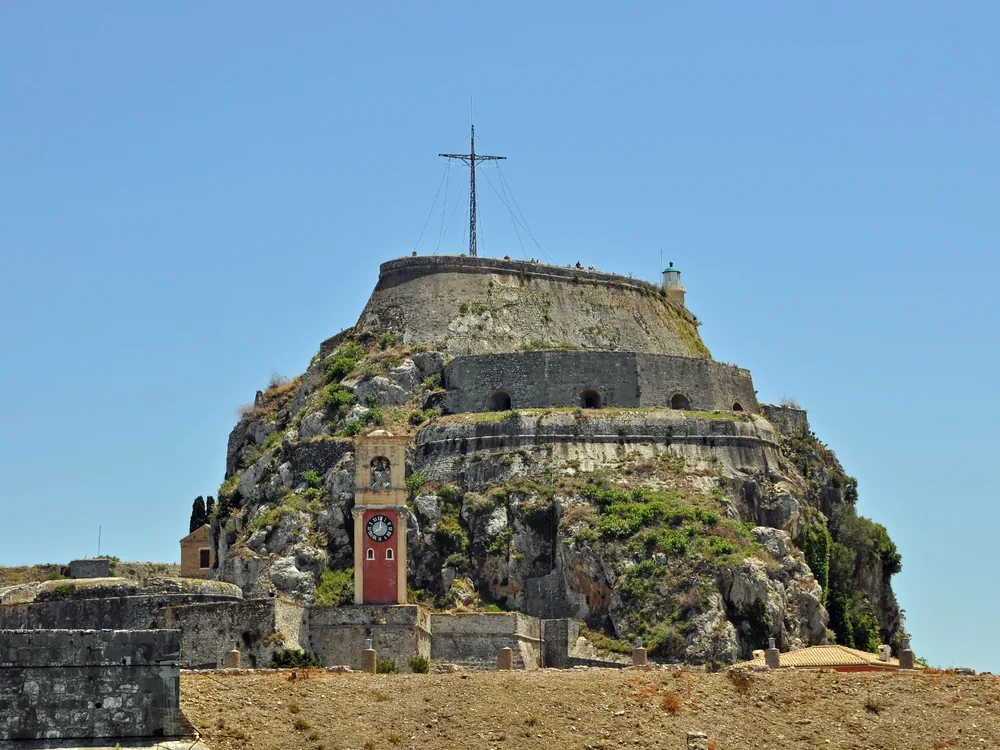
Venetian military fortification on a double-peaked rocky promontory — the primary surviving structure is Venetian Gothic-Renaissance military architecture (1386–1797): the inner sea gate, the Contrafossa channel (sea moat cut by Venetians to isolate the promontory), two main towers on the double summit (Castel a Terra, 40m, and Castel a Mar, 5.6m), and the full circuit of Venetian walls; the British Protectorate period (1814–1864) added the Church of St. George (Doric Greek Revival, 1840), barracks, and a lighthouse; Byzantine predecessor structures underlie the Venetian fabric from the 6th century AD
This page is part of an independent travel guide and is not affiliated with, endorsed by, or operated by Old Fortress of Corfu.
© Castles & Palaces
Quick Facts
- Hours
- Daily 08:00–20:00
- Guided tour from
- €75
- Duration
- 2–3 hours (full circuit of both peaks, Byzantine museum, and Venetian inner harbour area)
- Best time
- May to June and September to October
- Nearest city
- Corfu Town
Featured Tour
Old Fortress and Corfu Old Town: History and Culture Guided Tour
Cancellation available · Instant confirmation
Highlights
- ✦Venetian sea fortress on a double-peaked promontory — Corfu's most dramatic landmark, separating the Adriatic from the Ionian Sea at the entrance to the Adriatic, which Venice held for 411 years (1386–1797) and fortified as the key strategic hinge of its maritime empire
- ✦UNESCO World Heritage Site — part of 'Old Town of Corfu' (2007), recognising the exceptional Venetian urban planning and fortification ensemble that makes Corfu Town one of the best-preserved Venetian provincial capitals in the Mediterranean
- ✦The Contrafossa — the sea channel cut by Venetian engineers to separate the fortress promontory from the mainland, effectively making it an island within an island and the last line of defence if the outer town fell; still navigable by small boats
- ✦Byzantine museum — houses icons, liturgical objects, and artefacts from the Byzantine period; one of the most informative collections of Ionian Byzantine heritage on the islands, covering the 800 years of Orthodox Christian tradition that Venetian political control preserved rather than suppressed
- ✦Church of St. George (1840) — the most architecturally incongruous element of the fortress: a fully-formed Doric Greek Revival church designed by the British during their Protectorate period, standing against Venetian battlements in a visual collision that tells the fortress's full layered story
- ✦GetYourGuide guided tour — covers the Old Fortress and the Corfu Old Town together in 2.5 hours, providing the urban and historical context that makes the two sites legible in relation to each other
Skip the queue with a guided tour
Skip-the-line tickets & expert guides
The Old Fortress of Corfu — Palaio Frourio in Greek, Fortezza Vecchia to the Venetians who shaped its present form — stands on a rocky double-peaked promontory east of Corfu Town, separated from the mainland by a seawater channel (the Contrafossa) cut by Venetian engineers in the 16th century. It is simultaneously one of the most visually striking sites in the Ionian Islands — the twin summits rising directly from the sea, with towers, bastions, and the Church of St. George visible from the open water — and one of the most historically layered. Records mention a Byzantine kastro at this location from as early as the 6th century AD; what followed was Angevin, then Venetian, then French and British rule, and finally the Greek state from 1864: the Old Fortress compresses a millennium of Mediterranean military and political history into a single limestone promontory.
The Venetian period dominates the physical fabric of the fortress, and it defines Corfu's strategic significance. Venice acquired Corfu in 1386 — the Corfiots offered submission to avoid Genoese control — and immediately recognised the island's position: Corfu lies at the entrance to the Adriatic, the maritime highway that supplied Venice's commercial empire along both coasts of the Adriatic and into the Aegean. Whoever controls Corfu controls whether the Adriatic is open or closed to naval traffic, and for 411 years Venice dedicated substantial resources to ensuring the answer was Venice. The Venetians dredged the Contrafossa to make the eastern promontory effectively an island within an island — a citadel that could hold even if the outer town and walls fell — constructed the inner sea gate (the principal Venetian entrance, still the most atmospheric approach to the fortress), and erected the two main towers on the double summit: the Castel a Terra (land castle, approximately 40 metres above sea level) and the Castel a Mar (sea castle, approximately 5.6 metres above sea level).
The fortress was tested repeatedly, and the Venetian defences held. The Ottoman threat was constant: the Venetians and Ottomans fought continuously for control of the eastern Mediterranean through the 15th and 16th centuries. Corfu withstood Ottoman attacks in 1431 and 1571 — the same year the Ottomans destroyed Cyprus and were stopped at the Battle of Lepanto just off the Greek mainland. The most dramatic siege came in 1716, when a 33,000-strong Ottoman force landed on Corfu and laid siege to the fortress for six weeks. The Corfiots credit their miraculous deliverance to St. Spyridon, the island's patron saint, who appears in devotional paintings from the period holding a torch in the moment of the Turkish retreat. The historical record shows the Venetians called for reinforcements, a relief force arrived, and the Ottomans withdrew — but the Corfiots' interpretation of the events is preserved in the St. Spyridon Church in the old town and in the annual celebration of the island's four major festivals honouring the saint.
The British presence (1814–1864, the United States of the Ionian Islands under British protection) added the fortress's most architecturally incongruous element: the Church of St. George, built in 1840 in the Doric Greek Revival style that was fashionable in Britain for colonial public buildings during the Regency and early Victorian periods. It is a fully-formed classical temple, with columns, pediment, and portico, standing against Venetian battlements in a visual collision that is absurd in theory and oddly compelling in practice. The British also built barracks, stores, and a lighthouse on the outer promontory, converting a Venetian military citadel into a combination garrison town and strategic naval base for the Mediterranean Fleet.
The Ionian Islands were ceded to Greece under the Treaty of London in 1864. The fortress passed to the Greek military and has had periods of active military use and archaeological management; since the UNESCO inscription of Corfu Old Town in 2007, the Old Fortress has been managed primarily as a heritage site and tourist attraction, with the Byzantine museum as its principal indoor exhibit.
The UNESCO inscription itself covers the Old Town of Corfu as a whole — the Old Fortress, the New Fortress (on the western headland, Venetian construction of the 16th century, also visitable), and the Venetian-planned street network of the old town, with its distinctive arcaded streets (the Liston, modelled on the Rue de Rivoli in Paris, built during the French period 1807–1814), the British-era Esplanade, and the surviving Orthodox churches. The inscription recognises the ensemble as an exceptional Venetian urban planning achievement and an unusually complete example of a Venetian provincial capital preserved largely intact.
The GetYourGuide guided tour (2.5 hours) covers both the Old Fortress and the Corfu Old Town together, providing the connective tissue between the fortress and the city that makes both legible as parts of a single Venetian urban system. The English-speaking guide contextualises the Contrafossa, the siege history, the British architectural additions, and the relationship between the Orthodox religious culture and the Venetian political framework that preserved it. Basic independent entry to the fortress costs €6.
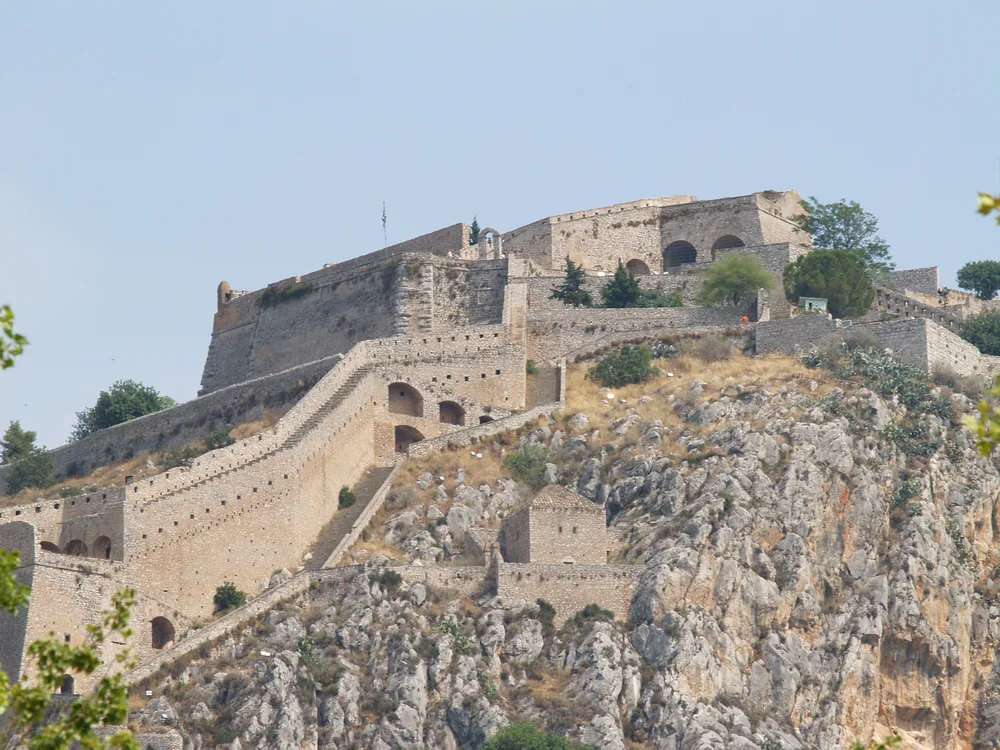
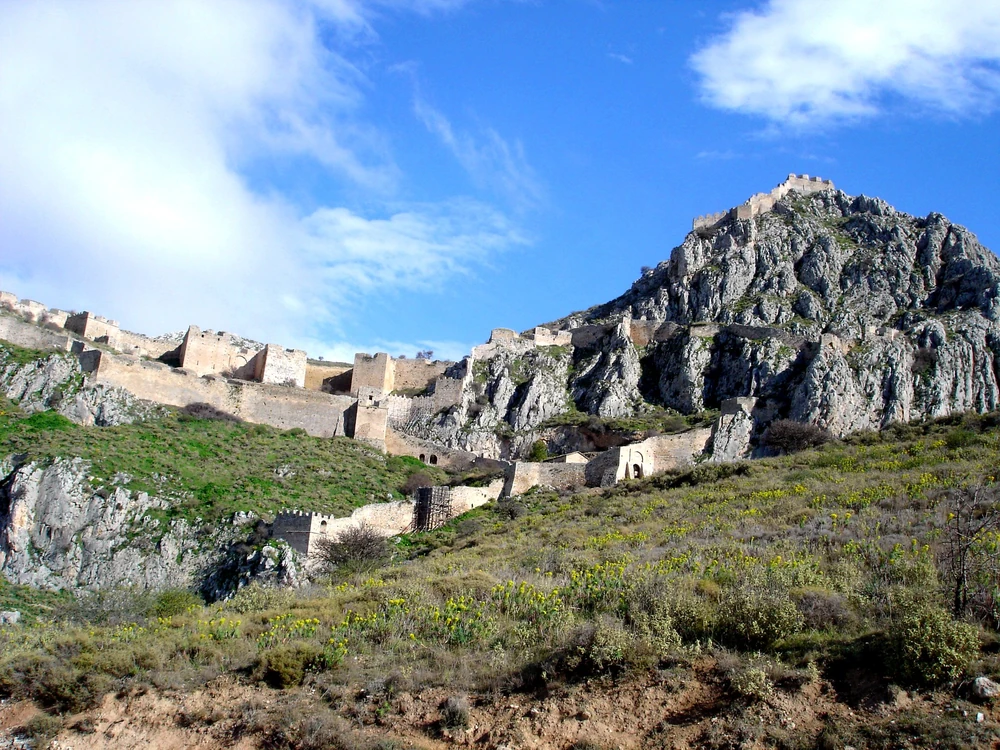
For more fortresses in Greece, [Palamidi Fortress](/castles/greece/palamidi-fortress) (Nafplio, Peloponnese — a Venetian fortress of the same period, with a similar 1716 construction date) and [Acrocorinth](/castles/greece/acrocorinth) (ancient citadel above Corinth, with medieval Frankish and Ottoman layers) are strong comparisons from the mainland — a ferry and a long drive from Corfu, not geographically nearby, but the most useful same-country comparators for a Venetian-period fortress visitor.
History
Byzantine kastro documented from 6th century AD. Byzantine, then Norman-Sicilian and Angevin control through the medieval period. Venice acquires Corfu 1386 (Corfiots offer submission to avoid Genoese alternative). Systematic Venetian fortification programme through the 15th–16th centuries. Contrafossa (sea channel) cut to isolate the promontory. Ottoman sieges repulsed 1431, 1571. Decisive Ottoman siege repulsed 1716 (attributed to St. Spyridon by Corfiots). Venetian Republic dissolved by Napoleon 1797; French control 1797–1799 and 1807–1814. United States of the Ionian Islands (British Protectorate) 1814–1864: Church of St. George built 1840. Ceded to Greece 1864. Old Town of Corfu UNESCO World Heritage Site inscription 2007.
How to Visit
Getting there: The Old Fortress is at the eastern end of Corfu Town, approximately 500 metres from the Liston arcade — an easy walk from the town centre. Corfu Town is served by Corfu Airport (Ioannis Kapodistrias, 2 km south of town) with direct summer flights from most European capitals. Ferry connections from Igoumenitsa (45 minutes) and Patra (approximately 7 hours). The fortress entrance is at the end of the Esplanade.
Tickets: Walk-up entry costs €6 (children free); the Byzantine museum inside is included, no booking required. The GetYourGuide guided tour covers the Old Fortress and the Corfu Old Town together in 2.5 hours with an English-speaking guide — recommended for first-time visitors to understand how fortress and town function as a single Venetian urban system.
Practical tips: Morning visits are recommended in summer to avoid peak heat. The full circuit of both peaks takes 2–3 hours at a comfortable pace; the fortress is occasionally closed for restoration or special events, so confirm with the Corfu town tourist office before visiting.
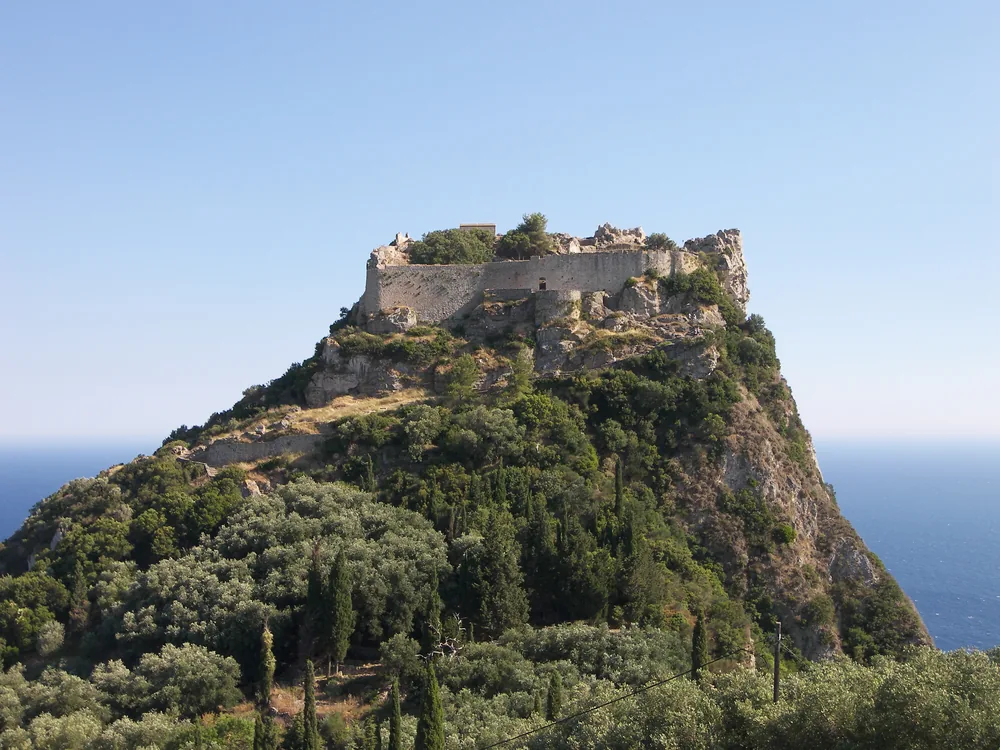
Combine with: Palamidi Fortress, Acrocorinth, or Angelokastro Castle for more of Greece's Venetian and medieval fortress circuit.
Frequently Asked Questions
The Contrafossa is the sea channel cut by Venetian engineers to separate the fortress promontory from the mainland, converting it from a headland into a genuine island. Cutting the channel meant that an attacker who breached the outer walls of Corfu Town would still face a sea crossing before reaching the fortress — effectively creating a second line of defence that could hold even if the outer town fell. The channel is still water-filled and navigable by small boats; it is one of the most visible pieces of Venetian military engineering on the island.
Location
Palaio Frourio, Corfu Town 491 00, Greece
Nearby Castles
Tours & Tickets
Powered by GetYourGuide
From
€75/ person