White Tower of Thessaloniki
Λευκός Πύργος (Lefkós Pýrgos)
Greece · Central Macedonia — Thessaloniki, waterfront promenade (Leoforos Nikis) · Near Thessaloniki
Built 1430 · Ottoman-era cylindrical fortified tower, c. 1430–1460s, possibly incorporating elements of earlier Byzantine fortifications — the White Tower (Lefkós Pýrgos) is a cylindrical fortified tower approximately 33 metres high with a base diameter of approximately 22.7 metres, constructed in five internally connected floors and a rooftop parapet; the tower is built in the characteristic Ottoman masonry technique of alternating courses of stone and brick; it formed part of the eastern end of the Byzantine and Ottoman city walls that followed the Thermaic Gulf shoreline from the western harbour to the eastern edge of the city; the tower stood at the point where the sea wall met the eastern land wall circuit; subsequent alterations by Ottoman and later authorities modified internal fittings and access arrangements but did not significantly change the cylindrical exterior form; today the tower presents the form given to it by the Ottoman fortification builders of the 15th century, with the rooftop parapet and battlements added or modified in later periods; the interior houses a museum of Byzantine and Ottoman Thessaloniki installed on the tower's six floors
This page is part of an independent travel guide and is not affiliated with, endorsed by, or operated by White Tower of Thessaloniki.

© Castles & Palaces
Quick Facts
- Hours
- Mon 13:00–20:00. Tue–Sun 08:30–15:30
- Guided tour from
- €49
- Duration
- 1–2 hours (six-floor interior museum, rooftop terrace with panoramic views over the Thermaic Gulf, and the waterfront promenade surrounding the tower)
- Best time
- April
- Nearest city
- Thessaloniki
Featured Tour
Thessaloniki: White Tower Untold Stories & Waterfront Walk
Cancellation available · Instant confirmation
Highlights
- ✦The 'Tower of Blood' — the 1826 Janissary massacre and the source of the tower's grim name — the White Tower's most famous historical episode dates to 1826, two centuries after its construction: in that year, Sultan Mahmud II ordered the destruction of the Janissary corps — the Ottoman military elite that had held political power for generations and had become a challenge to the Sultan's authority; in Thessaloniki, the Janissaries imprisoned in the tower were massacred; the event gave the tower its Ottoman-era nickname, Kanlı Kule — the 'Tower of Blood' — a name that reflected both the specific massacre and the tower's general function as a place of imprisonment and execution during the preceding centuries; the massacre of the Janissaries in Thessaloniki was part of the broader 'Auspicious Incident' of 1826, in which Mahmud II dissolved the Janissary corps across the empire and replaced it with a modernised European-style army; Thessaloniki's connection to this empire-wide political earthquake was its own Tower of Blood
- ✦The whitewashing and rebirth as city symbol — the 1890 rebranding — the transformation of the Tower of Blood into the White Tower happened in the late 19th century; the most commonly cited story involves a Greek prisoner granted his freedom in exchange for whitewashing the exterior of the tower, removing the visual associations of blood and imprisonment from what Ottoman authorities wished to present as a reformed, modernised symbol; the whitewashing gave the tower its current name (Beyaz Kule in Turkish, Lefkós Pýrgos in Greek) and fundamentally changed its cultural meaning; from a place of imprisonment and massacre, it became an emblem of civic renewal; the transformation was completed symbolically in 1913, when Thessaloniki passed from Ottoman to Greek sovereignty after the First Balkan War and the tower became the emblem of a Greek city rather than an Ottoman fortification
- ✦The museum and the six-floor experience — Byzantine and Ottoman Thessaloniki in a single tower — the interior of the White Tower today houses a museum on the history of Thessaloniki from its Byzantine period through the Ottoman era and into the modern Greek city; the six floors address successive historical periods, with artefacts, maps, and interpretive material on each level; the approach — ascending through history as you ascend through the tower — is architecturally appropriate for a building that was itself produced by the transition from Byzantine to Ottoman rule; the rooftop terrace, accessible from the sixth floor, gives a 360-degree panorama over the Thermaic Gulf, the Macedonian hinterland, and the city's waterfront — a view that explains in immediate geographic terms why Thessaloniki was important enough to fortify so elaborately for so many centuries
- ✦The waterfront promenade and Alexander the Great — the tower in its urban setting — the White Tower stands at the heart of Thessaloniki's modern waterfront promenade, the Leoforos Nikis, a broad esplanade along the Thermaic Gulf that is the city's primary public space for walking, socialising, and looking out to sea; to the west of the tower, the equestrian statue of Alexander the Great (erected 1974) faces the gulf on his horse Bucephalus, asserting the city's identification with Macedonia's most famous son; to the east, the promenade extends toward the White Tower's companion monuments on the seafront; the tower occupies the centre of this composition — the historical monument around which modern Thessaloniki organises its waterfront identity — and any approach to the city from the sea or the airport road gives the tower as the first architectural landmark
Skip the queue with a guided tour
Skip-the-line tickets & expert guides
There is no arriving in Thessaloniki without seeing the White Tower. It stands on the waterfront promenade where the Leoforos Nikis meets the Thermaic Gulf, a cylindrical Ottoman tower approximately 33 metres high with a base of pale stone that catches the light differently at different hours — golden in the afternoon, almost phosphorescent in the evening when the waterfront crowd gathers below it. It is the symbol of Thessaloniki in the way that the Eiffel Tower is the symbol of Paris or the Duomo is the symbol of Florence: not necessarily the most architecturally complex monument in the city, but the one that the city has chosen to represent itself.
The tower was built in the 15th century, during the Ottoman occupation of Thessaloniki that began in 1430. It formed part of the eastern end of the Byzantine and Ottoman city walls — the point where the sea wall following the Thermaic Gulf shoreline connected with the eastern land wall — and served the dual function of maritime defence and inland gate control. The tower's cylindrical form, its alternating courses of stone and brick, and its five internally connected floors and battlemented top are characteristic of Ottoman fortification architecture of this period. It was functional rather than ceremonial, a military asset rather than a representation of imperial power.
For the next four centuries, the tower served variously as a fortification, a prison, and a place of execution. It earned its darkest association in 1826, when Sultan Mahmud II ordered the dissolution of the Janissary corps — the Ottoman military elite that had become a threat to central authority. In Thessaloniki, the Janissaries held in the tower were massacred as part of the empire-wide destruction of the corps known in Ottoman history as the 'Auspicious Incident.' The tower became Kanlı Kule — the Tower of Blood — in popular memory, a name that acknowledged both the specific massacre and the cumulative weight of the tower's function as a place of imprisonment and execution.
The transformation into the White Tower happened in the late 19th century. The most widely circulated story — romantic, probably apocryphal, and deeply embedded in local culture — holds that a Greek prisoner was given his freedom in exchange for whitewashing the tower's exterior, stripping the associations of blood and imprisonment from a building that the Ottoman authorities wished to reframe as a symbol of renewal. Whether or not the story is accurate, the whitewashing happened, the name changed, and the tower began its passage from instrument of oppression to civic emblem.
In 1913, Thessaloniki passed from Ottoman to Greek sovereignty after the First Balkan War. The White Tower — now genuinely white, now genuinely named — became the symbol of a Greek city and has remained so. The 20th century brought a museum installation to the interior: the six floors of Byzantine and Ottoman history that visitors move through today, ascending through the city's successive layers of identity as they ascend the tower's internal stairs (or elevator). The rooftop view — across the Thermaic Gulf to the Pierian Mountains, over the Macedonian plain behind the city — explains in immediate geographic terms why Thessaloniki was worth fighting over, fortifying, and occupying for two millennia.
The GYG White Tower walking tour (t1247315, from €49, 1.5 hours, max 20 people) covers the history of the tower and the surrounding waterfront, including the interior museum visit and the 'untold stories' of the tower's historical episodes. Museum admission is explicitly included in the GYG price — the state museum fee is covered. The tour has 1 review; per REGLA #3, rating is not displayed.
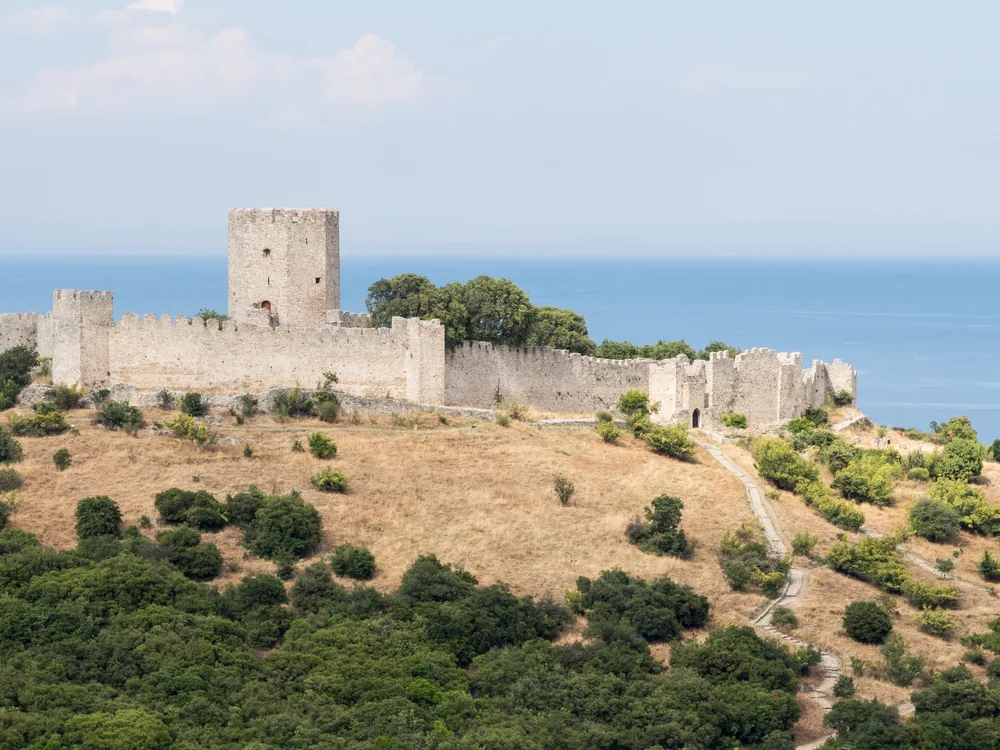
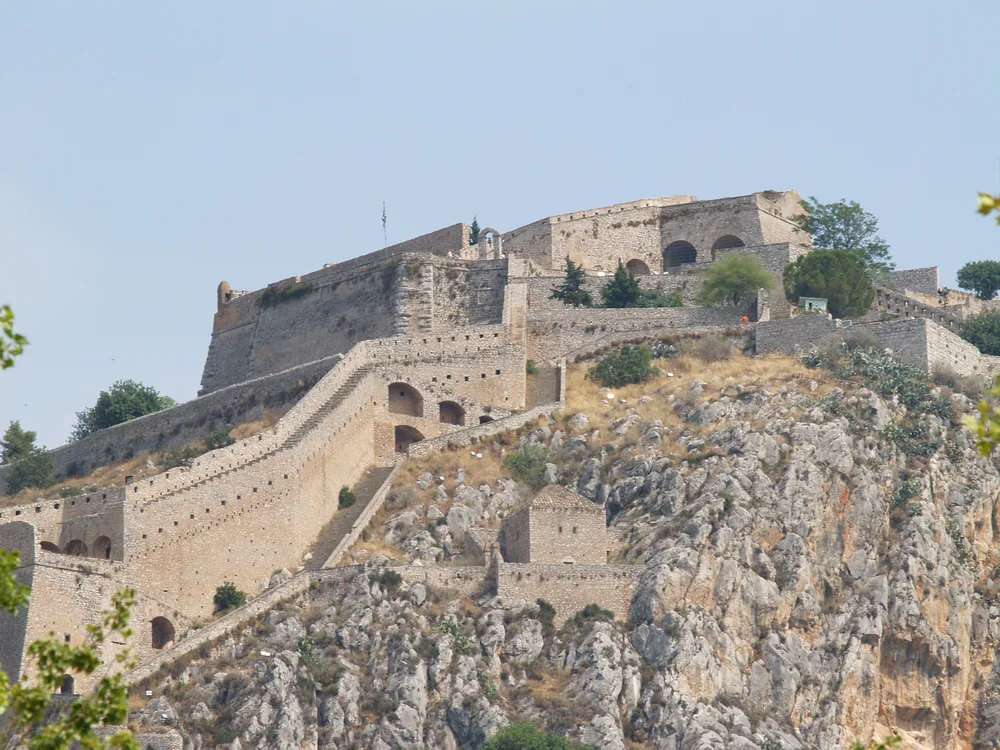
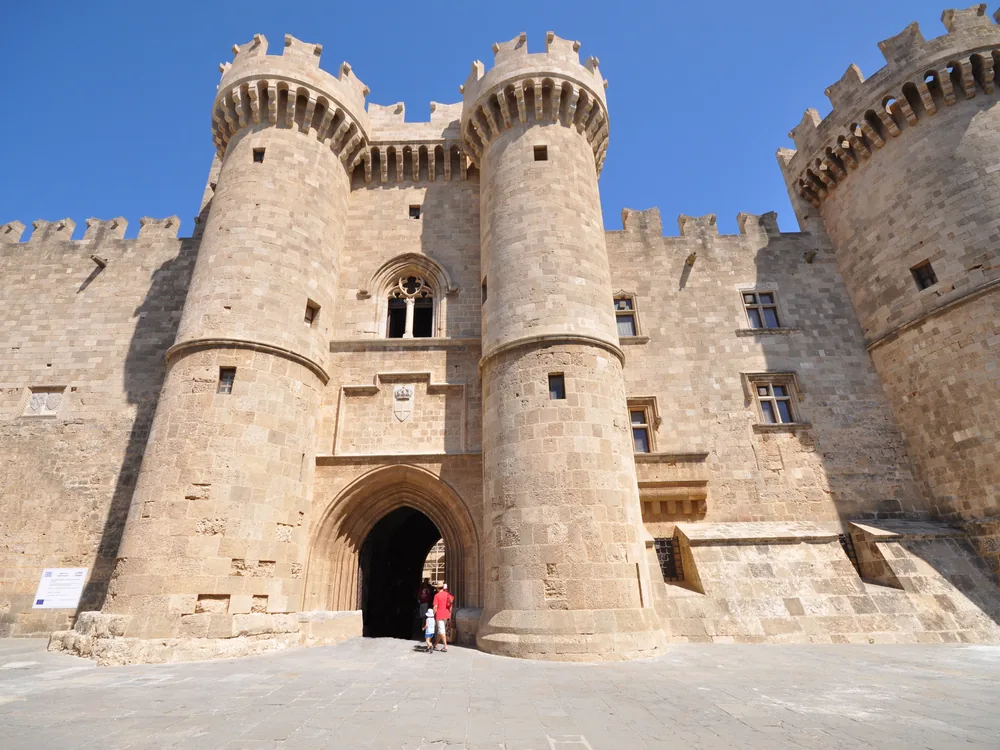
[Platamon Castle](/castles/greece/platamon-castle) — the medieval Crusader fortress 80km southwest of Thessaloniki at the pass where the Olympus massif meets the sea — is the nearest castle comparison for visitors on the road between Thessaloniki and Athens. [Palamidi Fortress](/castles/greece/palamidi-fortress) in Nafplio and the [Palace of the Grand Master](/castles/greece/palace-of-the-grand-master) in Rhodes extend the Greek castle circuit further south.
History
Thessaloniki was already an ancient city when the Romans conquered Macedonia in 168 BCE and made it the provincial capital. Through the Byzantine centuries — roughly the 4th to the early 15th century — it was one of the most important cities in the Eastern Roman Empire, and its sea walls along the Thermaic Gulf were maintained as a primary defensive line. Ottoman forces under Sultan Murad II conquered Thessaloniki in 1430 and immediately began an intensive fortification programme; the White Tower was constructed at the eastern end of the sea wall sometime between the 1430s and the 1460s as a garrison post, prison, and place of execution.
The tower's darkest association came in 1826, when Sultan Mahmud II's dissolution of the Janissary corps — the 'Auspicious Incident' — led to the massacre of Janissaries imprisoned inside the tower. The building was known for decades afterward as Kanlı Kule, the Tower of Blood. Around 1890 the tower was whitewashed and renamed — the White Tower in both Turkish (Beyaz Kule) and Greek (Lefkós Pýrgos) — in a deliberate act of symbolic renewal that severed the building's visual association with its bloodier past. The renaming stuck.
The First Balkan War of 1913 incorporated Thessaloniki into Greece, and the tower was gradually recast as the symbol of the Greek city it had dominated for four and a half centuries. The 20th century brought restoration and a museum of Byzantine and Ottoman Thessaloniki across the six floors. It is now managed as part of the Byzantine Culture Museum network.
How to Visit
Getting there: The White Tower stands on the waterfront promenade (Leoforos Nikis), a 20-minute walk from Thessaloniki's main train station or a 5-minute taxi from the city centre. Thessaloniki Airport (SKG, 16 km east) has direct connections throughout Europe; no dedicated parking at the tower — approach on foot or by taxi.
Tickets: Museum entry costs €6 (children and EU students free). The GYG guided tour (t1247315, from €49, no ratings yet) covers the tower's history — including the Janissary massacre and the whitewashing — with museum admission explicitly included; small group (max 20 people), 1.5 hours.
Practical tips: The tower has an elevator, making the six-floor museum largely accessible to visitors with mobility limitations. Open Tue–Sun 08:30–15:30 and Mon 13:00–20:00; confirm hours before visiting as they vary by season. The Rotunda of Galerius, the Arch of Galerius, and the Atatürk Museum are all within easy walking distance on the same waterfront circuit.
Combine with: [Platamon Castle](/castles/greece/platamon-castle) 80 km south at the foot of Mount Olympus, or [Palamidi Fortress](/castles/greece/palamidi-fortress) for a broader Greek fortifications itinerary.
Frequently Asked Questions
The Tower of Blood (Kanlı Kule in Turkish) was the tower's name during the Ottoman period, reflecting both its general function as a place of imprisonment and execution over several centuries and one specific event: in 1826, Sultan Mahmud II ordered the dissolution of the Janissary corps — the Ottoman military elite — across the empire, in what Ottoman history calls the 'Auspicious Incident.' In Thessaloniki, the Janissaries imprisoned in the tower were massacred. The massacre gave the tower its grimly specific nickname. Later in the 19th century, the tower was whitewashed — possibly by a Greek prisoner granted freedom in exchange for the work — and renamed the White Tower, symbolically removing the associations of blood and imprisonment. The name 'Tower of Blood' survives in historical accounts and tourism literature as an acknowledgement of the tower's history before its civic reinvention.
Location
Lefkos Pyrgos, Leoforos Nikis, Thessaloniki 546 21, Greece
Nearby Castles
Tours & Tickets
Powered by GetYourGuide
From
€49/ person