Hollókő Castle
Hollókői vár
Hungary · Nógrád County, Northern Hungary · Near Hollókő, Nógrád County
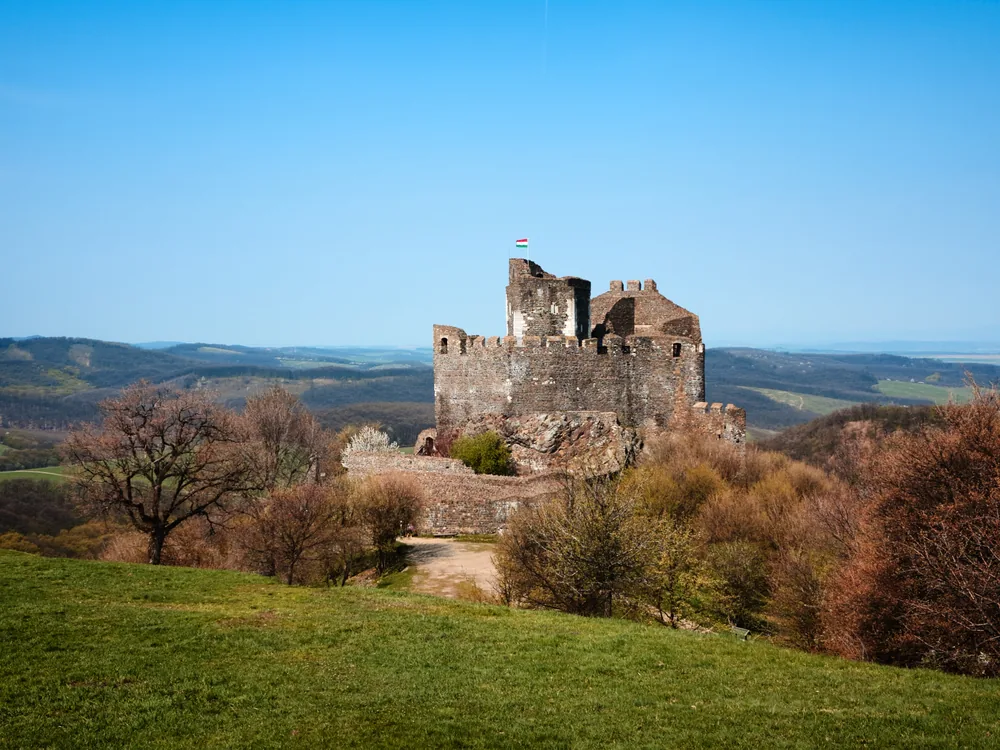
Built 1310 · 13th–14th-century hilltop castle ruins in the Cserhát hills of Northern Hungary, built originally in the post-Mongol invasion period (after 1241–42) and damaged and rebuilt multiple times during the medieval and early Ottoman period; the castle sits on a volcanic basalt ridge above the village of Hollókő, whose traditional Palóc ethnic-minority wooden-porched houses form the UNESCO World Heritage village designation (inscribed 1987, one of the first rural settlements worldwide to receive the honour); the castle ruins provide panoramic views over the preserved village and surrounding forested hills; the GetYourGuide tour is a private, premium-priced multi-site day trip from Budapest
This page is part of an independent travel guide and is not affiliated with, endorsed by, or operated by Hollókő Castle.
© Castles & Palaces
Quick Facts
- Hours
- Tue–Fri 10:00–17:00. Sat & Sun 09:00–17:00. Closed Mon
- Day trip from
- €545
- Duration
- 1 hour at the castle (part of a 9-hour private tour); 2–3 hours for the village independently
- Best time
- April to October
- Booking
- Required — book 3+ days ahead
- Nearest city
- Hollókő, Nógrád County
Featured Tour
A Timeless Experience — Private Day Trip from Budapest (Hollókő, Kékestető, Eger)
Cancellation available · Instant confirmation
Highlights
- ✦IMPORTANT: The GetYourGuide tour is an expensive private multi-site day trip for up to 3 people where Hollókő gets only 1 hour among four or more stops including Kékestető (Hungary's highest point), Eger Castle, and optional wine tasting; it is not a dedicated budget Hollókő ticket — independent visitors can reach the village and castle by public bus from Budapest for a fraction of the cost
- ✦Hollókő village is a UNESCO World Heritage Site (inscribed 1987), one of the first rural settlements worldwide to receive the designation — its traditional Palóc wooden-porched houses, embroidered folk costumes, and living ethnic-minority culture are the primary draw; the castle on the hill above is the scenic complement
- ✦The Palóc are a Hungarian ethnic subgroup of the northern highlands, distinct from the lowland Hungarian majority in dialect, folk costume, and rural architecture; Hollókő is the best-preserved Palóc village in Hungary and one of the few places where traditional folk dress is still worn regularly, particularly during the Easter festival
- ✦The castle was built in the post-Mongol invasion era — King Béla IV's nationwide stone-fortress building programme after the catastrophic 1241–42 Mongol invasion, which destroyed perhaps half of Hungary's population, led to a generation of castle construction across the northern highlands; Hollókő is one of many hilltop fortifications of this period
- ✦Eger Castle (hungary/eger-castle) is a stop on the same GetYourGuide tour — famous for the 1552 siege where Hungarian defenders under István Dobó held off a much larger Ottoman force in one of the defining moments of Hungarian national mythology
Skip the queue with a guided tour
Skip-the-line tickets & expert guides
Hollókő means Raven Rock in Hungarian. Local legend explains the name with a story about a devil building the castle to rescue a captured girl, carrying stones in the form of a raven — folklore that tells you something about both the castle's dramatic hilltop position and the region's tendency to explain its landscape through story. The castle sits on a volcanic basalt ridge above the village of Hollókő in the Cserhát hills of Northern Hungary, and the view from its walls down over the UNESCO-designated village of wooden-porched Palóc houses is one of the more unexpectedly affecting prospects in the Hungarian countryside.
Before the booking details: the GetYourGuide tour is an expensive private multi-site day trip designed for up to three people, where Hollókő receives approximately one hour among four or more stops — Kékestető (Hungary's highest point, 1,014 metres), the castle, Eger Castle, and an optional wine tasting. At €514 for three people, this works out to approximately €171 per person, which is a significant outlay for a one-hour castle visit. Visitors interested specifically in Hollókő should know that independent access is feasible and affordable — Volánbusz operates public bus service from Budapest's Stadionok bus terminal to Hollókő (approximately 1.5–2 hours, with connections), and the village entry and castle admission cost a small fraction of the tour price. The GetYourGuide tour suits visitors who want a private, guided, multi-site Northern Hungary day with transport arranged; it is not the only or cheapest way to reach the village and castle.
The UNESCO designation is Hollókő's primary claim on international attention, and it is for the village rather than the castle. Inscribed in 1987 as one of the first rural settlements in the world to receive World Heritage recognition, Hollókő was selected because its traditional Palóc architectural heritage had survived more or less intact — wooden-porched houses with whitewashed walls and distinctive decorative elements, arranged along a single main street in a pattern that reflects the pre-industrial rural building tradition of the northern Hungarian highlands. The Palóc are a Hungarian ethnic subgroup of the Cserhát and Mátra hills region, distinguished from the lowland Hungarian majority by dialect, folk costume (the intricately embroidered clothing worn for festivals), and a rural architectural tradition that elsewhere in Hungary has been largely replaced by concrete-block construction. Hollókő is the most accessible and best-preserved example of this tradition still inhabited.
The Easter festival is the peak event. Each year, the Hollókő Easter Celebration draws visitors from across Hungary and from abroad for a weekend of folk music, traditional crafts, embroidered-costume competitions, and the spectacle of a living village dressed in its historic best. Village women in full Palóc folk dress, the Easter egg decorating and water-sprinkling customs (boys traditionally sprinkle or pour water on girls as a spring fertility ritual), and the general activation of the village's folk culture make the Easter weekend significantly different from an ordinary visit. The castle on the hill above provides a viewpoint over the costumed village below that is one of the more visually complete expressions of Hungarian folk heritage available anywhere.
The castle itself dates from the post-Mongol invasion building programme. The Mongols invaded Hungary in the winter of 1241–42, crossing the frozen Danube and moving through the country with a speed and destructiveness that killed perhaps a third to half of Hungary's population. When the Mongols withdrew after the death of the Great Khan Ögedei, King Béla IV was left with a kingdom that had been catastrophically devastated and an army that had proved incapable of stopping the invasion. His response was a nationwide programme of stone castle construction — replacing the wooden and earthwork defences that had proved ineffective — on hilltop positions across Hungary that could resist cavalry-based attack. Hollókő Castle is one of many fortifications built or established in the decades following 1242 as part of this programme.
The castle was damaged and rebuilt across the medieval and early Ottoman period, changing hands between Hungarian noble families and, after the Ottoman expansion into Hungary in the 16th century, functioning on the frontier zone between Ottoman-controlled and Habsburg-controlled territory. What survives today is primarily the 14th-century structure, partially restored for visitor access; the walls, towers, and gate are in varying states of preservation, and the views from the summit over the forested Cserhát hills and the UNESCO village below are the principal reward of the climb.
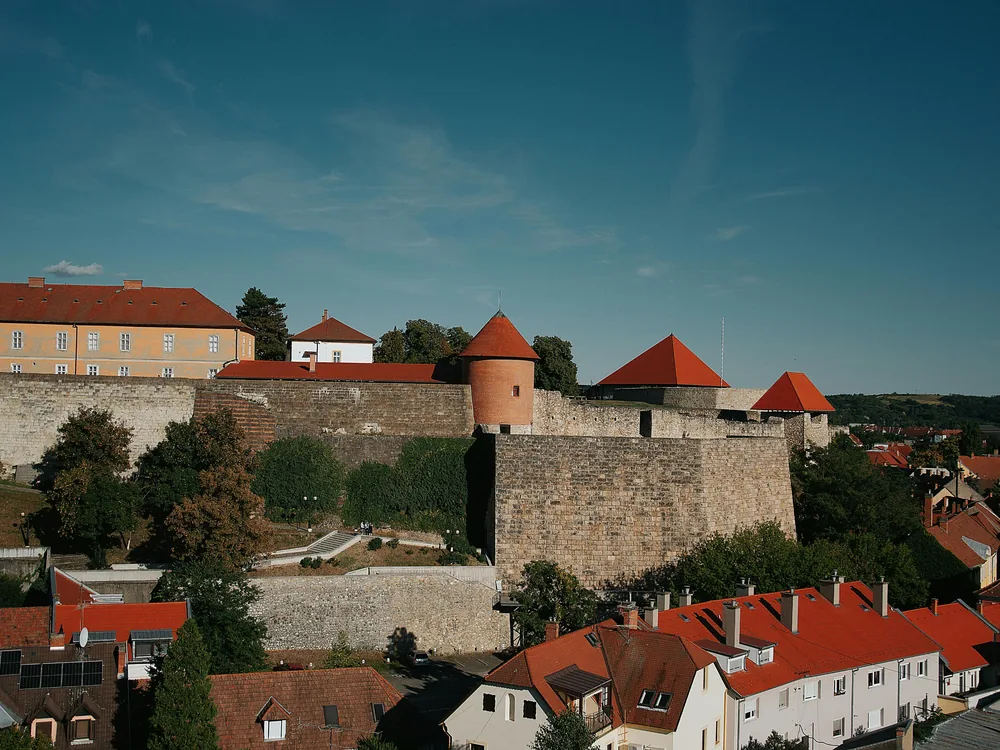
Eger Castle, already on this site (hungary/eger-castle), is a stop on the same GetYourGuide tour and roughly 60 kilometres east of Hollókő. Eger is famous primarily for the 1552 siege in which the Hungarian garrison under István Dobó held the castle against an Ottoman army considerably larger than the defending force — an event that entered Hungarian national mythology as an example of resistance against overwhelming odds and that dominates the castle's presentation and museum content. The Eger and Hollókő combination gives Northern Hungary's two most visited heritage sites in a single day, though the private-tour format at €514 for up to three people makes the calculation different from two separate low-cost visits.
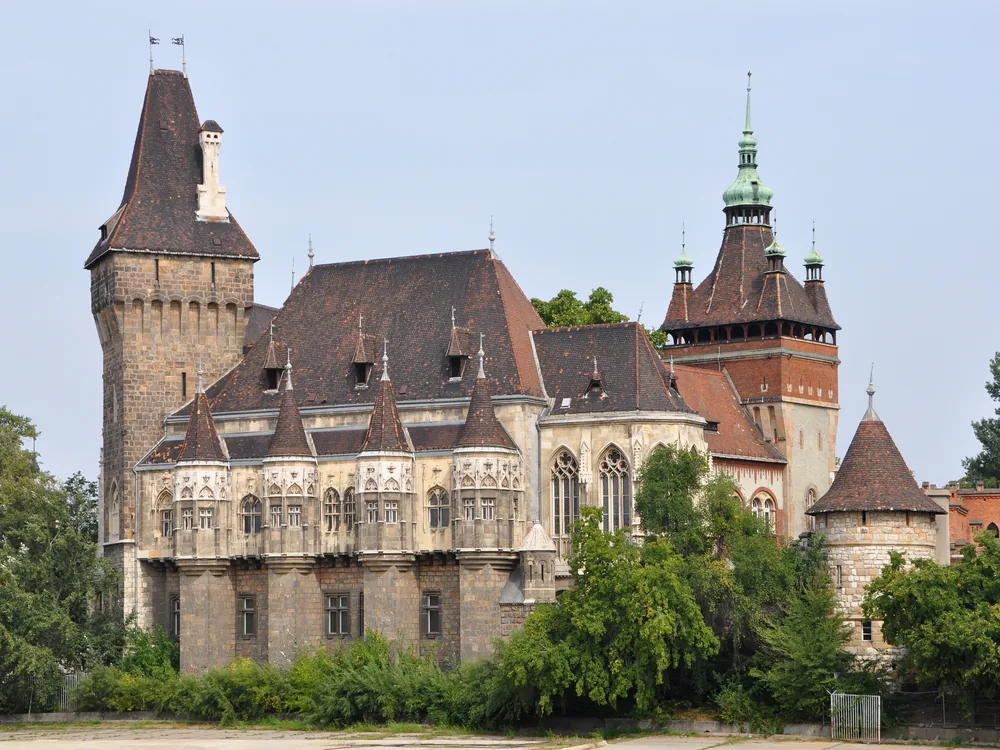
Vajdahunyad Castle (hungary/vajdahunyad-castle), Budapest's fantastical neo-historical castle in City Park, is the third castle linked by the GetYourGuide tour and already on this site — a 19th-century architectural eclectic monument that deliberately references multiple Hungarian castle styles including the actual Vajdahunyad Castle in Transylvania. It provides an interesting architectural counterpoint to the genuine medieval remains at Hollókő and Eger.
History
Hollókő Castle was established on its volcanic basalt ridge in the post-Mongol invasion period, following King Béla IV's nationwide stone-castle building programme after the catastrophic 1241–42 invasion. The 13th–14th-century structure changed hands between Hungarian noble families through the medieval period and functioned on the Ottoman-Habsburg frontier zone in the 16th century. The village of Hollókő below was inscribed as a UNESCO World Heritage Site in 1987 — one of the first rural settlements worldwide to receive the designation — for its intact Palóc ethnic-minority architectural heritage. Castle ruins are open to visitors; the village is a living community.
How to Visit
Getting there: By public bus: Volánbusz from Budapest Stadionok terminal to Hollókő (approximately 1.5–2 hours with connections; check current timetables at menetrendek.hu). By car: approximately 100 km north of Budapest via the M3 motorway then east on local roads.
Tickets: The village is free to enter; the castle has a modest walk-up admission fee. The GetYourGuide day trip (no ratings yet) is a private 9-hour excursion from Budapest covering Hollókő, Kékestető, and Eger Castle — Hollókő gets a 1-hour stop. Arriving independently by public bus gives far more time in the village.
Practical tips: The Easter Festival is the peak event — Palóc folk dress, traditional customs, and the full village culture on display each spring. The castle ruins provide the best viewpoint over the UNESCO village; the climb from the village takes about 15–20 minutes on uneven terrain.
Combine with: Eger Castle 60 km east — famous for the 1552 siege of Hungarian defenders against Ottoman forces, and covered by the same GetYourGuide day trip.
Frequently Asked Questions
Not necessarily for budget-conscious visitors. The GetYourGuide tour (from €514 for up to 3 people) is a private, premium multi-site day trip where Hollókő gets only 1 hour among 4+ stops. Public bus from Budapest to Hollókő is significantly cheaper and gives more time in the village. The GetYourGuide tour is best suited to visitors who want private transport, a guided day across multiple Northern Hungary sites, and the convenience of a single booking.
Location
Hollókői vár, 3176 Hollókő, Hungary
Nearby Castles
Tours & Tickets
Powered by GetYourGuide
From
€545/ group