
Barmeath Castle
Caisleán Bharr Méith
Ireland · Dunleer, County Louth · Near Drogheda
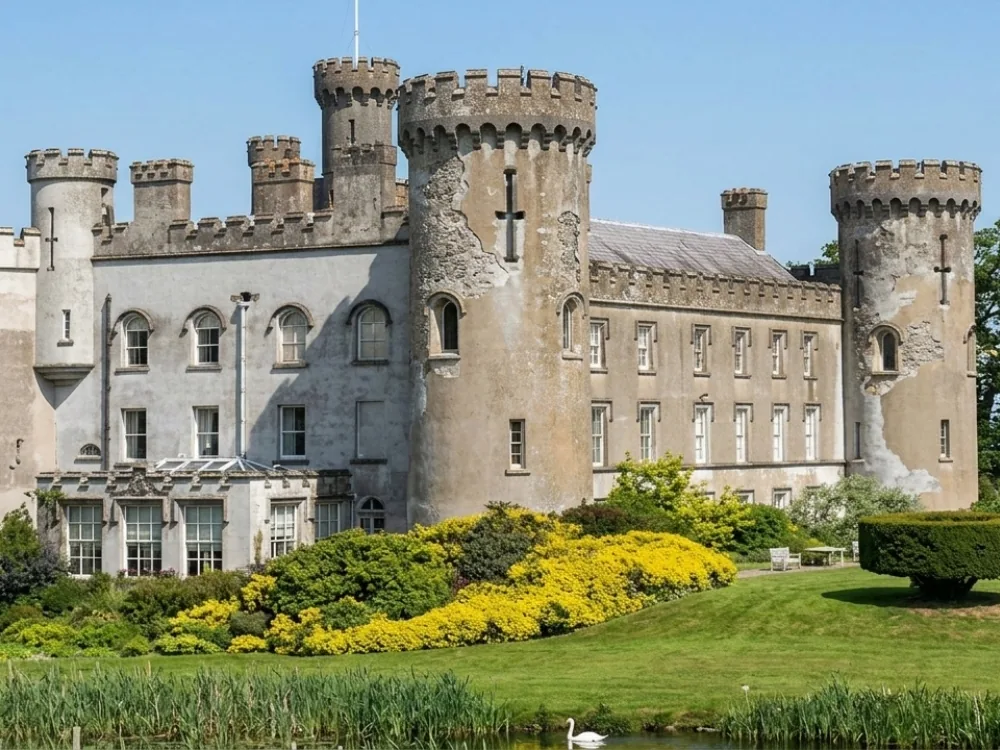
Built 1770 · Late-15th-century tower house core, built over by a 1770 castle for the Bellew family and further enlarged and castellated in 1839; gardens and lake designed by Thomas Wright, 'the Wizard of Durham'
This page is part of an independent travel guide and is not affiliated with, endorsed by, or operated by Barmeath Castle.
© Castles & Palaces
Quick Facts
- Rooms from
- €150 / night
- Duration
- Overnight stay only — no day-visit access
- Best time
- Year-round
- Nearest city
- Drogheda
Stay Here
Barmeath Castle Guest House
Booked via Booking.com · Free cancellation on most rates
Open to day visitors without booking a room — see How to Visit below.
Highlights
- ✦The building's core is a late-15th-century tower house, built by the Moore family, the land's earlier owners
- ✦The Bellew family received the estate (1,081 acres, including Barmeath) in 1669–71 as war compensation to Viscount Corren; the Bellew baronetcy of Barmeath was created in 1688 for Patrick Bellew, a Jacobite supporter of James II
- ✦The castle visible today was built over the 15th-century tower in 1770 by Patrick Bellew, 5th Baronet, and enlarged and castellated in 1839 by Sir Patrick Bellew, 7th Baronet (later 1st Baron Bellew)
- ✦The lake and gardens were designed by Thomas Wright, known as 'the Wizard of Durham,' a celebrated 18th-century landscape designer and astronomer
- ✦Still a family-run guest house, remaining in the ownership of the Bellew family today
Stay in the castle itself
Book a room via Booking.com
Barmeath Castle stands near Dunleer in County Louth, and its architectural core reaches back to the late 15th century, when the Moore family, the land's earlier owners, built a tower house on the site — a fortified residential structure typical of the smaller Anglo-Norman and Gaelic gentry landholdings scattered across the Irish countryside during this period. That original tower house survives today as the physical core around which the later, considerably grander castle was subsequently built.
The estate's connection to the family who would define its identity for the following three and a half centuries began in 1669–71, when the Bellew family received Barmeath and its surrounding 1,081 acres as compensation awarded to Viscount Corren following wartime losses — a specific and documented form of land grant distinct from the more common pattern of outright military confiscation seen at many other Irish estates. The Bellew family's status was formally elevated in 1688, when the Bellew baronetcy of Barmeath was created for Patrick Bellew, a supporter of King James II and thus a Jacobite in the political and religious struggles that convulsed Ireland and Britain during this pivotal period — a political allegiance that placed the family on the losing side of the Williamite War that followed, though the family evidently retained their estate despite this.
The castle that stands visible today, built directly over the earlier 15th-century tower house, dates to 1770, constructed under Patrick Bellew, the 5th Baronet. Nearly seven decades later, in 1839, Sir Patrick Bellew, the 7th Baronet — who would later be elevated further to become the 1st Baron Bellew — undertook a substantial enlargement and castellation of the building, giving Barmeath the more overtly castle-like appearance it retains today, in keeping with the broader 19th-century architectural fashion for castellated country houses among the Irish landed gentry and aristocracy.
Barmeath's grounds carry their own distinguished pedigree, quite separate from the building's architectural history. The estate's lake and gardens were designed by Thomas Wright, a genuinely notable figure in 18th-century intellectual and design history known by the evocative nickname 'the Wizard of Durham' — a landscape designer whose work extended into astronomy and mathematics as well as garden design, reflecting the broader Enlightenment-era tendency for talented individuals to work across what would today be considered quite separate professional disciplines. Wright's involvement at Barmeath places the estate's landscaping within a genuinely significant chapter of 18th-century British and Irish garden design history.
What distinguishes Barmeath most clearly within this entire Irish batch, and indeed within much of this wider collection, is its continued status as a family-run property still owned by the Bellew family today — a continuity of ownership stretching back more than 350 years to that original 1669–71 grant, unbroken by the sale to external hotel operators or corporate resort chains that has reshaped so many other historic Irish estates into their current commercial hospitality identities. This makes Barmeath a genuinely intimate, small-scale guest house experience rather than a large resort, with the property's family ownership giving visitors a direct sense of continuity with the Bellew family's centuries-long presence on this land.
County Louth, Ireland's smallest county, occupies a compact but historically dense stretch of the country's east coast between Dublin and the border with Northern Ireland, home to significant medieval monastic sites and the historic town of Drogheda. For visitors seeking a genuinely intimate, family-run castle stay rather than a large-scale hotel or resort experience, combined with historic Thomas Wright-designed gardens and more than three and a half centuries of continuous single-family ownership, Barmeath Castle offers a distinctive and genuinely personal alternative to the larger properties found elsewhere in this collection.
The political weight of the Bellew family's 1688 baronetcy, granted specifically for Patrick Bellew's support of the Catholic King James II, places Barmeath within the wider story of Ireland's Jacobite gentry — the network of Catholic and Anglo-Norman families who backed James's claim to the throne during the Williamite War of 1689–91, a conflict whose outcome would shape Irish Catholic landownership and political exclusion for the following century. That the Bellew family retained Barmeath despite backing the losing side of this conflict, and have continued to hold it in unbroken family ownership ever since, gives the estate a genuinely notable survival story within the wider pattern of Jacobite-supporting families who often lost their lands entirely in the war's aftermath.
History
Barmeath Castle's core is a late-15th-century tower house built by the Moore family. The Bellew family received Barmeath and 1,081 surrounding acres in 1669–71 as war compensation, and the Bellew baronetcy of Barmeath was created in 1688 for Patrick Bellew, a Jacobite supporter of James II. The castle visible today was built over the earlier tower house in 1770 by Patrick Bellew, 5th Baronet, and enlarged and castellated in 1839 by Sir Patrick Bellew, 7th Baronet, later 1st Baron Bellew. The lake and gardens were designed by Thomas Wright, 'the Wizard of Durham.' Barmeath remains a family-run guest house, still owned by the Bellew family.
Frequently Asked Questions
Yes. Barmeath has remained in the ownership of the Bellew family since they received the estate in 1669–71, a continuity of more than 350 years, unbroken by sale to an external hotel operator — the property operates today as a small, family-run guest house.
Location
Barmeath, Dunleer, Co. Louth, A92 P973, Ireland
Nearby Castles
Rooms from
€150/ night