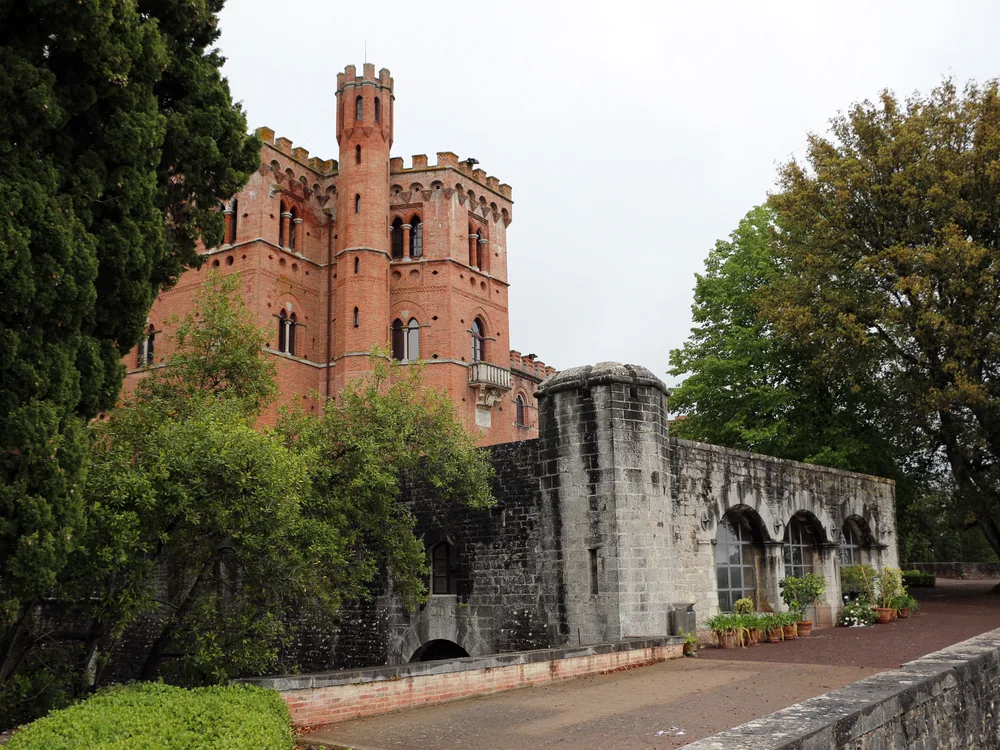
Brolio Castle
Castello di Brolio
Italy · Chianti Classico, Siena Province, Tuscany · Near Siena
Built 1141 · Medieval frontier castle on a hilltop at the historical border between the territories of Florence and Siena in the Chianti Classico wine zone; the Ricasoli family has held the estate continuously since 1141, making it one of the oldest continuously family-held estates in Italy and the origin of the Ricasoli 1141 winery brand; the medieval fortifications were fought over repeatedly by Florence and Siena across the 13th and 14th centuries given the castle's strategic frontier position; the current castle structure is largely a 19th-century neo-Gothic rebuild designed under Baron Bettino Ricasoli (Italy's second Prime Minister, 1861-62 and 1866-67) after the earlier historical structure was substantially damaged; the neo-Gothic rebuilding reflects the 19th-century Risorgimento-era interest in medieval Italian identity and the romantic revival of Gothic forms in Italian architecture of the period; the wine estate — primarily Sangiovese-based Chianti Classico wines — operates from cellars within the estate; Baron Bettino Ricasoli codified the modern Chianti wine formula here in the 1870s, prescribing the Sangiovese-dominant blend that established the legal foundation for what Chianti Classico became in the 20th century; the estate is now visited primarily as a winery with castle grounds rather than a museum-style heritage attraction
This page is part of an independent travel guide and is not affiliated with, endorsed by, or operated by Brolio Castle.
© Castles & Palaces
Quick Facts
- Hours
- Daily 10:00–18:00
- Guided tour from
- €60
- Duration
- 1.5–2 hours (tasting + grounds walk)
- Best time
- April to October
- Nearest city
- Siena
Featured Tour
Brolio Castle: Wine Tasting in Limonaia
Cancellation available · Instant confirmation
Highlights
- ✦Baron Bettino Ricasoli — Italy's second Prime Minister (in office 1861–62 under Victor Emmanuel II and again 1866–67) and the political figure known as the 'Iron Baron' for his uncompromising character in the Risorgimento — is the defining person of Brolio's modern identity; in the 1870s, after his political career had ended, he returned to Brolio and conducted a systematic experiment in wine composition, testing different proportions of Sangiovese, Canaiolo, Malvasia, and Trebbiano to determine the optimal blend for the Chianti wine that bore the name of the surrounding district; his documented formula — predominantly Sangiovese, with smaller additions of other varieties — became the foundation for the legal definition of Chianti Classico in the 20th century; a Tuscan wine baron becoming a national political leader and then returning home to codify the wine formula that would define the region's identity for 150 years is the kind of life story that makes Brolio genuinely interesting beyond its wine tourism value
- ✦The Ricasoli family has held the Brolio estate continuously since 1141 — 885 years of unbroken family ownership at the time of writing — making it one of the oldest continuously family-held estates in Italy; the winery brand name RICASOLI 1141 acknowledges this founding date explicitly; the estate's frontier position between Florence and Siena was both its strategic vulnerability (it was fought over, burned, occupied, and retaken multiple times across the medieval period as Florentine and Sienese power waxed and waned in Chianti) and its long-term commercial strength (the hilltop position, the exposure, and the soil of this specific piece of Chianti landscape are the reasons the wine tastes as it does)
- ✦The neo-Gothic castle that visitors see today is not the medieval original — it is a 19th-century rebuild undertaken by Baron Bettino Ricasoli, designed in the Gothic revival style fashionable in Risorgimento-era Tuscany for aristocratic families with medieval origins who wanted to express historical depth through architectural form; the rebuilding used some medieval material but created primarily a Victorian-era interpretation of what a 12th-century Tuscan frontier castle should look like; this is the same strategy employed at many of Italy's celebrated medieval-seeming castles, and Brolio's candour about the reconstruction date is worth acknowledging before attributing the stonework to the 12th century
- ✦The Chianti Classico wine zone — the area between Florence and Siena whose wines bear the black cockerel (gallo nero) designation and are among the most commercially significant Italian wines in export markets — has Brolio at its southern edge, near Gaiole in Chianti; visiting Brolio places you in the specific landscape that produces the wine in the glass: the clay-and-limestone galestro and alberese soils, the altitude (420 metres above sea level), and the exposure on the hill are visible from the estate walk in a way that no tasting room description can quite replicate
- ✦The tasting experience offered by the GetYourGuide product takes place in the Limonaia — the estate's historic lemon house, the kind of large, south-facing glazed structure that wealthy Tuscan estates built to overwinter lemon and citrus trees before artificial heating; the juxtaposition of a working wine tasting in a 19th-century agricultural building against the view of the neo-Gothic castle and the Chianti hills is the specific atmosphere that distinguishes Brolio from a standard winery visit
Skip the queue with a guided tour
Skip-the-line tickets & expert guides
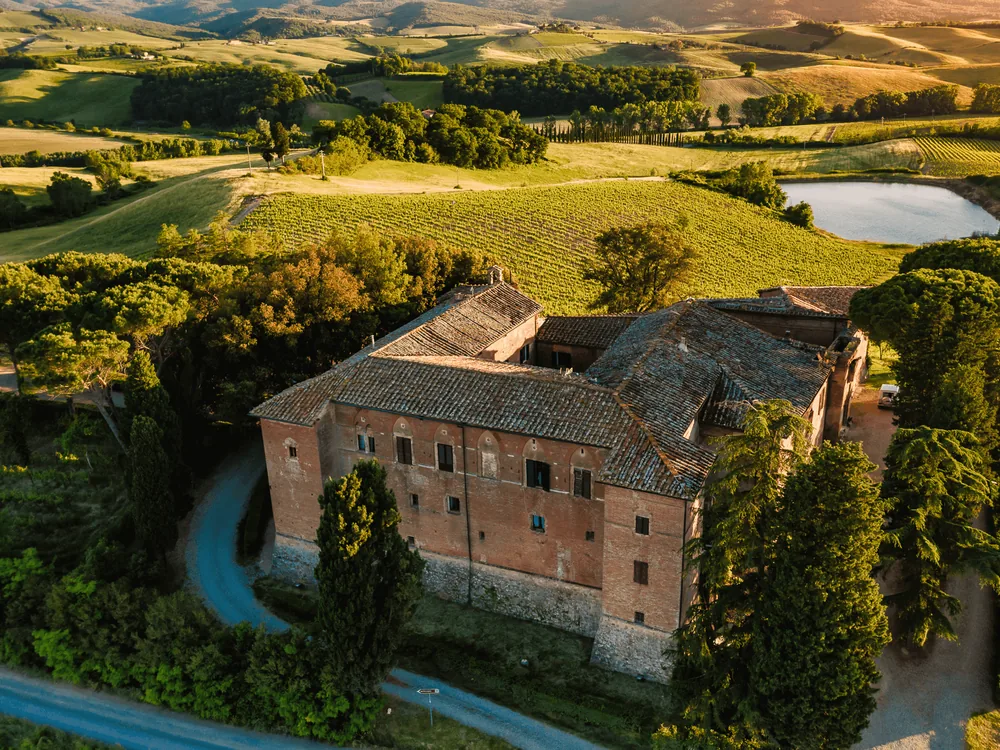
Brolio Castle stands on a hilltop in the Chianti Classico wine zone between Florence and Siena, at the southern edge of the zone near Gaiole in Chianti. It is the seat of one of Italy's oldest continuously family-held estates — the Ricasoli family have been here since 1141, 885 years of unbroken ownership through the medieval wars of Florentine and Sienese expansion, the Risorgimento, the World Wars, and the global wine market of the 21st century. The estate is a winery first and a heritage site second: the primary reason to visit Brolio today is the wine and the experience of the estate in the Chianti landscape, not a museum-style encounter with the castle building.
The estate's medieval history was inseparable from the territorial contest between Florence and Siena. Brolio sits on the historical frontier between the two city-states, a position that made it strategically valuable and perpetually contested. The castle was besieged, burned, occupied by Sienese forces, recovered by the Ricasoli with Florentine support, damaged, rebuilt, and contested again across the 13th and 14th centuries in the pattern of violence characteristic of Tuscan medieval politics. The specific incidents are better documented in the estate's own historical materials than in any external source, but the cumulative effect was that the medieval structure had been so substantially damaged by the time of Bettino Ricasoli that it required comprehensive rebuilding.
Baron Bettino Ricasoli (1809–1880) is the defining figure of Brolio's modern identity. He served as the second Prime Minister of unified Italy under Victor Emmanuel II in 1861–62, succeeding Cavour immediately after Italian unification — a period when the new state's institutional architecture was still being constructed and the political pressures were extraordinary. His political character earned him the sobriquet the Iron Baron for his uncompromising manner. When his ministerial career ended, he returned to Brolio and turned his systematic temperament toward wine: conducting documented experiments in grape proportions, fermenting trial batches with different blends, and arriving at a formula — predominantly Sangiovese, with smaller additions of Canaiolo and white varieties — that he codified and communicated in a letter of 1872. This formula became the foundation for the 20th-century legal definition of Chianti Classico wines. The connection between a national political figure and the specific wine formula that would define a major wine zone for 150 years is not the kind of thing that happens at every winery estate in Tuscany.
The castle building that visitors see from the estate walk is the neo-Gothic rebuild that Bettino Ricasoli commissioned in the same period — a Victorian-era interpretation of a 12th-century Tuscan frontier castle, designed in the Gothic revival language fashionable in Risorgimento-era Italy for aristocratic families expressing their medieval origins in contemporary architectural form. The medieval elements incorporated into the rebuild are less extensive than the medieval-looking stonework might suggest. The castle building itself is a private family residence and is not open for interior tours; the visitor experience is the estate walk and the wine tasting rather than a castle museum.
The wine tasting offered by the GetYourGuide product takes place in the Limonaia — the estate's historic lemon house, a large glazed agricultural building typical of wealthy Tuscan estates — with access to the grounds walk and views of the castle. This is the appropriate frame for the Brolio visit: an estate experience in one of Tuscany's most historically rooted wine properties, where the castle setting provides context and the wine provides the substance.
Brolio pairs naturally with [Cardaneto Castle](/castles/italy/cardaneto-castle), [Castle of Poppiano](/castles/italy/castle-of-poppiano), and [Castello Tricerchi](/castles/italy/castello-tricerchi) as part of the Tuscan winery-castle cluster on this site — all properties where the castle and the wine estate are inseparable, and where the visit is structured around a tasting experience rather than a heritage attraction.
History
1141: Ricasoli family acquires the Brolio estate; this is the founding date of the estate's continuous family tenure. 13th–14th centuries: Castle fought over repeatedly by Florence and Siena; besieged, burned, and rebuilt across the medieval Florentine-Sienese conflicts. 15th–18th centuries: Chianti frontier stabilises; estate operates under Florentine/Medici and later Grand Duchy of Tuscany jurisdiction. 1809: Baron Bettino Ricasoli born at Brolio. 1861–62: Bettino Ricasoli serves as Italy's second Prime Minister. 1870s: Bettino Ricasoli returns to Brolio and codifies the Chianti wine formula in documented wine trials; the 1872 letter prescribing Sangiovese-dominant Chianti blend becomes foundational. 19th century: Neo-Gothic castle rebuild undertaken. 20th century: Estate continues under family management; Chianti Classico designation formalised. Present day: Active winery estate and visitor destination; RICASOLI 1141 brand references founding year.
How to Visit
Getting there: Brolio is near Gaiole in Chianti, approximately 35km northeast of Siena and 70km south of Florence. By car: about 45 minutes from Siena on the Chiantigiana road (SR222), then local roads; around 1.5 hours from Florence. No public transport reaches the estate gate — a car is essential.
Tickets: Grounds access is free; the estate road and exterior views of the castle can be explored without booking. The GetYourGuide wine tasting in the Limonaia is a 45-minute hosted tasting with a grounds walk included — book in advance at ricasoli.com/en/visit or through GetYourGuide.
Practical tips: The castle building is a private family residence and is not open for interior tours — the visit is the estate walk and the wine. Harvest season (September–October) is the most atmospheric time; on clear days the view from the estate walk over the Chianti hills is outstanding.
Combine with: Cardaneto Castle, Castle of Poppiano, Castello Ginori di Querceto, and Castello Tricerchi form a natural Tuscan winery-castle route through the Chianti Classico zone.
Frequently Asked Questions
Baron Bettino Ricasoli (1809–1880) served as Italy's second Prime Minister in 1861–62 and again in 1866–67. After his political career, he returned to Brolio and conducted systematic experiments in wine composition, arriving at a formula — predominantly Sangiovese, with Canaiolo and white varieties — that he documented in a letter of 1872. This formula became the foundation for the 20th-century legal definition of Chianti Classico wines. The combination of national political leadership and the codification of a major wine region's defining formula is unique in wine history.
Location
Brolio, 53013 Gaiole in Chianti SI, Italy
Nearby Castles
Tours & Tickets
Powered by GetYourGuide
From
€60/ person