
Castle of Cisterna d'Asti
Castello di Cisterna d'Asti
Italy · Piedmont — Asti Province, Cisterna d'Asti, Monferrato hills · Near Asti
13th century · Medieval Piedmontese hilltop fortress (13th century); three-storey stone tower with courtyard; ethnographic museum occupying all three floors and panoramic terrace; typical of the defensive towers erected by the lords of the Asti Province and Monferrato marchesato across the hill country between Asti and the Langhe
This page is part of an independent travel guide and is not affiliated with, endorsed by, or operated by Castle of Cisterna d'Asti.
© Castles & Palaces
Quick Facts
- Hours
- Sat & Sun 10:00–17:00. Closed Mon–Fri
- Guided tour from
- €7
- Duration
- 1.5 hours (3-floor museum + panoramic terrace)
- Best time
- April to October
- Booking
- Required — book 1+ days ahead
- Nearest city
- Asti
Featured Tour
Cisterna d'Asti: Guided Visit to the Museum Arti e Mestieri di un Tempo
Cancellation available · Instant confirmation
Highlights
- ✦The 'Arti e Mestieri di un Tempo' ethnographic museum spans all three floors of the castle, covering traditional Piedmontese farming, wine-making, blacksmithing, textiles, and domestic life — an unusually complete collection for a village castle of this scale, assembled from farms and workshops across the province of Asti
- ✦The guided tour is included in the admission price, and local guides with specialist knowledge of 18th- and 19th-century rural Piedmontese culture transform what might otherwise read as a miscellany of agricultural implements into a coherent portrait of a vanished way of life
- ✦The panoramic terrace commands views across the Monferrato countryside that extend south to the Langhe hills and Barbaresco wine country, with the city of Asti visible 18 kilometres to the northwest — a perspective that conveys the strategic importance of the hilltop position
- ✦Cisterna d'Asti sits at the boundary between two of Italy's greatest wine territories — the Monferrato and the Langhe — making the castle a natural stop on a route combining Asti Spumante, Barbera d'Asti, and Langhe Nebbiolo cellars in the surrounding communes
- ✦Truffle season from October through November transforms the surrounding Langhe and Monferrato into one of Italy's most celebrated gastronomic landscapes; a castle visit in this period pairs naturally with the white truffle markets of Asti and the nearby Alba fairs
Skip the queue with a guided tour
Skip-the-line tickets & expert guides
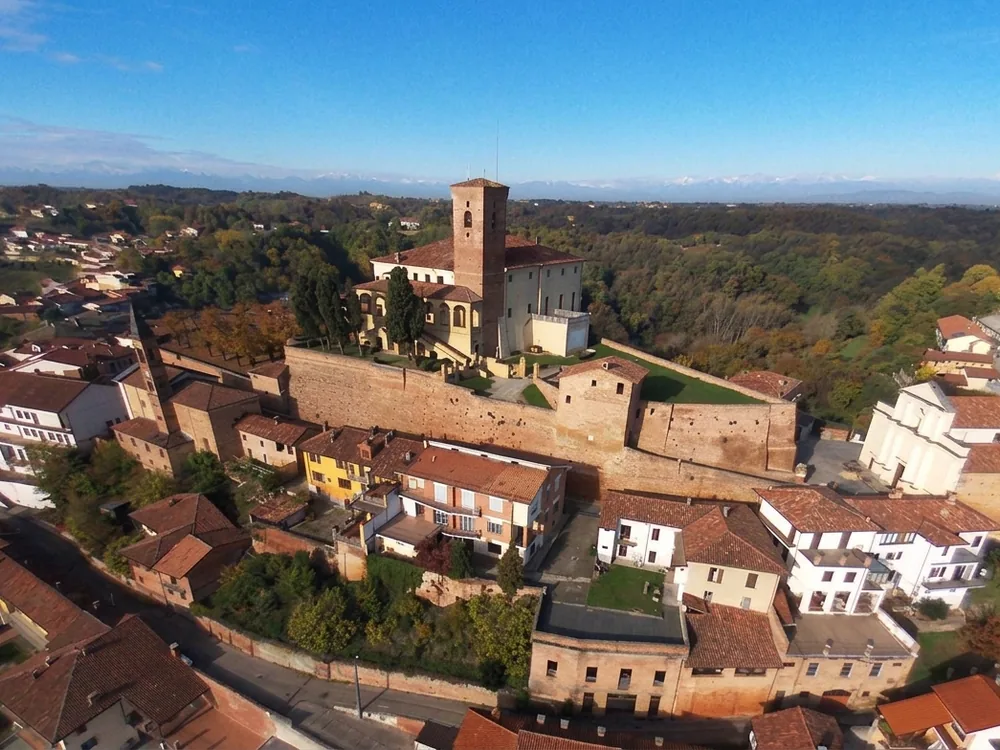
The Castle of Cisterna d'Asti rises from the ridge above the village of Cisterna d'Asti in the province of Asti, a well-preserved medieval tower fortress commanding the hill country between Asti and the Langhe. Dating to the 13th century, the castle is typical of the defensive fortifications built by local Piedmontese lords to control agricultural territory and road access through the Monferrato hills — not a grand ducal residence, but a functional military stronghold that has survived in remarkable condition and found a second purpose as one of the region's most engaging small museums.
Today the castle houses the 'Arti e Mestieri di un Tempo' — Arts and Crafts of the Past — an ethnographic museum dedicated to three centuries of traditional rural life in Piedmont. Spread across all three floors of the castle, the collection brings together farming tools, wine-making equipment, textile implements, blacksmithing objects, and domestic items from the 18th, 19th, and early 20th centuries. The objects were gathered from farms and workshops throughout the province of Asti, and together they constitute one of the most comprehensive records of pre-industrial Piedmontese rural culture accessible to the public.
What distinguishes the museum from comparable ethnographic collections elsewhere in northern Italy is the quality of its guided tours, which are included in the admission price. The local guides are specialists in rural Piedmontese social history, and their context transforms what might otherwise read as a warehouse of agricultural implements into a coherent portrait of vanished daily life — how peasant families managed land and livestock through the seasons, how wine was produced before mechanisation changed everything, how the rhythms of the Monferrato countryside shaped the material culture of its inhabitants across three centuries.
The third floor opens onto a panoramic terrace with views across the Monferrato countryside. On clear days the Langhe hills are visible to the south, with Barbaresco country in the middle distance; Asti lies 18 kilometres to the northwest. The view communicates something that no museum interior can: the scale of the agricultural landscape that these tools existed to work, and the strategic value of a hilltop position that made this a fortified castle rather than a farmhouse.
For visitors already in the Langhe or the Asti region — following wine routes through Barbera and Moscato country, visiting the Alba truffle markets in autumn, or exploring the wider Piedmontese cultural landscape — the Castle of Cisterna d'Asti is an easy and rewarding detour. It is a genuinely local institution, little visited by foreign tourists, and all the better for it.
History
The Castle of Cisterna d'Asti was built in the 13th century as part of the network of fortified positions that the lords of the Monferrato marchesato maintained across the hill country of the Asti Province. The Monferrato was one of the most contested territories of medieval Piedmont, fought over by the Paleologi of Montferrat, the commune of Asti, and the expanding Angevin and Visconti power blocs, and a hilltop castle controlling road access through the valley served as a standard instrument of local territorial authority.
Like most of the smaller Monferrato castles, Cisterna d'Asti changed hands several times as the political geography of Piedmont shifted across the late medieval and early modern periods. It passed through the control of various local dynasties before being absorbed into the administrative orbit of the Duchy of Savoy, which extended its reach across Piedmont during the 17th century. As the Savoyards consolidated their power, the castle's purely military function gradually gave way to residential and civic uses, and the strategic imperative that had originally justified its construction on a hilltop above the village slowly receded.
The castle survived intact into the modern period largely because the village of Cisterna d'Asti remained too small to generate the development pressure that has destroyed similar medieval structures elsewhere in Piedmont. Its transformation into an ethnographic museum was the work of local historians and the municipal administration in the late 20th century, who recognised the three-floor structure as an ideal repository for the agricultural tools and domestic objects disappearing from the farms of the Asti Province as mechanisation and rural depopulation transformed the landscape.
How to Visit
Getting there: Cisterna d'Asti is 18 kilometres southeast of Asti. By car from Asti, follow the SP27 toward Cisterna d'Asti (approximately 25 minutes); the castle is in the village centre on Piazza del Castello. Public transport connections are limited — a car is the practical option for most visitors. Asti is served by direct trains from Turin (approximately 35 minutes) and Milan (approximately 1 hour 15 minutes via Alessandria); car hire at Asti station provides onward access to the Monferrato and Langhe.
Tickets: Walk-up admission is €7 for adults and €4 for children; the guided tour is included in the ticket price at no additional charge. The GetYourGuide guided visit covers the full museum across all three floors and the panoramic terrace. Advance booking is required — the museum operates on a reservation system and does not accept unbooked walk-up visitors. Book at least one day ahead via the official website or via the GetYourGuide booking link.
Practical tips: Most guided tours are conducted in Italian; request an English-language guide specifically when booking if needed. Allow the full 1.5 hours — the museum is denser than the exterior suggests, and the panoramic terrace deserves time. Wear comfortable shoes; there are stairs between all three floors and the terrace is reached by a final staircase. In autumn, combine the visit with the nearby truffle markets in Asti (October–November) or the fairs in Alba, 35 kilometres to the south.
Combine with: Castello di Masino (60 km northwest — the FAI's flagship Piedmontese castle, with medieval fabric, Baroque apartments, and formal gardens overlooking the Po plain; the two Piedmont castles together offer complementary perspectives on regional aristocratic and rural heritage).
Frequently Asked Questions
Yes — the guided tour of the 'Arti e Mestieri di un Tempo' museum is included in the standard ticket price of €7 for adults and €4 for children. The tour covers all three floors of the castle and concludes on the panoramic terrace. Most tours are conducted in Italian; if you require an English-language guide, request one specifically at the time of booking.
Location
Piazza del Castello, 14010 Cisterna d'Asti AT, Italy
Nearby Castles
Tours & Tickets
Powered by GetYourGuide
From
€7/ person