
Julius II Castle
Castello di Giulio II
Italy · Lazio — Borgo di Ostia Antica, Municipality of Fiumicino, Metropolitan City of Rome · Near Rome
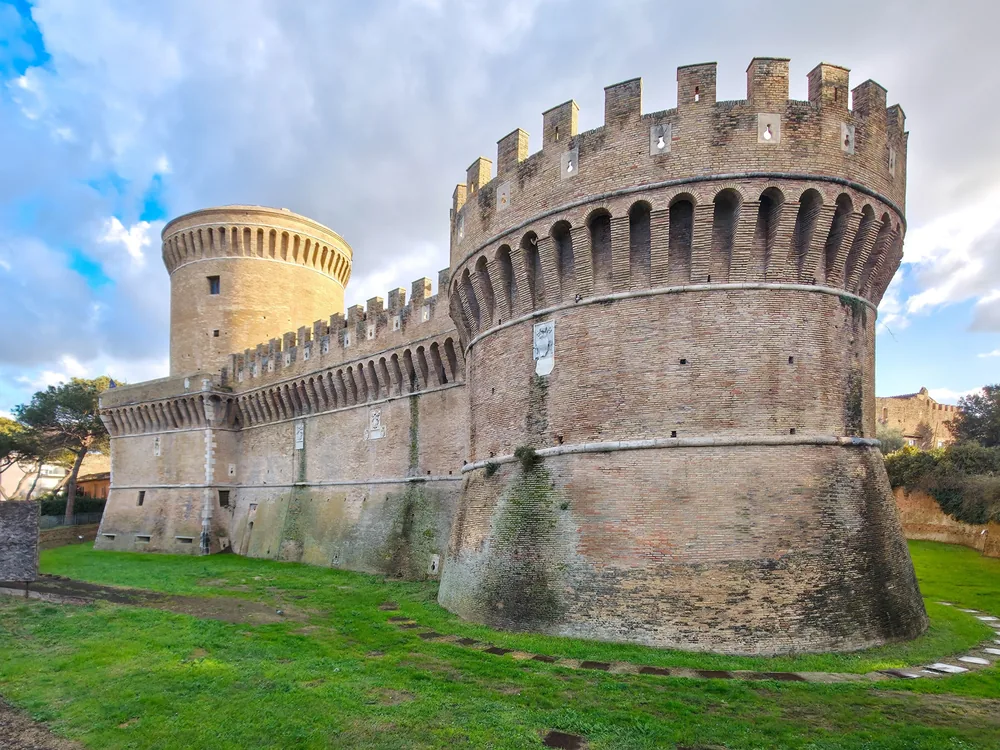
Built 1483 · Renaissance fortified castle, 1483–1503, with elements anticipating the bastioned star-fort tradition — construction began in 1483 under Pope Innocent VIII and the Cardinal of Ostia; expanded and completed under Pope Julius II (papacy 1503–1513), the 'warrior pope' who also commissioned Michelangelo's Sistine Chapel ceiling; the fortress is a square plan with cylindrical corner towers, representing the transitional phase of Italian military architecture between the medieval tower castle and the fully developed bastioned Renaissance fortification; the relatively low wall profiles and massive corner towers reflect awareness of the threat from cannon fire; the position at the mouth of the Tiber River was specifically chosen to control access to Rome by sea; the Borgo di Ostia Antica, the cobbled medieval village surrounding the castle, is a separately significant heritage environment distinct from the famous Ostia Antica Roman archaeological park nearby
This page is part of an independent travel guide and is not affiliated with, endorsed by, or operated by Julius II Castle.
© Castles & Palaces
Quick Facts
- Hours
- Tue–Sun 09:00–18:30. Closed Mon
- Entry from
- €26.1
- Duration
- 2 hours (self-guided audio tour of the castle interior and the curated walking route through Borgo di Ostia Antica)
- Best time
- Spring
- Nearest city
- Rome
Highlights
- ✦Pope Julius II — the warrior pope who also commissioned Michelangelo — Pope Julius II (papacy 1503–1513), who completed and gave his name to this fortress, was the most military and architecturally ambitious pope of the Renaissance; he commissioned Michelangelo's Sistine Chapel ceiling, Raphael's Stanze della Segnatura in the Vatican, and the rebuilding of St Peter's Basilica under Donato Bramante — and simultaneously led armies in person across the Italian states; the castle at Ostia was his defensive investment, the guardian of the sea approach to Rome, and reflects the same scope of practical vision that characterised his Vatican projects
- ✦An early example of bastioned military engineering — the Julius II Castle represents the transitional phase of Italian Renaissance military architecture between the medieval tower castle and the fully developed angular star fort; the cylindrical corner towers and the relatively low, thick wall profiles reflect an awareness of gunpowder's threat to vertical medieval walls, without yet reaching the fully developed bastioned system; for military architecture historians, Ostia is one of a small group of surviving examples of this transitional form in Italy
- ✦Borgo di Ostia Antica — the medieval village surrounding the castle — the GYG self-guided visit includes a curated walking route through the cobbled lanes of Borgo di Ostia Antica; this is an atmospheric medieval village of the kind increasingly rare near Rome, with historic churches, vernacular buildings, and the castle's presence at its centre; visitors should distinguish carefully between the Borgo (the medieval village, on this GYG visit) and the Ostia Antica Archaeological Park (the Roman city excavations, a separate site nearby) — the names are easily confused
- ✦Guardian of the sea approach to Rome — the castle's position at the mouth of the Tiber was militarily specific: the Tiber is the navigable river that connects the Tyrrhenian Sea to Rome; any force attacking Rome from the sea would need to control the Tiber mouth; the Julius II Castle was built to deny that approach, garrisoning the point where the river meets the sea and maintaining the ability to intercept pirate attacks that had made the Ostia area dangerous throughout the medieval period
- ✦A less-visited Roman day trip — the Ostia Antica area (both the castle and the archaeological park) is approximately 30km from central Rome via the Roma–Lido railway (direct from Ostia Antica station) and offers an authentic Roman heritage experience at a fraction of the crowds of the main Forum, Colosseum, and Vatican circuit
Skip the queue with a guided tour
Skip-the-line tickets & expert guides
The mouth of the Tiber has always been strategically sensitive for Rome. The river connects the city to the sea; whoever controls the Tiber mouth controls, in some measure, the sea approach to the capital. The port of Ostia, which served Rome throughout the classical period as its primary harbour, was eventually silted up and abandoned — the Tiber's delta extended outward over the centuries, leaving the original Roman Ostia stranded inland. But the strategic logic of the Tiber mouth did not disappear with the classical port; it persisted through the medieval period, when the coast around Ostia was subject to repeated pirate raids that left the area dangerous and partly depopulated.
Pope Innocent VIII ordered the construction of a fortress at the Tiber mouth in 1483, giving the commission to Cardinal Giuliano della Rovere — the future Pope Julius II — as Cardinal of Ostia. The construction that began under Innocent VIII was the first phase of a building that Cardinal della Rovere would develop and complete after he became pope in 1503. When Julius II was elected to the papacy, the fortress at Ostia acquired its permanent name: the Castello di Giulio II.
Julius II's papacy (1503–1513) is one of the most remarkable in the history of the institution. He led armies in person — earning the nickname il papa terribile, the formidable pope — while simultaneously commissioning the most ambitious cultural programme in the Vatican's history: Michelangelo's Sistine Chapel ceiling, Raphael's Stanze della Segnatura, and the demolition of the old St Peter's Basilica to begin the construction of the new one under Donato Bramante. The fortress at Ostia, which occupied a different register of Julius's activity — defensive, military, practical — was the same scale of vision applied to a different problem. The sea approach to Rome needed to be guarded, and Julius guarded it.
The castle's architectural form places it in a significant transitional phase of Italian military engineering. The cylindrical corner towers, the relatively low wall profiles (lower walls are harder to breach by cannon fire than tall medieval walls), and the overall square plan reflect an awareness of what gunpowder was doing to the assumptions of medieval fortification without yet arriving at the fully developed bastioned star-fort geometry that would dominate military architecture by the late 16th century. At Ostia, the architects were working out the early stages of the solution — thicker walls, lower profiles, curved surfaces to deflect cannonballs — and the fortress survives as one of the few intact examples of this transitional phase in central Italy.
The GYG self-guided visit (t1416346) combines entry to the castle with an audio tour and a curated walking route through the Borgo di Ostia Antica — the medieval village that surrounds the castle. The Borgo is a heritage environment in its own right: cobbled lanes, historic churches, and the atmospheric density of a settlement that has been inhabited continuously since the medieval period. The audio tour gives the castle's interiors a historical narration and the village walk a sequence of context.
Visitors planning a visit to the Julius II Castle should note the naming geography carefully. The Ostia Antica Archaeological Park — the excavations of the Roman city of Ostia, one of Italy's most impressive classical sites — is a separate attraction nearby. The Borgo di Ostia Antica (the medieval village, on this visit) and the Ostia Antica archaeological site are different places with confusingly similar names; they can be combined in a single day's excursion from Rome, but they require separate tickets and are accessed at different points.
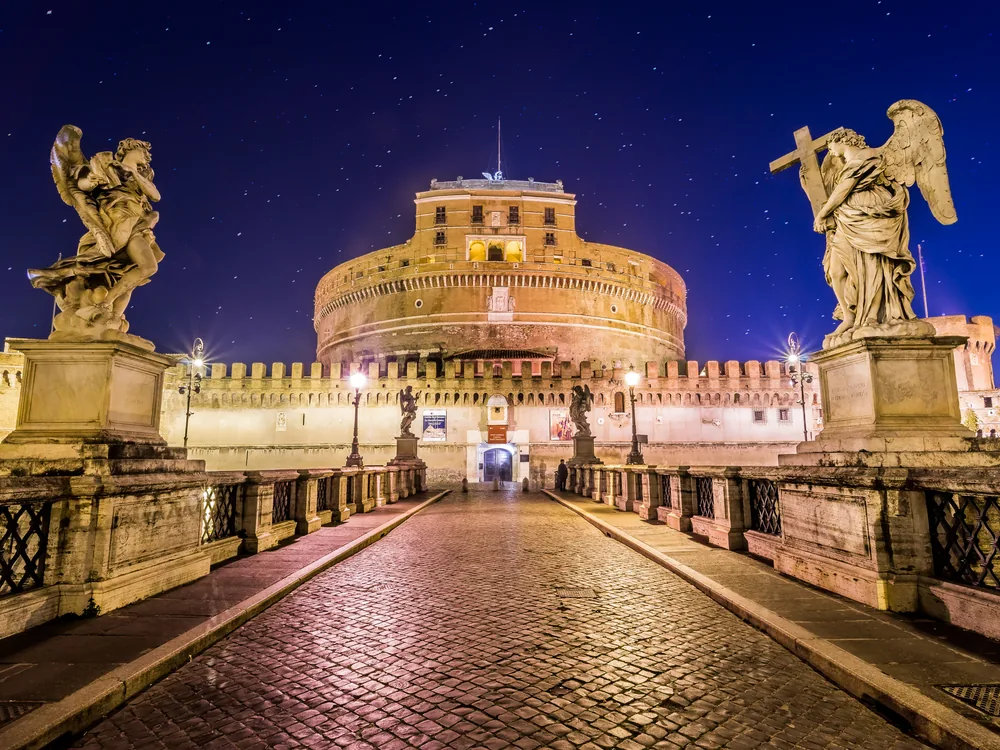
[Castel Sant'Angelo](/castles/italy/castel-santangelo) — the papal fortress beside the Tiber in Rome, originally Hadrian's mausoleum and converted into a castle by the medieval papacy — is Rome's other great papal fortress. The two buildings address the same strategic question from different ends of the Tiber: Castel Sant'Angelo defends Rome from within the city; the Julius II Castle defends the river mouth from the sea. Together they represent the complete river-and-sea defensive logic of the papal approach to protecting Rome.
History
Pope Innocent VIII ordered the construction of a fortress at the Tiber mouth in 1483, giving the commission to Cardinal Giuliano della Rovere — the future Julius II — who held the see of Ostia. The fortress was constructed in its initial form over the following two decades under Innocent VIII and Cardinal della Rovere's direction. When Giuliano della Rovere was elected Pope Julius II in 1503, he completed and expanded the fortress himself, and the building took his name — a rare case of a papal building named directly after the pontiff who finished it rather than commissioned it.
The pontificate of Julius II (1503–1513) produced the Sistine Chapel ceiling (Michelangelo, 1508–12) and the beginning of the new St Peter's (Bramante, 1506) simultaneously with the fortress's completion — a concentration of building patronage without precedent in papal history. The fortress remained in active use as a defensive installation and administrative centre for the Ostia territory through the 16th and 17th centuries before falling from active military service in the 18th and 19th centuries, as the Borgo di Ostia Antica developed around it.
The Italian Ministry of Culture administers the castle as a heritage monument, and the adjacent Ostia Antica Archaeological Park — one of the most extensive classical archaeological sites in Italy — has developed around the medieval and Renaissance fabric of the castle.
How to Visit
Getting there: From central Rome, take the Roma–Lido railway (line FL8) from Roma Porta San Paolo station (next to Piramide on Metro Line B) directly to Ostia Antica station — approximately 35 minutes, trains run frequently. The Julius II Castle is a 5-minute walk from the station in the Borgo di Ostia Antica. By car from Rome: approximately 30 km via the Via del Mare (SS296), with parking in the Borgo.
Tickets: Walk-up entry €26 adult, €15 child. The GYG ticket (t1416346, from €26) combines castle entry with a self-guided audio tour of the interior and a curated walking route through the Borgo di Ostia Antica medieval village — a worthwhile way to get historical context on both the fortress and the surrounding village — book in advance.
Practical tips: Open Tuesday–Sunday, 09:00–18:30; closed Monday. The full visit takes about 2 hours. Spring (April–June) and autumn (September–November) are the most comfortable seasons; summer can be very hot. The Ostia Antica Archaeological Park — the Roman city excavations — is a separate site near the same station and can be combined for a full day out of Rome: park in the morning, castle and Borgo in the afternoon.
Combine with: [Castel Sant'Angelo](/castles/italy/castel-santangelo) — Pope Julius II's other great fortress, at the Tiber bank in Rome, completed by the same pope as the papal passageway from the Vatican.
Frequently Asked Questions
The Julius II Castle (Castello di Giulio II) stands in the Borgo di Ostia Antica, a medieval village; it is a Renaissance papal fortress built 1483–1503 and named after Pope Julius II. The Ostia Antica Archaeological Park is the excavated remains of the ancient Roman city of Ostia — one of the most important classical sites in Italy — and is an entirely separate attraction nearby. Both are in the Ostia Antica area, which creates genuine naming confusion for visitors. They can be visited in the same day from Rome, but they require separate tickets, are accessed at different points, and have entirely different characters: one is a medieval-Renaissance military fortress, the other a classical Roman city excavation.
Location
Castello di Giulio II, Piazza della Rocca 8, 00119 Ostia Antica, Rome, Italy
Nearby Castles
Tours & Tickets
Powered by GetYourGuide
Entry from
€26.1/ adult