
Castel Sant'Angelo
Mausoleo di Adriano
Italy · Lazio · Near Rome
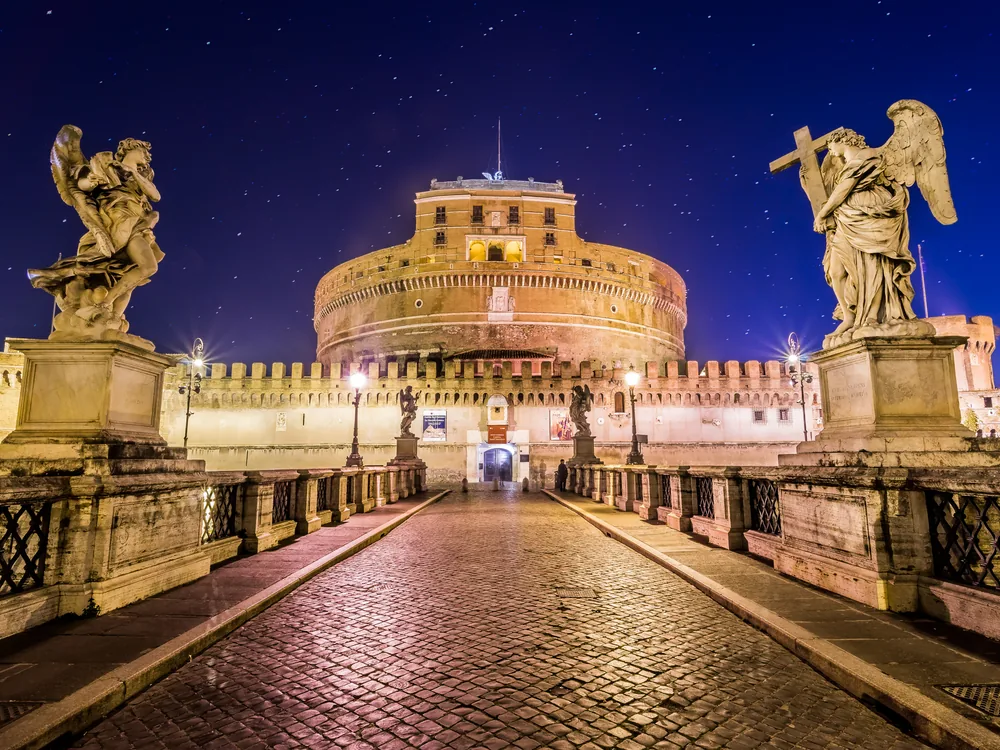
Built 139 · Roman mausoleum converted to medieval fortress and papal residence — cylindrical form from 139 AD
This page is part of an independent travel guide and is not affiliated with, endorsed by, or operated by Castel Sant'Angelo.
© Castles & Palaces
Quick Facts
- Hours
- Tue–Sun 09:00–19:30. Closed Mon
- Entry via GetYourGuide
- €18
- Duration
- 2–3 hours
- Best time
- March
- Booking
- Required — book 3+ days ahead
- Nearest city
- Rome
Featured Tour
Rome: Castel Sant'Angelo Entry Ticket & Digital Audioguide
Cancellation available · Instant confirmation
Highlights
- ✦The panoramic terrace — the highest point offers sweeping views over Rome, St. Peter's Basilica and the Tiber
- ✦The Passetto di Borgo — the elevated corridor connecting the castle to the Vatican, used by popes to escape during sieges
- ✦The Sala Paolina — elaborately frescoed papal apartments from the 16th century
- ✦The treasury and prison — rooms where prisoners were held, including Giordano Bruno and Benvenuto Cellini
- ✦The bronze angel statue at the summit — commemorating a vision by Gregory the Great that ended the plague of 590 AD
Tickets & tours
Book through GetYourGuide
Castel Sant'Angelo began as the mausoleum of Emperor Hadrian, completed in 139 AD as a circular monument on the banks of the Tiber intended to hold the remains of Hadrian and his successors. The cylindrical drum, 64 metres in diameter and originally topped with a garden and a gilded quadriga, still forms the core of the structure visible today. Within a century of Hadrian's death the mausoleum had been incorporated into Rome's defensive walls, and by the medieval period it had become the most secure fortress in the city — the ultimate refuge for popes facing invaders.
The castle's history crosses two thousand years of Roman and papal politics. Theodoric the Ostrogoth used it as a prison. The Normans sacked it. Pope Clement VII famously fled along the elevated Passetto di Borgo corridor in 1527 when Charles V's troops sacked Rome — remaining in the castle for six months while the city burned below him. Alexander VI added the outer fortifications; Paul III built the Renaissance apartments that survive today, including the Sala Paolina with its elaborate programme of frescoes.
Today the castle functions as the Museo Nazionale di Castel Sant'Angelo. The spiral ramp that once led to Hadrian's burial chamber still carries visitors through the core of the building; the papal apartments contain frescoes, tapestries and period furniture; and the terrace, where the bronze angel was placed in 1753, remains one of the finest viewpoints in Rome. Puccini set the final act of Tosca here.
History
Hadrian began his mausoleum around 130 AD, and it was completed shortly after his death in 138. The structure consisted of a square base, a cylindrical drum, and an upper section — the whole covered in white marble and decorated with statues. The ashes of Hadrian, his wife Sabina, and several subsequent emperors and their families were housed in the burial chamber within the drum.
By the 3rd century the mausoleum had been incorporated into the Aurelian Wall, Rome's defensive circuit. In 590 AD, Pope Gregory the Great led a procession across the Pons Aelius (now the Ponte Sant'Angelo) to pray for the end of a plague; according to tradition, he saw a vision of the Archangel Michael sheathing his sword above the castle — a sign that the plague was ending. A succession of marble and then bronze angels were placed at the summit to commemorate the vision, giving the building its current name.
The medieval and Renaissance popes transformed the castle into a combination fortress, refuge and luxury palace. Boniface IX added towers in the 14th century; Nicholas V and Alexander VI added further defensive works and the Passetto corridor; Paul III commissioned the state apartments in the 1540s. The castle served as a papal prison from the 14th to the 19th centuries — Benvenuto Cellini was imprisoned here twice, and Giordano Bruno was held here before his execution.
How to Visit
Getting there: From Vatican City it's a 5-minute walk across the Ponte Sant'Angelo — itself lined with Bernini's angel sculptures. From central Rome: Lepanto Metro station (Line A, 10-minute walk) or bus to Lungotevere Castello.
Tickets: Entry costs €16 for adults (children €2); booking in advance is strongly recommended. The GetYourGuide entry ticket with digital audioguide effectively skips the ticket queue — essential in peak summer months.
Practical tips: Allow 2–3 hours for the full circuit from the Roman mausoleum base to the panoramic terrace. Night opening events are held on selected dates — terrace views of Rome illuminated are exceptional; check the museum website for the current schedule. Closed Mondays and some public holidays.
Combine with: Julius II Castle and Colonna Palace are both within reach for a concentrated Rome fortifications and palaces day.
Frequently Asked Questions
The Passetto di Borgo is an elevated covered walkway, about 800 metres long, connecting Castel Sant'Angelo to the Apostolic Palace in the Vatican. It was built in the late 13th century and used by popes to escape to the safety of the castle during emergencies. Most famously, Pope Clement VII used it to flee during the Sack of Rome in 1527, when Charles V's troops rampaged through the city for weeks. The corridor is visible from the Borgo Pio street below.
Location
Lungotevere Castello, 50, 00193 Roma RM, Italy
Nearby Castles
Tours & Tickets
Powered by GetYourGuide
From
€18/ person