
Melfi Castle
Castello di Melfi
Italy · Basilicata — Melfi, Potenza Province, near Vulture volcano and Laghi di Monticchio · Near Melfi
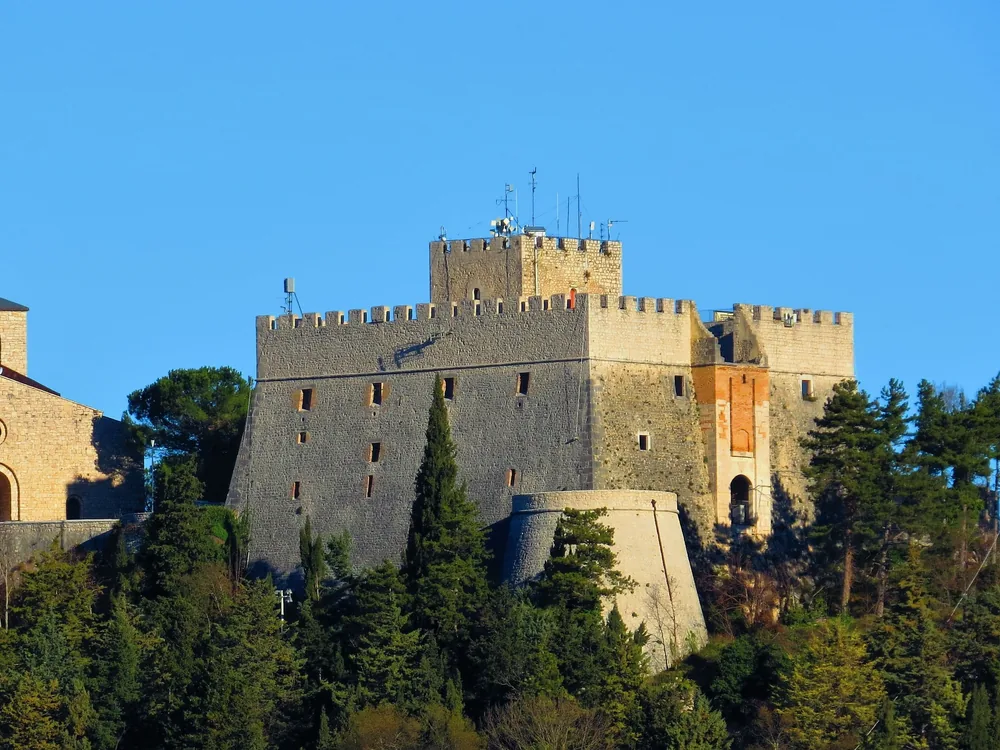
Built 1041 · Norman foundation (1041) with Swabian-Hohenstaufen additions under Frederick II — a large quadrangular fortress with eight surviving towers (of the original ten) and a massive central keep, set on a volcanic tuff hill above the town of Melfi; the Norman and Swabian building phases represent the two most historically significant periods of the castle's life: the Norman period (1041–late 12th century) established it as the capital of the Norman Kingdom in southern Italy, and the Swabian period (early 13th century) associated it with Frederick II, Holy Roman Emperor and King of Sicily, who promulgated the Constitutions of Melfi (1231) here — one of the most significant legal documents of the medieval period; later Angevin and Aragonese modifications added domestic and administrative buildings within the fortress precinct
This page is part of an independent travel guide and is not affiliated with, endorsed by, or operated by Melfi Castle.
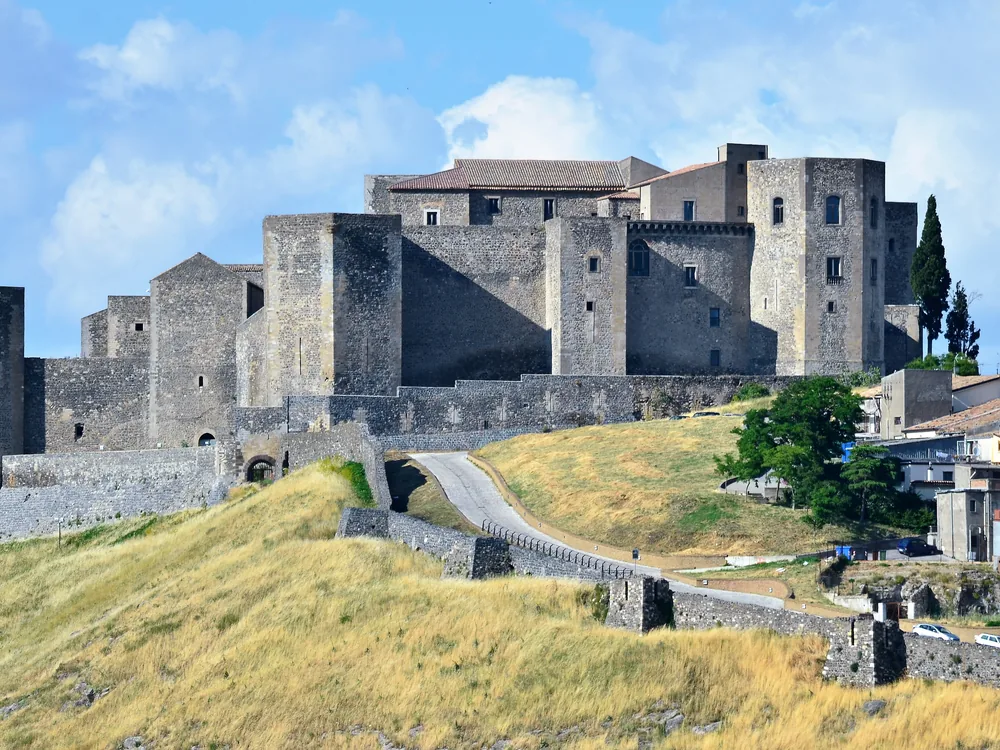
© Castles & Palaces
Quick Facts
- Hours
- Tue–Sun 09:00–20:00. Closed Mon
- Guided tour from
- €340
- Duration
- 1.5–2 hours (Norman-Swabian fortress exterior and towers + National Archaeological Museum of Melfi 'Massimo Pallottino' inside the castle)
- Best time
- April to October
- Nearest city
- Melfi
Featured Tour
Melfi: Private Guided Tour of Melfi Castle & National Archaeological Museum (up to 25 people)
Cancellation available · Instant confirmation
Highlights
- ✦Norman capital of southern Italy — after the Norman conquest of Apulia and Calabria in the 1040s–1060s, Melfi Castle was established as the administrative and symbolic capital of the Norman presence in the south; multiple Norman synods and councils (including the Council of Melfi, 1059, which established the feudal relationship between the Normans and the papacy) were held here, making the castle one of the most politically significant sites of 11th-century European history
- ✦Frederick II and the Constitutions of Melfi (1231) — Frederick II, Holy Roman Emperor and King of Sicily, used Melfi Castle as an administrative centre and promulgated the Constitutions of Melfi (Liber Augustalis) here in 1231 — a comprehensive legal code for the Kingdom of Sicily that is among the most sophisticated legislative achievements of medieval Europe; the Constitutions established secular rule of law, limited feudal privilege, and created a bureaucratic state administration that was centuries ahead of most European governance; this document, issued from Melfi, is the castle's most significant historical claim
- ✦Ten towers — the castle's original Norman plan included ten defensive towers around the quadrangular perimeter; eight survive in various states of preservation; the towers are visible from the town below and create the fortress silhouette that is the defining image of Melfi from any approach
- ✦National Archaeological Museum of Melfi 'Massimo Pallottino' — the castle houses the permanent collections of the National Archaeological Museum, named after the archaeologist Massimo Pallottino; the museum displays finds from the Vulture volcanic area spanning the Neolithic, Bronze Age, Iron Age, Hellenistic, and Roman periods — including the famous Rapolla sarcophagus (2nd century AD, exceptional marble carving), pre-Roman Lucanian painted pottery, and Daunian warrior bronzes; the museum collection gives the fortress a genuine interior visit of cultural substance beyond the architectural exterior
- ✦Basilicata's under-visited interior — Melfi and the Vulture zone are among the least touristically crowded areas of southern Italy; the volcanic Vulture mountain (extinct volcano), the Laghi di Monticchio crater lakes, and the local Aglianico del Vulture wine DOC (one of southern Italy's finest red wines) make the area a rewarding destination for visitors who have already seen the major Campania and Puglia sites
- ✦GetYourGuide private guided group tour — the GetYourGuide product (~€340 per group for up to 25 people) provides a private guided tour of the castle and museum; this per-group pricing makes it cost-effective for larger groups (shared across 10–25 visitors) but expensive for solo or couple visitors; independent entry with the standard MiC ticket is the practical option for most visitors
Skip the queue with a guided tour
Skip-the-line tickets & expert guides
Melfi Castle stands on a volcanic tuff hill at the edge of the town of Melfi, in the Potenza Province of Basilicata, overlooking the flat plains of the Ofanto River Valley and the Apennine ridgeline to the east. The fortress silhouette — quadrangular walls, eight surviving towers of the original ten, a dominant central keep — is visible from the approaches to the town and has defined the Melfi skyline since the Norman construction of the 1040s. Below the castle, the town is built on the slope of the same volcanic tuff outcrop, in a urban pattern that has changed little in its essentials since the medieval period.
The castle's historical significance is disproportionate to its geographic position in the Italian interior. The Norman conquest of southern Italy — one of the most consequential episodes of 11th-century European history — used Melfi as its administrative headquarters. Robert Guiscard, the Norman military leader who consolidated the southern Italian conquest, established his seat here; the Council of Melfi (1059) at which Pope Nicholas II formally invested the Normans with their Italian territories — establishing the feudal relationship between the papacy and the Norman rulers that shaped Italian politics for the next century — was held in and around the castle. Melfi was, for a generation, the effective capital of Norman ambition in the Mediterranean.
The Swabian-Hohenstaufen association is equally significant. Frederick II, Holy Roman Emperor (1194–1250) — the most extraordinary ruler of medieval Europe, monarch of Sicily, Germany, and Jerusalem simultaneously, author of a book on falconry that remains a zoological and hawking text of genuine value, multilingual, philosophically eclectic, and in continual conflict with the papacy — used Melfi Castle as an administrative centre for his southern Italian kingdom. The Constitutions of Melfi (Liber Augustalis), promulgated here in 1231, were the first systematic legal code of medieval Europe to establish the principle of secular government as a legitimate and comprehensive authority separate from ecclesiastical jurisdiction. The document is among the most significant achievements of medieval governance and gives Melfi Castle a claim to intellectual and legal history that few Italian fortresses can match.
The National Archaeological Museum of Melfi 'Massimo Pallottino', housed within the castle since 1976, transforms the fortress from an architectural monument into a functioning cultural institution. The museum's collections span the Neolithic to the Roman periods and are drawn primarily from the Vulture area — the volcanic zone surrounding the extinct Vulture mountain north of Melfi, which supported continuous human occupation from the Neolithic period through to Roman colonisation. The highlight is the Rapolla sarcophagus: a 2nd-century AD marble sarcophagus of exceptional quality, with relief carving of mythological scenes that places it among the finest Roman funerary sculptures surviving in southern Italy.
The GetYourGuide product associated with this castle is a private guided tour of the castle and museum at approximately €340 per group for up to 25 people — not per person. A group of 25 visitors sharing this tour pays approximately ~€14 per person; a couple would pay ~€170 per person for the same private guide. For independent visitors, the standard standalone entry ticket (approximately €6 per adult, standard MiC pricing) is available at the castle entrance without advance booking.
History
The Norman conquest of Apulia in the 11th century gave Melfi an administrative importance it has not held since: the castle, founded in 1041, was established as the capital of the Norman presence in southern Italy and the operational base from which Robert Guiscard and the de Hauteville family organised their subjugation of the Mezzogiorno. The Council of Melfi in 1059 formalised the arrangement: Pope Nicholas II invested the Norman leaders with their Italian territories at the castle, establishing the ecclesiastical legitimacy of their conquests.
The most significant political moment came under Frederick II, the Hohenstaufen-Swabian emperor who used Melfi as an administrative centre in the early 13th century and promulgated the Constitutions of Melfi — the Liber Augustalis — at the castle in 1231. This legal code, one of the most sophisticated of medieval Europe, attempted to establish a centralised, legally administered kingdom of Sicily on Roman and Byzantine models, and was written at Melfi specifically because the castle was Frederick's preferred administrative seat in the south. Angevin and Aragonese modifications added domestic buildings within the precinct during the 13th to 15th centuries. An earthquake in 1528 caused significant damage and was followed by partial reconstruction.
Restoration work in the 19th and 20th centuries stabilised the surviving fabric, and the National Archaeological Museum of Melfi 'Massimo Pallottino' was established within the castle in 1976. The castle and museum are now managed as a national heritage site.
How to Visit
Getting there: Melfi is approximately 90km north of Potenza and 120km east of Naples by car. From Naples, trains run via Battipaglia to Melfi (approximately 3 hours) but services are infrequent; a car is strongly recommended for exploring the Vulture area.
Tickets: Walk-up admission is €6 per adult, €2 per child, covering both the castle and the National Archaeological Museum 'Massimo Pallottino' inside. No advance booking required — buy at the entrance. The GetYourGuide private guided tour (from €340 per group of up to 25 people) includes a private guide for the castle and museum; at €340 per group this is cost-effective for large parties but expensive for solo or couple visitors.
Practical tips: The Aglianico del Vulture DOCG wine country surrounds Melfi — build in time to visit a local producer. Combine the castle with the Laghi di Monticchio crater lakes on Vulture mountain, approximately 15km east, for a full day in the area.
Combine with: No other castle pages currently cover this area — Melfi is best paired with a drive through the Vulture volcanic landscape and the crater lakes at Monticchio.
Frequently Asked Questions
€340 is per group (up to 25 people), not per person. For a group of 25 visitors, the per-person cost is approximately €14. For a couple, the same private tour costs ~€170 per person. For most visitors, the standalone entry ticket (~€6) provides access to the same castle and museum without the private guide — the GetYourGuide tour is worth considering only if a private guide and commentary is specifically required and the group is large enough to make the per-group price reasonable.
Location
Via Normanni, 85025 Melfi PZ, Italy
Nearby Castles
Tours & Tickets
Powered by GetYourGuide
From
€340/ group