
Postignano Castle
Castello di Postignano
Italy · Umbria — Sellano, Perugia Province, Vigi Valley · Near Spoleto
Built 850 · Founded in the 9th century as a "castrum" (control post) by its own farmer and artisan inhabitants; abandoned by its last residents in 1963; restoration began in 1994, declared a monument of historic-artistic interest in 2004
This page is part of an independent travel guide and is not affiliated with, endorsed by, or operated by Postignano Castle.
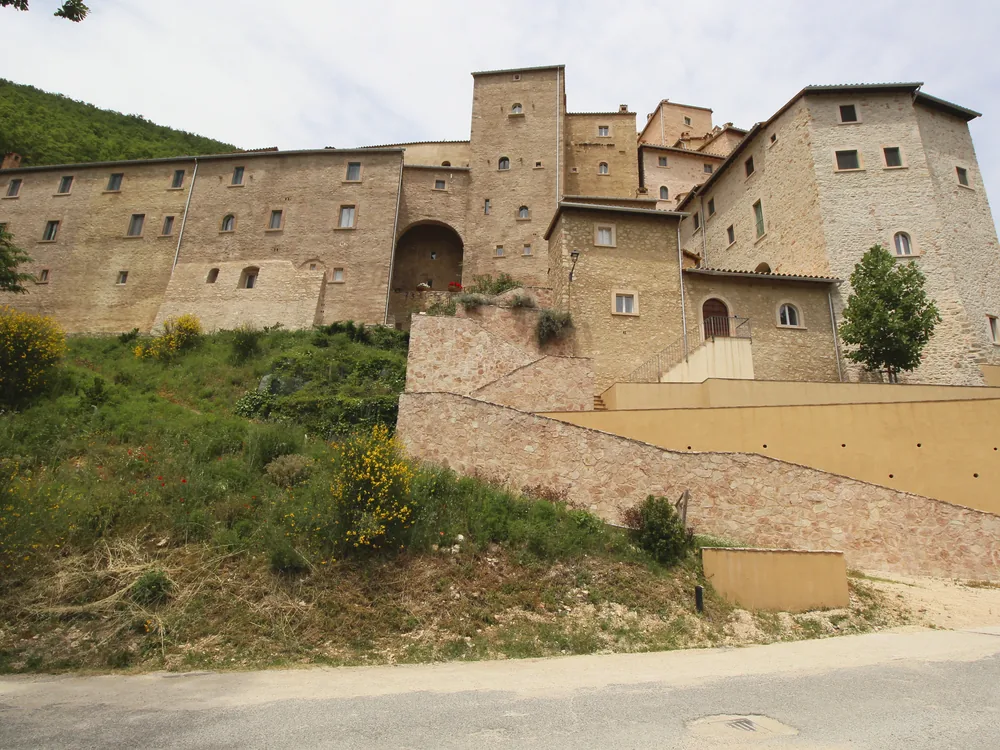
© Castles & Palaces
Quick Facts
- Rooms from
- €130 / night
- Duration
- Overnight stay only
- Best time
- Year-round
- Nearest city
- Spoleto
Stay Here
Castello di Postignano
Rooms are split between the historic building and a newer wing
Booked via Booking.com · Free cancellation on most rates
No confirmed independent day-visit product was found; access is primarily for hotel guests, though the restored hamlet is also a recognized architectural landmark.
Highlights
- ✦Founded in the 9th century as a "castrum" (control post) at a strategic crossroads between Spoleto, Norcia, Foligno and Assisi
- ✦Completely abandoned in 1963 when the last eight families left over collapse risk; photographer Norman F. Carver Jr. put it on the cover of his 1979 book "Italian Hilltowns," reviving interest
- ✦Restoration began in 1994; declared a monument of historic-artistic interest in 2004
Stay in the castle itself
Book a room via Booking.com
Set at a strategic point in the Vigi Valley, Postignano's history begins in the 9th century, founded and built by its own inhabitants — mainly farmers and artisans — with the function of a "castrum," or control post. Its position was of great strategic importance, right at the crossroads between Spoleto, Norcia, Foligno and Assisi. Over the following centuries, the village experienced a notable period of economic stability, serving as a key center for the processing and trade of iron and hemp in Umbria.
After a progressive decline, the last eight families living in Postignano left in 1963 due to the risk of building collapse. American photographer and architect Norman F. Carver Jr. put an image of Postignano on the cover of his 1979 book "Italian Hilltowns," reviving interest in the village. The restoration project began in 1994, and in 2004 the hamlet was declared a monument of historic-artistic interest by the Ministry of Culture. In 2007, restoration of the buildings and their frescoes began.
Postignano's complete abandonment in 1963, followed by three decades of dereliction before restoration began, gives this hamlet one of the more dramatic recovery arcs in this collection — an entire village, not just a single building, brought back from the brink.
Norman F. Carver Jr.'s decision to feature Postignano on his 1979 book cover connects this Umbrian hamlet to a specific moment in international architectural photography's rediscovery of Italy's hilltop villages, a recognition that predated the actual restoration by 15 years.
The hamlet's historic role in Umbria's iron and hemp trade ties Postignano to a specific medieval and early modern regional economy, distinct from the wine-focused history of many other properties in this collection.
The surrounding Valnerina and the towns of Spoleto, Norcia and Assisi give guests staying at Postignano access to some of Umbria's most historically and gastronomically significant destinations.
History
Postignano was founded in the 9th century as a "castrum" control post at a strategic crossroads in Umbria's Vigi Valley, later becoming a center for iron and hemp trade. The last residents abandoned it in 1963 due to collapse risk. Photographer Norman F. Carver Jr. featured it on his 1979 book cover, reviving interest, and restoration began in 1994, with the hamlet declared a monument of historic-artistic interest in 2004. Today its 22 suites occupy individual restored historic houses across the medieval village.
How to Stay
Getting there: About 20 minutes from Sellano and 45 minutes from Spoleto by car; Perugia's San Francesco d'Assisi Airport (PEG) is about 1h15 away.
Rooms & rates: 22 suites, each converted from a former house of the abandoned hamlet, dispersed across the restored medieval village. From €130/night.
On-site: Heated pool, spa with beauty treatments and massages, health trail, bowling green, billiard room, library lounge.
Good to know: This is an entire restored village, not a single building — the experience is more "boutique historic hamlet" than "castle" in the traditional sense.
Combine with: Spoleto (~45 min), Norcia, the Valnerina, Assisi.
Frequently Asked Questions
An entire restored medieval hamlet — the 22 suites are converted from individual historic houses dispersed across the village, following the same "albergo diffuso" model as Gargonza and Tabiano elsewhere in this collection.
Location
Loc. Postignano, 06030 Sellano PG, Italy
Nearby Castles
Rooms from
€130/ night