
Rocca di Angera
Rocca di Angera
Italy · Lombardy · Near Angera, Lake Maggiore
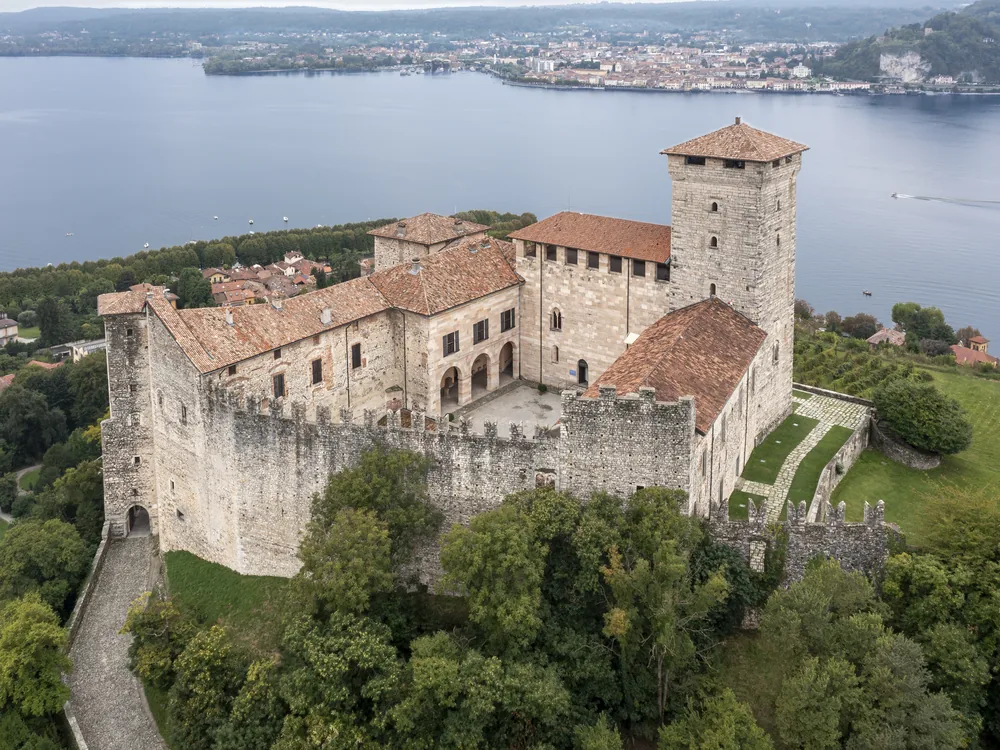
Built 1350 · Medieval fortress-castle built on a promontory above Lake Maggiore, incorporating a rectangular tower complex with battlemented walls and multiple defensive towers; the Sala di Giustizia (Hall of Justice) retains a remarkable cycle of 14th-century frescoes depicting the Battle of Desio (1277) and the defeat of Napo della Torre by Ottone Visconti — one of the best-preserved examples of secular medieval fresco painting in northern Italy; the Visconti and later Borromeo family additions include Renaissance-era residential wings integrated into the medieval fortification structure; houses the Museo della Bambola (Doll and Toy Museum), one of the largest collections of dolls and toys in Europe, occupying several castle rooms
This page is part of an independent travel guide and is not affiliated with, endorsed by, or operated by Rocca di Angera.
© Castles & Palaces
Quick Facts
- Hours
- Tue–Sun 09:00–17:30. Closed Mon
- Entry via GetYourGuide
- €18
- Duration
- 1.5–2 hours
- Best time
- April to October
- Nearest city
- Angera, Lake Maggiore
Featured Tour
Lake Maggiore: Rocca di Angera Entry Ticket
Cancellation available · Instant confirmation
Highlights
- ✦The Sala di Giustizia contains a 14th-century fresco cycle depicting the Battle of Desio (1277) — the Visconti victory over the della Torre that ended Milan's internecine power struggle and established Ottone Visconti's lordship; these are among the best-preserved examples of secular medieval fresco painting in northern Italy, predating by decades the Giotto frescoes in Padua and the Lorenzetti cycle in Siena
- ✦The Rocca has been owned by the Borromeo family since 1450 — the same family behind the Borromean Islands (Isola Bella, Isola Madre, Isola dei Pescatori) immediately across the lake, making Angera the less-visited counterpart to one of Lake Maggiore's most famous attractions
- ✦The Museo della Bambola (Doll and Toy Museum) occupies several rooms of the castle and holds over 1,000 objects spanning five centuries — dolls, toy furniture, costumes, games, and mechanical toys from the 16th century to the 20th — creating one of the most unexpected visitor experiences of any medieval Italian fortress
- ✦The castle's battlemented walls and towers command panoramic views over Lake Maggiore, with the Borromean Islands clearly visible across the water and the Alpine foothills behind — a setting that makes the fortress's strategic importance in controlling the lake crossing immediately legible
- ✦For visitors touring Italy's northern lakes region, Rocca di Angera is the principal medieval fortress site on Lake Maggiore, and pairs naturally with the Borromean Islands excursion as a same-day or same-trip experience covering both the Borromeo family's medieval stronghold and their later Baroque island gardens
Skip the queue with a guided tour
Skip-the-line tickets & expert guides
The Borromeo family's hold on Lake Maggiore is one of the more persistent facts of northern Italian history. From their acquisition of the Rocca di Angera in 1450 through their construction of the Baroque island gardens of Isola Bella and Isola Madre in the 17th century, the family shaped the lake's landscape and controlled its economic geography for nearly six centuries. Today their Borromean Islands are among the most visited sites in the Italian lakes region — the terraced gardens of Isola Bella, the botanical gardens of Isola Madre, and the fishing village of Isola dei Pescatori receive hundreds of thousands of visitors annually. The Rocca di Angera, on the eastern shore of the lake, is the other side of the same story: the medieval fortress that anchored Borromeo power on land while the islands anchored it on the water.
The castle predates the Borromeo acquisition. Its present structure dates primarily to the 14th century, when the Visconti lords of Milan used it as a strategic fortress controlling the lake crossing and the northern approach to the Lombard plain. The most remarkable survival from this Visconti period is the Sala di Giustizia — the Hall of Justice — and its fresco cycle. Painted in the late 13th and early 14th centuries, the frescoes depict the Battle of Desio (1277), in which Ottone Visconti's forces defeated Napo della Torre and established Visconti dominance over Milan. This is secular narrative fresco painting of a very high quality and an unusually early date: the cycle predates by decades the more famous secular fresco programmes of Giotto's Arena Chapel in Padua (sacred painting, completed around 1305) and the Lorenzetti brothers' Allegory of Good and Bad Government in Siena (civic painting, 1338–1339). The Angera frescoes are not widely known outside specialist circles, which makes their quality all the more surprising when encountered in a provincial lakeside fortress.
The broader castle interior accumulated across the Visconti and Borromeo periods includes residential wings integrated into the medieval fortification structure — the transition from a purely military installation to an aristocratic residential castle is visible in the architecture, as it is in many Italian fortresses that survived into the Renaissance by adapting to changing expectations of noble habitation. The panoramic views from the battlemented walls over Lake Maggiore, with the Borromean Islands directly opposite and the Piedmontese Alps behind, give the strategic logic of the castle's position an immediate visual explanation that no amount of historical narration can improve.
The most surprising element of the Rocca di Angera is the Museo della Bambola — the Doll and Toy Museum — which occupies several rooms and holds over 1,000 objects spanning approximately five centuries of European toy culture. The collection covers dolls from the 16th century to the 20th, toy furniture, period costumes for dolls, mechanical toys, board games, and children's material culture in a range and depth that qualifies it as one of the most significant toy collections in Europe. The juxtaposition with the medieval frescoes and Visconti battle narrative in the same building is jarring in a productive way — the castle functions as a medieval fortress museum in some rooms and as a history of childhood in others, and both collections reward serious attention.
For visitors to Lake Maggiore, the standard tourist circuit concentrates on Stresa as a base, the Borromean Islands excursion by boat, and possibly Verbania's botanical gardens. Angera and the Rocca sit on the opposite (eastern, Lombardy) shore and are reached by ferry from Arona or by car. The ferry crossing from Arona to Angera takes approximately 10 minutes and runs regularly — this is the natural way to combine the Borromean Islands excursion from Stresa (western shore) with the Rocca on the same day, though the logistics require some planning.
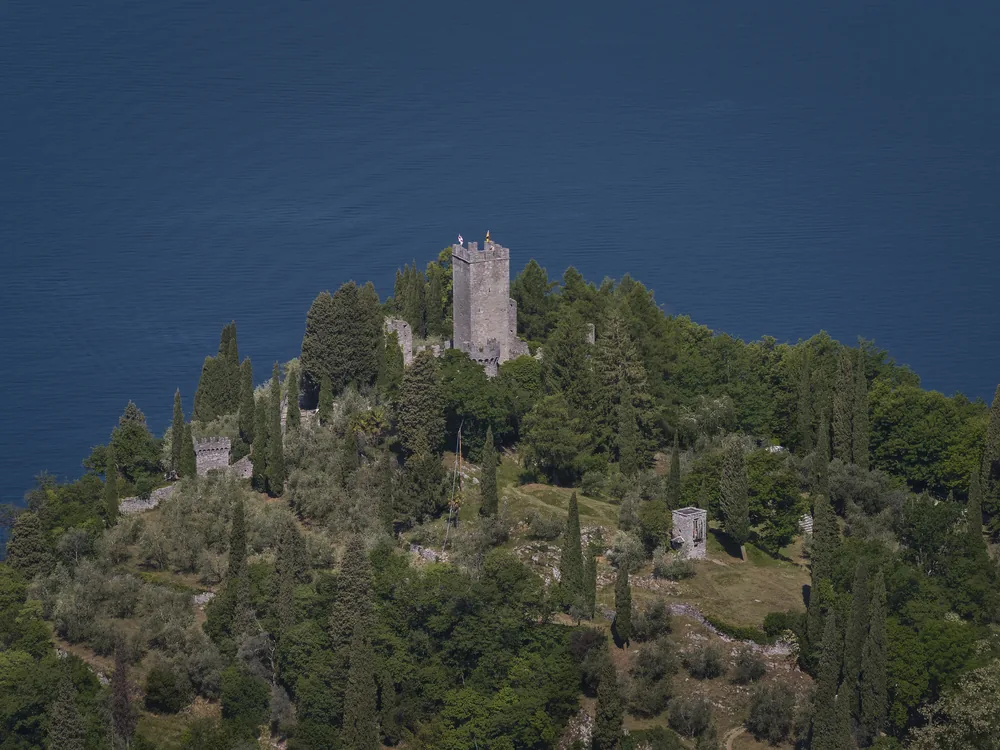
For visitors who are more broadly touring Italy's lake castles rather than concentrating on Lake Maggiore specifically, the Rocca di Angera occupies a different position: the primary medieval fortress of the northern lakes, thematically connected to Lake Como's Castello di Vezio (on the eastern shore of Lake Como, a boat trip from Varenna) as part of the broader story of medieval lakeside fortification in the Italian Alps. The two castles are on different lakes and approximately 1.5 hours apart by road — not a same-day pairing in the conventional sense, but part of the same territorial story of how medieval lordships controlled the northern Italian lake system.
The GetYourGuide self-guided entry ticket covers both the castle and the Doll Museum. The castle is open March through October only; the winter closure is firm.
The Borromeo family's broader cultural significance in northern Italy gives additional weight to the Rocca visit. The family produced Cardinal Carlo Borromeo, Archbishop of Milan from 1564 to 1584, one of the primary figures of the Catholic Counter-Reformation and a canonised saint — an administrative reformer whose influence on the structure of the Italian Catholic Church was as consequential as the Council of Trent's formal decrees. The combination of territorial control, religious prestige, and cultural patronage that the Borromeo family represented across the 15th through 17th centuries is one of the more coherent expressions of the Italian Renaissance aristocratic ideal, and the Rocca di Angera — medieval military stronghold gradually transformed into an aristocratic cultural property — encapsulates that arc from force to refinement.
Visitors arriving from the western shore by ferry from Arona will pass directly below the Rocca's walls as the boat approaches the Angera dock. This approach — from the water, as lake travellers have done for centuries — gives the castle's hilltop position and its commanding relationship to the crossing an immediacy that no road approach from the car park can replicate. The 10-minute Arona–Angera ferry runs several times daily through the visitor season and is worth taking even for those who have a car available, simply for this angle on the approach. The visual argument for why someone would build a fortress here becomes immediately obvious from the water: whoever held this rock controlled the crossing.
History
A fortress has existed at Angera since at least the 10th century, exploiting the promontory's command of the Lake Maggiore crossing. The castle passed through various northern Italian noble families before coming under Visconti of Milan control in the 13th century, when the Sala di Giustizia frescoes were painted. The Borromeo family acquired the Rocca in 1450 and have held it since, integrating it into their broader Lake Maggiore estate that includes the Borromean Islands. The Museo della Bambola was established in the 20th century using the Borromeo family's collection and subsequent acquisitions, and has become one of Europe's most important collections of antique dolls and toys.
How to Visit
Getting there: Angera is on the eastern shore of Lake Maggiore. By car from Milan: approximately 1 hour via the A8/A26 motorways (exit Sesto Calende/Angera). By ferry: the Arona–Angera crossing takes approximately 10 minutes and connects the western and eastern shores. From Stresa (western shore), take a boat to Arona then the ferry to Angera, or travel by car around the lake (approximately 1 hour).
Tickets: GetYourGuide self-guided ticket covers the castle and Doll Museum. Walk-up entry also available.
Visit length: 1.5–2 hours recommended for the castle, frescoes, and Doll Museum.
Practical tips: April to October.
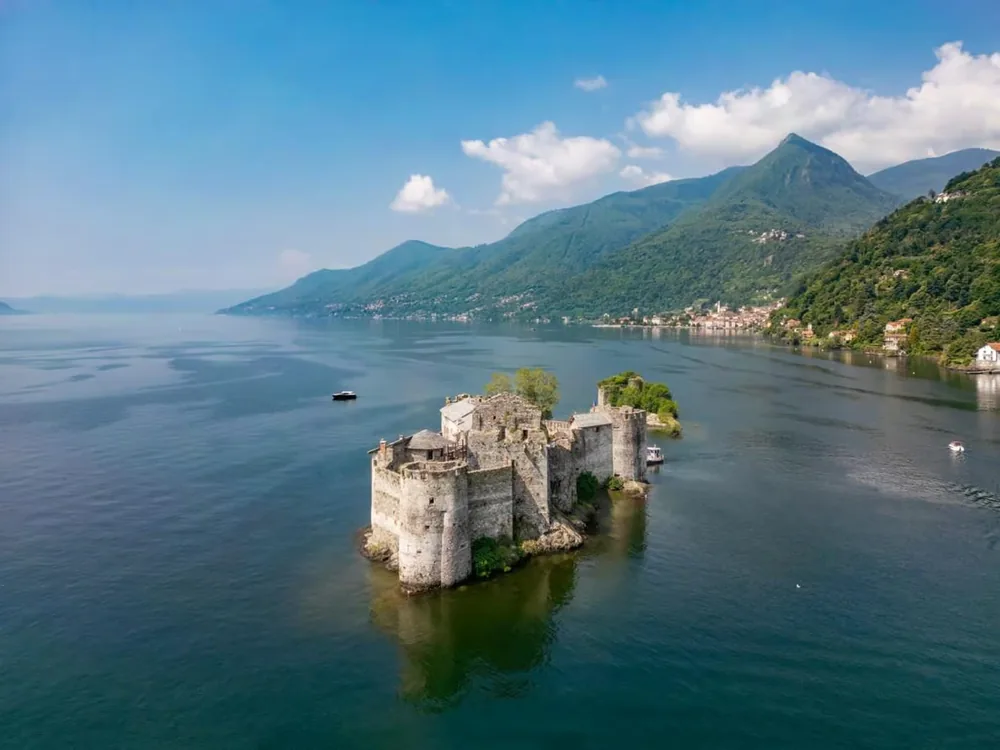
Combine with: The Borromean Islands (accessible by boat from Stresa on the western shore) is the primary Lake Maggiore pairing — both are Borromeo family properties and represent the medieval and Baroque poles of the same ownership history. On the western shore, the Castelli di Cannero boat tour visits two ruined medieval island fortresses 25 km north of Stresa — also Borromeo-owned, also reachable only by boat, and among the lake's least-crowded historic sites.
Frequently Asked Questions
The Sala di Giustizia (Hall of Justice) contains a fresco cycle painted in the late 13th and early 14th centuries depicting the Battle of Desio (1277), in which the Visconti defeated the della Torre family to establish their lordship over Milan. The frescoes are among the best-preserved examples of secular medieval narrative painting in northern Italy — secular because they depict a political and military event rather than a religious subject, and medieval because they predate by decades the more celebrated secular fresco programmes in Siena and elsewhere. They are not widely known, which makes their quality particularly striking.
Location
Via alla Rocca 2, 21021 Angera VA, Italy
Nearby Castles
Tours & Tickets
Powered by GetYourGuide
From
€18/ person