
Rocca di Lonato
Rocca di Lonato del Garda
Italy · Province of Brescia, Lombardy — Lonato del Garda, western Lake Garda shore · Near Desenzano del Garda
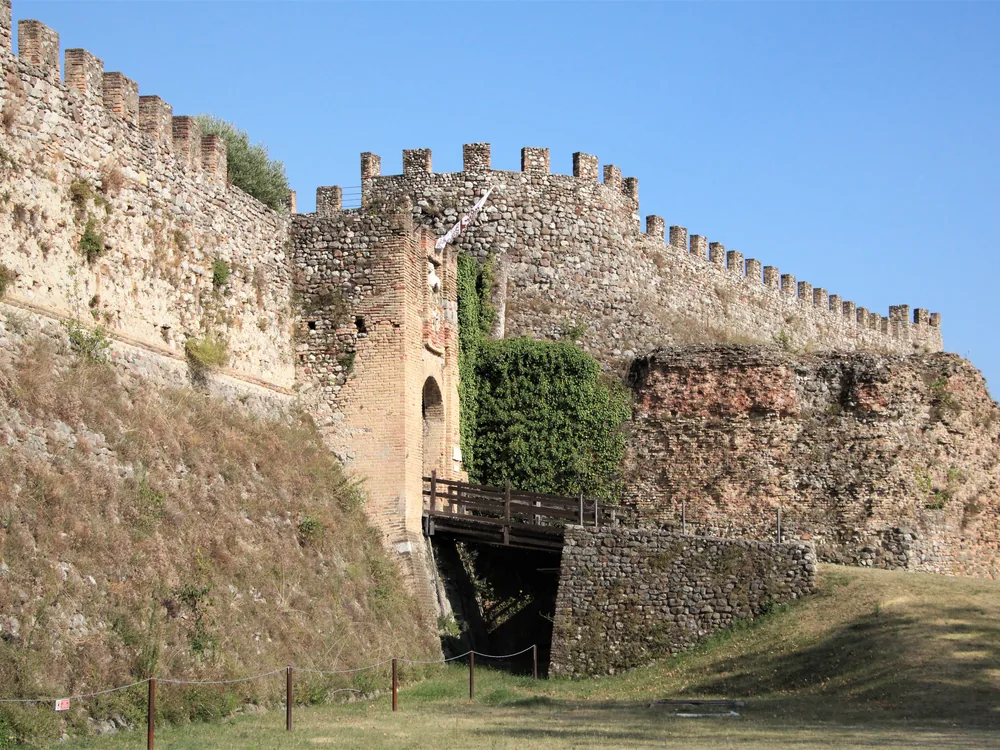
Built 1380 · Scaligeri medieval fortress, rebuilt and adapted under Venetian rule — the Rocca occupies a naturally defensible promontory above Lonato del Garda with origins in the medieval period; the current curtain wall circuit, towers, and gate structure date primarily from the Scaligeri period (late 14th century), when the Veronese dynasty reinforced the site as part of their western defensive perimeter controlling the approaches to the southwestern shore of Lake Garda; subsequent Venetian administration maintained and adapted the walls but made no major structural interventions; the adjoining Casa del Podestà (the medieval town administrative building, originally the residence and office of the Venetian podestà or governor) was converted into a house-museum in the early 20th century by Senator Ugo Da Como
This page is part of an independent travel guide and is not affiliated with, endorsed by, or operated by Rocca di Lonato.
© Castles & Palaces
Quick Facts
- Hours
- Tue–Sun 10:00–13:00, 14:00–18:00. Closed Mon
- Entry via GYG
- €12
- Duration
- 1.5–2 hours (self-guided Rocca walls and courtyard plus guided Casa del Podestà museum tour)
- Best time
- April to June and September to October
- Nearest city
- Desenzano del Garda
Featured Tour
Rocca di Lonato: Entry Ticket and Guide to the Casa del Podestà Museum
Cancellation available · Instant confirmation
Highlights
- ✦Panoramic views of Lake Garda and the Alps — from the Rocca's ramparts at altitude above Lonato del Garda, the view takes in the full southern basin of Lake Garda, the Monte Baldo ridge across the water, and on clear days the Alps to the north; Desenzano del Garda and the lake's southwestern shore are visible directly below, with the Brescia plain extending westward across the Po Valley
- ✦Garibaldi's headquarters in the 1859 battle — on June 24, 1859, Giuseppe Garibaldi directed his Hunters of the Alps from the Rocca di Lonato during one of the decisive engagements of the Second Italian War of Independence, part of the multi-theatre Battle of Solferino that also involved Napoleon III and the Piedmontese main forces; the same battles prompted Henri Dunant to found the International Red Cross
- ✦Casa del Podestà — a house-museum preserved in time — Senator Ugo Da Como (1869–1941) converted the adjoining medieval town hall into a personal house-museum preserving his antique furnishings, art collection, historical manuscripts, and the Biblioteca Maldotti (over 55,000 volumes including rare medieval manuscripts and early printed books), bequeathed to a foundation on his death and maintained exactly as he left it
- ✦Scaligeri and Venetian frontier history — the Rocca was held by the Scaligeri of Verona (the ruling dynasty of northeastern Italy in the 14th century) as part of their western defensive perimeter before passing to the Venetian Republic in the early 15th century with Venice's expansion onto the Italian mainland (the terraferma); the same Scaligeri built the contemporaneous castle at Sirmione on the lake peninsula below
- ✦An unhurried alternative to the Lake Garda crowds — most visitors to Lake Garda concentrate on Sirmione, Malcesine, and Limone; Lonato del Garda and its Rocca are ten kilometres from the lakeside resorts but see only a fraction of the traffic, with the large grassy courtyard inside the walls serving as a quiet picnic and rest point
Skip the queue with a guided tour
Skip-the-line tickets & expert guides
The fortress on the hill above Lonato del Garda does not announce itself as a major attraction. Reached by a short climb from the medieval town centre, the Rocca di Lonato is the kind of place that rewards visitors who arrive without strong expectations and leave with considerably more than they anticipated — panoramic views of Lake Garda and the surrounding Brescia plain, an unexpectedly complete medieval wall circuit, and one of the more unusual house-museums in northern Italy.
The site has been strategically significant since at least the medieval period. Control of the promontory above Lonato meant control of one of the key overland approaches to the southwestern shore of Lake Garda — the lake's importance in northern Italian military and commercial history is difficult to overstate, lying as it does between the Venetian terraferma to the east and the Duchy of Milan to the west. The Scaligeri, the powerful Veronese dynasty who dominated much of northeastern Italy through the 14th century, held and reinforced the Rocca as part of their western defensive perimeter, controlling the land routes between their Verona heartland and the approaches to Brescia and Milan. When the Venetian Republic expanded onto the Italian mainland in the early 15th century, absorbing the Scaligeri territories in a series of wars and diplomatic manoeuvres, the Rocca passed to Venice and continued its function as a military and administrative stronghold. The Venetian podestà — the appointed governor who administered subject cities and towns on the republic's behalf — was stationed at the adjoining Casa del Podestà, the building that would later become the site's most unusual feature.
The most dramatic episode in the Rocca's documented history came on June 24, 1859. Giuseppe Garibaldi, fighting as a general in the Piedmontese-French coalition against Austrian rule in Lombardy and Veneto, established his field headquarters at the Rocca di Lonato during one of the decisive engagements of the Second Italian War of Independence. The battles of June 24 were fought across the hills and towns south of Lake Garda in what military historians divide into two simultaneous actions: the Battle of Solferino, involving the French forces under Napoleon III and the Piedmontese main army, and the Battle of San Martino, the Piedmontese flank action in which Garibaldi commanded his irregular volunteer force, the Hunters of the Alps (Cacciatori delle Alpi). From the Rocca's commanding hilltop, Garibaldi directed troop movements across the visible landscape below. The battles were costly — the Austrian forces were eventually driven back, but the casualties on both sides were enormous and the management of the wounded was catastrophic by any humanitarian standard. A Swiss businessman named Henri Dunant happened to be in the area and was appalled by what he saw at Solferino; within four years he had published his account, 'Un Souvenir de Solférino,' and within a decade had helped establish the International Committee of the Red Cross. The Rocca's connection to this consequence is one of those threads of historical significance that small sites occasionally conceal beneath their modest appearances.
The present-day visit to the Rocca has two components, covered by a single GYG entry ticket. The outer fortifications — the curtain walls, the ramparts, and the medieval tower — are accessible for self-guided exploration; the perimeter walk provides the most rewarding views in the visit, with Lake Garda spread out to the northeast, the Alps framing the northern backdrop, Monte Baldo rising across the water, and the Brescia plain extending westward. The Rocca's central courtyard, sheltered inside the walls, is one of the quieter spaces in the Lake Garda area — a grassy, open space with benches and shade trees, used by Lonato residents for afternoon walks and by visitors as an unhurried rest point after the climb from town.
The second component is the guided tour of the Casa del Podestà — the medieval Venetian administrative building that Senator Ugo Da Como (1869–1941) converted into a personal house-museum in the early twentieth century. Da Como was a lawyer, historian, senator of the Kingdom of Italy, and systematic collector with a specific interest in the history of Lonato and its territory. Over decades he accumulated antique furnishings, Renaissance and Baroque artworks, historical manuscripts, and what became one of the more significant private historical libraries in Lombardy — the Biblioteca Maldotti, acquired and substantially enlarged by Da Como, now numbering over 55,000 volumes including medieval manuscripts and early printed books. When Da Como died in 1941, he bequeathed the entire complex — Rocca, Casa del Podestà, and library — to a foundation, which has maintained the property and administered public access in the decades since.
The guided tour of the Casa del Podestà covers the furnished rooms Da Como left as his working museum: the study, the reception rooms, the library reading rooms, all preserved largely as they were in his lifetime. The atmosphere is of a place that was genuinely lived in rather than assembled for display — the books remain as he ordered them, the furniture stands where it was used, the accumulated objects reflect the specific tastes and research interests of a real person. This particularity is the Casa del Podestà's most unusual quality: the sense of a specific human presence rather than a generalised collection.
Lonato del Garda is approximately 10km from Desenzano del Garda, the largest town on the southwestern lake shore and the area's main transport hub, with direct train connections to Milan and Verona. Local buses connect Desenzano to Lonato; the Rocca is a brief uphill walk from Lonato's central Piazza Martiri della Libertà.
[Scaligero Castle of Sirmione](/castles/italy/scaligero-castle-sirmione) — the most dramatically sited fortress on Lake Garda, built by the same Scaligeri dynasty in the 13th century on the tip of the Sirmione peninsula — is approximately 20km southeast along the lake shore.
History
The hilltop site above Lonato del Garda was fortified in the medieval period for the same reason it has been valued ever since: the position controls the western approaches to Lake Garda from above. The Scaligeri of Verona held and reinforced the Rocca in the late 14th century as part of their western defensive perimeter against the Duchy of Milan. In the early 15th century Venice acquired the Scaligeri territories, and the Rocca passed to the Venetian Republic — a Venetian podestà was stationed at the adjoining Casa del Podestà, giving the site both military and administrative functions that it retained through nearly four centuries of Venetian administration.
The fall of the Venetian Republic in 1797 passed the region through French and then Austrian administration. On 24 June 1859, Garibaldi directed his Hunters of the Alps from the Rocca during the Battle of San Martino in the Second Italian War of Independence — the same day and in adjacent terrain to the Battle of Solferino, whose aftermath prompted Henri Dunant to found the Red Cross.
In the early 20th century, Senator Ugo Da Como acquired the Casa del Podestà and converted it into a house-museum preserving his collection and the Biblioteca Maldotti. He bequeathed both the Rocca and the Casa del Podestà to the Fondazione Ugo Da Como in 1941. The combined site is open Tuesday to Sunday, with a single entry ticket covering both the self-guided Rocca and the guided museum tour.
How to Visit
Getting there: Lonato del Garda is ~10 km from Desenzano del Garda, the southwestern Lake Garda transport hub with direct trains from Milan (~50 min) and Verona (~25 min). Local buses connect Desenzano to Lonato. From Lonato's central Piazza Martiri della Libertà, the Rocca is a 10–15 minute uphill walk via Via Rocca.
Tickets: Walk-up entry €13 adult, free for children. The GYG entry ticket (t1333492, from €12) covers both the self-guided Rocca — walls, courtyard, and panoramic views — and the guided tour of the Casa del Podestà museum; guided museum sessions run at scheduled intervals so confirm current times when booking.
Practical tips: April to June and September to October offer the quietest visits and clearest views — summer brings day visitors from the lake resorts. The Rocca is closed Mondays; open Tuesday–Sunday in split sessions (10:00–13:00 and 14:00–18:00); confirm current hours at fondazionedacomo.it. No advance booking required for walk-up entry.
Combine with: [Scaligero Castle of Sirmione](/castles/italy/scaligero-castle-sirmione) is ~20 km southeast on the Lake Garda peninsula — built by the same Scaligeri dynasty and the most visited castle on the lake; together they cover both the dramatic lakeside fortress and the quieter hilltop command post.
Frequently Asked Questions
The GYG entry ticket (t1333492) covers both the Rocca di Lonato itself (self-guided visit to the curtain walls, ramparts, courtyard, and tower) and the guided tour of the Casa del Podestà museum, which contains Senator Ugo Da Como's antique furnishings, art collection, and the Biblioteca Maldotti historical library. The guided museum tour is led by a staff member and is included in the single ticket price. Check current tour times when booking, as the museum guided sessions run at scheduled intervals.
Location
Rocca di Lonato, Via Rocca, 25017 Lonato del Garda BS, Italy
Nearby Castles
Tours & Tickets
Powered by GetYourGuide
From
€12/ person