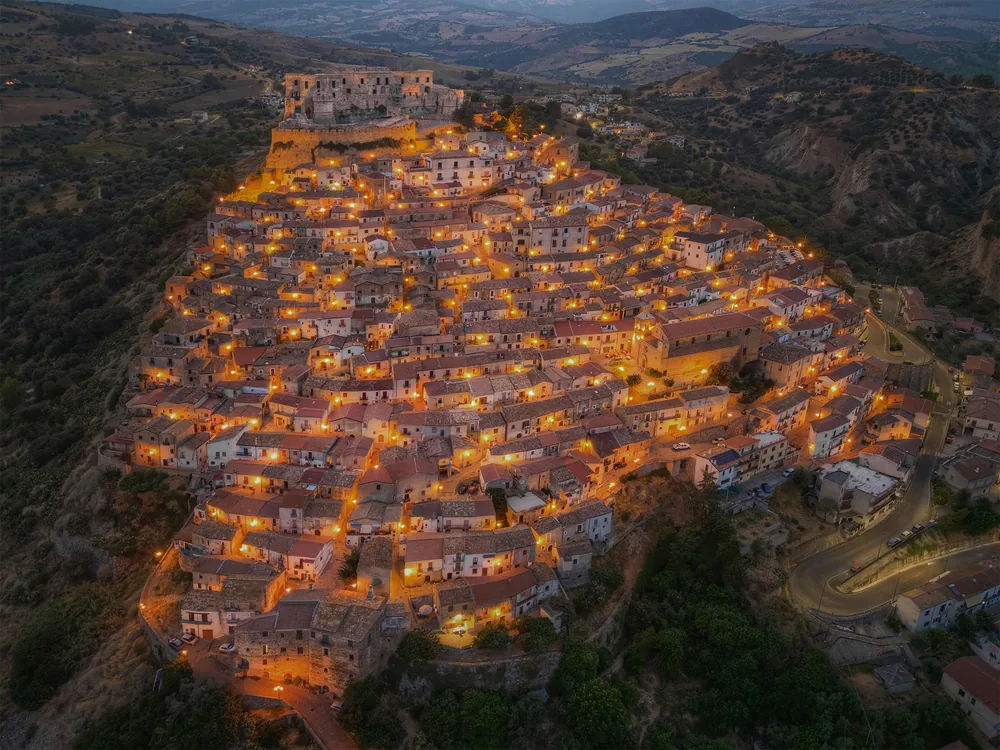
Rocca Imperiale Castle
Castello di Rocca Imperiale
Italy · Calabria, Cosenza Province, Pollino-Calabria · Near Taranto
Built 1225 · Hohenstaufen imperial castle built by Frederick II, Holy Roman Emperor, in 1225 — part of the network of defensive and administrative fortifications Frederick II constructed across southern Italy and Sicily during his reign; the castle sits on a ridge above the village of Rocca Imperiale in northern Calabria, on the Ionian coast at the border between Calabria and Basilicata; the structure follows the Frederician military design logic also evident in Castel del Monte and the other Hohenstaufen castles of the Mezzogiorno — a strategic hilltop position commanding the coastal plain and the inland routes, built to serve both administrative and defensive functions in the imperial management of the Kingdom of Sicily; the castle was expanded and modified under the Angevin dynasty that succeeded the Hohenstaufens in southern Italy after 1266, and underwent further changes under subsequent feudal lords; the village below the castle is a medieval hilltown whose urban structure follows the hillside in the pattern typical of the Norman-Swabian settlement pattern in Calabria; the area around Rocca Imperiale is known for its PGI-designated lemons (Limone di Rocca Imperiale IGP) — a specific local citrus cultivar of notable fragrance grown on the terraces below the castle
This page is part of an independent travel guide and is not affiliated with, endorsed by, or operated by Rocca Imperiale Castle.
© Castles & Palaces
Quick Facts
- Hours
- Mon–Sat 09:00–13:00. Sun 09:00–18:00
- Guided tour from
- €110
- Duration
- 1–1.5 hours (castle + village walk)
- Best time
- April to June and September to October
- Nearest city
- Taranto
Featured Tour
From Taranto: Rocca Imperiale Private Guided Tour
Cancellation available · Instant confirmation
Highlights
- ✦Frederick II, Holy Roman Emperor (1194–1250), is one of the most extraordinary rulers of medieval Europe — King of Sicily from the age of 3, King of Germany at 18, Holy Roman Emperor at 26, King of Jerusalem through a Crusade conducted primarily through diplomacy rather than combat; he maintained a multicultural court in Palermo where Arabic, Greek, Latin, Italian, and Provençal were spoken and where scholars of Christian, Muslim, and Jewish background coexisted; his building programme across southern Italy and Sicily — Castel del Monte, the Castel dell'Ovo in Naples, the fortifications of Syracuse and Catania, and smaller strategic castles including Rocca Imperiale — represents one of the most coherent administrative and defensive infrastructure projects of any medieval European ruler; Rocca Imperiale's 1225 construction fits squarely into this programme, built to control the coastal plain at the northern end of the Calabrian coast where the routes between the Kingdom of Sicily and the Lombard north converged
- ✦The Paese della Poesia (Country of Poetry) festival at Rocca Imperiale is one of Italy's most distinctive literary events — held annually in late August, it brings contemporary Italian and international poets to the medieval village for readings, performances, and literary events in the castle, the village streets, and the public spaces of the hilltop; the festival was founded in 1992 and has grown into a nationally recognised event in the Italian literary calendar; the choice of a small Calabrian hilltop castle as the setting for a poetry festival reflects both the cultural ambitions of the local administration and the genuine quality of Rocca Imperiale as a performance space — the views from the castle walls across the Ionian coast and the village below create an atmospheric setting that few Italian urban literary festivals can match
- ✦The Limone di Rocca Imperiale IGP (Indicazione Geografica Protetta) designation covers the specific lemon cultivar grown on the terraces below the castle — a variety of notable fragrance and acidity, grown in the microclimate created by the castle ridge's position on the Ionian coast; the PGI designation is an EU quality certification establishing that the geographical origin (the specific microclimate and soil of this ridge) is integral to the product's character; the combination of a Frederick II castle, a medieval hilltown, a poetry festival, and a protected lemon is the kind of layered local identity that southern Italian small towns sometimes carry with unexpected richness
- ✦Rocca Imperiale is the first Calabria entry on this site — the southernmost Italian region and one of the least visited by international tourists despite containing Norman-Swabian castle architecture, Magna Graecia archaeological sites (including Sibari, one of ancient Greece's most prosperous colonies, 30 km from Rocca Imperiale), and one of the most dramatic coastal landscapes in Italy; the Ionian coast of northern Calabria is the specific landscape visible from the castle walls — flat coastal plain meeting the sea, with the Pollino mountains as a backdrop to the northwest
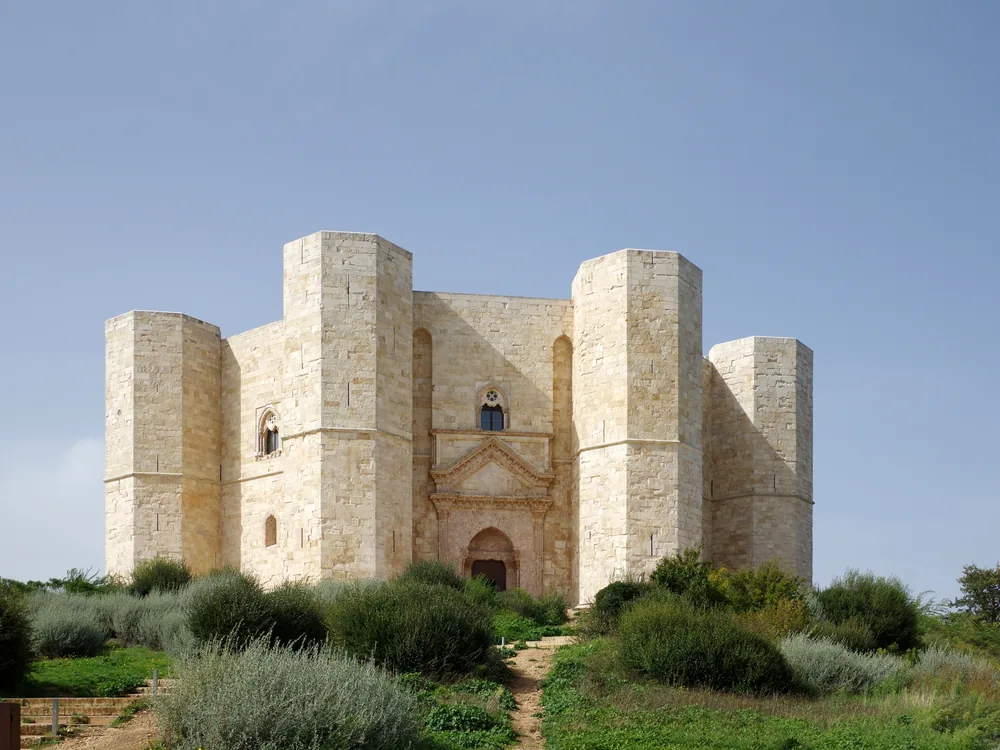
- ✦The Hohenstaufen legacy in southern Italy — Frederick II's dynasty, which ruled the Kingdom of Sicily from 1194 until the Angevin conquest of 1266 — is one of the most architecturally productive chapters in medieval Italian history; the comparable castle on this site is [Castel del Monte](/castles/italy/castel-del-monte) in Puglia, Frederick II's most famous building and one of the most analytically discussed medieval structures in Europe; Rocca Imperiale and Castel del Monte are both Frederician imperial castles, and the contrast between the relatively modest strategic hilltop castle at Rocca Imperiale and the geometrically sophisticated octagonal monument at Castel del Monte illustrates the range of Frederick II's building programme across the Mezzogiorno
Skip the queue with a guided tour
Skip-the-line tickets & expert guides
Rocca Imperiale Castle stands on a ridge above the village of Rocca Imperiale in northern Calabria, at the point where the Calabrian coast meets the border with Basilicata on the Ionian Sea. It was built by Frederick II, Holy Roman Emperor, in 1225 — part of the network of Hohenstaufen imperial fortifications that Frederick constructed across the Kingdom of Sicily during his reign, designed to serve both defensive and administrative functions in the imperial governance of southern Italy.
Frederick II (1194–1250) is one of the most remarkable rulers of medieval Europe. King of Sicily from childhood, Holy Roman Emperor at 26, King of Jerusalem through a Crusade conducted primarily through diplomatic negotiation rather than military conquest, he maintained a multicultural court in Palermo where Arabic, Greek, and Latin scholarship coexisted. His building programme across southern Italy and Sicily — which includes Castel del Monte in Puglia, the Castel dell'Ovo in Naples, and strategic castles at numerous Mezzogiorno sites — represents a systematic attempt to express imperial authority through architecture across the entirety of his southern kingdom. Rocca Imperiale's position at the northern end of the Calabrian Ionian coast, commanding the coastal plain and the routes between Calabria and the north, made it a logical node in this network.
The castle was subsequently expanded under the Angevin dynasty that replaced the Hohenstaufens in southern Italy after the Battle of Benevento in 1266, and modified by later feudal lords. The medieval village below the castle follows the hillside in the pattern typical of Norman-Swabian settlement in Calabria — a compact urban fabric of narrow streets climbing the ridge to the castle gate.
Rocca Imperiale is the first Calabria entry on this site. Calabria is the least visited region of mainland Italy by international tourists, despite its Hohenstaufen castle architecture, the extensive Magna Graecia archaeological heritage of the Ionian coast (Sibari — one of ancient Greece's most prosperous colonial cities — is 30 km from Rocca Imperiale), and the dramatic coastline of the Ionian and Tyrrhenian shores. The castle's position on the ridge above the coastal plain gives views across the Ionian Sea and toward the Pollino mountains.
The area is designated for its PGI lemons (Limone di Rocca Imperiale IGP) — a specific citrus cultivar of notable fragrance grown on the terraces below the castle in the microclimate of the Ionian ridge. The EU's geographic indication designation confirms that the specific character of these lemons is inseparable from the geographical conditions of this particular hillside.
The Paese della Poesia (Country of Poetry) festival, held annually in late August since 1992, brings Italian and international poets to the castle and village for readings and performances. The festival's choice of a small Calabrian hilltop castle as its permanent venue is one of the more distinctive pairings of medieval heritage and contemporary literary culture in Italy.
The GetYourGuide product is a private guided tour from Taranto covering Rocca Imperiale and the surrounding area — €110 for a private group, not per person. Independent visitors can reach the castle by car from Taranto (approximately 90 km, 1 hour 15 minutes) or from Sibari (30 km). [Castel del Monte](/castles/italy/castel-del-monte) in Puglia — Frederick II's most famous building — is the natural companion piece for visitors interested in the Hohenstaufen imperial castle programme.
History
Frederick II, Holy Roman Emperor and King of Sicily, built the castle at Rocca Imperiale in 1225 as part of the network of Hohenstaufen imperial fortifications that controlled the coasts and inland territories of the Kingdom of Sicily. The castle served the administrative and defensive functions of this network through Frederick's reign until his death in 1250, and the village of Rocca Imperiale developed below it in the pattern typical of Calabrian hilltown settlement — community forming around the castle's protective shadow.
The Battle of Benevento in 1266 ended Hohenstaufen power in southern Italy and transferred the Kingdom of Sicily to the Angevins, who expanded the castle under their feudal administration. Subsequent centuries brought Aragonese and Spanish vice-regal jurisdiction over the region, with the castle passing through various feudal lords. Italian unification in the 19th century transferred the castle to municipal management.
The Paese della Poesia — Country of Poetry — literary festival was founded at Rocca Imperiale in 1992 and has been held annually in late August since. The castle is open to visitors.
How to Visit
Getting there: Rocca Imperiale is best reached by car — no direct public transport serves the village. From Taranto: ~90 km south on the SS106 Ionian coastal road (~1h15). From Sibari/Cassano allo Ionio: ~30 km north (~30 min). From Naples: ~3 hours via A3/SS106. The SS106 coastal bus stops at the Rocca Imperiale junction, from where it is a steep uphill walk through the village to the castle.
Tickets: Walk-up entry €4 adult, €2 child; confirm current seasonal hours at comune.roccaimperiale.cs.it before travelling. The GetYourGuide private guided tour from Taranto (not per person) is a 4-hour private group experience covering the castle and surrounding area.
Practical tips: April to June and September to October are the most comfortable months — summer is hot and the Ionian coast fills with beach visitors, though the hilltop castle stays relatively quiet. The castle is open mornings only on weekdays (09:00–13:00) with extended Sunday hours to 18:00; late August brings the Paese della Poesia poetry festival to the castle and village. Allow 1–1.5 hours for castle and village walk.
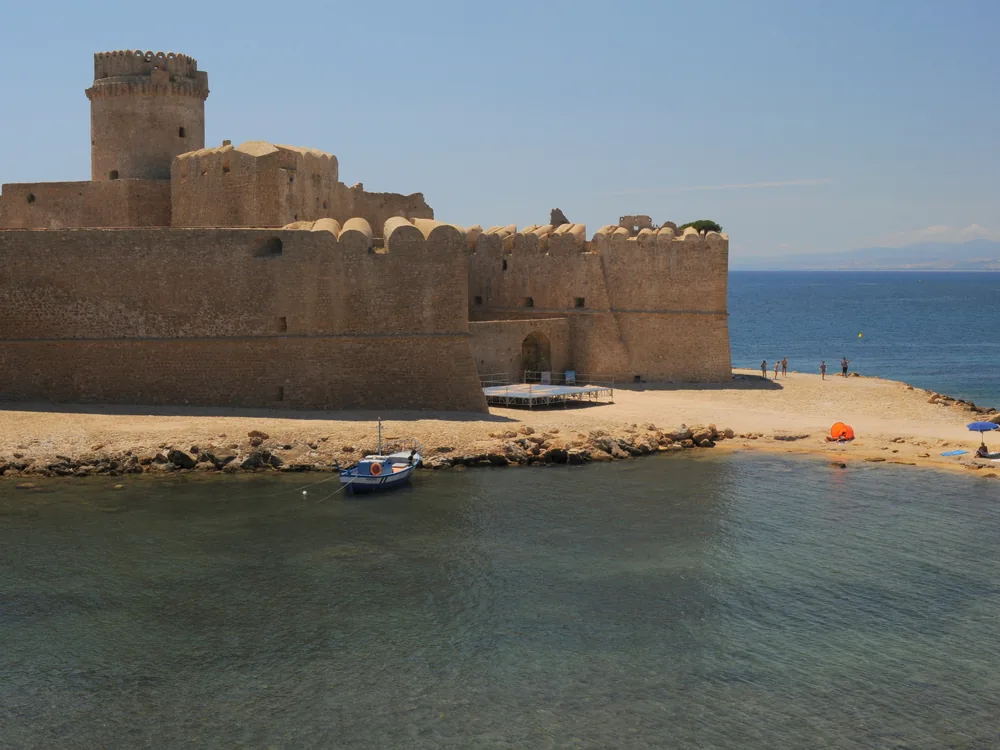
Combine with: Castel del Monte in Puglia is Frederick II's most famous castle and the architectural counterpoint to Rocca Imperiale's strategic hilltop form. Le Castella Fortress is further south on the Calabrian coast.
Frequently Asked Questions
Frederick II (Holy Roman Emperor, 1194–1250) built a network of castles across southern Italy and Sicily as part of his governance of the Kingdom of Sicily. Rocca Imperiale was built in 1225 at the northern end of the Calabrian Ionian coast, at a strategic position commanding the coastal plain and the routes between Calabria and the north. Like other Frederician castles in the Mezzogiorno, it served both defensive and administrative functions in the imperial management of the kingdom.
Location
Via Castello, 87074 Rocca Imperiale CS, Italy
Nearby Castles
Tours & Tickets
Powered by GetYourGuide
From
€110/ person