
Rocca Paolina
Rocca Paolina
Italy · Umbria, Perugia · Near Perugia
Built 1540 · Renaissance papal punitive fortress built directly over a buried medieval quarter — Antonio da Sangallo the Younger designed the Rocca Paolina between 1540 and 1543 on commission from Pope Paul III following Perugia's defeat in the Salt War; the fortress was built not by clearing the existing Baglioni family district but by filling it: the streets, house fronts, and ground floors of the Baglioni quarter were preserved intact beneath the new fortress walls, effectively creating a buried medieval city entombed within the fortress foundations; the portion visible today is the surviving underground level — the original Baglioni streets, tower bases, and house interiors — which is traversed by modern public escalators connecting the lower town to Piazza Italia; the above-ground fortress was almost completely demolished by the citizens of Perugia in 1848 following the end of papal rule, leaving only fragments of the outer walls
This page is part of an independent travel guide and is not affiliated with, endorsed by, or operated by Rocca Paolina.
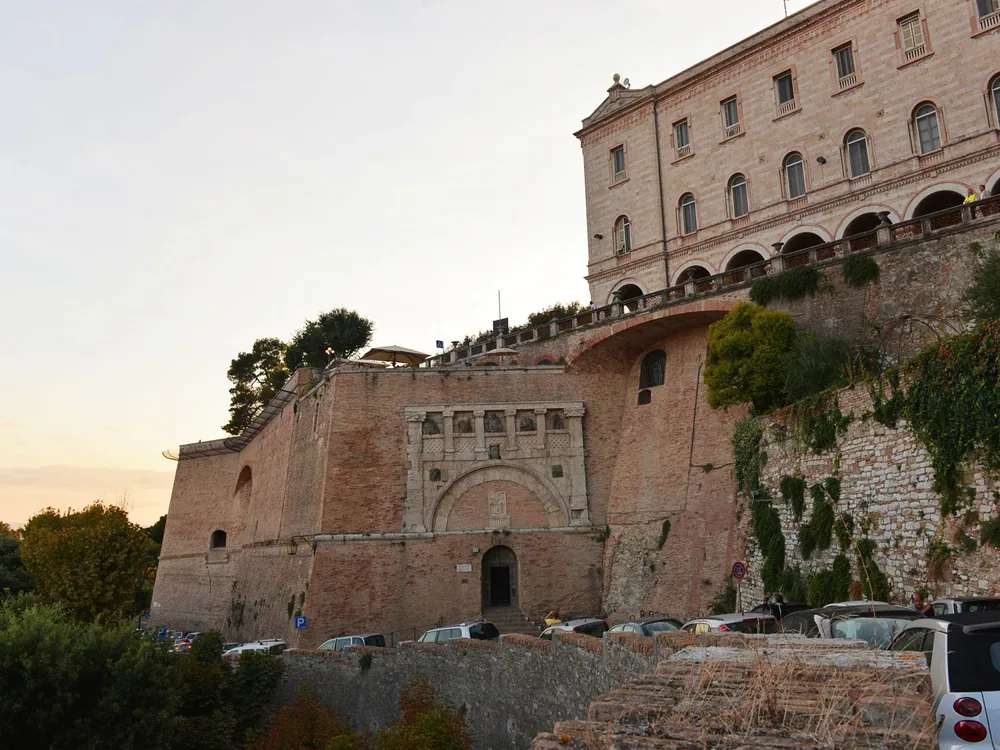
© Castles & Palaces
Quick Facts
- Hours
- Mon Open — the underground passage is a public pedestrian route. Tue–Sun Open
- Guided tour from
- €30
- Duration
- 30 minutes (free public walk-through); 1.5 hours (GetYourGuide guided walking tour of Perugia historic centre including the underground section)
- Best time
- Year-round
- Nearest city
- Perugia
Featured Tour
Perugia: Old Town Walking Tour, Piazza IV Novembre
Cancellation available · Instant confirmation
Highlights
- ✦The buried medieval city — the Baglioni family's actual 15th-century streets, house facades, tower bases, and ground-floor interiors survive intact beneath the fortress that was built to entomb them; walking through the underground passage you are walking through the streets of pre-conquest Perugia preserved by accident of construction method: Pope Paul III had the fortress built over the medieval quarter rather than clearing it, so the district was sealed rather than destroyed
- ✦The Salt War of 1540: why this fortress exists — Perugia revolted in 1540 against a new papal salt tax (the 'Guerra del Sale'), lost the revolt when the city capitulated after a brief siege, and was punished by the construction of the Rocca directly on top of the Baglioni quarter — the ruling family's district demolished (or rather buried) as a permanent symbol of who now controlled the city; the fortress physically embodied papal authority for three centuries
- ✦Free public escalators through a Renaissance fortress — the Rocca Paolina underground is not only a heritage site but an active civic infrastructure: modern escalators installed in the 20th century use the fortress's buried passages to connect the lower town to Piazza Italia, and Perugians use it daily as a commuter route; the conjunction of Renaissance military architecture and contemporary public escalators is unlike anything else in Italian historic cities
- ✦Antonio da Sangallo the Younger's entombment technique — rather than demolishing the Baglioni district, Sangallo's design filled the existing rooms and streets with rubble and soil to the level of the new fortress floor, then built on top; the filling preserved the below-grade structures while erasing them from the urban surface; it is arguably the most thorough act of punitive urban erasure in Italian Renaissance history — and the most complete accidental preservation
- ✦1848: the demolition as a political act — when Perugia came under Risorgimento control during the revolutions of 1848, the citizens immediately attacked the above-ground portion of the Rocca; the demolition of the fortress was not primarily practical but symbolic: tearing down the building that had represented three centuries of papal dominance over the city was an act of political theatre that left the underground portion — embedded in the hillside below street level — untouched by necessity
- ✦GetYourGuide Perugia Old Town Walking Tour including Rocca Paolina underground (1.5 hours) — the most-reviewed GetYourGuide product on the site
Skip the queue with a guided tour
Skip-the-line tickets & expert guides
The most remarkable thing about the Rocca Paolina is that it was meant to erase something and instead preserved it. Pope Paul III commissioned Antonio da Sangallo the Younger to build a punitive fortress on top of the Baglioni family's quarter of Perugia after the city's defeat in the Salt War of 1540 — a revolt against a new papal salt tax that ended with the city's capitulation and the pope's decision to make the consequences physically permanent. The fortress would occupy the highest point of the city, built directly over the homes and streets of the family who had run the city for decades, eliminating their district from the urban map. It stood for three centuries as the most visible symbol of papal control over Perugia. Then Perugia tore it down.
What survives is the part that was buried.
Sangallo's construction method, dictated by the terrain and the existing buildings, was not to demolish the Baglioni district but to fill it. The streets and house fronts, the tower bases and ground-floor rooms of the quarter, were filled with rubble and soil to the level of the new fortress floor, then built over. The district was sealed rather than cleared — an accidental form of preservation in which the very act of entombment kept the medieval urban fabric intact beneath the weight of the fortress above it.
When Perugia gained independence from papal control during the upheavals of 1848, the citizens attacked the above-ground portion of the fortress — a specific act of political demolition, aimed at the symbol of papal power — and dismantled most of what rose above the hillside. The underground portion was embedded in the rock below street level and could not be demolished without destroying the hill itself. It remained, sealed, until the 20th century, when the city excavated and opened the buried passages as a pedestrian route between the lower town and the upper city, installing modern escalators through the fortress passages.
The result is something that has no direct equivalent in Italy. You enter the Rocca Paolina from the lower town through an entrance cut into the hillside, and you are immediately in the buried 15th-century Baglioni quarter: actual medieval streets with house facades still standing to first-floor height, tower bases, doorways, window openings, arched passages between buildings — the entire social geography of a pre-conquest medieval urban district preserved at scale beneath the fortress that was built to erase it from collective memory. The streets are lit, signed, and maintained by the city. The escalators that carry Perugians between the lower town and Piazza Italia run through the same passages.
The Salt War that produced the fortress deserves its context. In 1539, Pope Paul III imposed a new tax on salt throughout the Papal States. The Perugians, who had a specific exemption from salt taxes under an earlier treaty, refused to pay and expelled the papal legate. The Pope's response was military force; the city capitulated in the summer of 1540 without significant fighting. The punishment Paul III chose — not execution or exile but the physical obliteration of the ruling family's district from the urban fabric — was specifically architectural. A fortress built over your houses, streets, and towers, erasing your district from the surface of the city while leaving you aware that it existed beneath: the Rocca Paolina was a form of permanent humiliation that used buildings as its medium.
The buildings below are also a social document. The Baglioni quarter preserved under the fortress contains the street plan of a 15th-century Perugian upper-class district: the relationship between the main thoroughfares and secondary lanes, the relative scale of tower houses and ordinary residences, the placement of arched passages — the spatial sociology of medieval urban life at the level of one neighborhood. Walking through it is as close as it is possible to get to the experience of walking through a medieval Italian town, with the obvious difference that it is underground, artificially lit, and serves as a commuter route for contemporary Perugians.
The guided walking tour offered through GetYourGuide covers the underground section as part of a broader 1.5-hour Perugia historic-centre tour that also visits the Etruscan Arch, Piazza IV Novembre, and the Fontana Maggiore — one of the finest medieval fountains in Italy. The Rocca underground walk-through is free as a public pedestrian passage at any time.
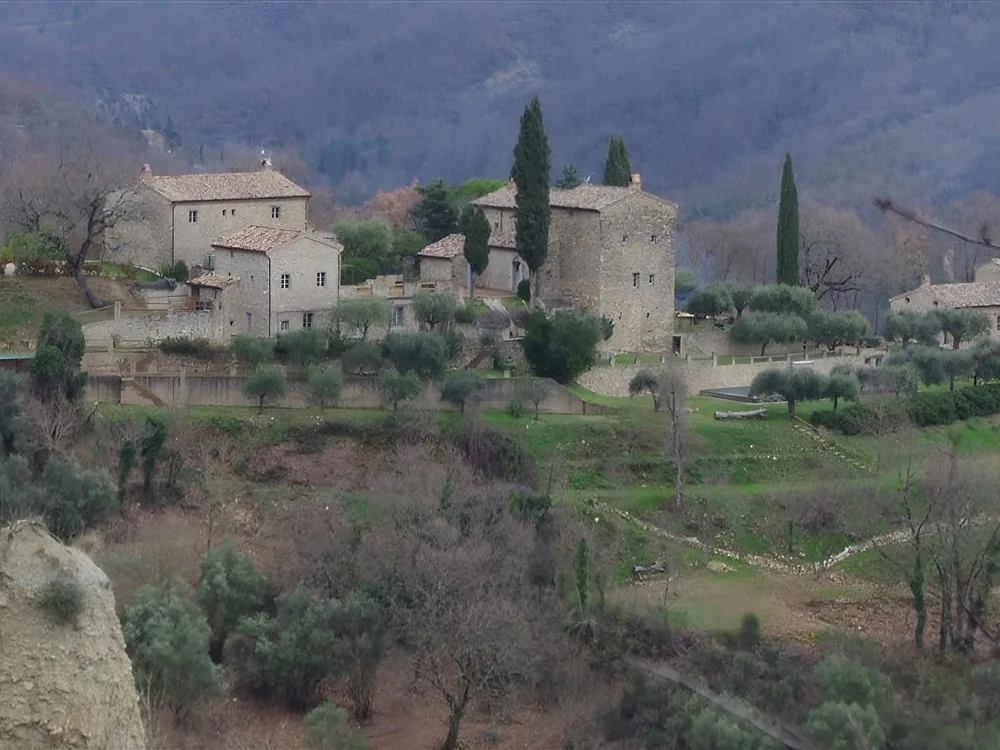
[Cardaneto Castle](/castles/italy/cardaneto-castle) in Foligno, 35 kilometres southeast in the same Umbrian valley system, is the region's other medieval fortification on this site.
History
Perugia's revolt against Pope Paul III's salt tax — the Guerra del Sale — ended in 1540 when the city capitulated after a short siege. Paul III's response was architectural: he commissioned Antonio da Sangallo the Younger to build a punitive fortress directly over the Baglioni family's quarter, the most powerful Perugian noble clan, whose prominence was to be literally buried under the foundations of papal authority. What followed in the three years of construction from 1540 to 1543 was one of the more unusual decisions in Renaissance military engineering: rather than demolishing the Baglioni neighbourhood, Sangallo's builders filled the streets and house fronts with earth and rubble, building directly on top of the existing urban fabric. The Porta Marzia, a Roman gate, was preserved and incorporated into the fortress wall — a piece of antiquarian sensitivity within an otherwise punitive project.
The above-ground Rocca Paolina stood for three centuries as the symbol of papal control over Perugia. When the city gained independence during the Risorgimento uprisings of 1848, citizens demolished most of the above-ground structure as a deliberate political act — destroying the symbol of subjugation. The underground level survived intact, preserved by the very earth fill that had buried it, and the medieval streets and building facades beneath the fortress were gradually excavated and opened to the public in the late 19th and 20th centuries.
Escalators now carry pedestrians through the underground passages as a public route between the lower town and Piazza Italia. Exhibition spaces within the walls host rotating cultural programming. Entry is free.
How to Visit
Getting there: Perugia is ~2.5 hours from Rome by train (Trenitalia from Roma Termini, direct or via Foligno) and ~2 hours by bus from Florence. The Rocca Paolina entrance at Via Baglioni in the lower town is served by the same public escalators that connect the lower city to Piazza Italia — the underground passage is part of the city's everyday pedestrian infrastructure.
Tickets: Free entry. The underground passage is a public pedestrian route open daily with no admission charge. The GetYourGuide Old Town walking tour includes a guided underground section in the Rocca plus the Etruscan Arch, Piazza IV Novembre, and the Fontana Maggiore — a 1.5-hour circuit that provides the fullest context for the buried city.
Practical tips: The underground maintains a consistently cool temperature year-round — welcome relief on hot summer days and useful wet-weather cover. No advance booking is needed for the free walk-through; allow 20–30 minutes for a self-guided circuit. Exhibition spaces within the Rocca may charge a separate fee when cultural events are active.
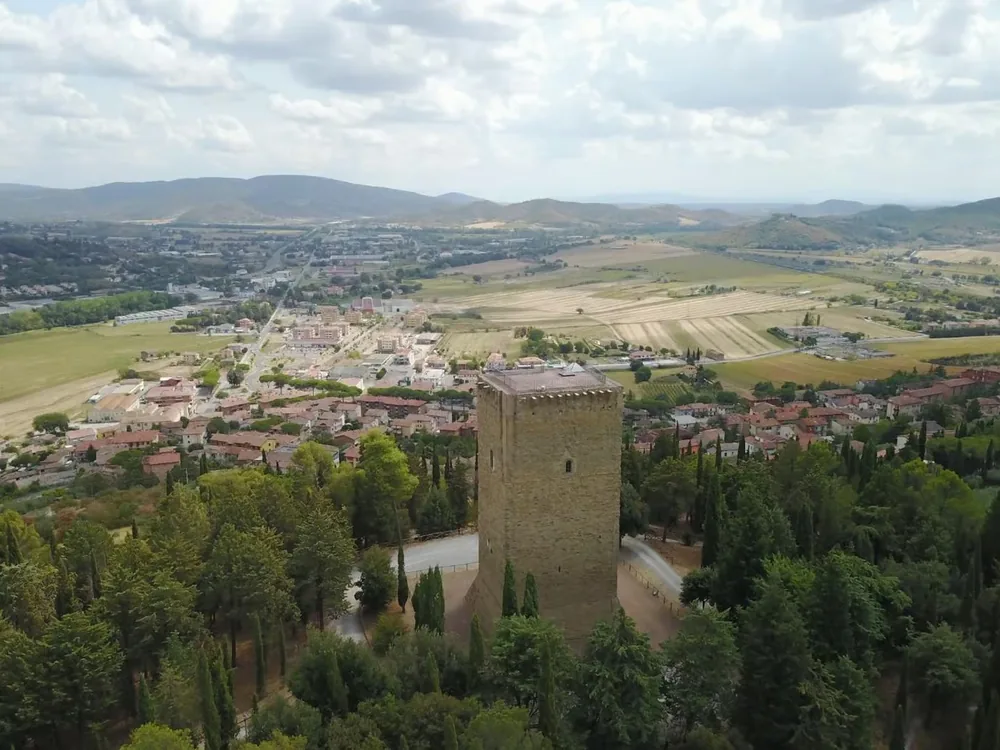
Combine with: Cardaneto Castle is ~35 km southeast in Foligno in the same Umbrian valley; Lambardi Tower of Magione is ~20 km west on the shore of Lake Trasimeno.
Frequently Asked Questions
No — the underground passage through the Rocca Paolina is a free public pedestrian route that Perugians use daily to travel between the lower town and Piazza Italia. The escalators and the medieval street passages they run through are civic infrastructure, not a ticketed museum. Exhibition spaces within the wider Rocca Paolina complex may charge a separate admission fee when in use for cultural events. The GetYourGuide guided walking tour (from €30) adds a guide and a broader Perugia historic-centre itinerary to the underground section; the underground portion itself requires no ticket at any time.
Location
Via Marzia, 06121 Perugia PG, Italy
Nearby Castles
Tours & Tickets
Powered by GetYourGuide
From
€30/ person