
Villa Arconati
Villa Arconati — FAR (Fondazione Augusto Rancilio)
Italy · Lombardy — Metropolitan City of Milan, Castellazzo di Bollate (Bollate municipality) · Near Milan
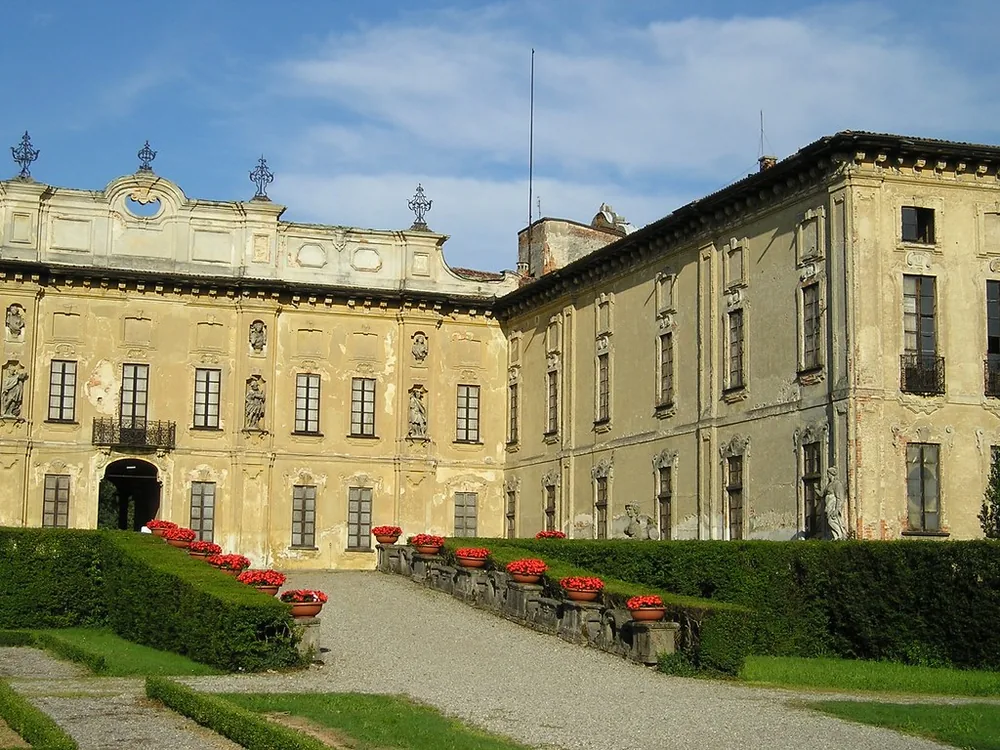
Built 1600 · Lombard baroque villa developed across the 17th and early 18th centuries (c.1600–1750) by the Arconati family of Milan; two main residential floors arranged around a central cortile; frescoed ceilings throughout the main floor rooms in the late Lombard baroque manner; the monumental garden of approximately 12 hectares is laid out along two principal axes with a baroque exedra, long hedgerow corridors, circular water basins, and formal boschi — one of the most extensive baroque villa garden ensembles in the metropolitan Milan area
This page is part of an independent travel guide and is not affiliated with, endorsed by, or operated by Villa Arconati.
© Castles & Palaces
Quick Facts
- Hours
- Thu–Sun 10:00–18:00. Closed Mon–Wed
- Entry via GetYourGuide
- €13
- Duration
- 2–3 hours (villa + full garden circuit)
- Best time
- April to October
- Booking
- Required — book 1+ days ahead
- Nearest city
- Milan
Featured Tour
Villa Arconati: Entrance Ticket with Autonomous Tour
Cancellation available · Instant confirmation
Highlights
- ✦The 12-hectare monumental baroque garden — one of the largest historic villa gardens in the metropolitan Milan area, laid out on two principal axes with a baroque exedra terminus, long hedgerow corridors, circular water basins, and ornamental woodland sections that take a full 90 minutes to walk properly
- ✦The baroque exedra — the garden's most architecturally ambitious feature: a curved monumental structure at the far end of the principal garden axis that frames the perspective and creates a sense of formal termination characteristic of the grandest baroque garden designs
- ✦Frescoed ceilings across 70 rooms — the villa's moveable furnishings were dispersed over the centuries, but the baroque fresco decorations on the main-floor ceilings survive and constitute the primary reason to explore the villa's interior rooms
- ✦Arconati family and Leonardo da Vinci connection — the Arconati were the long-term custodians of several of Leonardo da Vinci's manuscript codices before the codices were dispersed to institutions; their cultural significance extends beyond their architectural investment at Castellazzo
- ✦GetYourGuide 'Rare Find' status — Villa Arconati's low profile outside the Lombard heritage specialist community means the estate is rarely crowded, offering the experience of a major baroque villa garden at a pace and scale the more famous Lake Como villas cannot provide
Skip the queue with a guided tour
Skip-the-line tickets & expert guides
Villa Arconati stands in Castellazzo di Bollate, a village 20 kilometres northwest of Milan, behind a long approach road and gates that open into one of the most substantial Lombard baroque villa complexes accessible to the public — 70 rooms on two main floors and a 12-hectare monumental garden that together constitute one of the largest historic villa estates in the metropolitan Milan area.
The villa was developed by the Arconati family across the 17th and early 18th centuries, with construction and garden design progressing from approximately 1600 through the 1750s in a sustained programme of aristocratic investment typical of the Lombard nobility of the period. The Arconati were a significant Milanese family — patrons of arts and letters, custodians of a library that included Leonardo da Vinci manuscripts — and their villa at Castellazzo expressed both their wealth and their cultural ambitions. The result is an ensemble of rooms arranged on two main floors around a central cortile, with baroque fresco decorations throughout, carved stonework, and the spatial sequence of a Lombard palazzo of serious intention.
The practical reality for today's visitor is important to understand before arriving: the villa is largely unfurnished. The period furniture, paintings, and decorative objects that once populated the 70 rooms were dispersed over the centuries, and what visitors see today is the architectural shell — the frescoed ceilings, carved doorframes, tiled floors, and spatial sequence of the rooms — rather than a fully furnished house museum. The highlight is the architecture itself, and particularly the fresco decorations, which survive across multiple ceilings and represent one of the more complete baroque decorative programmes in the Lombard villa tradition.
The 12-hectare garden is the villa's most impressive single feature. Laid out along two principal axes, the garden incorporates a baroque exedra at its far terminus, long hedgerow corridors, circular water basins, and formal boschi that together create a monumental landscape of a kind rare in the area around Milan. The scale — comparable to approximately 30 football pitches in area — exceeds anything a visitor might expect from a suburban Lombard villa, and the baroque exedra is a piece of landscape architecture of genuine ambition.
The Fondazione Augusto Rancilio (FAR) now manages the estate and has invested in stabilisation and restoration. The GetYourGuide entry ticket provides autonomous (self-guided) access to both the villa and the full garden circuit. GetYourGuide lists Villa Arconati as a 'Rare Find' — reflecting its genuinely low profile outside the Lombard heritage specialist community — but the estate rewards the detour for visitors with an interest in baroque garden design and Lombard aristocratic architecture.
History
The Arconati family were among the significant noble families of 17th-century Milan — patrons of arts and literature who occupied positions in the cultural and civic life of the Duchy of Milan under Spanish and later Austrian Habsburg rule. Their decision to develop a villa estate at Castellazzo di Bollate in the early 17th century followed the established pattern of Lombard aristocratic investment in country retreats near the city, a tradition that produced many of the region's most important historic villa estates. The programme of construction and garden design at Castellazzo unfolded across four to five generations, from the earliest works around 1600 through the mature baroque garden and the completion of the main villa rooms by the mid-18th century.
The Arconati's most remarkable cultural contribution was their custodianship of a collection of Leonardo da Vinci's manuscript codices — scientific notebooks containing studies of hydraulics, anatomy, mechanics, and the arts — which the family held in private collection for an extended period before the codices passed to other institutions. The most significant of these, the Codex Atlanticus, is now held at the Biblioteca Ambrosiana in Milan.
The dispersal of the villa's furnishings and collections occurred across the 19th and 20th centuries as the estate changed hands. The Fondazione Augusto Rancilio subsequently acquired the property and committed to stabilising the structure and opening the estate to visitors, making a long-term investment in public access to one of the more overlooked baroque villa complexes in Lombardy.
How to Visit
Getting there: Villa Arconati is in Castellazzo di Bollate, approximately 20 kilometres northwest of central Milan. By public transport from Milan, take the S1 suburban rail line from Milano Centrale or Milano Porta Garibaldi to Bollate Centro or Garbagnate Milanese (approximately 20–25 minutes), then a taxi or rideshare (approximately 5 minutes) to Via Fametta 1. By car from Milan, follow the SS233 or SS33 northwest toward Bollate; the villa is signposted from Castellazzo di Bollate. Parking is available at the villa.
Tickets: Walk-up admission is €13 for adults, €8 for children, covering autonomous (self-guided) access to both the villa and the garden. The GetYourGuide entry ticket provides the same access with the convenience of advance booking. Booking at least one day in advance is required — the villa does not accept unbooked walk-up visitors; admission is by timed slot. Book at villaarconati-far.it or via GetYourGuide.
Practical tips: Note that the villa is largely unfurnished — the highlight is the Baroque architecture, frescoed ceilings, and the 12-hectare garden rather than period rooms. Plan 2–3 hours for the full villa and garden circuit; the garden alone takes at least 90 minutes to walk properly. The baroque exedra and long hedgerow corridors are the most photogenic elements and are best in morning light. The villa operates on a limited schedule (typically Thursday through Sunday, April to October) — check current opening days at villaarconati-far.it before travelling.
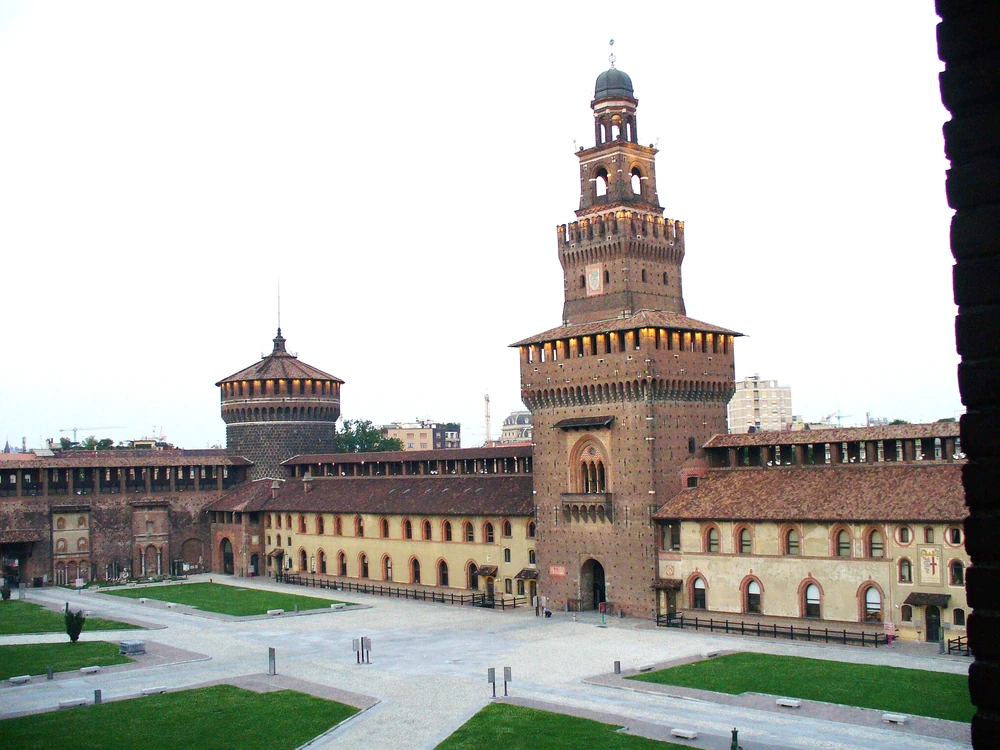
Combine with: Castello Sforzesco — the great Sforza fortress-palace in central Milan, a 15th-century ducal complex housing the city's civic museums; Villa Arconati in the morning and Castello Sforzesco in the afternoon makes a full Lombard heritage day from a Milan base.
Frequently Asked Questions
The principal interior draws are the architectural fabric and the baroque fresco decorations on the main-floor ceilings, which survive in reasonable condition despite the dispersal of the villa's moveable contents. The sequence of 70 rooms — even without furnishings — communicates the scale and ambition of the original Arconati investment, and several rooms retain the carved stonework, original floor surfaces, and architectural detail that period furniture would partly obscure. For visitors primarily interested in furnished historic interiors or decorative arts collections, the unfurnished state may disappoint; set expectations accordingly. For visitors interested in baroque architecture and fresco decoration, the rooms are genuinely engaging.
Location
Via Fametta 1, 20021 Castellazzo di Bollate (Bollate), Milan, Italy
Nearby Castles
Tours & Tickets
Powered by GetYourGuide
From
€13/ person