
Sforza Castle
Castello Sforzesco
Italy · Lombardy · Near Milan
Built 1358 · Renaissance Military Architecture
This page is part of an independent travel guide and is not affiliated with, endorsed by, or operated by Sforza Castle.
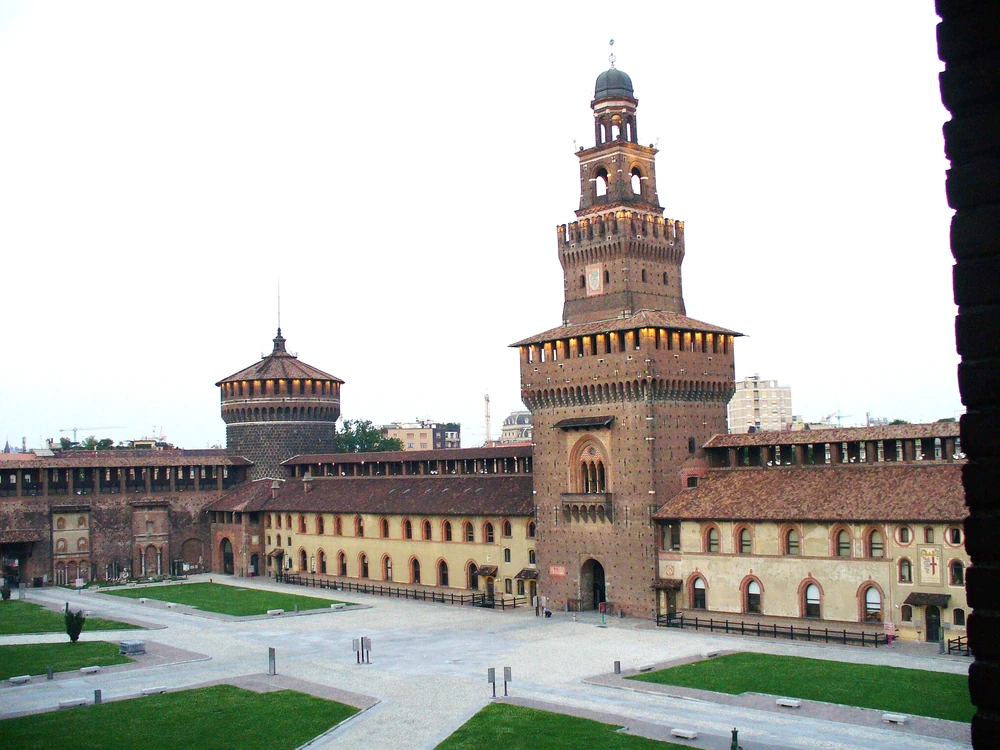
© Castles & Palaces
Quick Facts
- Hours
- Daily 07:00–19:30
- Entry via GetYourGuide
- €20
- Duration
- 2–3 hours
- Best time
- Year-round
- Nearest city
- Milan
Featured Tour
Milan: Sforza Castle Entry Ticket with Digital Audio Guide
Cancellation available · Instant confirmation
Highlights
- ✦Leonardo da Vinci worked here under Ludovico Sforza — his ceiling frescoes still decorate the Sala delle Asse
- ✦Houses Michelangelo's last sculpture: the unfinished Pietà Rondanini, completed days before his death in 1564
- ✦The vast courtyards are free to enter and among the grandest open spaces in central Milan
- ✦One of the largest castles in Europe — the outer walls enclose over 200,000 square metres
- ✦The Pinacoteca del Castello holds masterworks by Bellini, Mantegna, and Canaletto
Skip the queue with a guided tour
Skip-the-line tickets & expert guides
Castello Sforzesco sits at the northern end of central Milan like a city within a city — its outer walls enclosing a space so vast that the courtyards could contain entire city blocks. For centuries it was the power centre of Lombardy, the residence of the Visconti and Sforza dynasties, and the workplace of some of the greatest artists of the Italian Renaissance. Today it is simultaneously a free public park, a complex of civic museums, and one of the most historically dense buildings in Italy.
The castle's connection to Leonardo da Vinci is its most remarkable distinction. Leonardo spent nearly two decades at the Sforza court, working as a painter, engineer, stage designer, and general creative polymath for Duke Ludovico Sforza. In the Sala delle Asse — a ground-floor room in the north tower — you can still see Leonardo's ceiling frescoes from 1498: an elaborate trompe-l'oeil canopy of intertwined mulberry trees, recently restored to reveal their original extraordinary quality.
But the castle's greatest artistic treasure is Michelangelo's Pietà Rondanini, displayed in a dedicated museum space in the Spanish Hospital. Michelangelo worked on this sculpture from around 1552 until six days before his death in 1564. It was never finished, and its unfinished quality — the raw stone, the elongated anguished figures — gives it an intensity that his polished Vatican Pietà never achieves. Standing before it in the quiet of its dedicated room is one of the most moving experiences Milan offers.
History
The site has been fortified since Roman times, when it lay on the northern edge of Milan's city walls. The first medieval castle was built by Gian Galeazzo Visconti, Duke of Milan, in 1358 — a massive military fortress designed to control both external enemies and the potentially rebellious Milanese citizens within.
When Francesco Sforza seized Milan in 1450, he ordered the castle comprehensively rebuilt as a ducal residence worthy of his new dynasty. The Sforzas employed the finest architects of the Renaissance, including Filarete and Bramante. It was during the reign of Ludovico Sforza 'il Moro' (1480–1499) that Castello Sforzesco became one of the most brilliant courts in Europe, attracting Leonardo da Vinci, Donato Bramante, and the poet Bernardo Bellincioni. After French, Spanish, Austrian, and Napoleonic control, the architect Luca Beltrami undertook a major restoration between 1893 and 1905, returning the castle to something approaching its Renaissance appearance.
How to Visit
Getting there: Castello Sforzesco is in central Milan, easily reached by Metro (Line 1, Cairoli station, 3-minute walk; or Cadorna station, 5 minutes). From Milan Centrale station it is 15 minutes on foot or 5 minutes by Metro.
Tickets: The courtyards are free and open daily 07:00–19:30. Museum tickets cost €10 for adults (free for under-18s) and cover all civic collections including the Pietà Rondanini and the Sala delle Asse. The castle is also free on the first Sunday of every month. The GetYourGuide ticket "Milan: Sforza Castle Entry Ticket with Digital Audio Guide" includes entry and an audio guide.
Practical tips: The Pietà Rondanini by Michelangelo is in the Spanish Hospital wing — follow signs from the main courtyard, as it is easy to miss. Museums open Tuesday–Sunday 10:00–17:30; if you plan only the free courtyards, any day works.
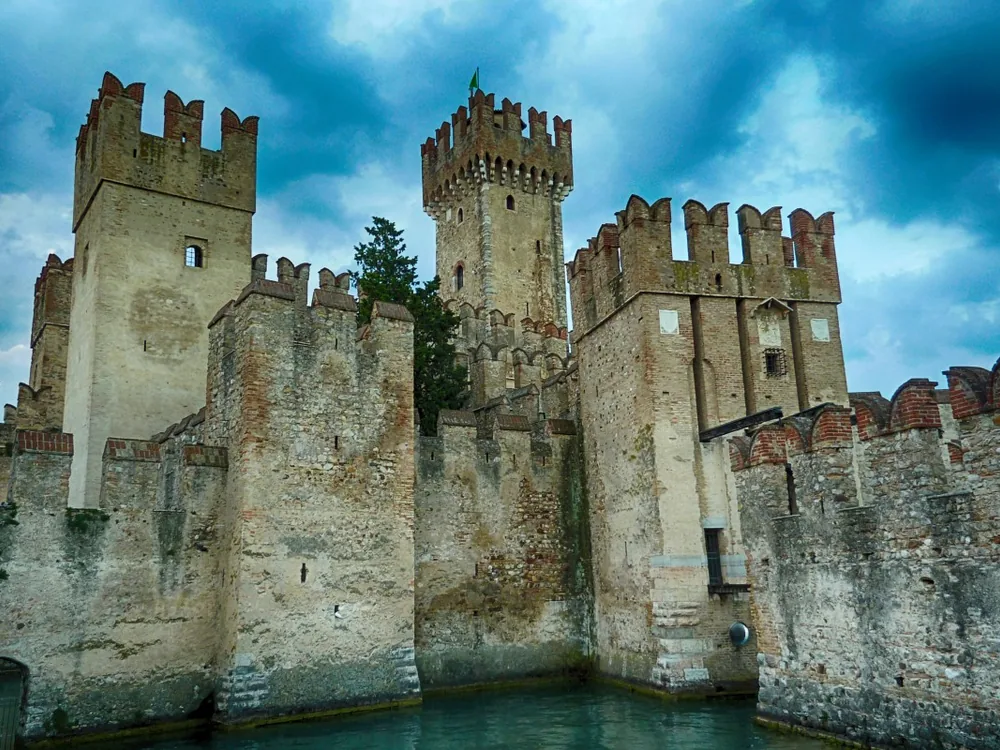
Combine with: Scaligero Castle Sirmione on Lake Garda (90km east) as a day trip from Milan. Castello di Masino in the Canavese hills (75km northwest) — a Valperga family castle with Piedmontese interiors. Parco Sempione immediately behind the castle is free and worth a stroll after the museum visit.
Frequently Asked Questions
The outer courtyards and grounds are free to enter at any time. The civic museums inside (which include the Michelangelo Pietà Rondanini and Leonardo da Vinci's Sala delle Asse ceiling) require a ticket: €10 for adults, free for under 18s. The castle is free every first Sunday of the month.
Location
Piazza Castello, 20121 Milano MI, Italy
Nearby Castles
Tours & Tickets
Powered by GetYourGuide
From
€20/ person