
Villa Pisani
Villa Pisani Nazionale
Italy · Stra, Veneto · Near Padua
Built 1721 · Grand Venetian villa designed by Gerolamo Frigimelica and Francesco Maria Preti, begun in 1721, with a French-influenced park combining Versailles-style design with the Venetian walled-garden tradition
This page is part of an independent travel guide and is not affiliated with, endorsed by, or operated by Villa Pisani.
© Castles & Palaces
Quick Facts
- Hours
- Tue–Sun 09:00–19:00. Closed Mon
- Entry via GYG
- €19
- Duration
- 1.5–2.5 hours, including the park and the Maze of Love
- Best time
- Spring to autumn
- Nearest city
- Padua
Featured Tour
Villa Pisani Entrance Tickets
Cancellation available · Instant confirmation
Highlights
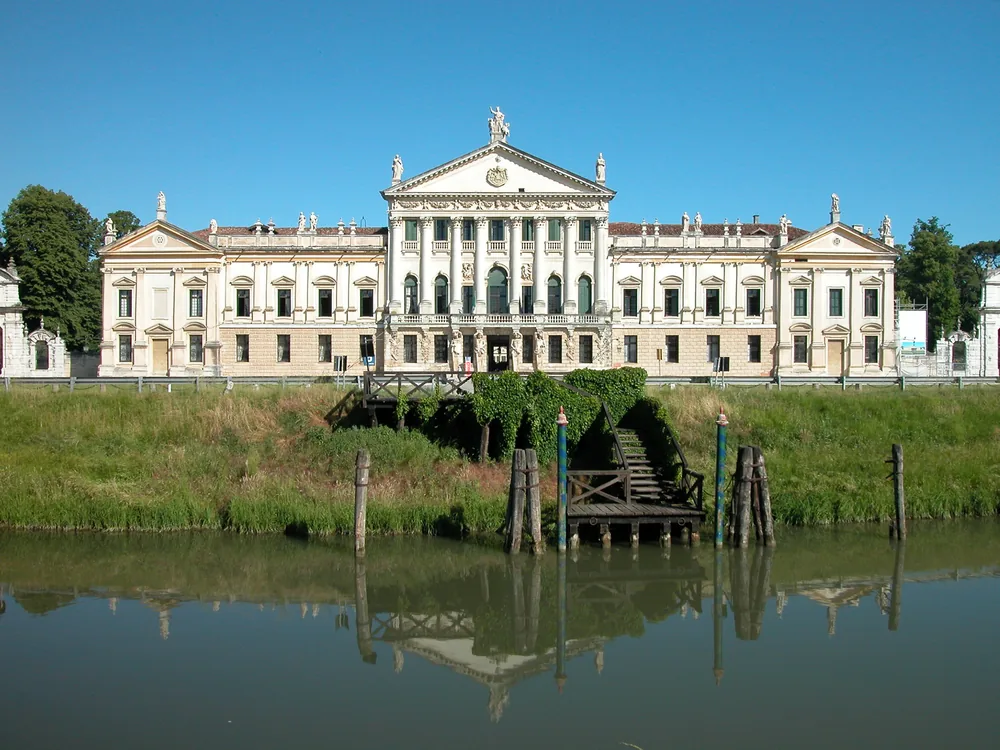
- ✦Construction began in 1721 to a design by Gerolamo Frigimelica and Francesco Maria Preti, commissioned by the noble Venetian Pisani di Santo Stefano family — one of the most celebrated villas of the Brenta Riviera, occupying an entire curve of the canal with a 1,500-metre perimeter
- ✦Interiors decorated by leading Venetian masters, including Giambattista Tiepolo and Giovanni Battista Crosato
- ✦Bought from the Pisani family by Napoleon Bonaparte in 1807; in 1934 the villa hosted the first meeting between Mussolini and Hitler, giving it genuine 20th-century political weight alongside its 18th-century artistic pedigree
- ✦The park was named 'the most beautiful park in Italy' in 2008, blending French garden design — inspired by André Le Nôtre's work at Versailles — with the Venetian tradition of the walled garden
- ✦The celebrated Maze of Love (Labirinto d'Amore), one of the largest in Europe, with nine concentric rings of boxwood hedge — a design concept older than the villa itself, echoing the 16th-century Gonzaga family mazes at Mantua
Skip the queue with a guided tour
Skip-the-line tickets & expert guides
Villa Pisani stands on the Brenta Riviera between Venice and Padua, and its scale alone sets it apart from the many grand villas that line this historic waterway: the building and its grounds occupy an entire bend of the Brenta Canal, with a perimeter stretching some 1,500 metres — a footprint more characteristic of a royal palace than a private family villa. Construction began in 1721, commissioned by the noble Venetian Pisani di Santo Stefano family, one of the wealthiest and most influential dynasties of the Venetian Republic, to a design by Gerolamo Frigimelica and later completed under Francesco Maria Preti. The result is widely regarded as one of the most celebrated villas of the entire Brenta Riviera, a stretch of waterway once lined with the summer residences of Venice's aristocratic elite.
The villa's interior decoration matches the ambition of its architecture. Rooms throughout the building carry work by leading Venetian masters of the 18th century, including Giambattista Tiepolo, whose ceiling fresco work here ranks among his significant achievements, alongside contributions from Giovanni Battista Crosato and other artists of the Venetian school. Together these interiors make Villa Pisani a genuine gallery of Venetian decorative painting at its most confident and technically accomplished, embedded within the working rooms of an aristocratic family residence rather than displayed as isolated museum pieces.
Villa Pisani's history carries a political weight that few Italian villas can match. In 1807, Napoleon Bonaparte purchased the villa directly from the Pisani family, absorbing one of the great symbols of Venetian aristocratic power into his own expanding Italian domains — a genuinely significant transfer given the villa's status as a flagship property of the old Venetian nobility. More than a century later, in 1934, Villa Pisani became the setting for one of the 20th century's most consequential diplomatic encounters: the first meeting between Benito Mussolini and Adolf Hitler took place within its walls, a meeting that set in motion the alliance between Fascist Italy and Nazi Germany that would shape the following decade of European history. Today the villa functions as a national museum and continues to host meetings between heads of state, a direct institutional continuation of its role as a site of genuine historical and political significance rather than a purely retired monument.
The villa's park is, in its own right, one of the great achievements of Italian landscape design, formally recognised when it was named 'the most beautiful park in Italy' in 2008. The grounds combine two distinct garden traditions: French formal design, drawing on the model established by André Le Nôtre at Versailles, and the older Venetian tradition of the walled garden, a more contained and intimate style of landscape enclosure distinctive to the Venetian mainland's villa culture. This blending of French grandeur and Venetian containment gives Villa Pisani's grounds a character genuinely distinct from either purely French or purely Italian garden traditions elsewhere in Europe.
The park's single most celebrated feature is the Maze of Love, the Labirinto d'Amore, counted among the largest surviving boxwood mazes in Europe, built from nine concentric rings of dense hedge radiating outward from a central tower. Remarkably, the maze's design concept predates the villa itself in conceptual lineage, drawing on the tradition of 16th-century garden mazes built by the Gonzaga family at Mantua — meaning Villa Pisani's most photographed feature is, in design spirit if not physical age, older than the grand building that now surrounds it. Visitors typically climb the small tower at the maze's centre after navigating its rings, rewarded with a full view of the labyrinth's geometric pattern laid out below.
Villa Pisani sits within easy reach of both Venice and Padua, making it a natural stop for visitors travelling the Brenta Riviera by land or by the historic Burchiello boat route that once carried Venetian nobility between their city palaces and their countryside villas. For anyone interested in 18th-century Venetian art, French-influenced Italian garden design, or the more unexpected 20th-century political history embedded in Italy's grand houses, Villa Pisani offers a rare combination of all three within a single, remarkably intact estate.
History
Villa Pisani was begun in 1721 to a design by Gerolamo Frigimelica, later completed under Francesco Maria Preti, commissioned by the noble Venetian Pisani di Santo Stefano family. Its interiors were decorated by leading Venetian masters including Giambattista Tiepolo and Giovanni Battista Crosato. Napoleon Bonaparte bought the villa from the Pisani family in 1807, and in 1934 it hosted the first meeting between Mussolini and Hitler. The villa today functions as a national museum and continues to host meetings between heads of state. Its park, named the most beautiful in Italy in 2008, combines French Versailles-inspired design with the Venetian walled-garden tradition, and includes the celebrated nine-ring boxwood Maze of Love.
Frequently Asked Questions
In 1934, Villa Pisani hosted the first meeting between Benito Mussolini and Adolf Hitler, a diplomatic encounter that set in motion the alliance between Fascist Italy and Nazi Germany. The villa continues to host meetings between heads of state today, a direct institutional continuation of this role.
Location
Via Doge Pisani, 7, 30039 Stra VE, Italy
Nearby Castles
Tours & Tickets
Powered by GetYourGuide
From
€19/ person