
San Pelagio Castle
Castello di San Pelagio
Italy · Veneto · Near Padua
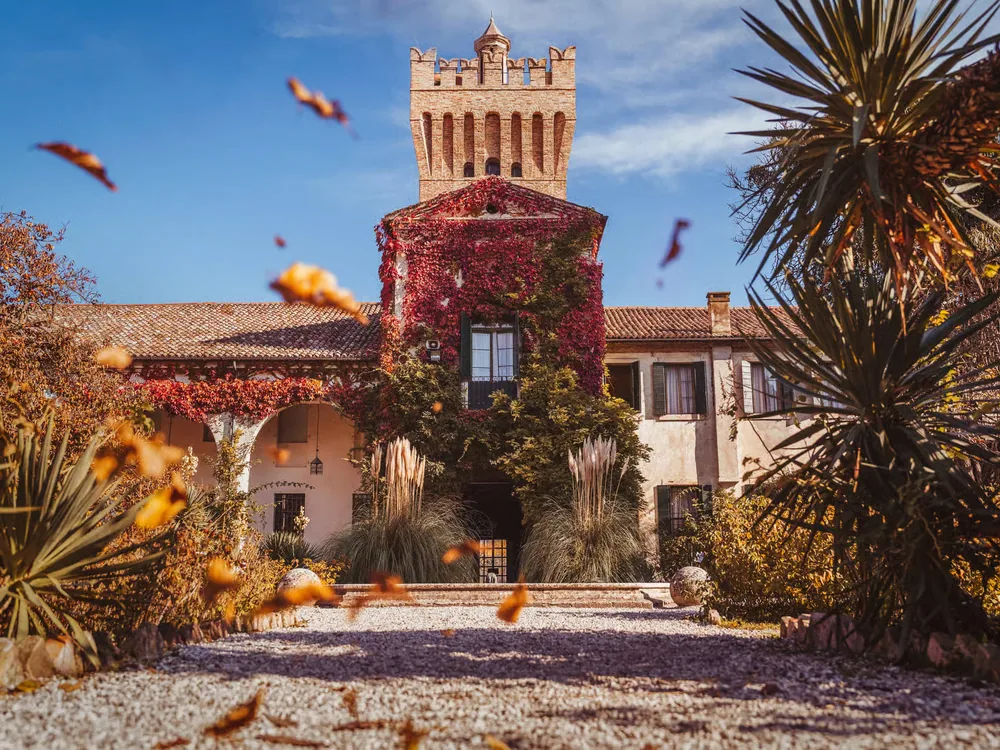
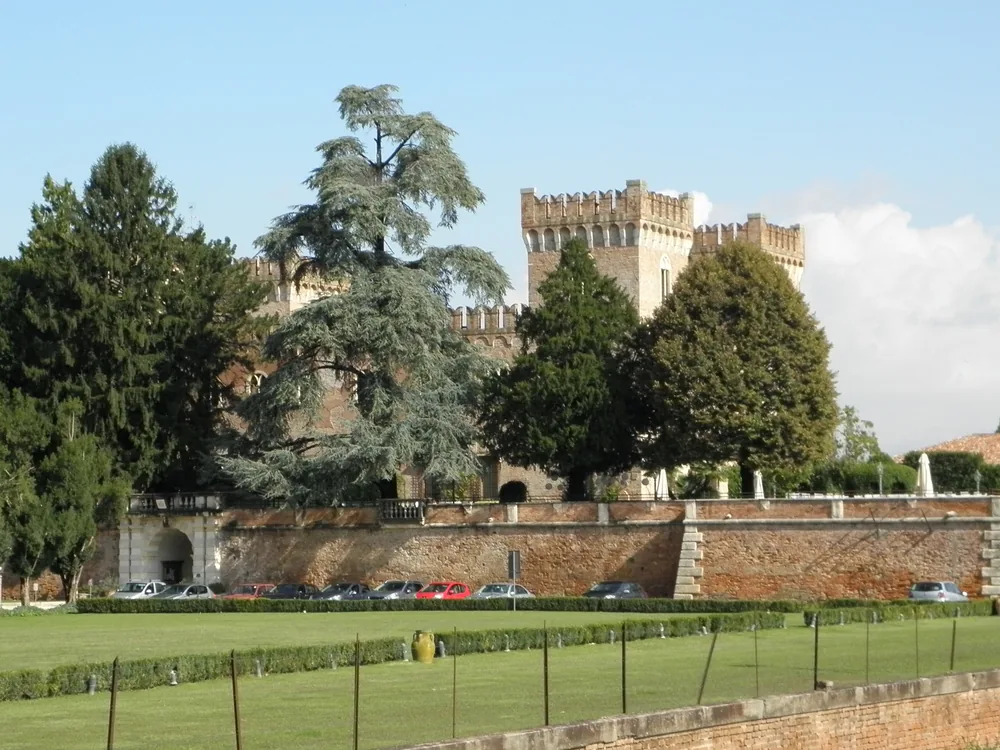
Medieval moated castle of Venetian-Gothic character with a square plan, corner towers, and a moat surviving largely intact; the castle dates in its present form to the medieval period, with later additions reflecting the transition from fortified stronghold to aristocratic villa; the estate includes extensive grounds and is surrounded by the agricultural flatlands of the Veneto south of Padua; houses the Museo del Volo (Museum of Flight) in the castle's interior spaces, dedicated to the history of aviation and in particular to the 1918 'Volo su Vienna' propaganda raid launched from this site by Gabriele D'Annunzio
This page is part of an independent travel guide and is not affiliated with, endorsed by, or operated by San Pelagio Castle.
© Castles & Palaces
Quick Facts
- Hours
- Tue–Sun 09:00–18:00. Closed Mon
- Entry via GetYourGuide
- €12
- Duration
- 1.5–2 hours
- Best time
- April to October
- Nearest city
- Padua
Featured Tour
San Pelagio Castle Entry Ticket
Cancellation available · Instant confirmation
Highlights
- ✦San Pelagio Castle was the departure point of Gabriele D'Annunzio's 1918 'Volo su Vienna' — a propaganda flight across 1,200 kilometres of Austrian territory to drop patriotic leaflets over Vienna, demonstrating Italian air capability and demoralising the Austrian enemy in the war's final months; the Museo del Volo (Museum of Flight) commemorates this mission and the broader history of early aviation
- ✦The castle's Museo del Volo contains aircraft, engines, uniforms, documents, and personal effects spanning Italian aviation history from the earliest flying experiments to the jet age, with D'Annunzio's 1918 mission as its emotional and historical centrepiece — one of the few aviation museums in Italy housed inside a genuine medieval castle
- ✦The medieval moated structure survives substantially intact — corner towers, moat, and the square plan of a Venetian-Gothic fortified estate — creating an unusual visual combination of medieval fortress architecture and aviation history that has no obvious parallel among Italian castle museums
- ✦D'Annunzio himself — poet, nationalist, decorated World War I pilot, and the most flamboyant figure in early 20th-century Italian culture — is one of the more remarkable humans to have operated out of any Italian castle; the museum traces his military career alongside the broader context of Italy's WWI aerial campaigns
- ✦Located 20 minutes south of Padua in the agricultural Veneto lowlands, San Pelagio is a genuinely off-the-main-circuit find for visitors to the Veneto region who have covered the Doge's Palace and Arena di Verona and are looking for something with a more specific and unusual historical identity
Skip the queue with a guided tour
Skip-the-line tickets & expert guides
On August 9, 1918, eleven SVA biplanes took off from the airfield at San Pelagio, near Padua, on a mission that had no military purpose in the conventional sense. Their objective was Vienna — 1,200 kilometres of enemy airspace, high Alpine passes, and Austrian territory — not to bomb the capital but to fly over it, demonstrating that Italian aircraft could reach the heart of the Austro-Hungarian Empire and dropping 400,000 leaflets urging the Austrian people to end the war. The operation's commander was Gabriele D'Annunzio: poet, nationalist, decorated veteran, and possibly the most theatrically gifted propagandist in early 20th-century Europe. Only eight of the eleven aircraft completed the round trip. The mission accomplished nothing strategically. It changed the course of the war by approximately nothing. But it was spectacularly dramatic, it was reported worldwide, and it established the template for the psychological dimension of aerial warfare that every subsequent air force in the 20th century would develop.
The castle from which D'Annunzio launched this mission is still standing. San Pelagio Castle, near Due Carrare south of Padua, is a medieval moated stronghold of Venetian-Gothic character — corner towers, a square plan, a surviving moat — set in the flat agricultural landscape of the Veneto lowlands. It is not one of the grand showpiece castles of northeastern Italy: no hill position, no dramatic backdrop, no UNESCO designation. What it has is a specific and unusually vivid connection to a moment in aviation and military history that the Museo del Volo (Museum of Flight) housed within it commemorates with genuine depth.
Gabriele D'Annunzio's cultural prominence in Italy between roughly 1890 and 1938 was of a kind that is difficult to translate into modern terms. He was the country's most celebrated living poet and playwright, an aesthetic sensualist whose private life was conducted with theatrical self-consciousness, a nationalist visionary whose ideas about Italian greatness influenced everyone from Mussolini (who learned from him, distrusted him, and eventually sidelined him) to the Futurists who wanted to burn the museums and celebrate the machine. His military career in the First World War added combat credentials to his cultural authority: he lost an eye in a flying accident, led cavalry raids, and flew numerous missions before the Vienna flight that made him internationally famous. The museum at San Pelagio treats this career in full, with personal effects, documents, aircraft instruments, and photographs that trace D'Annunzio the aviator alongside D'Annunzio the cultural figure.
The museum's collection extends beyond D'Annunzio to cover the broader history of Italian aviation: engines, aircraft (or substantial parts thereof), uniforms from the Italian air services across both World Wars, technical instruments, and documentary material tracing the development of Italian military and civil aviation from the pioneering early flights through the postwar jet era. For a specialist collection housed in a regional Italian castle, the scope is genuinely impressive — this is not a single-room display but a multi-gallery museum that requires 1.5 to 2 hours to cover properly.
The castle building itself deserves attention separately from the museum. The moated structure with its corner towers represents the Venetian-Gothic fortified architecture that characterised the defensive estates of the Veneto lowlands in the medieval period — not the Alpine clifftop castle or the hilltop fortress, but the flat-country stronghold designed to control agricultural territory and protect the estate from raiding parties rather than armies. The moat survives as a functioning water feature rather than a drained ditch, and the castle's overall condition reflects both the quality of its medieval construction and the care of its later owners. The transition from fortified stronghold to aristocratic estate — visible in the villa-style additions and the extensive grounds — is a narrative common to many Veneto castles of this type but legible here in specific architectural terms.
For visitors to the Veneto region who have covered the major Padua and Verona sites — the Scrovegni Chapel, the Basilica del Santo, the Arena, Juliet's balcony — San Pelagio offers a genuinely different kind of engagement. It is not a place for Renaissance frescoes or Roman architecture. It is a place for a specific and somewhat counter-intuitive story: the medieval castle as launchpad for modern psychological warfare, and the self-dramatising poet-soldier who flew out of it toward Vienna on an overcast August morning in 1918.
The GetYourGuide entry ticket covers access to both the castle and the Museo del Volo. The castle is most conveniently reached by car from Padua, approximately 20 minutes south on the SS16.
The broader context for the D'Annunzio flight is worth establishing for visitors who encounter the museum without prior knowledge of the Italian First World War. Italy entered the war in 1915 on the Allied side, having negotiated the Treaty of London with the promise of territorial gains, and spent three years fighting Austria-Hungary along the Isonzo River in a grinding series of battles with casualty rates comparable to the Western Front. The army's catastrophic defeat at Caporetto in 1917 — a collapse that required Allied reinforcements and restructured the entire Italian war effort — created a crisis of national morale that operations like D'Annunzio's Vienna flight were specifically designed to address. Demonstrating Italian aerial capability over the enemy capital at a moment when Italian military credibility was under question was exactly the kind of theatrical gesture D'Annunzio understood instinctively and executed with genuine competence.
D'Annunzio's postwar career adds a complicating layer to the museum's subject. His 1919 occupation of Fiume — a disputed Adriatic city that the Paris peace conference had declined to award to Italy — with a force of nationalist irregulars became a founding event of Italian fascism: the theatrical mass-mobilisation techniques he pioneered there, including call-and-response crowd rhetoric, black-shirt uniforms, and the cult of the charismatic leader, were directly adopted by Mussolini. The museum at San Pelagio focuses on the aviation career and treats the postwar political legacy with appropriate care. The 1918 flight remains a legitimate and extraordinary moment in early aviation history regardless of what came after, and the museum presents it on those terms.
History
San Pelagio Castle was established in the medieval period as a fortified Venetian-Gothic estate in the agricultural lowlands south of Padua. The castle passed through various noble families during the Venetian Republic era. In August 1918, during the final months of World War I, Gabriele D'Annunzio used the adjacent airfield as the departure point for his celebrated 'Volo su Vienna' propaganda mission over the Austrian capital. The castle subsequently became the site of the Museo del Volo (Museum of Flight), which commemorates this mission and the history of Italian aviation.
How to Visit
Getting there: San Pelagio Castle is in Due Carrare, approximately 20 km south of Padua. By car: take the A13 motorway south from Padua toward Bologna and exit at Due Carrare, 20 minutes. By public transport: limited bus connections from Padua — car is strongly recommended for this site.
Tickets: The GetYourGuide entry ticket covers the castle and Museo del Volo. Walk-up entry available at the door.
Visit length: 1.5–2 hours for the full museum circuit.
Practical tips: April to October.
Combine with: Padua city (20 min north) — Scrovegni Chapel, Basilica del Santo, and the university district — makes a natural same-day pairing. The castle adds a very different kind of historical experience to Padua's more conventional art and religious heritage.
Frequently Asked Questions
The 'Volo su Vienna' (Flight over Vienna) was an Italian propaganda mission on August 9, 1918, led by Gabriele D'Annunzio, in which eleven SVA biplanes flew over Vienna and dropped 400,000 leaflets urging the Austrian people to end the war. The mission had no direct military effect but demonstrated Italian aerial capability and established the template for the psychological dimension of air warfare. D'Annunzio's mission influenced how subsequent air forces thought about the morale dimension of aviation, anticipating the carpet-leafleting operations and psychological air campaigns of World War II.
Location
Via del Castello 2, 35020 Due Carrare PD, Italy
Nearby Castles
Tours & Tickets
Powered by GetYourGuide
From
€12/ person