
Visconti Castle (Pavia)
Castello Visconteo di Pavia
Italy · Lombardy — Province of Pavia, city of Pavia, on the Ticino River · Near Milan
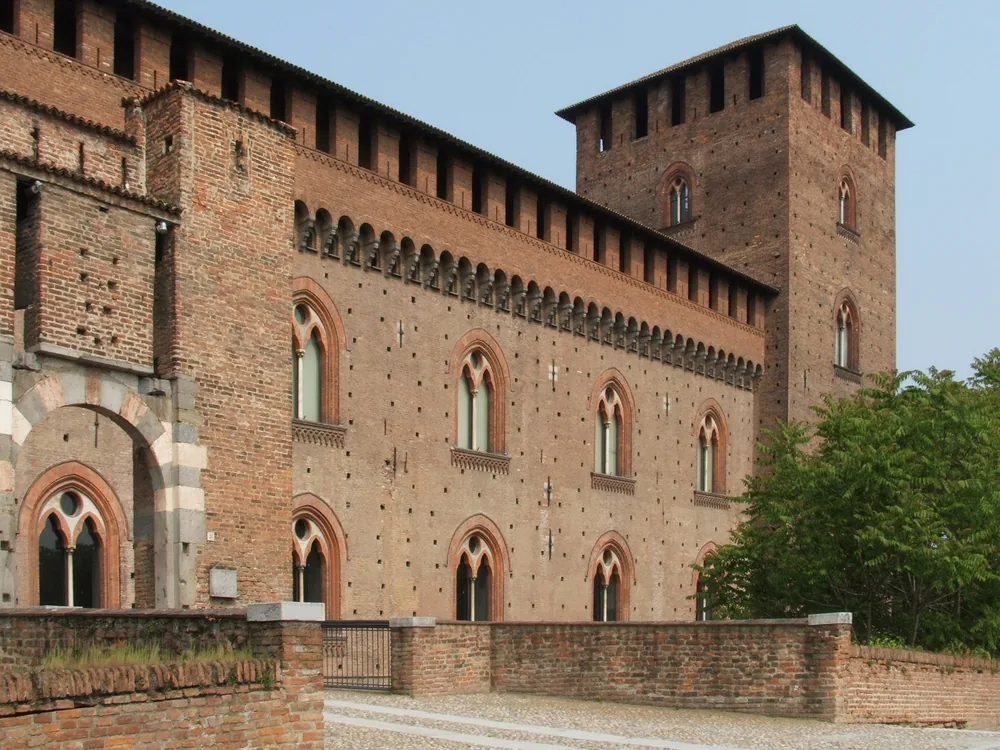
Built 1360 · Gothic fortress (1360–1365) with late medieval features; quadrilateral plan originally with four corner towers (one wing destroyed by French military explosion in 1527); arcaded internal courtyard; red-brick construction in the Lombard medieval tradition; three surviving wings house the Civic Museums of Pavia including the Malaspina painting collection
This page is part of an independent travel guide and is not affiliated with, endorsed by, or operated by Visconti Castle (Pavia).
© Castles & Palaces
Quick Facts
- Hours
- Tue–Fri 10:00–18:00. Sat & Sun 10:00–19:00. Closed Mon
- Guided tour from
- €340
- Duration
- 2–3 hours (courtyard + gardens + Civic Museums)
- Best time
- Year-round
- Nearest city
- Milan
Featured Tour
Pavia: Private Tour Discovering the Visconti Castle
Cancellation available · Instant confirmation
Highlights
- ✦Built by Galeazzo II Visconti in 1360–1365 as a symbol of Milanese supremacy over Pavia, the castle was among the most ambitious architectural projects of 14th-century Italy — a quadrilateral fortress with corner towers, an arcaded courtyard, and a deer park that extended across the territory to the north
- ✦The Malaspina Collection inside the Civic Museums of Pavia is one of the finest civic art holdings in Lombardy, with paintings by Giambattista Tiepolo, Antonello da Messina, Correggio, and Francesco Hayez — a gallery of genuine quality housed within the castle's surviving medieval wings
- ✦The Visconti library assembled within these walls was, by the late 14th century, the largest north of the Alps — an extraordinary collection of manuscripts that expressed the Visconti dynasty's ambitions as cultural as well as military patrons at a moment when books were rarer than gold
- ✦Leonardo da Vinci was active at the Sforza court in Pavia and Milan during the 1490s, and the castle's late-15th-century associations with the most creative court in northern Italy give it a cultural resonance that extends far beyond its architectural fabric
- ✦A remarkable wooden scale model of Pavia Cathedral is among the highlights of the Civic Museums — an extraordinarily detailed craftsman's model from the period of the cathedral's construction, giving visitors an insight into the planning process of one of Renaissance Lombardy's most ambitious buildings
Skip the queue with a guided tour
Skip-the-line tickets & expert guides
The Castello Visconteo di Pavia stands at the northern edge of the city on the banks of the Ticino River, a vast red-brick fortress whose remaining three wings speak — even in their incomplete state — of the extraordinary ambitions of the dynasty that built it. Commissioned by Galeazzo II Visconti, Lord of Milan, and constructed between 1360 and 1365, the castle was intended as a statement of Milanese supremacy over Pavia, one of the most symbolically important cities in northern Italy: the former capital of the Lombard Kingdom, an episcopal centre of ancient prestige, and a university city whose scholars the Visconti were actively cultivating as instruments of dynastic legitimacy.
The castle that emerged from this programme was among the most ambitious architectural projects of 14th-century Italy. The original plan was quadrilateral, with four corner towers enclosing an arcaded internal courtyard, and the complex included a deer park extending across the territory to the north — a pleasure ground that spoke of lordly leisure as much as the fortress walls spoke of military power. The Visconti library assembled within the castle was, by the late 14th century, the largest collection of manuscripts north of the Alps, a concentration of intellectual wealth that expressed the dynasty's cultural ambitions with the same clarity that the walls expressed their military ones.
The castle's association with Leonardo da Vinci comes through the Sforza court that succeeded the Visconti. Ludovico Sforza 'il Moro', who governed Milan from the early 1480s, attracted Leonardo to his court as painter, engineer, stage designer, and intellectual polymath; Leonardo was active across the Sforza territories, including Pavia, during the 1490s. The garden of the Castello Visconteo, according to contemporary records, retained its enclosed deer park well into the Sforza period.
A French military explosion in 1527 destroyed one of the four original wings, and the three-wing structure that survives today has been given over to the Civic Museums of Pavia. These museums are among the most substantial civic collections in Lombardy: the Malaspina Collection brings together paintings by Giambattista Tiepolo, Antonello da Messina, Correggio, and Francesco Hayez; the sculptural collection includes Roman and medieval works; and a remarkable detailed wooden scale model of Pavia Cathedral from the period of the cathedral's construction gives visitors a glimpse of Renaissance Lombard architectural planning at the moment it was happening.
For visitors travelling between Milan and Genoa, or using Milan as a base for Lombard day trips, the Castello Visconteo and the Certosa di Pavia — the Visconti mausoleum a few kilometres north — constitute one of the most rewarding full-day historic circuits in northern Italy.
History
Pavia had been a place of consequence for a thousand years before Galeazzo II Visconti chose it as the site for his new castle. The Lombards had made it their capital in the 6th century, and it retained its status as an episcopal and university city well into the medieval period — a city with the weight of history that the Visconti, as newly established lords of Milan, both coveted and needed to control. The castle built here between 1360 and 1365 was the architectural instrument of that control: a vast fortress within the city limits that announced Milanese authority as plainly as any proclamation.
Under the Sforza dynasty that succeeded the Visconti after Francesco Sforza seized Milan in 1450, the castle continued to function as a centre of ducal power. It was under Ludovico Sforza 'il Moro' in the 1480s and 1490s that the castle reached its cultural apogee: Ludovico assembled at his court the most remarkable concentration of artistic and intellectual talent in northern Italy, including Leonardo da Vinci, who was active across the Sforza territories during this period. The library and collections that the Visconti had begun were augmented by the Sforza into one of the most remarkable cultural repositories in Europe.
French forces occupying Pavia destroyed one wing of the castle in a military explosion in 1527, reducing the quadrilateral to three sides. Subsequent Spanish and Austrian rule further diminished the castle's importance as a centre of political power. It was eventually given over to the municipality of Pavia, which established the Civic Museums in the surviving wings during the 19th century — preserving the castle's role as a cultural institution, if on a very different scale from the Visconti and Sforza eras.
How to Visit
Getting there: Pavia is 35 kilometres south of Milan. By train from Milan Centrale or Milano Rogoredo, direct services to Pavia take approximately 25–35 minutes; the castle is a 20-minute walk from Pavia station or a short bus ride. By car from Milan, take the A7 motorway south and exit at Pavia Nord (approximately 40 minutes); parking is available near the castle. Pavia is also easily reached from Genoa by rail.
Tickets: Museum walk-up entry is approximately €8 for adults and €4 for children, payable at the castle. The GetYourGuide private guided tour (from €340 per group of up to 25) covers guided access to the courtyard, gardens, moat, and a guided visit of the Civic Museums inside — the €340 is a per-group rate, making it excellent value for 10 or more people. Note that the tour description specifies the castle entrance ticket is not pre-included; pay museum entry separately at the castle, then join your guide for the circuit. Book the GetYourGuide tour in advance to secure your guide; museum entry can be arranged on arrival.
Practical tips: The wooden scale model of Pavia Cathedral in the Civic Museums is easy to miss — ask staff to direct you to it, as it is one of the most unusual objects in the collection. The destroyed fourth wing is now a garden and courtyard space worth crossing; the gap in the structure, and the surviving corner towers on either side of it, make the 1527 explosion and its consequences legible in the architecture in a way that no caption can convey. If combining with the Certosa di Pavia, take the city bus (line 3) northward or arrange a taxi; the Certosa is approximately 8 kilometres from the castle.
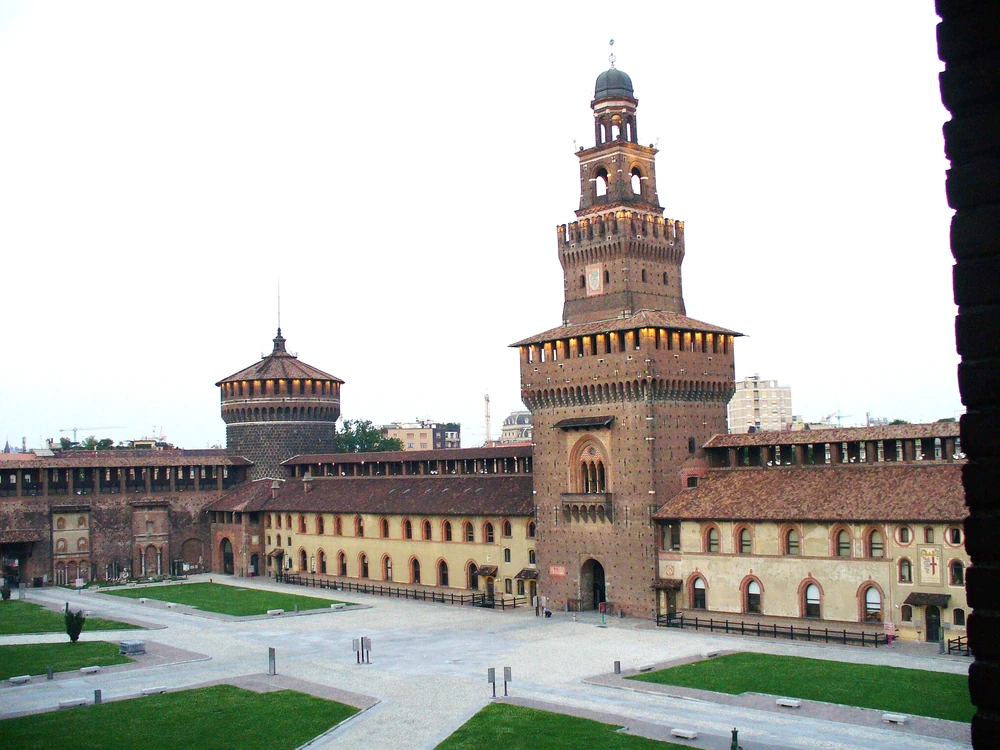
Combine with: Castello Sforzesco (35 km north in Milan — the great Sforza successor to the Visconti dynasty's power, now housing the city's finest museums; the Pavia and Milan castles together trace the rise and succession of Lombardy's two greatest medieval dynasties in a single day).
Frequently Asked Questions
The three surviving wings of the Castello Visconteo house the Civic Museums of Pavia, which include several distinct collections. The Malaspina Collection is the most celebrated, with paintings by Giambattista Tiepolo, Antonello da Messina, Correggio, and Francesco Hayez. The sculptural collection spans Roman and medieval works. A notable highlight is a remarkable wooden scale model of Pavia Cathedral from the period of the cathedral's Renaissance-era construction — an extraordinarily detailed craftsman's model that gives insight into the planning process. The museums together constitute one of the most substantial civic art collections in Lombardy.
Location
Viale XI Febbraio, 35, 27100 Pavia PV, Italy
Nearby Castles
Tours & Tickets
Powered by GetYourGuide
From
€340/ group