
Clervaux Castle
Schloss Clierf
Luxembourg · Clervaux, Canton of Clervaux, Northern Luxembourg · Near Clervaux
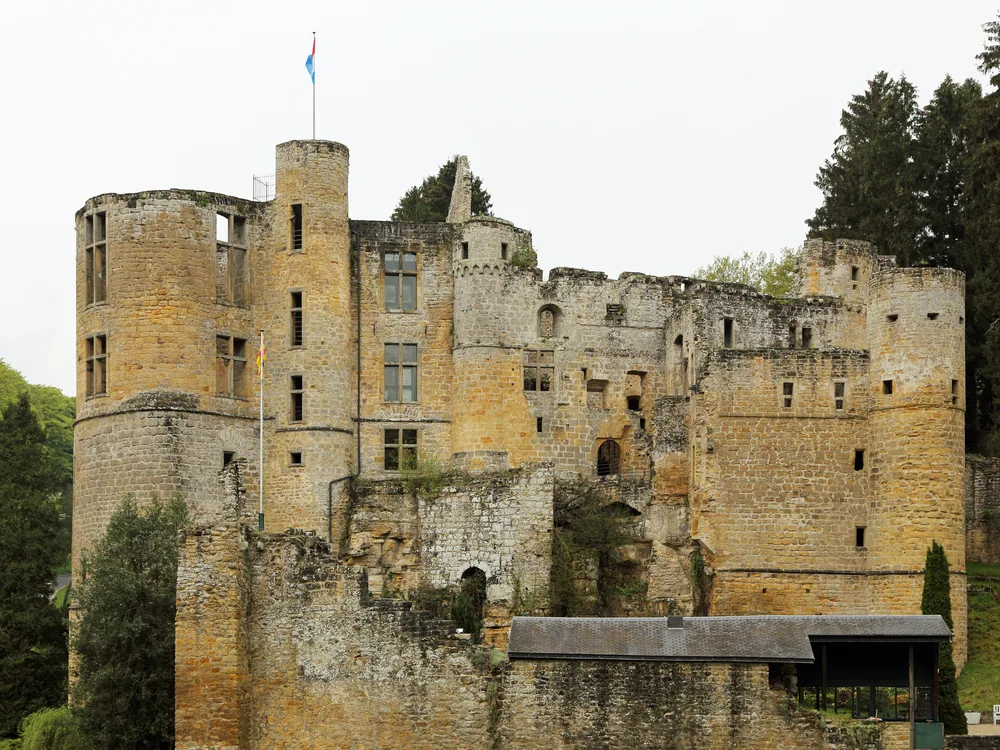
Built 1120 · 12th-century medieval castle built by the Lords of Clervaux above the Clerve river; almost completely destroyed by German artillery during the Battle of the Bulge in December 1944 and meticulously reconstructed after the war; the rebuilt interior now houses three separate attractions — a permanent photography exhibition, a WWII museum, and a model-castle exhibition — rather than a single-narrative historic house museum
This page is part of an independent travel guide and is not affiliated with, endorsed by, or operated by Clervaux Castle.
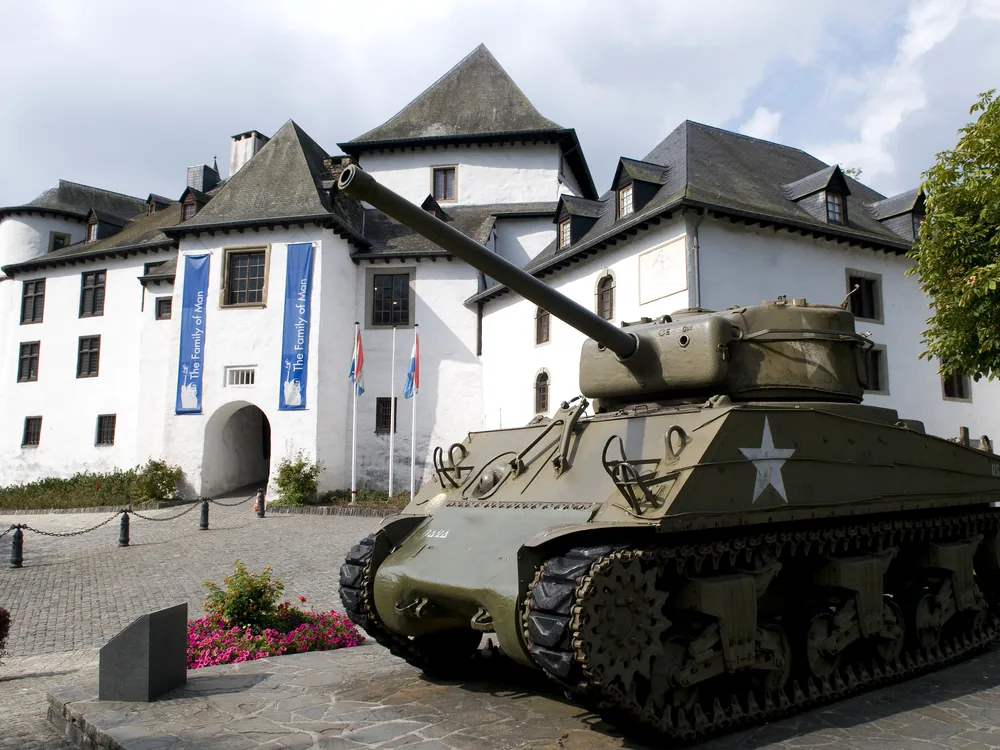
© Castles & Palaces
Quick Facts
- Hours
- Daily 10:00–18:00
- Guided tour from
- €940
- Duration
- 1.5–2 hours for the castle's three exhibitions combined
- Best time
- April to October
- Nearest city
- Clervaux
Featured Tour
Luxembourg WWII Battlefield, Castle & Abbey Private Day Tour
Cancellation available · Instant confirmation
Highlights
- ✦The Family of Man — Edward Steichen's 1955 photographic exhibition, inscribed on UNESCO's Memory of the World register, permanently installed at Clervaux Castle since 1994; 503 photographs from 68 countries assembled into what is still considered one of the most significant photography exhibitions of the 20th century
- ✦The Battle of the Bulge Museum — housed in the same rebuilt castle that was itself devastated during the battle in December 1944, the museum holds an extensive collection of wartime artifacts, uniforms, and personal accounts from the fighting that nearly levelled the town of Clervaux
- ✦Near-total WWII destruction and postwar reconstruction — German artillery reduced much of the medieval castle to rubble during the Battle of the Bulge; the meticulous postwar rebuild means most of what visitors see today is 20th-century reconstruction faithfully following the original medieval form
- ✦The Clerve river valley setting — the castle overlooks the town of Clervaux in a dramatic loop of the Clerve river, with the Benedictine Clervaux Abbey visible on the opposite hillside, together forming one of the most photographed valley panoramas in northern Luxembourg
- ✦A model-castle exhibition — a third, smaller attraction inside the same building displaying scale models of Luxembourg's medieval castles, giving visitors a comparative sense of the duchy's fortification landscape before seeing (or after having seen) the real thing
Skip the queue with a guided tour
Skip-the-line tickets & expert guides
Clervaux Castle stands above the town of Clervaux in Luxembourg's northern Ardennes, at a bend in the Clerve river tight enough that the castle, the town, and the Benedictine abbey on the far hillside all sit within sight of one another. The Lords of Clervaux built the original fortress in the 12th century, and the castle passed through several noble families over the following centuries, expanded and modified as the surrounding Ardennes region shifted between competing feudal and, later, national powers.
The castle's most consequential chapter arrived not in the medieval period but in December 1944, when Clervaux found itself directly in the path of the German offensive that became known as the Battle of the Bulge. The town and castle were subjected to intense fighting and artillery bombardment as German forces pushed through the Ardennes, and by the time the battle moved on, Clervaux Castle had been reduced to little more than its outer walls. The scale of the destruction was severe enough that a full medieval interior did not survive to be restored — what stands today inside the walls is a careful 20th-century reconstruction, rebuilt to the castle's historic footprint rather than preserved as an original interior.
That reconstruction gave Clervaux Castle an unusual second life: rather than functioning as a conventional historic house museum, the rebuilt interior now hosts three distinct and largely unrelated attractions under one roof. The most significant of these is The Family of Man, the American photographer Edward Steichen's landmark 1955 exhibition of 503 photographs drawn from 68 countries, originally created for New York's Museum of Modern Art and installed permanently at Clervaux since 1994. UNESCO inscribed the exhibition on its Memory of the World register in recognition of its historical and cultural significance as one of the defining photographic exhibitions of the 20th century — an improbable but deliberate pairing of a rebuilt medieval castle with one of the most important photography collections in the world.
The second attraction, the Battle of the Bulge Museum, turns the castle's own wartime history into its subject matter: an extensive collection of uniforms, weapons, personal letters, and battlefield artifacts documents the fighting that devastated Clervaux and the wider Ardennes campaign in the winter of 1944–45. Visiting the museum inside the same walls that were themselves destroyed in that battle gives the exhibition a directness that a purpose-built museum elsewhere could not replicate. A third, smaller exhibition displays scale models of Luxembourg's medieval castles, offering a comparative overview of the duchy's fortification landscape.
Most visitors reaching Clervaux without their own transport do so as part of a broader Luxembourg day tour rather than a dedicated Clervaux excursion — the town sits in the far north of the country, and a private full-day itinerary combining several WWII-related sites across Luxembourg is the most common way the castle appears on GetYourGuide's booking platform. That itinerary typically threads together the Luxembourg American Cemetery, the German War Cemetery at Sandweiler, the Patton Memorial Museum in Ettelbruck, Clervaux Castle and its museums, and the Benedictine Clervaux Abbey on the hillside opposite — a full circuit of the country's WWII heritage rather than a single-site visit.
History
The Lords of Clervaux built the original castle in the 12th century on a rocky spur above the Clerve river, a position that controlled the valley and the routes through this part of the northern Ardennes. The castle passed through several noble families over subsequent centuries as the surrounding territory changed hands amid the shifting feudal politics of the region. It survived in various states of repair into the modern era, but its defining ordeal came in December 1944, when the Battle of the Bulge — Germany's last major western offensive of the Second World War — swept directly through Clervaux. The town and castle absorbed heavy artillery bombardment and fighting as German forces pushed toward the Meuse, and the castle was left largely in ruins by the time the battle moved on. Luxembourg undertook a careful postwar reconstruction of the castle to its historic footprint, and the rebuilt structure was subsequently repurposed to house cultural and historical exhibitions rather than restored as a conventional lordly residence. Edward Steichen's The Family of Man exhibition was installed permanently in 1994, cementing the castle's modern identity as much a cultural venue as a historic monument.
How to Visit
Getting there: Clervaux is in the far north of Luxembourg, near the Belgian border, approximately 60 km from Luxembourg City. By car, the drive takes about 45–50 minutes via the A7/N7. Luxembourg's national railway (CFL) runs a direct line from Luxembourg City to Clervaux (approximately 1 hour); the station is a short walk from the castle. There is no dedicated GetYourGuide transport for independent visitors — the private tour below provides its own vehicle for those without a car.
Tickets: Walk-up entry to the castle's exhibitions is approximately €8 for adults and €4 for children, paid on-site; the three exhibitions (The Family of Man, the Battle of the Bulge Museum, and the model-castle exhibition) may be ticketed individually or combined depending on current arrangements — confirm at the door. The GetYourGuide private day tour (from €940 for a group of up to 4 people — not per person) is a full Luxembourg WWII-sites circuit that includes Clervaux Castle as one of several stops, alongside the Luxembourg American Cemetery, the German War Cemetery at Sandweiler, the Patton Memorial Museum in Ettelbruck, and Clervaux Abbey. The €940 covers private transport, pickup and drop-off in Luxembourg City, and guided commentary for the group — it does NOT include entrance fees to the museums and exhibitions inside Clervaux Castle itself (approximately €5–€10 per site), which are paid separately and are explicitly excluded from the tour price.
Practical tips: This is not a Clervaux-only tour — it is a full-day circuit of Luxembourg's WWII heritage sites, and Clervaux Castle is one stop among several rather than the sole destination. The tour explicitly states it is not suitable for people with mobility impairments, owing to the uneven paths and stairs at the castle and other stops. Visitors who only want Clervaux Castle itself, without the wider WWII-sites circuit, are better served travelling independently by car or train and paying the modest walk-up museum entry directly.
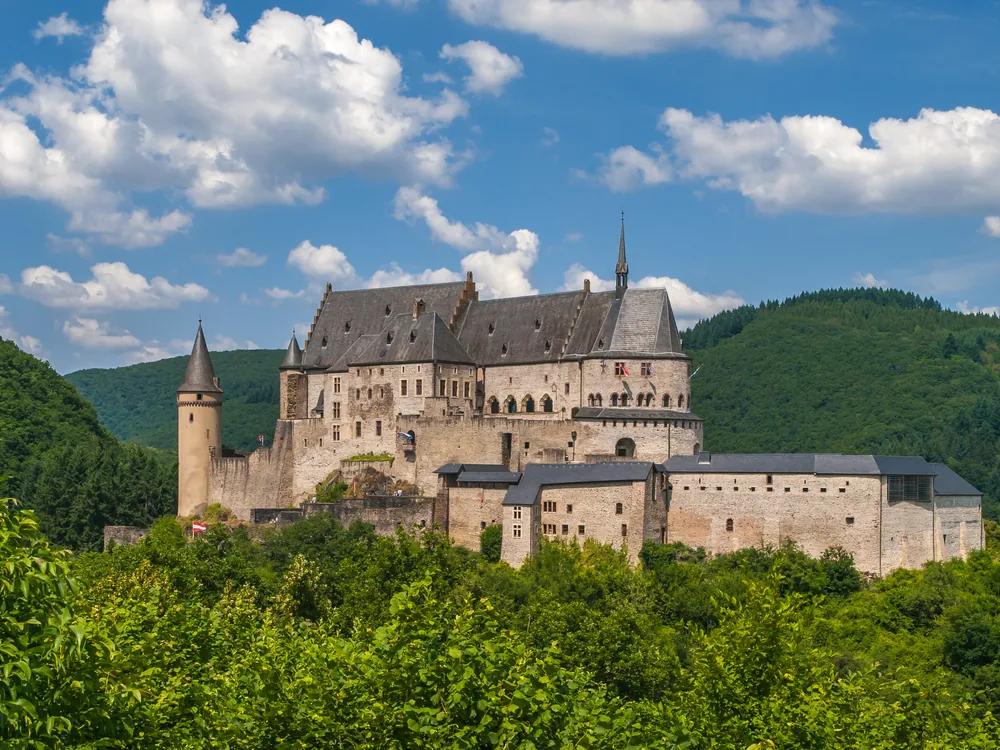
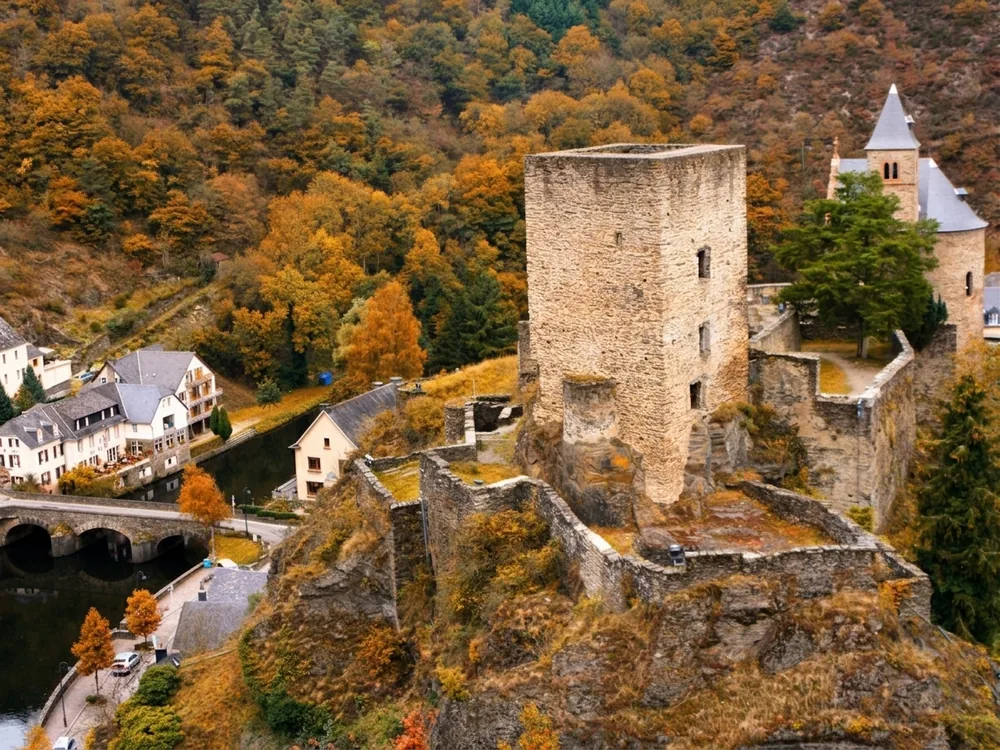
Combine with: Vianden Castle (~30 km east — Luxembourg's most completely restored medieval castle, with full interior access, above the Our river valley) and Esch-sur-Sûre Castle (~35 km south — a free, open-access ruin on a dramatic river-loop cliff site).
Frequently Asked Questions
No. The €940 price (per group of up to 4 people, not per person) covers private transport, pickup and drop-off in Luxembourg City, and guided commentary throughout the day. Entry fees to the museums and exhibitions inside Clervaux Castle — The Family of Man, the Battle of the Bulge Museum, and the model-castle exhibition — are explicitly excluded and cost approximately €5–€10 per site, paid separately on the day. Meals and personal expenses are also excluded.
Location
Montée du Château, L-9712 Clervaux, Luxembourg
Nearby Castles
Tours & Tickets
Powered by GetYourGuide
From
€940/ group