
Vianden Castle
Château de Vianden
Luxembourg · Canton of Vianden · Near Ettelbruck
Built 1090 · Romanesque and Gothic
This page is part of an independent travel guide and is not affiliated with, endorsed by, or operated by Vianden Castle.
© Unsplash
Quick Facts
- Hours
- Daily 10:00–18:00
- Guided tour from
- €770
- Duration
- 2–3 hours
- Best time
- Spring and autumn for valley foliage
- Nearest city
- Ettelbruck
Featured Tour
Luxembourg Vianden Castle Tour with Transfer + surprise stop
Cancellation available · Instant confirmation
Highlights
- ✦One of the largest and most important feudal residences in the Romanesque-Gothic style in Europe, dating from the 11th century
- ✦Victor Hugo lived in exile in Vianden in 1871 and sketched the castle daily — his house in the lower town is now a museum
- ✦Dramatically positioned on a spur above the Our River valley, visible for kilometres across the Ardennes
- ✦The Byzantine-influenced double chapel is one of the finest examples of 12th-century religious architecture in Luxembourg
- ✦Completely restored to its medieval appearance between 1977 and 2009 after being sold for demolition and stripped by speculators in 1820
Skip the queue with a guided tour
Skip-the-line tickets & expert guides
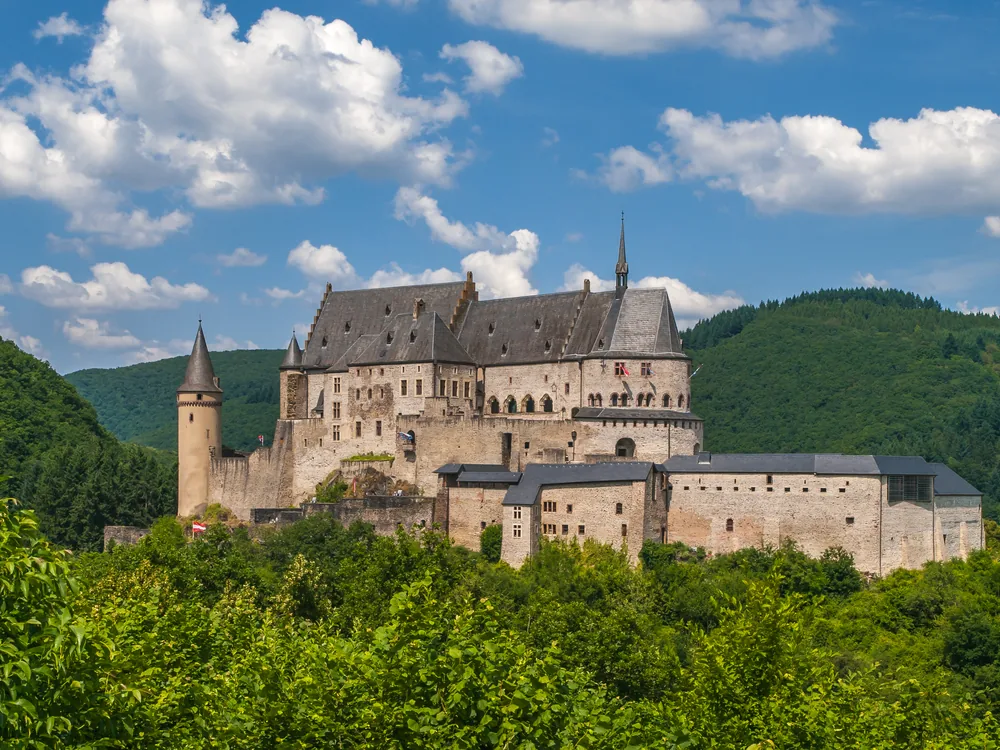
Vianden Castle looms above the charming medieval town of the same name, its towers and battlements perched on a rocky spur above the Our River valley in a setting that would seem contrived if it appeared in a painting. One of the largest and most architecturally significant feudal residences in the Romanesque-Gothic tradition in Europe, the castle has been the dominant physical and historical presence in Luxembourg's smallest and most beautiful canton for nearly a thousand years.
The castle's most famous resident was not a medieval lord but a French literary exile: Victor Hugo arrived in Vianden in 1871, having fled the German occupation of Paris, and stayed for two months in a modest house by the river. During his stay he sketched the castle compulsively, producing dozens of drawings that give us an invaluable record of its semi-ruined state before restoration. Hugo's house is now a small museum; his drawings hang in the rooms where he lived.
The restoration of Vianden Castle is one of the great heritage achievements of the 20th century. In 1820, the King of the Netherlands — to whom Luxembourg then belonged — sold the castle for demolition. Speculators stripped it of all removable material: roof tiles, window frames, interior stonework. What was left was a shell of bare walls open to the sky. From 1977 to 2009, the Luxembourg Friends of Vianden Castle association undertook a systematic reconstruction, returning the great hall, chapel, residential towers, and kitchen ranges to their medieval appearance. The result is the most complete 'full restoration' of a major Romanesque-Gothic castle in the Benelux region.
History
The spur above the Our River at Vianden has been fortified since at least Roman times, when a watch tower guarded the road through the Ardennes. The medieval castle was established by the Counts of Vianden, a significant noble family in the 11th century, and expanded substantially through the 12th and 13th centuries into the palace complex that survives as its basis today.
The 12th-century double chapel — a two-storey Byzantine-influenced structure with apsidal chapels and geometric patterned stonework — represents the architectural high point of the Romanesque period. The great hall and residential towers were added in the 13th and 14th centuries in Gothic style. The County of Vianden passed to the House of Nassau (ancestors of the modern Dutch royal family and Luxembourg's Grand Ducal family) through marriage in 1417.
The Nassau family expanded the castle through the 15th and 16th centuries and used it as a residence until the 17th century, when political gravity shifted toward their Dutch and Flemish territories. The castle fell into disuse and disrepair, accelerated by the scandalous 1820 demolition sale. The Luxembourg state acquired the ruins in 1977 and handed them to the Friends of Vianden Castle association, which undertook the 30-year restoration programme that transformed the shells into one of Luxembourg's greatest heritage sites.
How to Visit
Getting there: Vianden is 55 km north of Luxembourg City. By car, take the N17 north through Ettelbruck toward the Belgian border — approximately 55 minutes. Regular buses run from Ettelbruck train station (reached from Luxembourg City in 35 minutes by train) to Vianden; the Ettelbruck–Vianden bus takes about 30 minutes.
Tickets: €13 adult / €5 child at the gate; no advance booking required. The GetYourGuide private guided tour with transfer from Luxembourg City covers the castle in 4 hours including transport — the per-group price makes it practical for families or small groups arriving without a car.
Practical tips: The seasonal chairlift (télésiège) from the Our River valley up toward the castle is the most dramatic approach — check the operating season (roughly April–October) before visiting, and buy a one-way ticket up so you can walk down through the medieval town. The Maison de Victor Hugo on the main street by the bridge (5 minutes from the castle) contains Hugo's compulsive sketches of the castle during his 1871 exile and is worth 30 minutes before or after the castle visit.
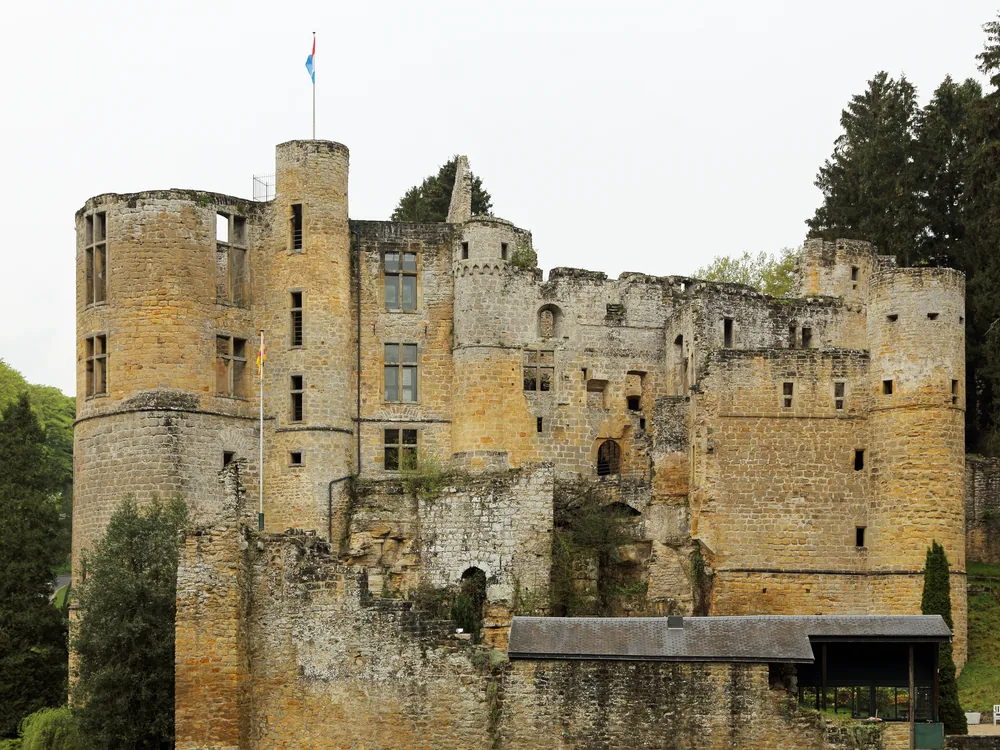
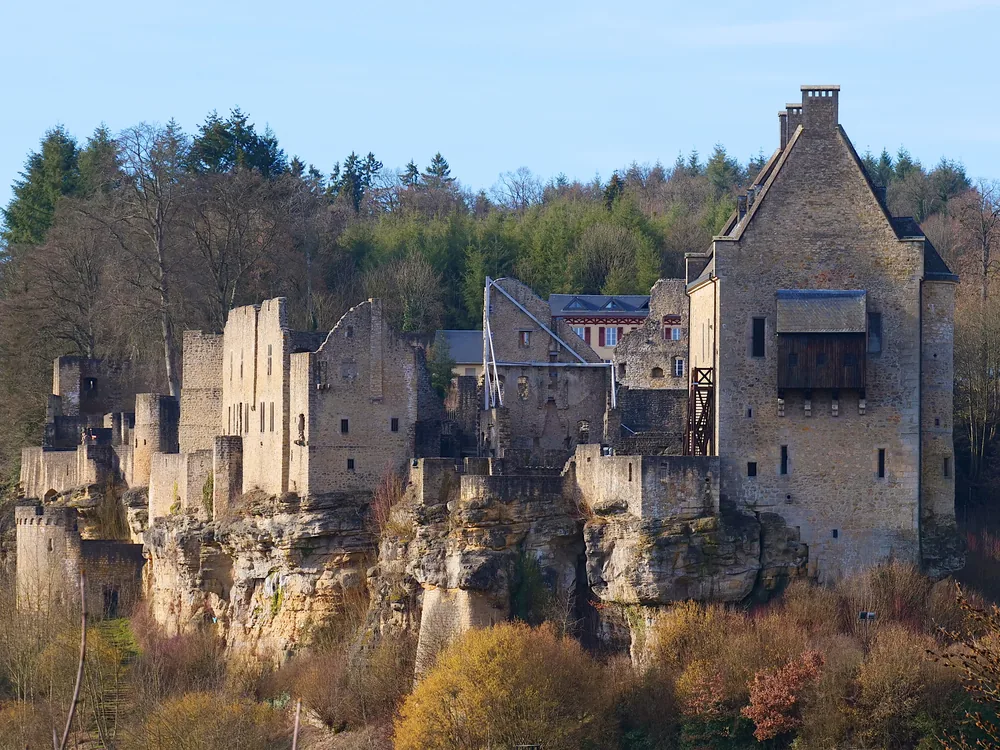
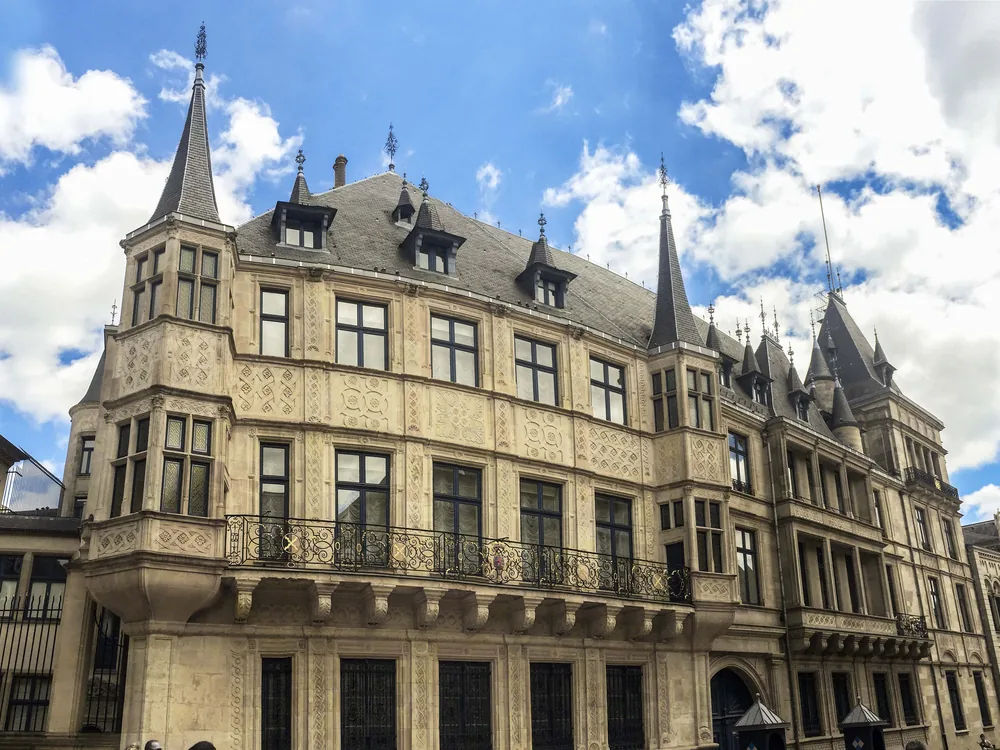
Combine with: Beaufort Castle, 35 km southeast in the Müllerthal region, and Larochette Castle, 30 km south, complete a full Luxembourg castles circuit in a single long day. Grand Ducal Palace in Luxembourg City is the urban counterpoint — the working royal residence versus this restored medieval fortress.
Frequently Asked Questions
Yes — in 1820, King William I of the Netherlands (who governed Luxembourg at the time) sold the medieval castle to a speculator for demolition. The buyer stripped all removable materials including roof tiles, window frames, floors, and interior stonework over the following decades. The shell of bare walls remained until the Luxembourg state acquired it in 1977 and began the 30-year restoration programme.
Location
Montée du Château, 9408 Vianden, Luxembourg
Nearby Castles
Tours & Tickets
Powered by GetYourGuide
From
€770/ group