Grand Ducal Palace
Palais Grand-Ducal
Luxembourg · Luxembourg City · Near Luxembourg City
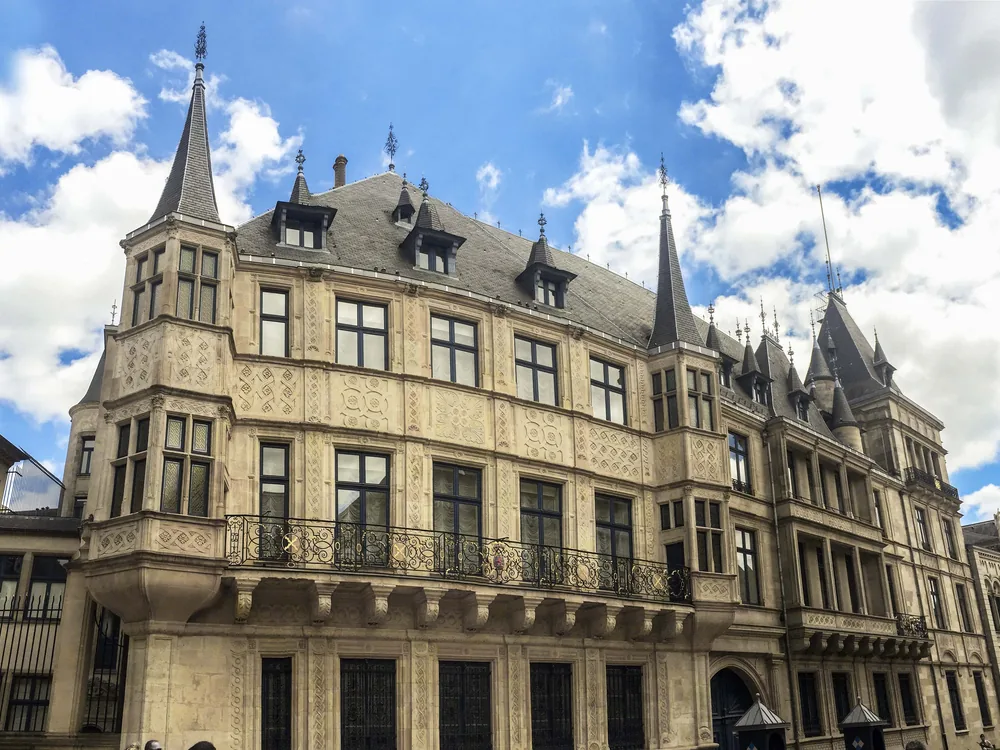
Built 1572 · Late Renaissance and Baroque palace in the centre of Luxembourg City; the original building was constructed in 1572 as the city hall of Luxembourg and converted to a ducal residence in the 17th century after the previous palace burned; extended in 1741 and 1891–1894 with neo-Moorish and neo-Gothic additions that introduced decorative variety without disrupting the principal Renaissance facade; the central section's facade is decorated with Renaissance cartouches and the coats of arms of the Nassau-Weilburg dynasty; the palace is the official city residence of the Grand Duke, open to the public for guided tours in summer only when the Grand Ducal family is at Fischbach Castle
This page is part of an independent travel guide and is not affiliated with, endorsed by, or operated by Grand Ducal Palace.
© Castles & Palaces
Quick Facts
- Hours
- Tue–Sun Varies seasonally. Closed Mon
- Guided tour from
- €139
- Duration
- 1 hour
- Best time
- July and August
- Booking
- Required — book 7+ days ahead
- Nearest city
- Luxembourg City
Featured Tour
Luxembourg: Power, Palaces & Royal Secrets Walking Tour
Cancellation available · Instant confirmation
Highlights
- ✦The Grand Ducal Palace is not a museum or a heritage site — it is a currently functioning royal residence, used by Grand Duke Henri as his official city home for formal state receptions, diplomatic functions, and ceremonial occasions throughout the year; the summer guided tours offer access to one of Europe's very few working royal palaces that regularly admits the public
- ✦The building began as Luxembourg City's town hall in 1572 — the Renaissance facade with its decorative cartouches was the civic face of the city rather than a royal composition; the conversion to ducal residence after the original palace burned down in the 17th century superimposed a royal use on an originally civic architectural identity that is still legible in the facade
- ✦The 1891–1894 addition introduced neo-Moorish decorative panels to the right-hand wing — a stylistic choice that makes the palace unusual among European royal residences; the Moorish elements were fashionable in the late 19th century as a reference to Islamic architectural tradition, and they sit alongside the original Renaissance cartouches in a combination that is architecturally eclectic rather than unified
- ✦Luxembourg City's Chemin de la Corniche — the 'most beautiful balcony in Europe' — is a short walk from the palace through the old town, and the palace's position in the heart of the historic quarter (a UNESCO-listed site) means that a palace visit can be combined with the broader old town experience without covering more than 500 metres
- ✦Grand Duke Henri, current ruler of Luxembourg, is the last absolute monarch in Europe to retain real political power in a constitutional framework — Luxembourg's Grand Duke has constitutional prerogatives that most European monarchs have long since ceded, including a formal role in appointing government that was tested in 2008 when Henri publicly indicated he would not sign a euthanasia law; the palace is the physical seat of this unusual constitutional arrangement
Skip the queue with a guided tour
Skip-the-line tickets & expert guides
The Grand Ducal Palace stands in the medieval quarter of Luxembourg City, two blocks east of the Place Guillaume II, in a tight section of the old town where the streets narrow and the buildings press close. It is not what most visitors expect a royal palace to look like: no great forecourt, no impressive approach, no spectacular park. The facade — Renaissance cartouches, the coats of arms of the House of Nassau-Weilburg, and a 19th-century Moorish-influenced right wing — is pressed directly against the street. The palace's urban setting is part of its character. This is a working royal residence in the centre of a small capital city, not a showpiece designed to impress from a distance.
The building's origins are civic rather than royal. When it was built in 1572, it served as the town hall of Luxembourg — the administrative centre of the city rather than the seat of the ruling power. The design reflects this: the facade's Renaissance decorative programme is the kind appropriate for a prosperous municipal building of its period, and the scale is more city-hall than royal-palace. The conversion to a ducal residence happened in the 17th century, after the original Grand Ducal Palace elsewhere in the city burned down. The town hall was repurposed as the ducal seat and gradually modified to its current function, with additions in 1741 and an 1891–1894 extension to the right-hand wing that introduced neo-Moorish decorative panels — a Victorian-era enthusiasm for Islamic architectural motifs that appears in the building as a stylistic addition without disturbing the original Renaissance body of the palace.
Luxembourg's position in European history explains why the current dynasty holds more formal constitutional power than most European royal houses. The Grand Duchy was created at the Congress of Vienna in 1815 as a territorial entity to be held by the King of the Netherlands in personal union — separate from the Netherlands but connected by the same crown. Its independence was consolidated by the Treaty of London of 1867, when Prussian troops withdrew, the fortress was dismantled (Luxembourg had been the most heavily fortified city in Europe after Gibraltar), and the Grand Duchy became permanently neutral. The Nassau-Weilburg dynasty has held the throne since 1890. Grand Duke Henri, the current ruler, has constitutional prerogatives that most European monarchs have long since transferred to elected governments, including a formal role in government formation that became controversial in 2008 when he publicly indicated he would not sign a euthanasia law, prompting a constitutional change that reduced his role from formal assent to promulgation.
The palace is open to the public for guided tours in July and August only — the period when the Grand Ducal family has moved to Fischbach Castle for the summer recess. During the winter months and the working year the palace is a functioning royal residence: the state rooms are used for diplomatic receptions, the throne room for formal investitures, and the grand salon for official events. The summer guided tours are the only public access to the interior and represent a genuinely unusual opportunity: guided access to a currently working royal palace, furnished and in use, in the centre of a European capital.
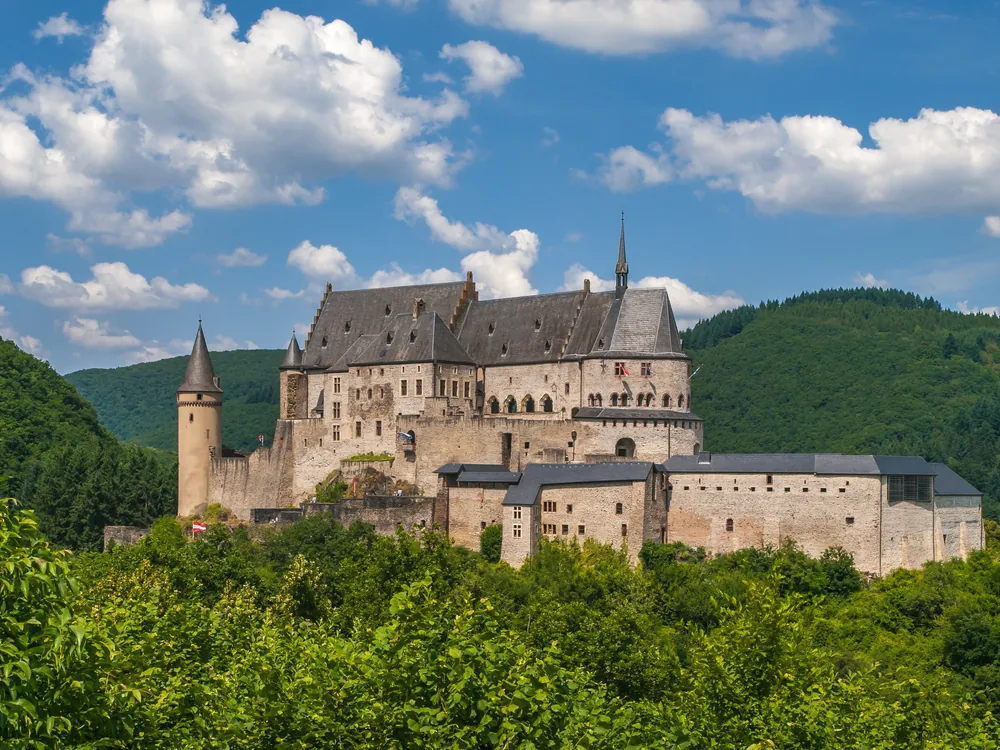
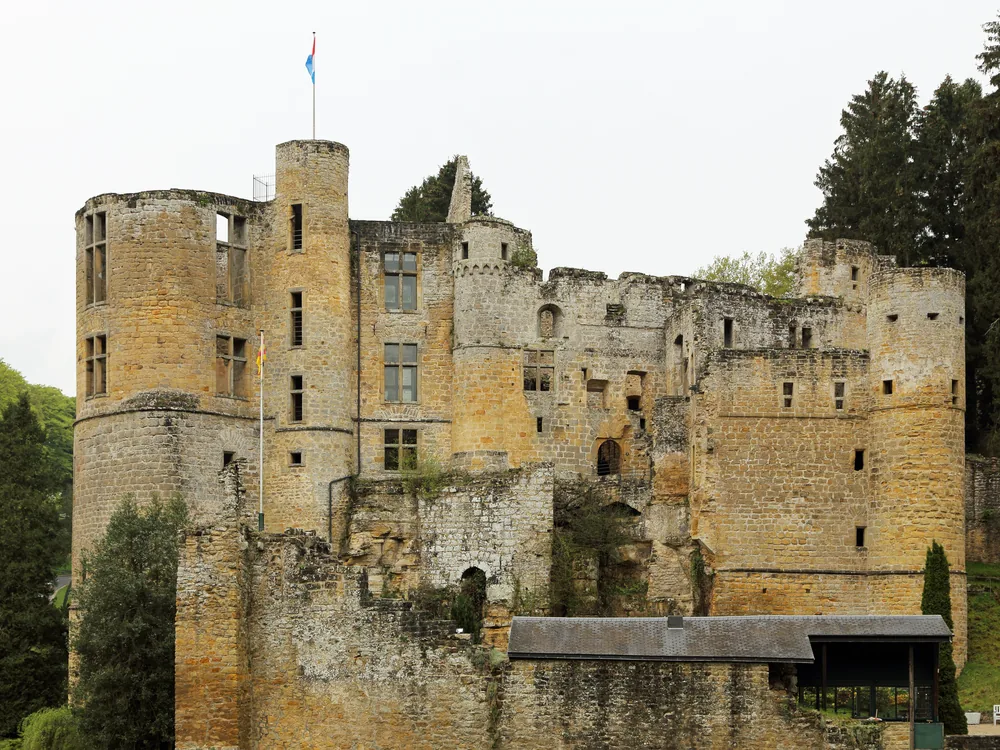
The GetYourGuide tour that covers the Grand Ducal Palace also includes [Vianden Castle](/castles/luxembourg/vianden-castle), [Beaufort Castle](/castles/luxembourg/beaufort-castle), and [Larochette Castle](/castles/luxembourg/larochette-castle) in a single Luxembourg day — which means the full range of Luxembourgish castle types, from medieval fortress to Baroque royal residence, in a single circuit. Luxembourg's unusual concentration of castle types within a very small national territory makes this combination work geographically in a way that would not be possible in a larger country.
History
The site of the Grand Ducal Palace was first occupied in 1572 by Luxembourg City's town hall, built in Renaissance style. A fire in the 17th century destroyed the original palace structure, and the town hall was converted to serve as the ducal residence — a pragmatic repurposing that set the building on its current trajectory. An extension in 1741 added a wing and established the approximate footprint the palace occupies today.
The Congress of Vienna in 1815 created the Grand Duchy of Luxembourg as a separate entity under the King of the Netherlands, giving the residence its dynastic context. The Treaty of London in 1867 dismantled Luxembourg's extensive fortifications and established the Grand Duchy's permanent neutrality, completing the transition to the independent state it has been since. When the Dutch crown separated from the Luxembourgish crown in 1890, the Nassau-Weilburg dynasty began ruling Luxembourg independently, and the palace became unambiguously a national royal residence rather than a branch court. A Neo-Moorish right-hand wing extension was added between 1891 and 1894, giving the facade its distinctive ornamental asymmetry.
The palace served as the Grand Duke's official city residence through two World War occupations and the postwar period. It is the official residence of Grand Duke Henri and is open for guided tours in July and August only.
How to Visit
Getting there: The palace is in the heart of Luxembourg City's old town, approximately 10 minutes on foot from Luxembourg-Ville Gare (main railway station). Luxembourg City is directly connected to Paris (2 hours), Brussels (3 hours), and Trier (50 minutes) by train. Buses also serve the city centre from the station.
Tickets: €10 adult / €5 child; advance booking required via visitluxembourg.com or the Luxembourg City Tourist Office. The palace is open for guided tours in July and August only — when the Grand Ducal family is at Fischbach Castle. The GetYourGuide walking tour covers the palace as an exterior stop only; entry tickets to the interior are not included and must be booked separately through the official tourism office.
Practical tips: Book the summer guided tour at least a week in advance — slots fill quickly in July. Allow extra time before or after: the Bock Casemates (the medieval underground fortifications, 5 minutes walk) and the Chemin de la Corniche — described as the most beautiful balcony in Europe — are within the same old town circuit. Luxembourg City's historic centre is a UNESCO World Heritage Site; a half-day combining the palace with the old town ramparts and casemates is the natural itinerary.
Combine with: Vianden Castle, 50 km north — Luxembourg's most impressive medieval fortress above the Our valley — is the essential same-trip pairing. Beaufort Castle and Larochette Castle in the Müllerthal region, 35 km east, complete a full Luxembourg castle circuit from this base.
Frequently Asked Questions
The palace is open for guided public tours in July and August only — the summer period when the Grand Ducal family is at Fischbach Castle. During the rest of the year it is a working royal residence, in active use for state occasions, diplomatic receptions, and formal government functions, and is not open to visitors. Advance booking is required for the summer tours; go to visitluxembourg.com or the Luxembourg City Tourist Office.
Location
17 Rue du Marché-aux-Herbes, 1728 Luxembourg City, Luxembourg
Nearby Castles
Tours & Tickets
Powered by GetYourGuide
From
€139/ person