
Stari Bar
Стари Бар / Stari Bar
Montenegro · Bar Municipality — 5 km from the modern town of Bar and Adriatic port, at the foot of Mount Rumija · Near Bar
Built 600 · Layered fortified town — Byzantine 6th-century origins; Venetian curtain walls, towers, and the Lion of St. Mark gate; an Ottoman mosque (1662 Omerbašić Mosque) and hammam; residential quarters and churches; abandoned after the 1979 earthquake; partially restored open-air ruin complex
This page is part of an independent travel guide and is not affiliated with, endorsed by, or operated by Stari Bar.
© Castles & Palaces
Quick Facts
- Hours
- Daily 09:00–19:00
- Guided tour from
- €179
- Duration
- 1.5–2 hours
- Best time
- April to June and September to October
- Nearest city
- Bar
Featured Tour
From Bar: Budva Old Town and Sveti Stefan Shore Excursion
Cancellation available · Instant confirmation
Highlights
- ✦Not a single castle keep but a complete layered fortified town — Byzantine 6th-century fortifications, Venetian curtain walls and the Lion of St. Mark gate, a 1662 Ottoman mosque, and a hammam all occupy the same enclosed hillside, spanning more than 1,000 years of layered rule
- ✦Founded in the 6th century as a Byzantine fortification and known for centuries as Antivari — an important Adriatic fortified settlement contested between Byzantines, Slavic kingdoms, Venetian and Ottoman forces across the medieval period
- ✦The earthquake of 15 April 1979 — a 6.9 magnitude event, one of the most destructive in Yugoslav history — destroyed the town's aqueduct and water supply, making the site uninhabitable and forcing residents to relocate to build modern Bar on the coast; Stari Bar was effectively abandoned overnight
- ✦Venetian Lion of St. Mark gates stand beside the Ottoman Omerbašić Mosque (built 1662) and surviving Byzantine-era church ruins — an architectural palimpsest of the complete succession of powers that held this site, visible in a single walk
- ✦The olive trees around Stari Bar are among the oldest in Montenegro and the broader region — one specimen is estimated at over 2,000 years old, meaning it was already ancient when the Byzantine fortress was built beside it
Skip the queue with a guided tour
Skip-the-line tickets & expert guides
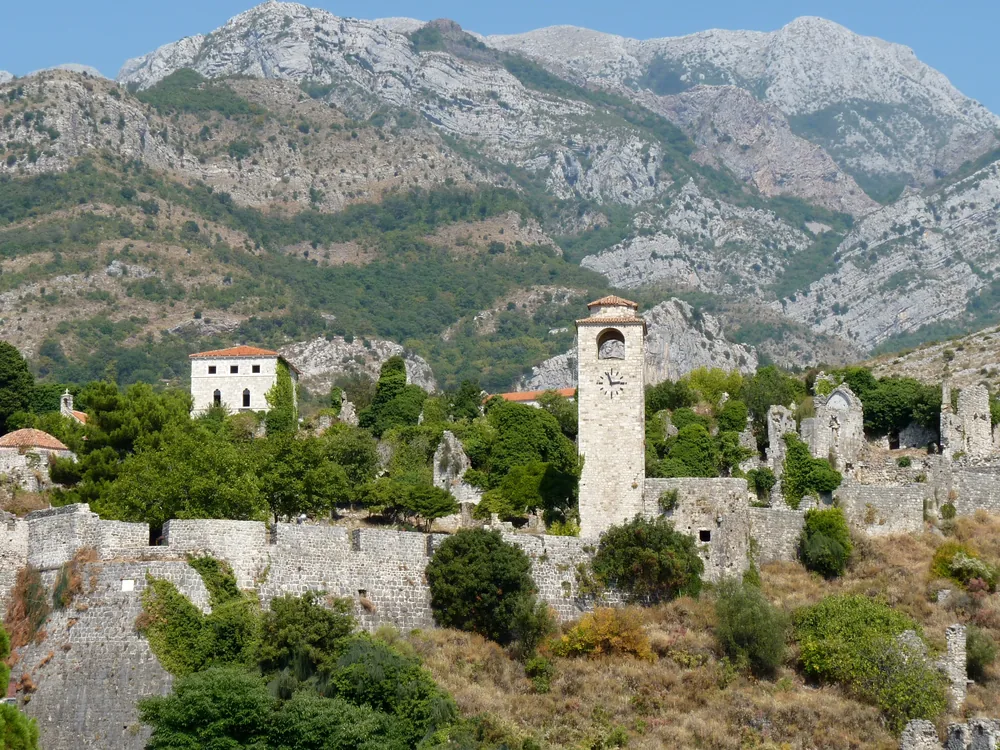
On 15 April 1979, an earthquake measuring 6.9 on the Richter scale struck the Adriatic coast of what was then Yugoslavia — one of the most destructive seismic events in the region's modern history. The earthquake destroyed the ancient aqueduct supplying Stari Bar, the fortified hilltop town above the modern port of Bar. Without water, the settlement was uninhabitable. Residents relocated to the coast; the hilltop town was not demolished or rebuilt — it was left. The result is what visitors find today: a complete fortified settlement, its churches, mosque, hammam, clock tower, and residential quarters all standing within an intact perimeter wall, frozen in the state in which its last residents abandoned it.
The layers beneath the 1979 abandonment span more than a thousand years. A Byzantine fortification was established here in the 6th century — known for centuries as Antivari — and the site was subsequently contested between Byzantine, Slavic, and Serbian medieval rulers before Venetian control brought the curtain walls, towers, and the Lion of St. Mark gate that still stands at the entrance today. Ottoman forces took the town in 1571; the Omerbašić Mosque, built in 1662, and a hammam survive from their period of rule. Montenegro acquired Stari Bar at the Congress of Berlin in 1878. In 1979, residents were still living in a town that had accumulated a millennium of overlapping architecture — Byzantine, Venetian, Ottoman, and Montenegrin — all within the same enclosed hilltop perimeter.
The enclosed site is substantial — large enough that the full perimeter walk and exploration of the main monuments takes around two hours. The partially restored citadel, the clock tower, the Bishop's Palace, the mosque, and the hammam can all be explored, with ruins of residential quarters filling the spaces between. It is one of the most complete open-air ruined settlements on the Adriatic coast, consistently undervisited relative to its architectural and historical significance.
Beside the ruins grow some of the oldest olive trees in Montenegro. One specimen near the entrance is estimated at over 2,000 years old — already ancient when the Byzantine fortress was built beside it, still living today. It is an unlikely final image for a site defined by abrupt abandonment: something continuous, uninterrupted, and entirely indifferent to the thousand years of contested history around it.
History
Antivari — the Latin name by which the settlement was known for centuries — emerged as a Byzantine fortification in the 6th century, one of a network of strategic points along the eastern Adriatic. Over the following centuries the site passed between successive medieval powers: Byzantine governors, Slavic principalities, and the Serbian medieval kingdom each held authority at different moments, and the fortifications accumulated the traces of each administration. Venetian control, formalised during the 15th century, brought the most visible transformation: new curtain walls, towers, and the Lion of St. Mark gate that would define the town's entrance for centuries to come. Ottoman forces captured Stari Bar in 1571, adding the Omerbašić Mosque in 1662 and a hammam to the enclosed hilltop — the final major architectural layer before Montenegrin rule. The Congress of Berlin in 1878 assigned the town to Montenegro, ending nearly three centuries of Ottoman administration. The earthquake of 15 April 1979 destroyed the site's aqueduct and forced the population's relocation to coastal Bar; a restoration programme begun in the 1980s stabilised the key monuments and opened the site as the open-air ruin complex it remains today.
How to Visit
Getting there: Stari Bar is 5 km from the modern town and Adriatic port of Bar — easily reached by taxi (~€5–8) or as part of an organised shore excursion from Bar, which is a regular Adriatic cruise stop. The site is not directly connected by regular bus; a car or taxi is the practical option. From Budva by car, allow about 45 minutes.
Tickets: Entry to the open-air ruin site is approximately €3 adult; verify current pricing at the entrance gate. The GetYourGuide shore excursion from Bar — covering Budva Old Town and Sveti Stefan island, with pickup available from Bar port — is a useful day-tour option for cruise visitors who want to combine Stari Bar with the broader Montenegrin coast; the Stari Bar visit can be added as a standalone extension before joining this tour.
Practical tips: This is an exposed hilltop site with little natural shade — bring water and sun protection, especially in summer. Wear sturdy footwear; the ancient paving is uneven and wet stone can be slippery. The site is large and the full perimeter walk takes around 1.5–2 hours — allow this time rather than rushing. The 2,000-year-old olive tree near the entrance is unmissable. Restoration work is ongoing in parts of the site — access to specific buildings may vary; check locally on arrival.
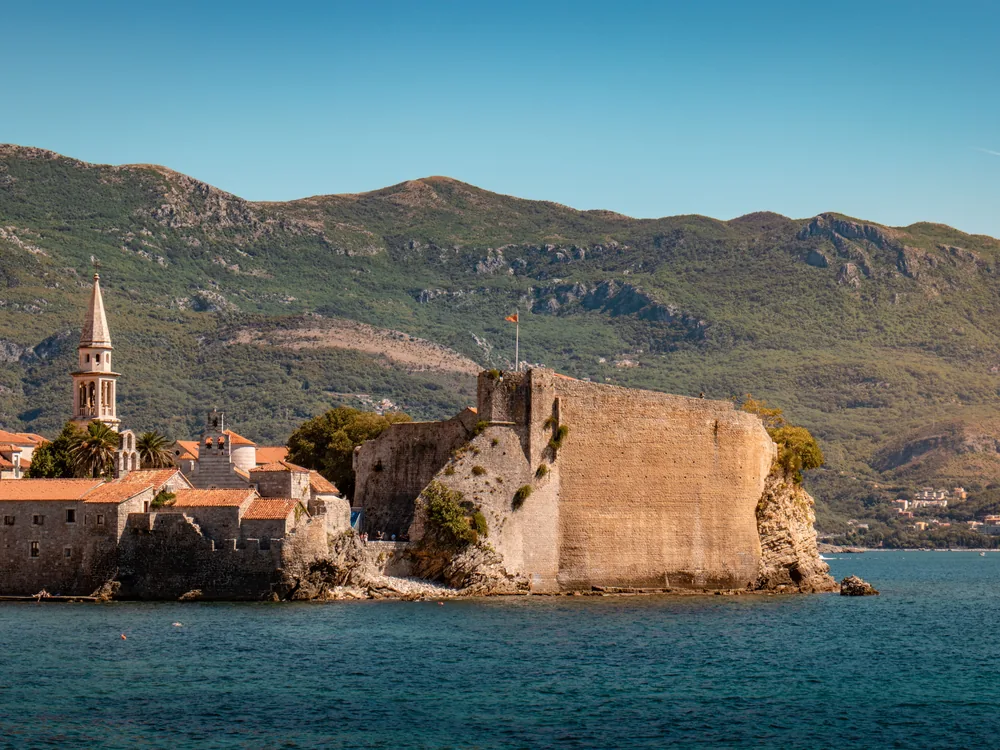
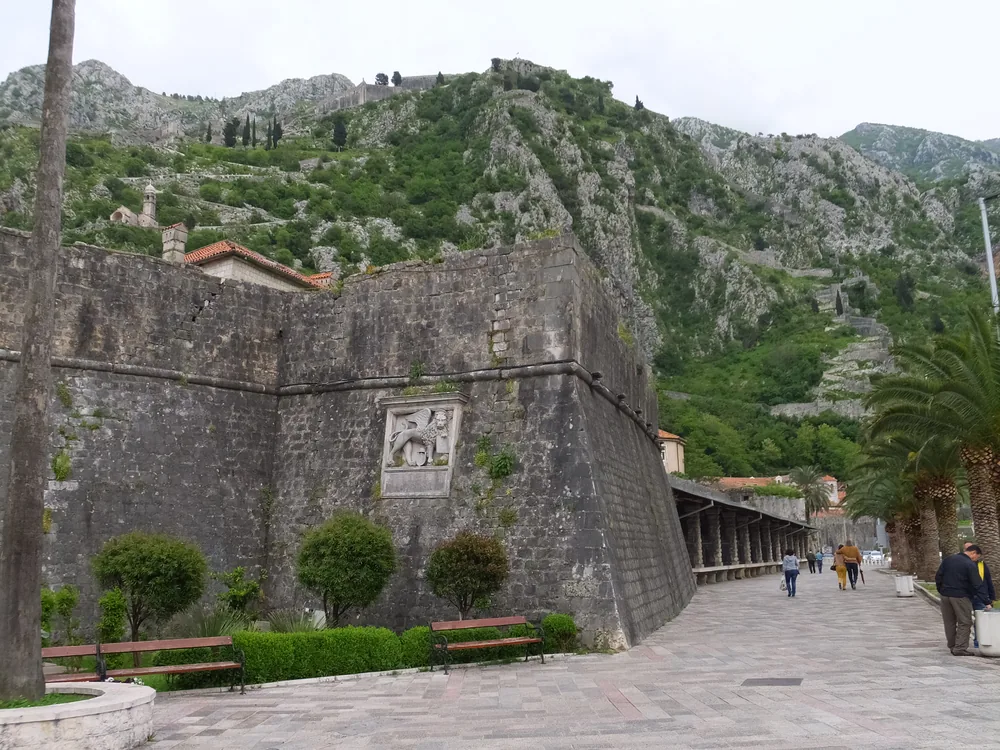
Combine with: Budva Citadel (40 km northwest — the sea-facing Venetian citadel at the heart of Budva's famous old town, the most visited site on the Montenegrin coast) and Kotor City Walls (75 km northwest — the UNESCO-listed medieval city walls of Kotor climbing the steep hillside of Mount Lovćen, 4.5 km of walls with 118 towers).
Frequently Asked Questions
The catastrophic earthquake of 15 April 1979 destroyed the town's aqueduct and water supply; residents could not remain without water and relocated to build modern Bar on the coast, leaving the hilltop town as an open-air ruin.
Location
Stari Bar, 85000 Bar, Montenegro
Nearby Castles
Tours & Tickets
Powered by GetYourGuide
From
€179/ person