
Arcen Castle
Kasteel Arcen
Netherlands · Limburg · Near Arcen, near Venlo
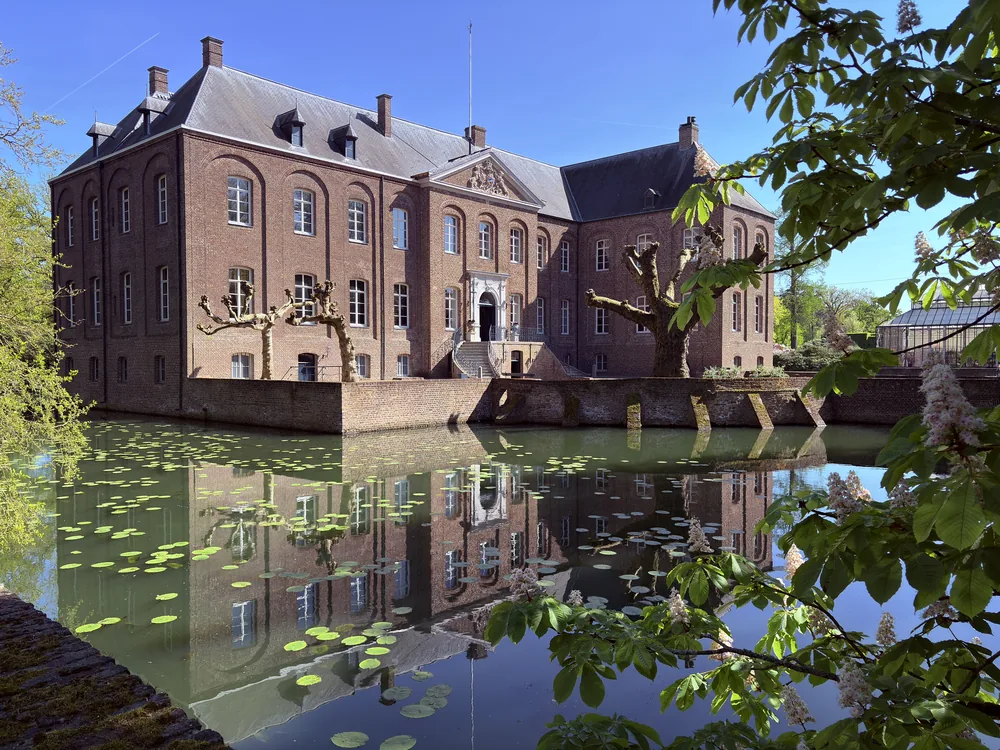
Built 1709 · Baroque manor house and courtyard complex built in 1709 on an earlier medieval fortified site near the Maas river in Limburg; the original medieval castle was replaced by a brick manor structure that served as the principal house of the Arcen estate; Allied bombardment in 1944 destroyed the interior of the castle while leaving the exterior shell largely intact; the castle exterior and courtyard now form the architectural centrepiece and entrance structure for the Kasteeltuinen Arcen, the themed castle gardens developed from 1988 and spanning approximately 19 hectares; the gardens contain a Japanese garden, Mediterranean terraces, rose garden, kitchen garden, tropical greenhouses, and water features, making them among the most visited garden attractions in the Netherlands
This page is part of an independent travel guide and is not affiliated with, endorsed by, or operated by Arcen Castle.
© Castles & Palaces
Quick Facts
- Hours
- Daily 10:00–17:00
- Entry via GetYourGuide
- €22
- Duration
- 2–3 hours
- Best time
- April to September
- Nearest city
- Arcen, near Venlo
Featured Tour
Arcen: Kasteeltuinen Arcen Entry Ticket
Cancellation available · Instant confirmation
Highlights
- ✦Arcen Castle's interior was destroyed in Allied bombardment in 1944, leaving a baroque exterior shell around an empty ruin — the gardens that now surround it were developed from 1988 not as a reconstruction project but as an independent creation that uses the ruined castle as an architectural anchor and entrance gate for an entirely new 19-hectare themed landscape
- ✦The Kasteeltuinen Arcen (Castle Gardens Arcen) are among the most elaborate garden attractions in the Netherlands, with distinct themed sections including a formal rose garden, Japanese garden, Mediterranean terraces, kitchen garden, and tropical greenhouses — each coherent as a distinct horticultural idiom, all connected by the Maas river estate setting in southern Limburg
- ✦The Japanese garden at Arcen is one of the most carefully designed in Western Europe, with a tea pavilion, koi ponds, stone lanterns, and planting that follows seasonal Japanese garden logic — cherry blossom in spring, iris and wisteria in early summer, autumn colour in September; it is a serious horticultural commitment rather than an orientalist decoration
- ✦The castle sits directly alongside the Maas river, and the estate occupies the kind of low, river-meadow Limburg landscape that feels distinct from the Netherlands' northern polder geography — the gentle hills of the Limburg border region and the proximity to Germany (the border is approximately 5 km east) give the garden a Central European setting that the Kasteeltuinen's German and Japanese themed sections make legible
- ✦The GetYourGuide rating reflects the experience of the gardens as a destination rather than the castle as a monument — Arcen is recommended to garden visitors and landscape design enthusiasts more than to castle historians, and visitors approaching it with that orientation consistently find it outstanding
Skip the queue with a guided tour
Skip-the-line tickets & expert guides
There is an important clarification to make before visiting Arcen Castle: the castle itself is a ruined shell, and the primary attraction is the garden estate that has grown around it. This is not a disappointment but a context-setting fact, because Kasteeltuinen Arcen — the Castle Gardens Arcen — are among the most thoughtfully designed and horticulturally substantial garden attractions in the Netherlands, and visitors who arrive expecting a castle and find instead 19 hectares of themed international garden design typically conclude that the gardens are better than a castle would have been.
The history of what happened to the castle is specific and verifiable. A medieval fortification occupied the Arcen site, replaced over time by the kind of manor-house complex that Limburg's river-valley estates favoured in the 17th and 18th centuries. The current baroque brick structure visible as the entrance and courtyard of the gardens was built in 1709 — a substantial country-house of its period, serving as the principal residence of the Arcen estate on the Maas river. The Second World War ended this use. Allied bombardment in 1944, during the fighting in the Netherlands' southern provinces that followed the failed Arnhem operation and the liberation campaigns of late 1944 and early 1945, destroyed the interior of the castle while leaving the exterior walls and facade largely intact. What survived was the structural shell: walls, windows, and the courtyard gate, but no floors, no roof, and no recoverable interior. The building was not restored afterwards — the cost was prohibitive, the historic interior gone, and the estate's post-war ownership situation complex.
The transformation that created the current Kasteeltuinen began in 1988, when the decision was taken to develop the castle grounds not as a restoration project but as a garden estate in its own right. The ruined castle became the architectural centrepiece and gateway of a new 19-hectare garden landscape, with the baroque facades providing visual and historical grounding for a set of international themed garden sections designed and planted across the following decades. The result is one of the more interesting post-war repurposings of a damaged historic site in the Netherlands — not an attempt to return to what was lost but a deliberate new creation that accepts the loss and builds forward.
The garden sections at Kasteeltuinen Arcen cover a range of horticultural traditions that require some navigation on first visit. The Japanese garden is the most coherently realised of the themed areas — it was designed with serious attention to the principles of Japanese garden design and contains a tea pavilion, koi ponds, stone lanterns, raked gravel, and planting sequences that track the Japanese garden calendar: cherry blossom and magnolia in April, iris and wisteria in May and June, hydrangea in summer, and the autumn colour changes in September that Japanese gardens are specifically designed to amplify. This is not a token orientalist decoration but a garden that rewards the attention of visitors with some knowledge of its source tradition.
The rose garden is one of the largest in the Netherlands, with a formal layout and a collection that covers both modern hybrid tea roses and older varieties from the 19th century and earlier; it peaks in June and September, with the familiar rose-garden rhythm of two main flushes. The Mediterranean terraces use the mild Limburg microclimate — the region is notably warmer than the Netherlands' northern provinces — to grow plants that would be marginal further north: lavender, oleander, bay, and Mediterranean herbs in a terrace layout that references Provençal and Italian garden traditions. The kitchen garden demonstrates the historic productive garden of the estate, planted with period-appropriate vegetables, herbs, and small fruit. The tropical greenhouses contain collections of exotic plants that require controlled temperature through the Dutch winter.
The estate's location on the Maas river, approximately 10 kilometres north of Venlo and close to the German border, situates it in a Limburg landscape that feels distinct from the Netherlands' more familiar northern geography. The river-meadow setting, the Limburg hills visible to the south, and the proximity of Germany (the border is approximately 5 kilometres east) give Arcen a transitional quality between Dutch and German-Belgian border region character. The Kasteeltuinen reflects this with its international garden sections — the Japanese garden, the Mediterranean terraces, and the formal European garden traditions all make sense as deliberate statements of cosmopolitan design ambition in a border-region estate.
The GetYourGuide entry ticket covers all garden areas including the tropical greenhouses, with no additional charges for specific sections. The castle exterior and courtyard are part of the visitor experience — the roofless baroque shell is visible throughout, and the courtyard gate functions as the formal entrance to the gardens — but the castle interior is not accessible and there is no castle museum or heritage exhibition inside. The gardens are open April to October, closed November to March, with peak season from May through August when the rose garden and Japanese garden are simultaneously at their best. Visitors arriving in late April for cherry blossom or in early June for roses and wisteria will find the garden at its most photogenic.
Hoensbroek Castle, approximately 40 kilometres south in the Limburg coalfield area and already on this site, is the natural castle complement — a fully intact medieval moated castle in contrast to Arcen's garden-centred destroyed monument — and the two together cover the range of what Limburg's castle heritage offers.
History
The Arcen site had medieval fortifications that were gradually replaced by a baroque manor complex. The current castle structure was built in 1709 as the country house of the Arcen estate. Allied bombardment in 1944 destroyed the castle interior while leaving the exterior walls intact. The building was not restored after the war. In 1988 the decision was made to develop the castle grounds as a major garden attraction — the Kasteeltuinen Arcen — using the ruined baroque shell as the centrepiece and entrance to a new 19-hectare landscape of themed international gardens. The Kasteeltuinen are now one of the most visited garden attractions in the Netherlands.
How to Visit
Getting there: By car from Venlo: approximately 15 minutes north on the N271 to Arcen village, then follow signs to Kasteeltuinen. From Eindhoven or Düsseldorf: approximately 45–60 minutes. By bus from Venlo station: regional bus services to Arcen, with a 10-minute walk to the castle gardens. Venlo has direct rail connections to Eindhoven, Roermond, and (via Viersen) Düsseldorf.
Tickets: The GetYourGuide entry ticket covers all garden sections including greenhouses. Walk-up tickets are also available at the entrance.
Practical tips: Allow 2–3 hours for a thorough garden visit. Time your trip for the best season: late April for cherry blossom, late May–June for roses, iris, and wisteria, and September for autumn colour in the Japanese garden — the most photogenic windows are May–June combined.
Combine with: Hoensbroek Castle (40 km south near Heerlen) is the best Limburg castle pairing — a fully intact medieval moated castle in contrast to Arcen's garden estate.
Frequently Asked Questions
Only the gardens are open to visitors. The castle interior was destroyed in Allied bombardment in 1944 and has not been restored; the exterior walls and baroque facade are intact and form the visual anchor and entrance gate of the gardens, but there is no castle interior, museum, or heritage rooms to enter. The Kasteeltuinen Arcen — 19 hectares of themed international garden sections — are the principal attraction, and they are why the site is recommended.
Location
Lingsforterweg 26, 5944 AB Arcen, Netherlands
Nearby Castles
Tours & Tickets
Powered by GetYourGuide
From
€22/ person