
Royal Palace of Amsterdam
Koninklijk Paleis Amsterdam
Netherlands · North Holland · Near Amsterdam
Built 1648 · Dutch Classicism; designed by Jacob van Campen 1648–1665; built as Amsterdam's city hall; converted to royal palace by Louis Bonaparte 1808; one of the largest secular buildings of the Dutch Golden Age
This page is part of an independent travel guide and is not affiliated with, endorsed by, or operated by Royal Palace of Amsterdam.
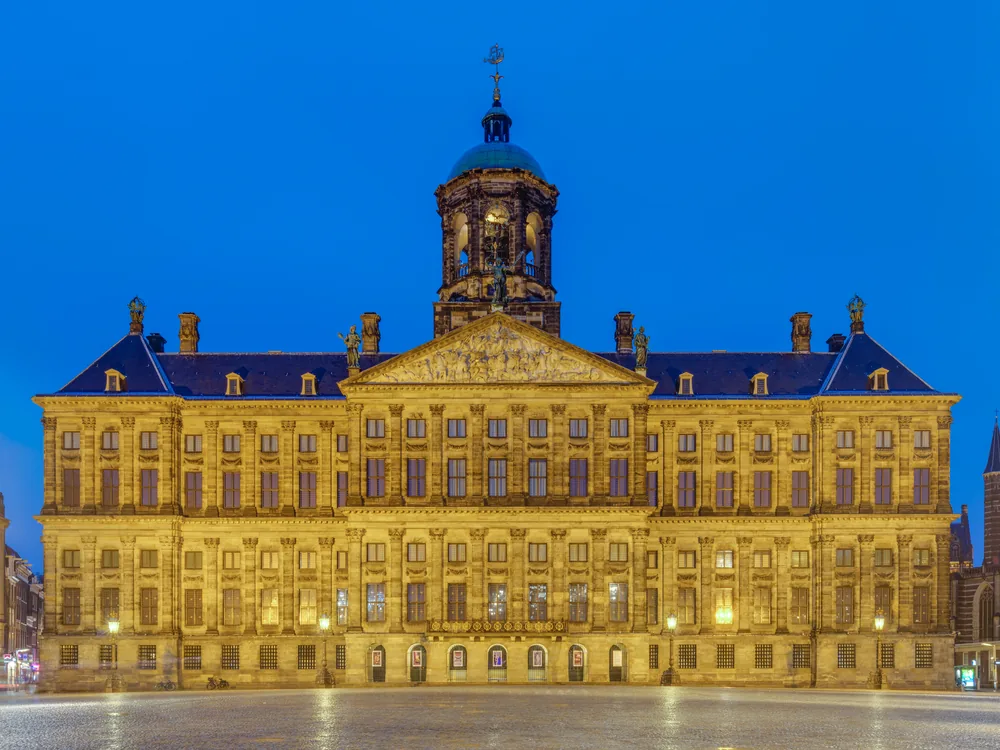
© Castles & Palaces
Quick Facts
- Hours
- Daily 10:00–17:00
- Entry via GetYourGuide
- €14
- Duration
- 1–1.5 hours
- Best time
- Year-round
- Nearest city
- Amsterdam
Featured Tour
Amsterdam: Royal Palace Entry Ticket + Audio guide
Cancellation available · Instant confirmation
Highlights
- ✦The Burgerzaal (Citizens' Hall) — 28 by 17 by 29 metres, with marble floor maps of the eastern and western hemispheres laid out beneath visitors' feet
- ✦Built in 1648 as Amsterdam's city hall, at the precise moment the Dutch Republic's independence was confirmed and its global trading power was at its peak
- ✦Converted into a royal palace in 1808 when Napoleon installed his brother Louis Bonaparte as King of Holland, with no say from the city that built it
- ✦The Tribunal, where death sentences were once pronounced, retaining its original marble panelling and allegorical sculpture of Justice, Prudence and Punishment
- ✦Still an active royal palace today, used for state banquets and royal investitures whenever the Dutch monarch requires an Amsterdam residence
Skip the queue with a guided tour
Skip-the-line tickets & expert guides
Dam Square is the zero point of Amsterdam — the spot from which all distances in the Netherlands were once measured. At its centre stands a building that looks like a palace because it now is one, but was built as something far more democratic: the city hall of the most commercially powerful republic in the 17th-century world. That contradiction — civic grandeur later repurposed as royal residence — defines everything about the Royal Palace of Amsterdam.
Jacob van Campen began construction in 1648, the year the Peace of Westphalia ended the Eighty Years' War and formally confirmed Dutch independence from Spain. Amsterdam was at the absolute apex of its power: the VOC, the Dutch East India Company, controlled trade routes stretching across Asia and the Americas, and the city's population had nearly tripled in a generation. The new city hall was conceived as a statement as much as a piece of civic infrastructure — this republic needed no king, but it could still outbuild any king's palace in Europe. Construction took seventeen years, and the finished building was immediately counted among the wonders of the age.
The exterior is restrained Dutch Classicism: sandstone, regular pilasters, a central cupola crowned by a ship weathervane, the symbol of Amsterdam's maritime dominance. The interior tells a different story entirely. The Burgerzaal, the Citizens' Hall, is a room of extraordinary ambition — 28 metres long, 17 metres wide, 29 metres high — with marble maps of the eastern and western hemispheres inlaid directly into the floor. In the 17th century this was a genuinely public hall, where ordinary citizens transacted business, met officials and circulated freely. The marble underfoot mapped the entire known world, a statement of commercial reach that bordered on audacity for a single city's town hall.
That civic identity ended abruptly in 1808. Napoleon Bonaparte had appointed his brother Louis King of Holland, and Louis needed a royal residence in Amsterdam — the only building in the city adequate to the role was its own town hall. He moved in, renamed it a palace, and filled the rooms with French Empire furniture. Amsterdam's citizens lost their secular civic gathering place overnight, with no consultation. Louis turned out to be a conscientious ruler who tried to govern Holland in its own interests rather than Napoleon's, a stance that led his brother to depose him only two years later — but the conversion of the city hall into a palace was a wound the city never fully forgave.
After Napoleon's fall, the House of Orange-Nassau established the Kingdom of the Netherlands with Amsterdam as its capital, and the former city hall became one of several royal residences available to the new monarchy. Today the Dutch royal family uses it for state functions: royal investitures (the Dutch ceremony is called an investiture rather than a coronation), state banquets, and official receptions for visiting heads of state. When the royal family does not require it, the palace opens to the public.
Inside, the State Rooms on the first floor are the principal draw. The Tribunal, where death sentences were once formally pronounced, retains its original marble panelling and sculpted allegories of Justice, Prudence and Punishment. The Council Chamber, where the city's elected burgomasters once met, holds Ferdinand Bol's ceiling painting of Moses receiving the Tablets of the Law. The Burgerzaal remains the spatial centrepiece of the whole building — its marble hemisphere maps are among the most remarkable surviving interior features of any 17th-century public building in Europe. A rotating programme of temporary exhibitions drawn from the royal collection occupies part of the second floor.
What the palace does not have is equally instructive. There is no permanent collection, and no traditional state bedroom or private apartments open to visitors — this is a working palace, not a museum built around a fixed display. The furniture throughout is mostly 19th-century French Empire rather than anything older. Visitors expecting the decorative richness of Versailles or the Alhambra may be surprised by the comparative restraint; the power of this building is spatial and historical rather than ornamental, rooted in what the rooms were built to do rather than how they were decorated to look.
History
Jacob van Campen began construction of Amsterdam's new city hall in 1648, the same year the Peace of Westphalia confirmed Dutch independence after the Eighty Years' War. Amsterdam was then at the height of its commercial power, and the building — completed in 1665 after seventeen years of work — was designed to express that power as plainly as any palace would express royal authority, despite serving a republic with no monarch at all.
The building functioned as Amsterdam's seat of civic government for over a century, housing the city's courts, council chambers and administrative offices, with the Burgerzaal serving as a genuinely public space where citizens conducted business and circulated freely. This civic identity ended in 1808, when Napoleon Bonaparte's brother Louis, installed as King of Holland, requisitioned the building as his royal residence and renamed it a palace, displacing its original function without local consent.
Following Napoleon's defeat, the House of Orange-Nassau founded the Kingdom of the Netherlands, and the former city hall was retained as a royal palace available to the new monarchy for state occasions in Amsterdam. It has remained in that role ever since, used today for investitures, state banquets and official receptions, while opening to the public whenever it is not required for royal business.
How to Visit
Getting there: The palace stands directly on Dam Square in the centre of Amsterdam — a 10-minute walk south from Amsterdam Centraal station along the Damrak. All major tram lines stop within two minutes of Dam Square. There is no practical parking nearby; Amsterdam's historic centre is best reached by train or tram.
Tickets: Walk-up entry €17 adult, €8 child. The GetYourGuide ticket includes an audio guide and is often slightly cheaper than the gate price — book in advance to avoid queues in peak season, when waits at the door can exceed 45 minutes.
Practical tips: Check the palace website before travelling — the building closes without much notice on state occasions (investitures, state banquets, official receptions), which happen several times per year. The Burgerzaal is the spatial centrepiece worth lingering in; stand in the middle and look down at the marble hemisphere floor maps of the eastern and western hemispheres. The Nieuwe Kerk next door, where Dutch monarchs are formally invested, is free to enter and a natural companion.
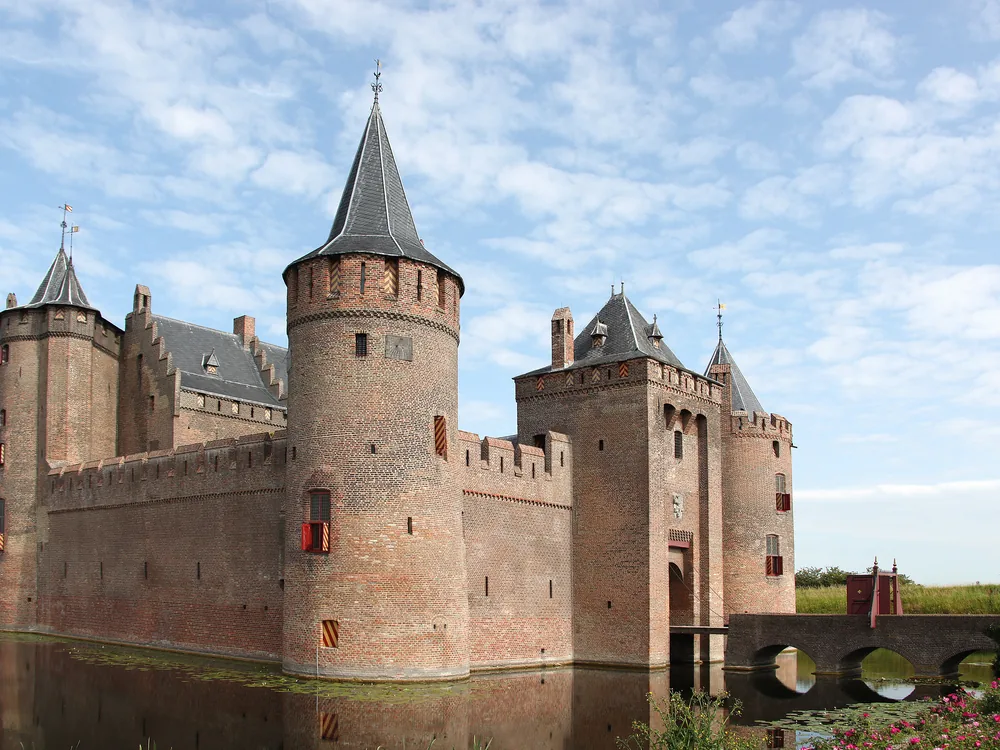
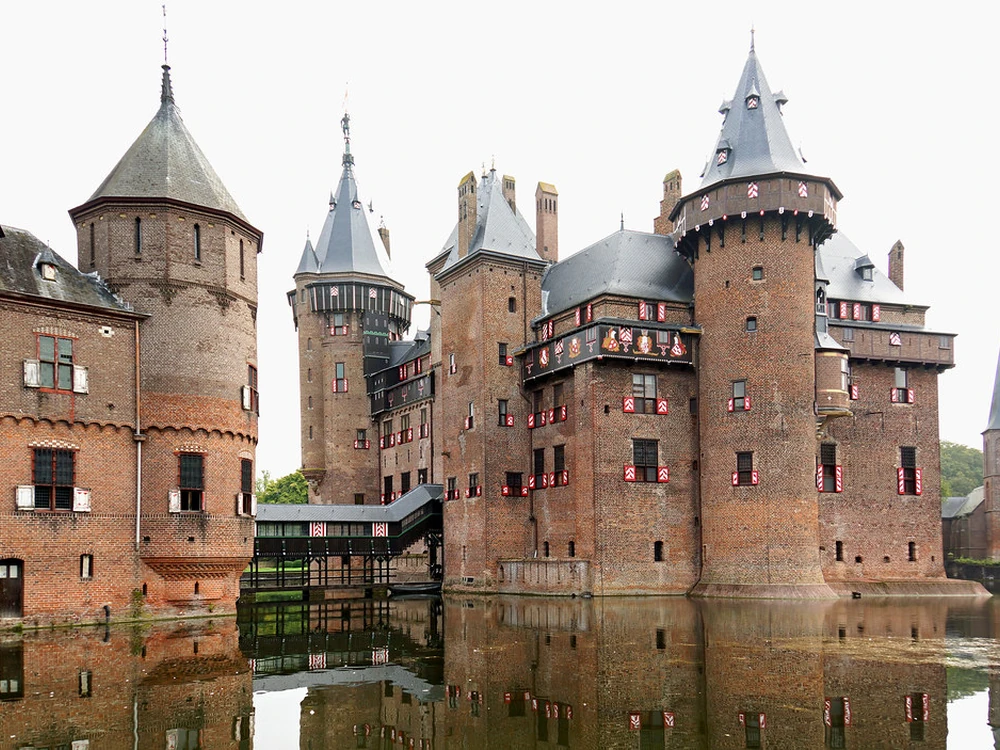
Combine with: Muiderslot, the best-preserved medieval castle in the Netherlands, is 15 km east of Amsterdam and reachable in under 30 minutes by car. De Haar Castle, the country's grandest neo-Gothic estate castle, is about 45 minutes by train near Utrecht.
Frequently Asked Questions
No — it was built between 1648 and 1665 as Amsterdam's city hall, at the height of the Dutch Golden Age, and functioned as the seat of civic government for over a century. It only became a royal palace in 1808, when Napoleon's brother Louis Bonaparte, installed as King of Holland, requisitioned the building as his official residence. The Dutch royal family has retained it as a palace ever since.
Location
Dam Square, 1012 JS Amsterdam, Netherlands
Nearby Castles
Tours & Tickets
Powered by GetYourGuide
From
€14/ person