Czocha Castle
Zamek Czocha
Poland · Lower Silesia Province — Czocha village, near Leśna, ~140km from Wrocław · Near Leśna
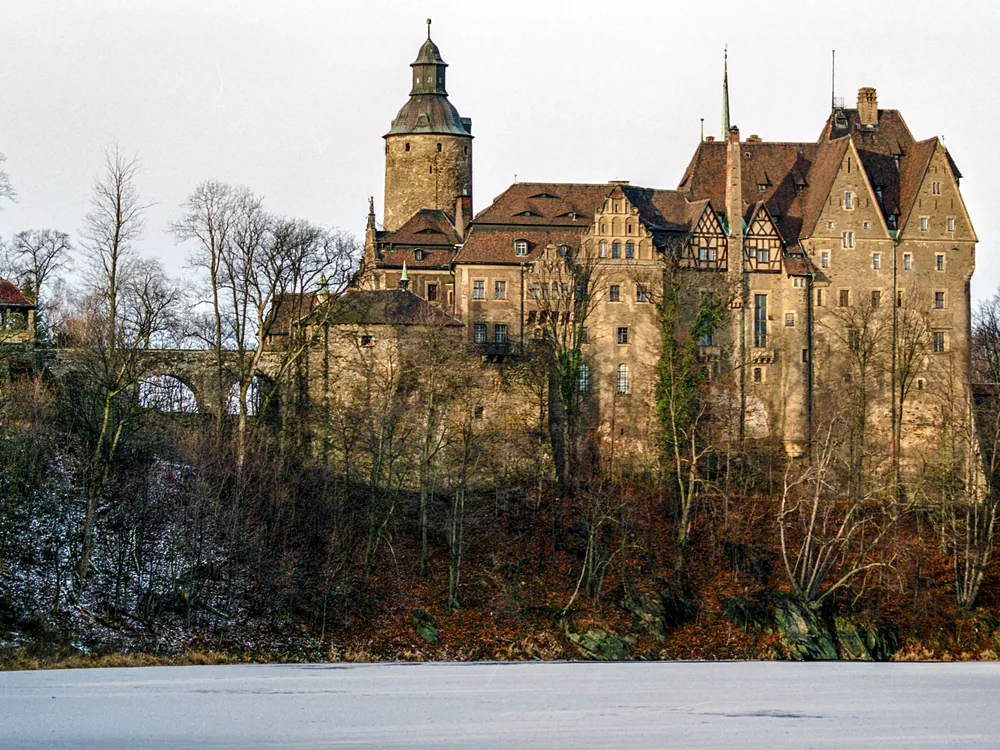
Built 1329 · Medieval castle of Bohemian origin with extensive Neo-Gothic reconstruction of 1909–1914 — the original 14th-century fortification was built by the Bohemian Crown on a rocky promontory above the Kwisa River; after centuries of modification, the castle underwent a substantial Neo-Gothic reconstruction between 1909 and 1914 by the German landowner Ernst von Gütschow, who purchased it in 1904 and hired the Berlin architect Bodo Ebhardt (the most prominent German castle restoration architect of the period) to restore and expand it; the result is a romantic interpretation of the medieval castle in the tradition of 19th-century historicist castle architecture — towers, battlements, and a picturesque silhouette that makes the castle appear older and more coherent than its layered construction history would suggest; it now sits above the artificial Lake Leśniańskie (created in 1905 by the damming of the Kwisa River), giving it the island-like lake promontory appearance that makes it one of the most photographed castle sites in Silesia
This page is part of an independent travel guide and is not affiliated with, endorsed by, or operated by Czocha Castle.
© Castles & Palaces
Quick Facts
- Hours
- Mon–Fri 10:00–17:00. Sat & Sun 10:00–18:00
- Day trip from
- €167
- Duration
- 1.5–2 hours (guided tour of public rooms, hidden passages, and tower); 7 hours for the GetYourGuide full-day programme from Wrocław
- Best time
- May to September
- Nearest city
- Leśna
Featured Tour
Wrocław: Czocha Castle Private Day Trip (7 hours, hidden passages, audio guide)
Cancellation available · Instant confirmation
Stay Here
Zamek Czocha
Rooms are within the historic castle building itself
Booked via Booking.com · Free cancellation on most rates
Highlights
- ✦Hidden passages and underground corridors — the castle tour's most unusual element is access to a network of hidden passages behind movable wardrobes and panels, and underground corridors in the castle's lower levels; these secret routes were built or discovered during the Neo-Gothic reconstruction and have given Czocha its reputation as a castle full of secrets; the combination of hidden access points, narrow underground corridors, and the castle's theatrical setting on a lake promontory makes the passage tour a deliberately atmospheric experience
- ✦Lake Leśniańskie promontory — the artificial lake created by the damming of the Kwisa River in 1905 (a year after the castle's current owner purchased it) surrounds the castle on three sides, giving it the visual character of a peninsula fortress or island castle; the castle's Neo-Gothic silhouette reflected in the lake is the dominant image of Czocha and the reason it frequently appears in Polish tourism imagery
- ✦The 'Well of Unfaithful Wives' — one of the castle's most retold legends concerns a well in which, according to the tradition, unfaithful wives of castle lords were drowned; the well (and the legend) are incorporated into the castle tour as an example of the atmosphere of supernatural menace that Czocha has carefully cultivated; the historical authenticity of the legend is secondary to its value as a narrative element of the castle experience
- ✦Bodo Ebhardt's Neo-Gothic reconstruction — Ernst von Gütschow, who purchased the castle in ruins in 1904, hired Bodo Ebhardt — the most prominent German castle restoration architect of the Wilhelmine period, who also restored Hohkönigsburg in Alsace and advised on multiple German medieval reconstructions — to rebuild Czocha in the romantic historicist style; the result is a castle that looks medieval in profile but whose current structure dates primarily from 1909–1914; understanding this timeline contextualises the experience
- ✦Filming location — Czocha has been used as a location for several film and television productions, contributing to the castle's cultural presence beyond its architectural and historical character; the castle's photogenic quality (romantic, complete, atmospheric, with the lake setting) makes it a practical choice for period productions requiring a convincing medieval fortress setting
- ✦Lower Silesia regional pairing with [Książ Castle](/castles/poland/ksiaz-castle) — both Czocha and [Książ Castle](/castles/poland/ksiaz-castle) are in Lower Silesia Province, accessible from Wrocław; Książ (90km southwest of Wrocław) is a substantially larger 13th–17th century castle complex with a 400-room baroque expansion and a wartime Nazi underground installation; the two castles offer complementary Lower Silesia castle experiences at different scales and from different periods
Tickets & tours
Book through GetYourGuide
Czocha Castle stands on a rocky promontory above the artificial Lake Leśniańskie, in the forested hills of Lower Silesia near the village of Leśna, approximately 140 kilometres southwest of Wrocław. Three sides of the promontory are surrounded by the lake — created in 1905 by damming the Kwisa River — giving the castle its characteristic peninsula or island appearance and the still-water reflections that make it one of the most photographed castle silhouettes in Silesia. The Neo-Gothic towers and battlements of the 1909–1914 reconstruction rise above the treeline with a picturesqueness that reads as entirely medieval to a visitor who has not been told about the reconstruction.
The castle's actual history is older and more complicated. A fortress was established on the Kwisa River promontory by the Bohemian Crown in the early 14th century — the first documented mention of a castle here is from 1329, during the period of Bohemian-Silesian dominion. The Silesian region changed hands repeatedly across the following centuries — Bohemian, Habsburg, Prussian, German — and the castle changed with it, accumulating building phases and alterations without ever reaching the coherent architectural unity of a purpose-designed palace. By the late 19th century, when the German landowner Ernst von Gütschow purchased the property in 1904, the castle was a ruin.
Gütschow hired Bodo Ebhardt, the leading German castle restoration architect of the Wilhelmine period (responsible also for the restoration of Hohkönigsburg in Alsace, commissioned by Kaiser Wilhelm II), to rebuild Czocha. The result, completed 1909–1914, is a romantic Neo-Gothic interpretation: towers added, battlements completed, interiors designed, and the overall profile shaped for maximum medieval picturesqueness. The lake below — created in 1905 as part of a hydroelectric and water management project — was not part of Ebhardt's design but became the castle's most significant landscape element, transforming a hilltop ruin into an apparent lake fortress.
The castle's defining visitor experience is the guided tour of the hidden passages. A network of concealed corridors — accessible through movable wardrobes and hidden panel openings — runs through sections of the castle's interior and connects to underground passages in the lower levels. These passages were either built during the Neo-Gothic reconstruction (Ebhardt included such elements deliberately in the historicist Gothic tradition) or were discovered and integrated into the visitor programme from existing medieval or later service corridors. The tour presents them as authentic secrets, which in the context of a castle whose primary appeal is atmospheric narrative rather than strict historical authenticity is entirely appropriate. The 'Well of Unfaithful Wives' — a well with a legend of drowning — is similarly presented as part of the tour's deliberately sinister atmosphere.
The castle operates simultaneously as a heritage monument, a tourist attraction, and a hotel, which means the public visit circuit and the hotel guests coexist in different parts of the same building. This combination is more common in Polish castle heritage management than in many Western European countries; Czocha makes it work reasonably well, though public access to some areas may be restricted during private events.
The GetYourGuide private day tour from Wrocław (7 hours) includes hotel pickup, transport to and from Czocha (approximately 2.5 hours each way from Wrocław), an audio guide, and entrance tickets. The €167 is per person — not a per-group flat fee. For visitors independently based in or passing through Lower Silesia, the standalone entry (~€8) and the public castle tour is the practical option.
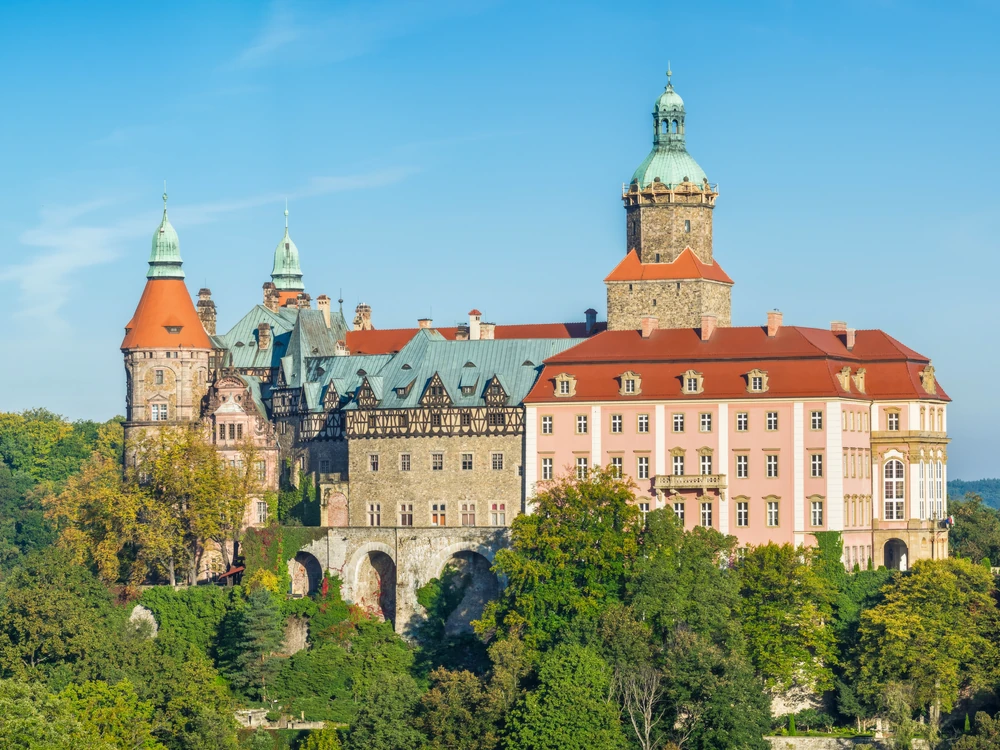
[Książ Castle](/castles/poland/ksiaz-castle) — approximately 90 kilometres southwest of Wrocław — is the nearest major castle in the same regional category: a substantially larger complex (one of the largest castles in Poland by volume) with a layered history from a 13th-century Gothic foundation through a 17th-century Baroque palace expansion to a wartime Nazi underground installation (Project Riese) beneath the rock. The two castles — Czocha for the atmospheric, lake-set Gothic romantic experience; Książ for the monumental scale and wartime history — make a natural Lower Silesia pairing.
History
A castle on the Kwisa River promontory in Silesia was first documented in 1329, under Bohemian Crown administration. It developed through successive Bohemian, Habsburg, and Prussian ownership across the medieval and early modern period, with multiple building phases adding to and modifying the original fabric. By the 17th to 19th centuries the castle was a partial ruin, its earlier functions obsolete.
Ernst von Gütschow purchased the ruined castle in 1904 and almost immediately changed its physical context: the Kwisa River was dammed in 1905 to create Lake Leśniańskie, surrounding three sides of the castle promontory with water and transforming the site's relationship with its landscape. Between 1909 and 1914, the architect Bodo Ebhardt undertook a Neo-Gothic reconstruction that established the current castle profile — the towers, battlements, hidden passages, and the silhouette that the castle presents today from the lake's surface. During the Second World War the castle was used by German military and reportedly served as a storage facility for cultural objects and documents.
Post-1945 territorial changes transferred Silesia to Poland, and the castle became Polish state property. It has been managed as a heritage site and hotel, with public tours operating alongside accommodation access.
How to Visit
Getting there: Czocha Castle is approximately 140 km southwest of Wrocław. By car: take the A4 motorway west toward Zgorzelec, then the DK30 south to Leśna and follow signs to Czocha (~1.5 hours). By train: Wrocław to Leśna via Zgorzelec (~2 hours), then taxi or bicycle (~10 km) to the castle. A car is significantly more practical for this area.
Tickets: Entry approximately €8 adult, €4 child. Tours run at scheduled times — confirm at zamek-czocha.pl. The 'Wrocław: Czocha Castle Private Day Trip' (7 hours) includes hotel pickup from Wrocław, transport (~2.5 hours each way), audio guide, and entrance.
Practical tips: The castle also operates as a hotel; book overnight at zamek-czocha.pl if you want to experience the building after day-visitor closing. The hidden passage section involves ducking through low-lit narrow corridors — not suitable for visitors with severe claustrophobia.
Combine with: Książ Castle (90 km southeast — one of the largest castles in Poland with 400 rooms and Nazi tunnel history; the natural Lower Silesia pairing).
How to Stay
Getting there: On a hill above Lake Leśniańskie in the forested hills of Lower Silesia near the village of Leśna, about 140 km south-west of Wrocław; a car is by far the most practical way to arrive (see How to Visit above).
Rooms & rates: Rooms from approx. €72/night with a shared bathroom, or from approx. €112/night with a private bathroom, in the castle and decorated with classical furniture and period accessories; the rooms with private bathroom are small (15–16 m²).
On-site: Breakfast is included in the rates seen on Booking, and the castle has a restaurant serving Polish dishes and grilled specialities; the front desk is open 24 hours and can arrange cycling, canoeing and hiking.
Good to know: The castle works as a heritage attraction and a hotel at the same time, so day-visitor areas and guest areas coexist; staying overnight is the way to see it after the public tours close. Some rooms have shared bathrooms, so check the room type when you book.
Combine with: The guided castle tour with its hidden passages (already described above) and Książ Castle, the other big Lower Silesia castle, about 90 km away.
Frequently Asked Questions
Yes — Czocha Castle operates simultaneously as a heritage tourist attraction and a hotel. Guests can stay in castle rooms overnight; the public visitor areas are separate from the hotel accommodation areas, though during high occupancy some public rooms may have restricted access. The combination of hotel and heritage monument is relatively common in Polish castle management. Staying overnight at the castle is a genuinely unusual experience; check zamek-czocha.pl for hotel availability.
Location
Sucha 43, 59-820 Leśna, Lower Silesia Province, Poland
Nearby Castles
Tours & Tickets
Powered by GetYourGuide
From
€167/ person