
Czorsztyn Castle
Zamek Czorsztyn
Poland · Czorsztyn, Pieniny National Park, Lesser Poland — Nowotarski County, above the Czorsztyn Reservoir · Near Nowy Targ
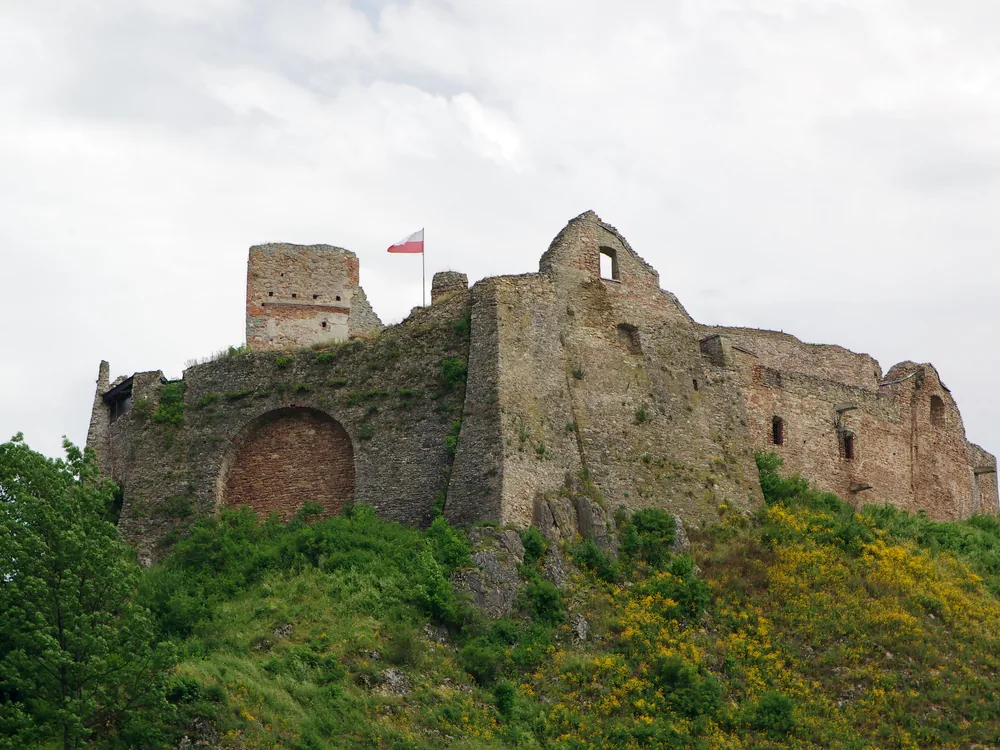
Built 1320 · 14th-century Polish royal fortress on a natural limestone promontory, now partially ruined — the castle was built on a rocky cliff above the Dunajec river as a royal stronghold guarding the medieval trade route through the Pieniny mountains to Hungary; the original structure included a round keep, curtain walls, gatehouses, and residential buildings; the complex was substantially damaged by fire in 1790 and progressively ruined thereafter; current remains include the gate tower and parts of the curtain wall circuit, with one tower partially renovated for visitor access; the site is managed by Pieniny National Park and the ruins retain a dramatic cliff-top character above the Czorsztyn Reservoir
This page is part of an independent travel guide and is not affiliated with, endorsed by, or operated by Czorsztyn Castle.
© Castles & Palaces
Quick Facts
- Hours
- Mon–Fri 08:00–18:00. Sat & Sun 08:00–20:00
- Guided tour from
- €116
- Duration
- 45 minutes–1 hour (ruins circuit and renovated tower view terrace)
- Best time
- May to October
- Nearest city
- Nowy Targ
Featured Tour
Zakopane: Alpine Coaster & Czorsztyn Castle Tour
Cancellation available · Instant confirmation
Highlights
- ✦The facing-castles view — Czorsztyn and Niedzica across the water — the most visually striking feature of the site is the sight of Niedzica Castle on the opposite bank of the Czorsztyn Reservoir, approximately 2km away across the water; the two fortifications were built by opposing powers (Polish crown and Hungarian noble lords) on opposite sides of the Dunajec river border, and their symmetrical confrontation across the alpine lake is one of the most photographed historical views in Poland
- ✦The Czorsztyn Reservoir and the flooded medieval valley — the reservoir was created by the Czorsztyn dam (completed 1997), which raised the Dunajec river level and flooded a section of the historic valley including the village of Maniowy; the medieval valley that the two castles once overlooked is now beneath the water, and the reservoir landscape the contemporary visitor sees is a creation of the late 20th century
- ✦14th-century royal Polish fortress on a natural limestone cliff — the castle was built as a royal stronghold of the Polish crown to guard the principal medieval trade route through the Pieniny mountains to Hungary; the cliff site required minimal additional fortification on the river-facing side, and the natural rock foundation is visible throughout the ruins
- ✦Pieniny National Park setting and Dunajec river gorge — the Pieniny are a small but distinctive limestone range in southern Poland, with the Dunajec gorge a popular raft trip destination; the combination of ruined royal castle, alpine reservoir, and forested limestone peaks is distinctive even by Polish mountain standards
- ✦Panoramic views from the renovated tower — the partially renovated gate tower provides the best elevated viewpoint at the site, with the Czorsztyn Reservoir, Niedzica Castle, and the Pieniny and Tatra mountain ranges spread out below in one of the more spectacular castle panoramas in Poland
Skip the queue with a guided tour
Skip-the-line tickets & expert guides
Two castles face each other across the Czorsztyn Reservoir in the Pieniny mountains. On the southern shore, the ruined towers of Czorsztyn Castle rise from a rocky limestone cliff above the water; on the northern bank, the more intact towers of Niedzica Castle look back from an equally commanding position. The two fortifications were built by opposing forces — Czorsztyn by the Polish crown, Niedzica by Hungarian noble lords — on opposite sides of the Dunajec river, which formed the medieval boundary between the Kingdom of Poland and the Kingdom of Hungary across this stretch of the Pieniny mountains. Their symmetrical confrontation above the alpine lake is one of the most frequently photographed historical views in Poland.
The reservoir itself is modern. The Czorsztyn dam, completed in 1997, raised the water level of the Dunajec and its tributary valleys, flooding a section of the historical valley floor and creating a large hydroelectric lake that now occupies what was previously the riverbed and banks overlooked by both castles. The flooding submerged parts of the valley including the village of Maniowy and changed the landscape fundamentally; the medieval valley that both fortifications once surveyed is now beneath the water. The dam project was contested for decades, and the relocation of the valley's residents was a significant disruption. The reservoir that resulted is visually striking — a large alpine lake hemmed in by the Pieniny peaks, with the two castle outlines reflected in the water — but it came at the cost of the original landscape both castles were built to command.
Czorsztyn Castle dates to the 14th century, when the Polish crown invested in stone fortifications at this strategic river crossing. The Dunajec gorge through the Pieniny mountains was one of the principal routes connecting the Kingdom of Poland with the Kingdom of Hungary — essential for trade, diplomacy, and military movement — and control of the crossing at Czorsztyn meant control of the passage. The castle's position on a rocky promontory was naturally defensible; the limestone cliff gave the walls a foundation that required little additional reinforcement on the river-facing side. The Polish and Hungarian fortifications on opposite banks of the Dunajec coexisted across the medieval and early modern centuries in a relationship that was sometimes adversarial and sometimes cooperative, depending on the current state of relations between the two crowns.
The castle was progressively abandoned after the early modern period and suffered a major fire in 1790 that left large sections permanently ruined. The current remains — gatehouses, parts of the curtain wall circuit, and a partially renovated gate tower — represent the surviving fabric after two centuries of unmanaged deterioration followed by conservation stabilisation. Pieniny National Park administers the ruins today, maintaining them as an archaeological landscape rather than attempting full reconstruction.
The renovated tower provides the most rewarding viewpoint of the visit: a panorama across the Czorsztyn Reservoir toward Niedzica Castle and the mountain ranges beyond, with the High Tatras visible on clear days to the southwest. The ruined courtyard and wall circuit can be explored self-guided at the visitor's own pace. The natural drama of the site — a ruined fortress on a cliff edge above an alpine reservoir, framing a view of a rival castle on the opposite bank — makes Czorsztyn one of the more genuinely atmospheric ruins in Poland, despite (or perhaps because of) the relatively little that survives.
The setting in Pieniny National Park adds to the experience in all directions. The Dunajec gorge runs immediately below the castle cliff, and the raft trip from Sromowce Niżne to Szczawnica through the gorge beneath the castle is one of the most popular activities in the area — a two-hour float through limestone walls with the Pieniny peaks above and the occasional eagle below. The park's forested hillsides and the reservoir's calm water combine to make the area a destination that works well beyond the castle visit alone.
The GYG product for Czorsztyn (t1319116) is a five-hour excursion from Zakopane that combines the castle visit with a ride on the Kluszkowce Alpine Coaster — a mountain sled experience at a purpose-built track nearby. The castle entry ticket is explicitly included in the tour, which is structured as a family activity day combining a genuine heritage stop with an outdoor adrenaline experience. Visitors who prefer to reach Czorsztyn independently can drive from Nowy Targ (approximately 25km east) or from Zakopane (approximately 40km west); the castle is signposted from the village of Czorsztyn below the cliff, with a small car park at the foot of the access path.
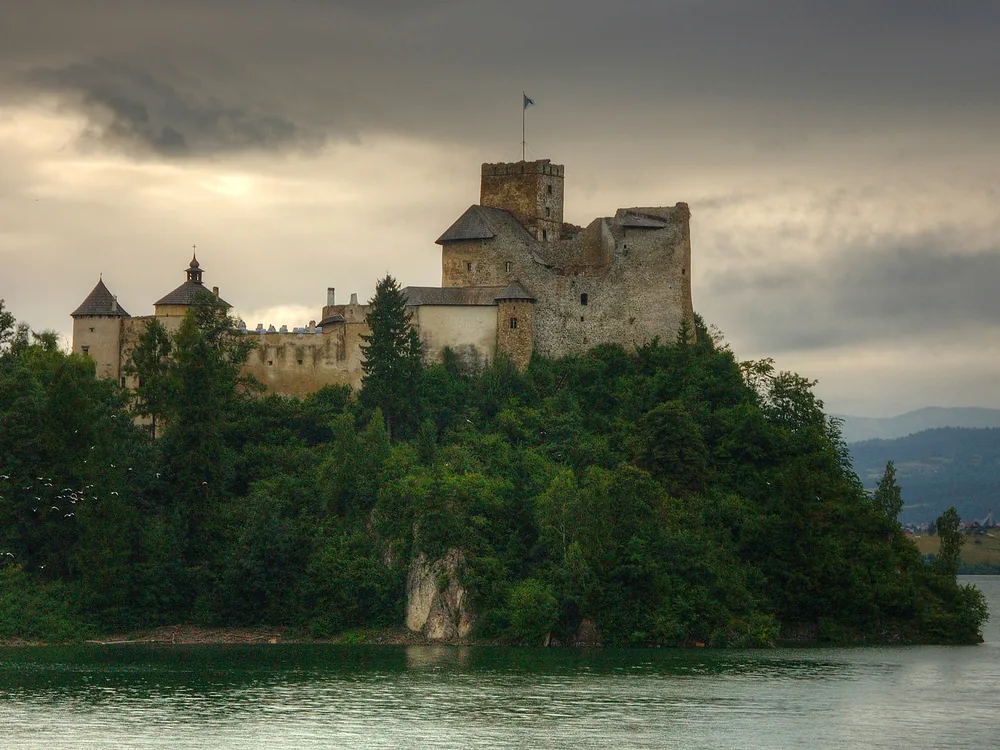
[Niedzica Castle](/castles/poland/niedzica-castle) — the Hungarian-era fortress directly across the reservoir, more intact than Czorsztyn and housing a functioning museum — is approximately 2km across the water by boat or 6km by road around the reservoir shore. Boat services across the reservoir connect the two banks during the tourist season. Both castles reward a combined visit in the same day: the contrast between Czorsztyn's photogenic ruins and Niedzica's more complete preserved interiors gives the day a natural shape.
History
The Dunajec gorge crossing in the Pieniny mountains was an important transit point on the route between Poland and Hungary in the 13th and 14th centuries — a mountain passage that whoever controlled the crossing could tax, obstruct, or protect. The Polish crown built the first stone fortifications at Czorsztyn around 1320 to control that crossing from the northern bank. Niedzica Castle was subsequently built on the opposite, southern (Hungarian) bank, establishing the pattern of facing border fortifications that defined this stretch of the Pieniny frontier for centuries.
Czorsztyn remained a Polish royal castle through the 15th to 17th centuries while the Pieniny border region changed hands at various points between Polish and Hungarian administration. A fire in 1790 severely damaged the castle, beginning a progressive decline into the ruin it has been since. The landscape itself was fundamentally altered in 1997 when the Czorsztyn dam was completed, flooding the valley and creating the reservoir that now surrounds the castle's limestone cliff on three sides — transforming a riverside ruin into a lakeside one.
Pieniny National Park has conserved and stabilised the ruins, with the gate tower partially renovated for visitor access. The ruins circuit and tower are open for self-guided visits from May to October.
How to Visit
Getting there: By car from Nowy Targ (~25 km east on DK969), follow signs to Czorsztyn village and the castle car park. From Zakopane: approximately 40 km by road via Nowy Targ. The castle entrance is a short uphill walk from the car park below the cliff.
Tickets: Approximately 17 PLN adult. The 'Zakopane: Alpine Coaster & Czorsztyn Castle Tour' (t1319116, from €116, 5 hours) combines confirmed entry to Czorsztyn Castle Ruins with a Kluszkowce Alpine Coaster ride and round-trip transport from Zakopane. New activity — no reviews yet.
Practical tips: The renovated gate tower provides the best panorama over the reservoir to Niedzica Castle and the Tatra mountains — clearest in the morning. A boat service across the reservoir connects the two banks during tourist season (approximately 20 minutes each way).
Combine with: [Niedzica Castle](/castles/poland/niedzica-castle) (2 km across the reservoir by boat, 6 km by road — the more intact Hungarian-era fortress with museum interiors and the Inca treasure legend).
Frequently Asked Questions
The Czorsztyn Reservoir was created by the Czorsztyn dam, completed in 1997, which raised the water level of the Dunajec river and flooded a significant section of the historic valley between the castle cliffs. The flooding submerged the village of Maniowy and parts of the original valley floor. The dam was planned from the 1960s but construction was delayed for decades due to engineering challenges and political disputes; when it was finally completed in the 1990s, several thousand people were relocated from the valley. The reservoir now provides the alpine-lake backdrop for the view between Czorsztyn and Niedzica Castles and is a popular recreation area, but the flooding of a historic cultural landscape and the displacement of a community are remembered locally.
Location
Zamek Czorsztyn, 34-440 Kluszkowce, Poland
Nearby Castles
Tours & Tickets
Powered by GetYourGuide
From
€116/ person