
Łazienki Palace
Pałac Łazienkowski (Pałac na Wyspie)
Poland · Warsaw — Łazienki Park, Ujazdów district, southern Warsaw · Near Warsaw
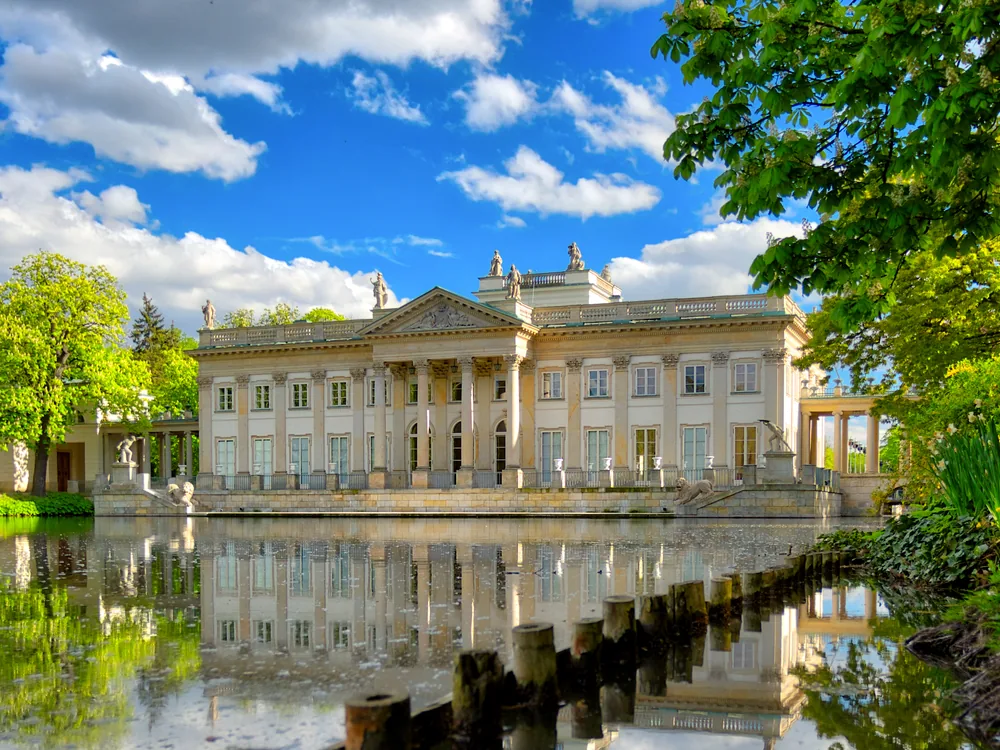
Built 1683 · Polish Neoclassicism; the Palace on the Isle was rebuilt from a 17th-century bath pavilion (łazienki = 'bathhouse') into a water palace standing on an artificial island in a lake, designed by architects Domenico Merlini and Jan Chrystian Kamsetzer for King Stanisław II August Poniatowski between 1775 and 1793; the design integrates classical colonnades, four-column porticos on the north and south facades, and pediments in the Italian neoclassical manner, set on an island reached by two stone bridges; the wider Łazienki Royal Park contains complementary neoclassical and Baroque garden structures — the Old Orangery (with Poland's oldest surviving 18th-century court theatre), the Myślewicki Palace, the White Pavilion, the Water Tower, the island amphitheatre, and the Chopin Monument — creating one of the finest neoclassical park-palace ensembles in Eastern Europe
This page is part of an independent travel guide and is not affiliated with, endorsed by, or operated by Łazienki Palace.
© Castles & Palaces
Quick Facts
- Hours
- Tue–Sun 10:00–18:00. Closed Mon
- Guided tour from
- €124
- Duration
- 2–3 hours (Palace on the Isle + Old Orangery + Chopin Monument + park); 3.5 hours for the full private tour option
- Best time
- May to September
- Nearest city
- Warsaw
Featured Tour
Łazienki Park and Palace Warsaw: Private Tour with Tickets
Cancellation available · Instant confirmation
Highlights
- ✦The Palace on the Isle — a neoclassical water palace built on an artificial island in a lake, connected to the park banks by two stone bridges, with four-column classical porticos reflected in the water; one of the most coherent examples of Polish neoclassicism in existence and the only Warsaw royal palace with an authentic spatial relationship to its original landscape
- ✦Poland's oldest surviving court theatre — the Old Orangery (Stara Pomarańczarnia), built in 1788, contains a baroque theatre hall with original 18th-century stage machinery and an auditorium of around 200 seats; the only surviving 18th-century court theatre in Poland, still used for live performances
- ✦The intellectual centre of the Polish Enlightenment — King Stanisław II August Poniatowski held his celebrated 'Thursday Dinners' at Łazienki through the 1780s, weekly gatherings of artists, architects, philosophers, and writers that made this palace one of the most culturally animated royal courts in late 18th-century Europe before the Partitions erased the Polish state
- ✦Free open-air Chopin piano concerts every Sunday from May to September — professional pianists perform at the Chopin Monument at 12:00 and 16:00 in what has been a Warsaw tradition since 1959; the concerts are free, open to anyone, and take place against the backdrop of the lake and the Palace on the Isle
- ✦GetYourGuide private guided tour — a private licensed guide covering the Palace on the Isle, Old Orangery, Myślewicki Palace, White Pavilion, and Water Tower, with all entry tickets included; the €124 is per person for the private guided programme, not the cost of park or palace entry alone
Skip the queue with a guided tour
Skip-the-line tickets & expert guides
Warsaw has two royal palaces. One — the Royal Castle in the Old Town — was blown up by German forces in the weeks after the 1944 Warsaw Uprising and rebuilt from rubble over thirteen years in the 1970s and 1980s. The other is the Palace on the Isle at Łazienki: a neoclassical water palace that survived the war, standing on its artificial island in a lake inside what is now Warsaw's largest park. The distinction between original and reconstruction matters less than the spatial one — Łazienki is the one Warsaw royal building that still sits in the landscape it was built for, and the relationship between the palace, the lake, and the 76-hectare park around it cannot be reproduced from plans.
The palace's name derives from its origins. Łazienki means 'bathhouse' in Polish — the original structure was a bath pavilion built in 1683 for the nobleman Stanisław Herakliusz Lubomirski at the Ujazdów estate south of Warsaw. When Poland's last elected king, Stanisław II August Poniatowski, acquired Ujazdów in 1764, he recognised the possibility of a personal summer retreat in the neoclassical manner — a palace on an island, separated from the formality of the Royal Castle by the breadth of a park. Working with architects Domenico Merlini and Jan Chrystian Kamsetzer over nearly three decades, Poniatowski rebuilt the bathhouse as a two-storey neoclassical palace with four-column porticos on its north and south facades, set on an artificial island reached by two stone bridges. Completed by 1793, the Palace on the Isle is one of the most coherent examples of Polish neoclassicism: a building designed to be seen across water, its classical facades reflected in the lake.
Łazienki was Poniatowski's intellectual project as much as his residential one. The king held his celebrated 'Thursday Dinners' here — weekly gatherings of artists, architects, writers, and philosophers that made the palace the centre of Polish Enlightenment culture through the 1780s. The rooms accumulated a significant royal collection of paintings, sculptures, ancient coins, and decorative arts. The Partition of 1795 ended Poniatowski's reign and his connection with Łazienki; the palace passed into Russian imperial ownership for the 19th century and was transferred to the Polish state after the First World War.
The wider park that developed around the palace over two centuries is now Warsaw's most-visited public space — 76 hectares containing the Old Orangery (with Poland's oldest surviving 18th-century court theatre), the Myślewicki Palace, the White Pavilion, the Water Tower, and the Chopin Monument. The Sunday concerts at the monument (12:00 and 16:00, May through September) are free, open to anyone, and performed by professional pianists before large open-air audiences with the Palace on the Isle visible across the lake.
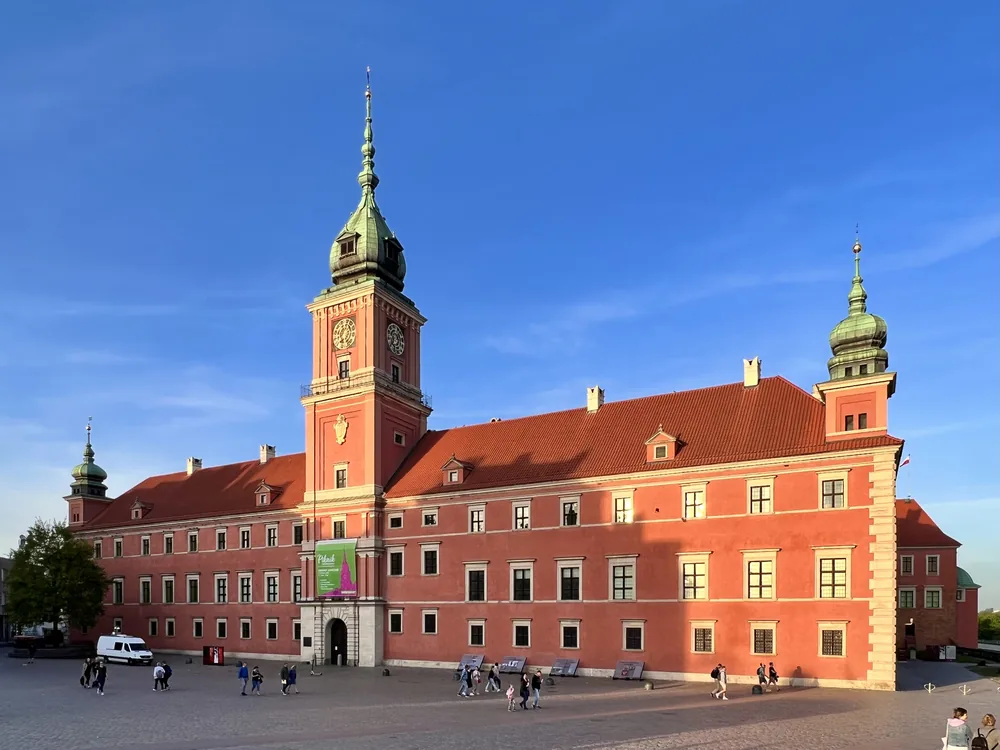
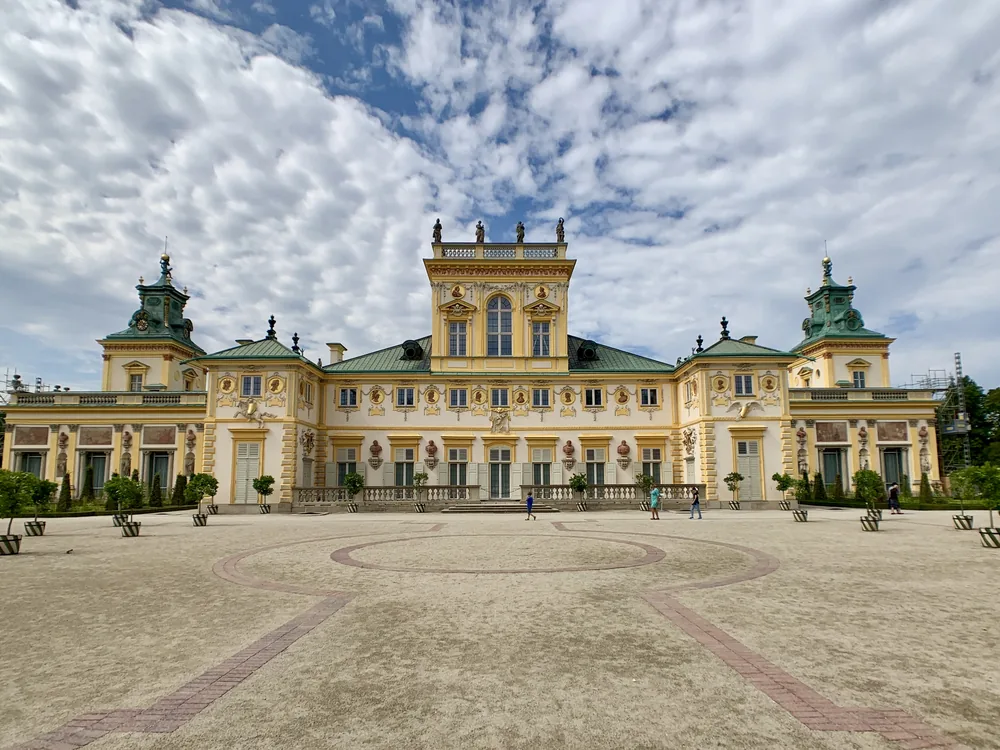
[Royal Castle Warsaw](/castles/poland/royal-castle-warsaw), 3 kilometres north in the Old Town, is the ceremonial complement to Łazienki — the rebuilt Gothic and Baroque seat of the Polish kings, with its Canaletto Room of Bernardo Bellotto's precise 18th-century views of Warsaw. [Wilanów Palace](/castles/poland/wilanow-palace), 7 kilometres south, is the Baroque summer residence of King John III Sobieski, the hero of the 1683 Battle of Vienna, and the one Warsaw royal palace to survive the Second World War structurally intact.
History
The estate at Łazienki traces its origins to 1683, when the Polish nobleman Stanisław Herakliusz Lubomirski built a bath pavilion — the łazienki, or 'bathhouse' — in the gardens of his Ujazdów residence south of Warsaw. When Stanisław II August Poniatowski, Poland's last elected king, acquired the Ujazdów estate in 1764, he immediately set about transforming the bathhouse and its small lake into a neoclassical summer palace. Working over nearly three decades with architects Domenico Merlini and Jan Chrystian Kamsetzer, Poniatowski created the Palace on the Isle — a neoclassical building on an artificial island in a lake, reached by two stone bridges, with four-column porticos on its north and south facades reflecting in the water. The palace was the personal court of Poland's last elected king and the setting for his celebrated 'Thursday Dinners', which gathered artists, architects, writers, and philosophers through the 1780s and established Łazienki as the centre of Polish Enlightenment culture. The third Partition of Poland in 1795 forced Poniatowski to abdicate; the palace passed into Russian imperial ownership and remained in Russian hands through the 19th century before being transferred to the newly independent Polish state after the First World War. During the Warsaw Uprising of 1944, German forces set fire to the palace and the building suffered interior damage, but the structure survived the war intact. Postwar restoration returned the palace to use, and it is now administered as a national museum complex by the Royal Łazienki Museum.
How to Visit
Getting there: Łazienki Park is approximately 3 km south of Warsaw city centre. The most convenient public transport is by bus (lines 116, 166, or 180 from the city centre to the Łazienki Królewskie or Agrykola stops; approximately 20 minutes depending on traffic). A taxi or rideshare from Warsaw Old Town takes around 10 minutes. There is limited parking near the Agrykola entrance; the park is best approached on foot or by public transport from the city centre.
Tickets: The Łazienki Park grounds are free to enter; individual palace buildings charge a small entrance fee (approximately PLN 25–30 per building). The GetYourGuide private guided tour — a private licensed guide for 2 to 3.5 hours covering the Palace on the Isle, Old Orangery, Myślewicki Palace, White Pavilion, and Water Tower, with all entry tickets included — is the comprehensive option for a single in-depth visit; the €124 is per person for a private guide, not the cost of park/palace entry alone. Book in advance.
Practical tips: If visiting on a Sunday between May and September, time your arrival to catch the free Chopin concerts at the monument (12:00 and 16:00) — arrive 15–20 minutes early in summer to secure a position. The Palace on the Isle is the priority interior; a combined multi-building ticket is available at the main ticket office near the Agrykola entrance. Palace buildings are closed Mondays — the park is open daily, but budget your visit accordingly.
Combine with: Royal Castle Warsaw (3 km north in the Old Town — the rebuilt 14th-century castle that served as the official residence of Polish kings and the seat of the Sejm; destroyed by German forces in 1944 and rebuilt 1971–1984; together with Łazienki they form the complete Warsaw royal heritage circuit).
Frequently Asked Questions
The park grounds — 76 hectares of neoclassical garden and landscape park, including the Chopin Monument — are free to enter year-round. Individual palace buildings within the park each charge a separate entrance fee, typically approximately PLN 25–30 per building per person. A combined multi-building ticket is available at the main ticket office near the Agrykola entrance; check current pricing at lazienki-krolewskie.pl before visiting, as admission fees and included buildings are updated seasonally.
Location
Agrykola 1, 00-460 Warszawa, Poland
Nearby Castles
Tours & Tickets
Powered by GetYourGuide
From
€124/ person