
Wilanów Palace
Pałac w Wilanowie
Poland · Wilanów district, southern Warsaw · Near Warsaw
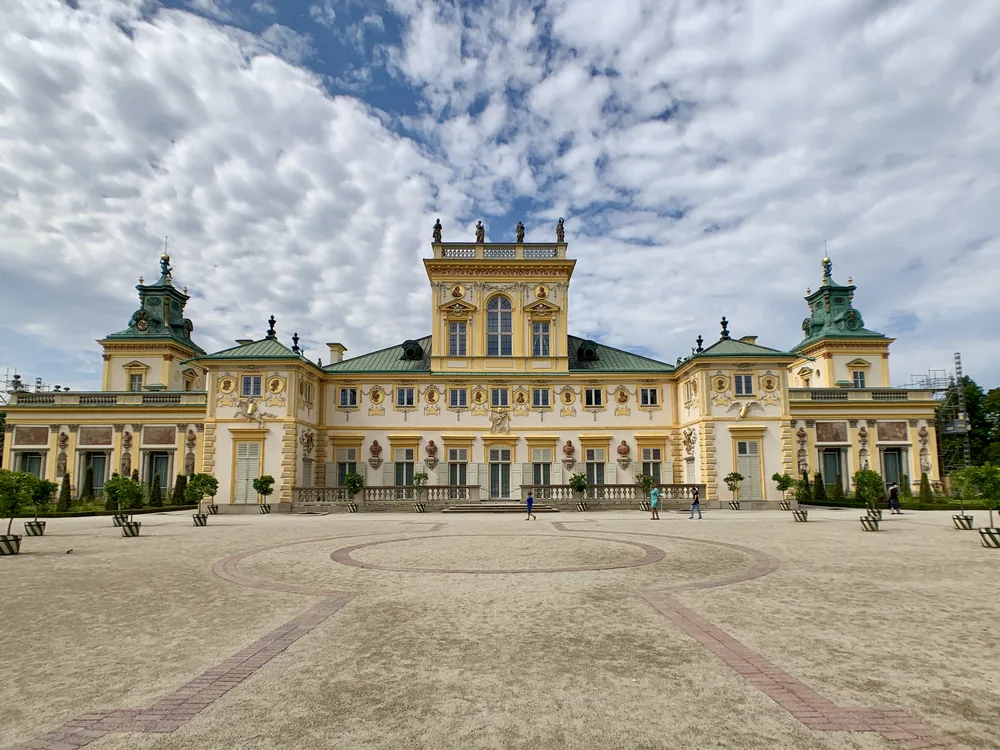
Built 1677 · Polish Baroque royal summer palace with later Neoclassical and Rococo interiors — designed primarily by Italian-born architect Agostino Locci for King John III Sobieski between 1677 and 1696; the two-storey main body is flanked by wings added in the early 18th century under Elżbieta Sieniawska; the facade carries an extraordinary sculptural program of Latin victory inscriptions, bas-reliefs of Roman-style military scenes, sundials, and allegorical figures that reads as an architectural autobiography of the warrior-king who commissioned it; the interior accumulates successive decorative layers — Baroque royal apartments, a Chinese-lacquer cabinet, Neoclassical rooms, and a private chapel — added by the sequence of aristocratic families who owned the palace after Sobieski's death; the garden ensemble combines a formal Italian Baroque parterre south of the palace with an English landscape park added in the late 18th century, a Baroque orangery, and a Chinese summerhouse
This page is part of an independent travel guide and is not affiliated with, endorsed by, or operated by Wilanów Palace.
© Castles & Palaces
Quick Facts
- Hours
- Tue–Sun 09:00–18:00. Closed Mon
- Guided tour from
- €80
- Duration
- 1.5–2 hours (palace interior self-guided); 2 hours (GetYourGuide guided tour); additional time for gardens
- Best time
- May to September
- Nearest city
- Warsaw
Featured Tour
Wilanów Palace: 2-Hour Guided Tour with Entrance Tickets
Cancellation available · Instant confirmation
Highlights
- ✦The rarest thing in Warsaw: an intact original — Wilanów is the one surviving authentic royal palace in a city whose architecture was systematically destroyed in 1944–1945; while the Royal Castle and Old Town were rebuilt from rubble, Wilanów came through the war structurally intact, preserving original Baroque interiors, furnishings, and the collections accumulated across 200 years of aristocratic ownership
- ✦King John III Sobieski's victory monument in stone — the palace's exterior facade is covered in Latin inscriptions commemorating the king's military campaigns, bas-reliefs of Roman-style battle scenes, and allegorical figures of Fame and Victory; the entire building was designed as a declaration of Sobieski's identity as the defender of Christian Europe against the Ottoman Empire, the warrior-king in the classical Roman tradition
- ✦September 12, 1683: the Battle of Vienna — the event that made Sobieski famous throughout Europe; his cavalry charge down the Kahlenberg slopes broke the two-month Ottoman siege of Vienna, turned the strategic momentum of the Ottoman advance into Central Europe, and earned him the title 'Lion of Lechistan' (Poland) from the Ottoman sultan he had defeated
- ✦One of the first public art museums in Poland (opened 1805) — Stanisław Kostka Potocki opened the palace to the public in 1805, during the Partition era when Poland had lost its statehood entirely; the decision made Wilanów one of the earliest public art museums in Europe and established it as a cultural institution rather than a private aristocratic residence
- ✦Five generations of aristocratic collecting — after Sobieski's death in 1696 the palace passed through the Sieniawska, Czartoryski, Lubomirski, and Potocki families; each successive owner added wings, commissioned redecoration, and contributed to the collections that now make the museum's holdings one of the most significant assemblages of Polish Baroque and Neoclassical decorative arts in existence
- ✦GetYourGuide 2-hour guided interior tour with entrance tickets — confirmed genuine guided visit through the Royal Library, queen's apartments, Chinese cabinet, and private chapel
Skip the queue with a guided tour
Skip-the-line tickets & expert guides
Most of Warsaw's royal history is reconstruction. The Royal Castle was blown up by German forces in 1944 and rebuilt over the following decades from historical records and archival photographs; the Baroque palaces that once lined the Royal Route were burned and demolished in the systematic destruction that followed the Warsaw Uprising; the medieval and early modern city was reduced to rubble in three months of deliberate post-surrender obliteration, the German military command's decision to erase the capital of a nation they had decided should not exist. Against this documented history of near-total architectural loss, Wilanów Palace occupies a singular position: an original Baroque royal residence, substantially intact in both its interiors and gardens, that survived the Partitions of Poland and the Second World War and stands today as the one authentic primary material record of how Poland's kings actually lived.
The palace was created by King John III Sobieski (r. 1674–1696), whose place in Polish and European history rests most immediately on a single date: September 12, 1683, when his cavalry charge down the slopes of the Kahlenberg above Vienna broke the Ottoman siege of the city, saving the Habsburg capital and turning the strategic momentum of what had been 150 years of Ottoman advance into Central Europe. Sobieski commanded roughly 70,000 allied troops in what remains one of the largest cavalry charges in European military history. The Ottoman Grand Vizier Kara Mustafa Pasha retreated with the remnant of his forces; Vienna was relieved; the Ottoman army never again advanced this far into Central Europe. Pope Innocent XI wrote to Sobieski directly to thank him. He was 54 years old.
In 1677, six years before Vienna, Sobieski purchased a small manor at the village of Milanów south of Warsaw and engaged Italian-born architect Agostino Locci to transform it into a summer residence commensurate with royal ambition. The Latin Latinization — Villa Nova becoming Wilanów — was a standard aristocratic affectation of the period, but what Locci and Sobieski built was not standard. The exterior facade of the completed palace carries an extraordinary sculptural program: Latin inscriptions celebrating Sobieski's military victories, bas-reliefs depicting Roman-style battle scenes, allegorical figures of Fame and Victory flanking the upper cornice, sundials inscribed with royal mottoes. The palace was designed as a monument to a specific person's specific identity — an architectural autobiography of the warrior-king who commissioned it, with the Roman tradition of the triumphal monument adapted to a residential building. It is one of the most self-conscious pieces of royal self-representation in Central European Baroque architecture.
Sobieski died in 1696, the year the palace was completed in its first form. He had barely lived in it. The palace's history as an inhabited royal residence lasted less than two decades; its history as a vehicle for aristocratic collecting and cultural ambition lasted another century and a half. The sequence of owners — Elżbieta Helena Sieniawska, who added flanking wings in the early 18th century; the Czartoryski family; the Lubomirski; and finally the Potocki family, who held the palace from 1799 until the Second World War — each brought collections, commissioned redecoration, and contributed to the accumulation that makes the museum's holdings today one of the most significant assemblages of Polish Baroque and Neoclassical decorative arts in existence.
The most consequential act of the Potocki stewardship came in 1805, when Stanisław Kostka Potocki opened the palace to the public as a museum. The decision was made during the Partition era — Poland had not existed as an independent state since 1795, divided between Russia, Prussia, and Austria — and the gesture of making the palace's collections accessible to the public carried a specific cultural-political charge: in the absence of a Polish state, the historical collections of a Polish royal residence would function as a form of national cultural memory, publicly held. The opening preceded the wave of European national museum foundations by several decades and established Wilanów as a cultural institution rather than a private residence at a moment when that distinction carried meaning beyond the bureaucratic.
The palace's survival through the Second World War was not entirely accidental. German occupation authorities used Wilanów as a residence for high-ranking officials — a form of protection, however cynical, against the deliberate demolition that other Warsaw landmarks did not survive. The Royal Castle was dynamited in December 1944; the systematic destruction of the remaining city continued into 1945. Wilanów came through structurally intact, damaged but standing, and was transferred to the Polish state after the war, which undertook conservation and reopened it as a national museum.
The museum today encompasses the palace interiors — the Royal Library with its original fittings, the queen's apartments, the Chinese lacquer cabinet (one of the finest surviving examples of 18th-century chinoiserie in Poland), the private chapel, and a sequence of Neoclassical rooms added during the Lubomirski and Potocki periods — accessible via timed self-guided and guided tours. The garden ensemble includes the formal Italian Baroque parterre immediately south of the palace with clipped hedges, topiary, and fountains; an English landscape park section added in the late 18th century; a Baroque orangery that houses rotating exhibitions; and a Chinese summerhouse.
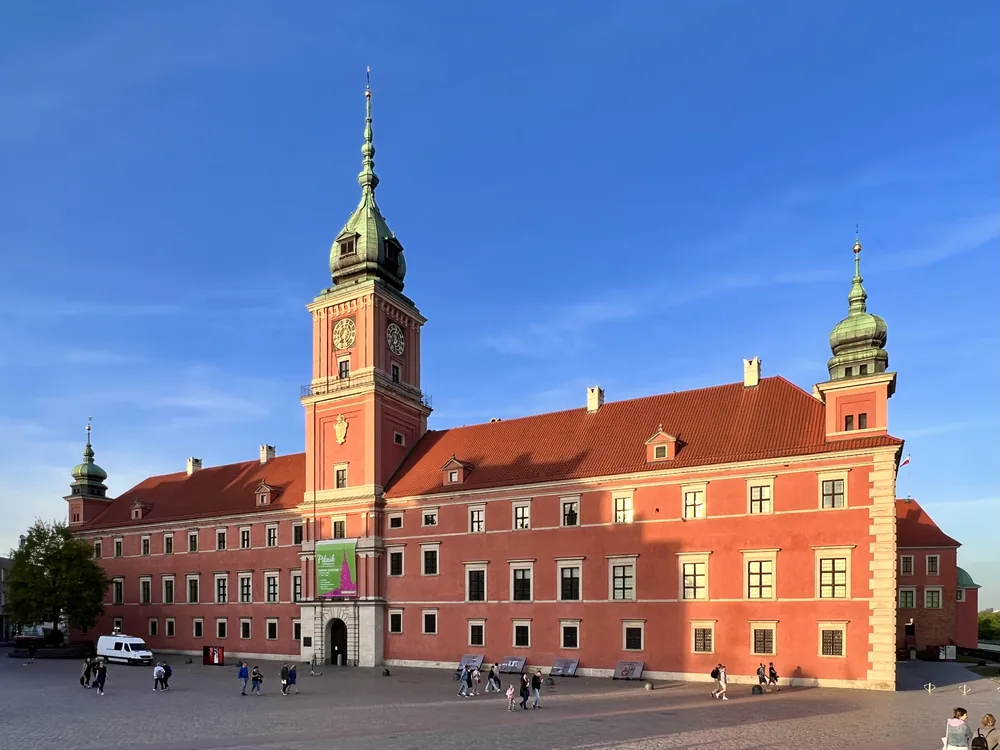
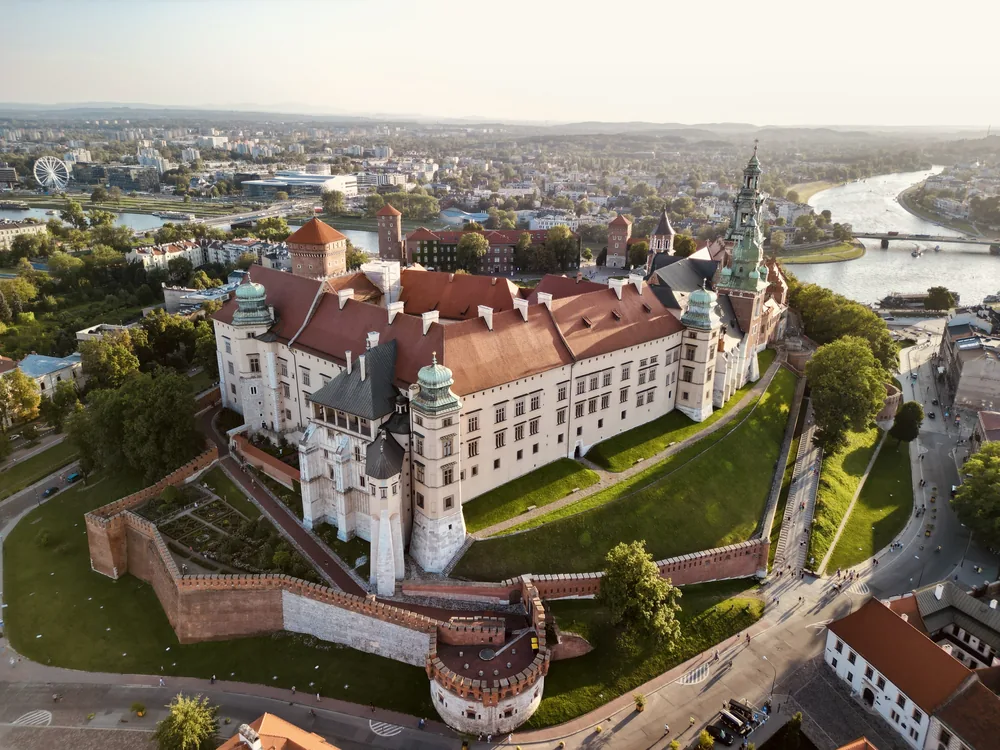
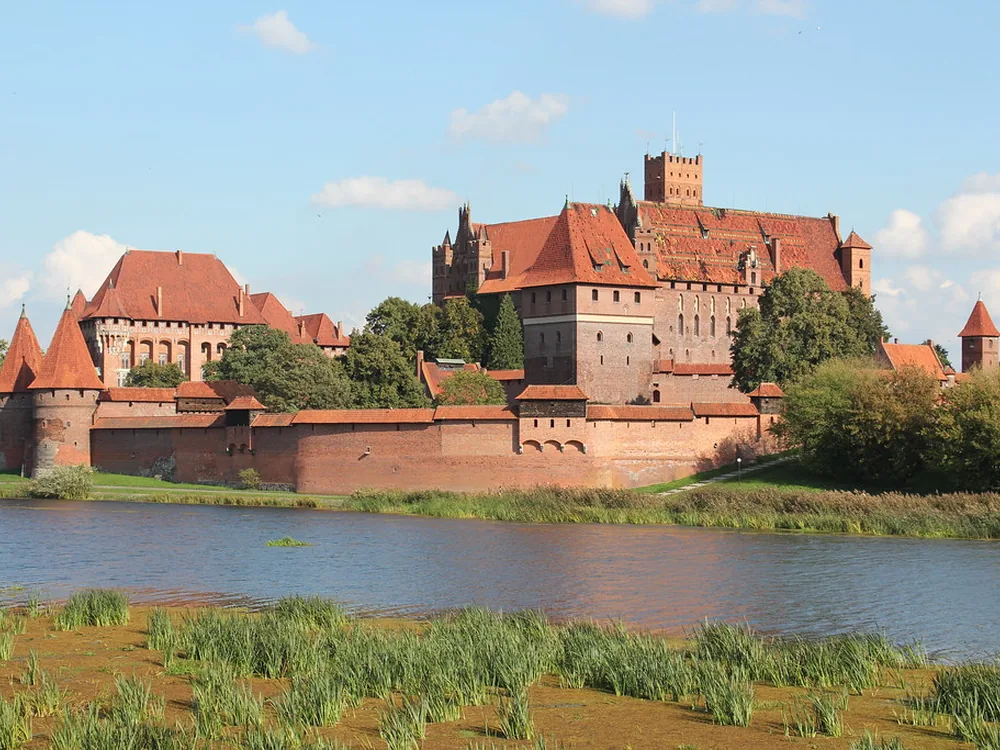
[The Royal Castle in Warsaw](/castles/poland/royal-castle-warsaw), rebuilt after wartime destruction, is the formal ceremonial seat of the Piast and Jagiellon kings 5 kilometres north — a companion to Wilanów's more personal residential character and the natural pairing for a Warsaw castle day. [Wawel Castle in Kraków](/castles/poland/wawel-castle), 300 kilometres south, was the seat of Polish kings for 500 years before Warsaw replaced Kraków as capital in 1596. [Malbork Castle](/castles/poland/malbork-castle), 350 kilometres north in the Pomeranian lowlands, is the largest Gothic brick castle complex in the world — the former seat of the Teutonic Knights and a wholly different architectural tradition from Wilanów's Baroque self-expression.
History
King John III Sobieski purchased the manor of Milanów south of Warsaw in 1677 and began construction of his summer palace with architect Agostino Locci — a project that proceeded alongside the military campaigns that would define Sobieski's reputation. The Battle of Vienna in 1683, where Sobieski's cavalry charge relieved the Ottoman siege and saved the city, made him the most celebrated military figure in Catholic Europe. The palace he was building south of Warsaw acquired retrospective significance from that victory: Wilanów became the residence of the king who had turned back the Ottoman advance at the gates of Vienna.
The palace was built in its original two-storey Baroque form with the sculptural facade programme between 1677 and 1696. Sobieski died in 1696, and the palace passed to the Sieniawska family. Elżbieta Sieniawska added the flanking wings in the early 18th century, giving the palace its present external form. Czartoryski and Lubomirski families extended the garden and added Rococo and Neoclassical interior elements through the mid-18th century. The Potocki family acquired the palace in 1799, and Stanisław Kostka Potocki opened it to the public in 1805 as one of the first art museums in Poland.
German forces destroyed most of Warsaw in 1944–45 but Wilanów Palace survived structurally intact, used as a residence by German officials. The Polish state took ownership after the war, and the palace was conserved, restored, and reopened as a national museum. It is now administered by the Museum of King John III's Palace at Wilanów, open Tuesday to Sunday.
How to Visit
Getting there: Wilanów Palace is approximately 8 km south of Warsaw city centre — about 20 minutes by car or 40 minutes by public bus (lines 116, 180, or 519 from the city centre; check Warsaw ZTM for current schedules). The palace is not on the metro network.
Tickets: Walk-up entry approximately PLN 30 adult — confirm current prices at wilanow-palac.pl before visiting. The GetYourGuide tour — a 2-hour guided interior tour of the main royal apartments with entrance tickets included — book in advance.
Practical tips: The palace is closed on Mondays year-round. Garden admission is ticketed separately from the palace interior — check current pricing on arrival. Visit May to September for the Italian Baroque parterre gardens at full bloom; the Chinese lacquer cabinet and queen's apartments are the interior highlights. Budget an additional hour for the gardens beyond the 2-hour guided tour.
Combine with: Royal Castle Warsaw 8 km north in the Old Town — the formal ceremonial seat of the Piast and Jagiellon kings, rebuilt after wartime destruction, a natural same-day pairing with Wilanów. Rogalin Palace near Poznań — the Raczyński Baroque estate with the legendary ancient oaks Lech, Czech, and Rus.
Frequently Asked Questions
Unlike the Royal Castle, the Old Town, and most of Warsaw's historic architecture — which were deliberately bombed, burned, and dynamited by German forces in 1944–1945 — Wilanów was used by German occupation authorities as a residence for senior officials, which provided a degree of protection against systematic destruction. This was not a principled act of preservation; it was incidental protection from administrative occupation. The palace survived damaged but structurally intact and was transferred to the Polish state after the war. The Royal Castle, by contrast, was dynamited in December 1944 on orders from the German high command; its current form is a postwar reconstruction.
Location
ul. Stanisława Kostki Potockiego 10/16, 02-958 Warsaw, Poland
Nearby Castles
Tours & Tickets
Powered by GetYourGuide
From
€80/ person