Kórnik Castle
Zamek Kórnik
Poland · Greater Poland Voivodeship (Wielkopolska) — Kórnik, Poznań County · Near Poznań
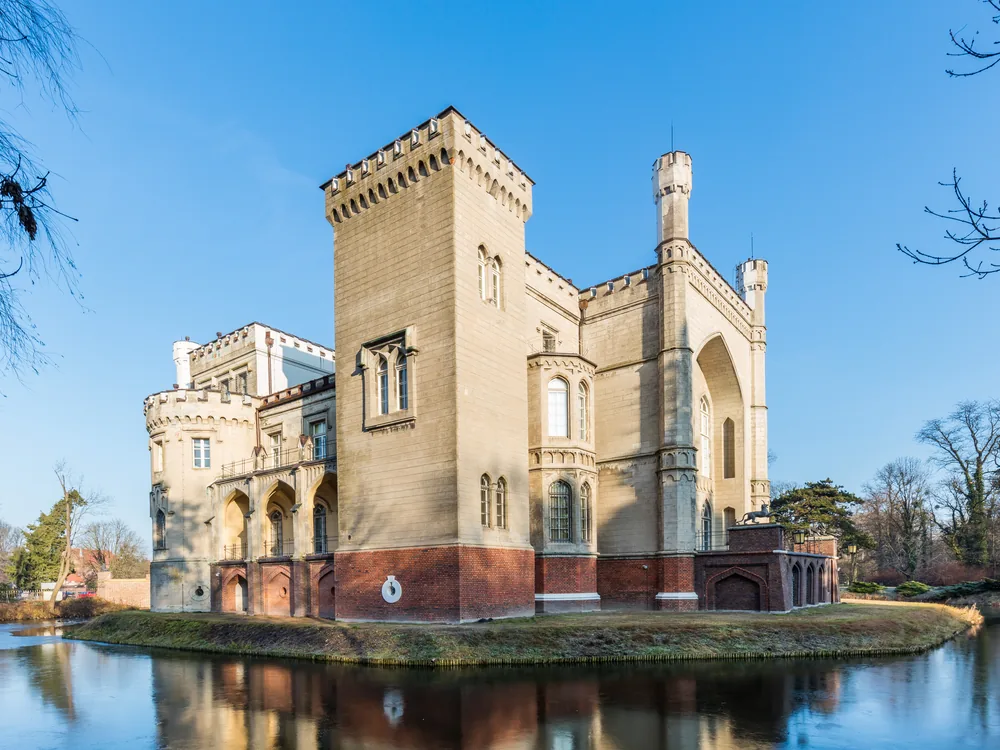
Built 1426 · Neo-Gothic castle with English Gothic Revival character, mid-19th century — the medieval origins of the castle (first mentioned in the 14th century) were radically transformed in the 1820s–1850s by Tytus Działyński working with the Prussian architect Karl Friedrich Schinkel; the current appearance — pointed battlements, turrets, stepped gables, Moorish-influenced interiors — reflects the English Perpendicular Gothic sources that Schinkel drew on; the interior includes Moorish hall (Sala Mauretańska) with intricate stucco vaulting directly inspired by the Alhambra in Granada, a feature exceptional in Central European neo-Gothic; the building is surrounded by the moat that defined the original medieval island site; the neo-Gothic exterior was completed by Jan Działyński (Tytus's son) in the second half of the 19th century
This page is part of an independent travel guide and is not affiliated with, endorsed by, or operated by Kórnik Castle.
© Castles & Palaces
Quick Facts
- Hours
- Tue–Fri 09:00–17:00. Sat & Sun 10:00–17:00. Closed Mon
- Guided tour from
- €67
- Duration
- 1–1.5 hours (guided tour of the castle interior including the Moorish Hall, armory, and state rooms); 1–2 additional hours for the Kórnik Arboretum
- Best time
- May to June for the arboretum's rhododendron and magnolia flowering
- Nearest city
- Poznań
Featured Tour
Kornik Castle and Rogalin Palace Half-Day Private Tour
Cancellation available · Instant confirmation
Highlights
- ✦Karl Friedrich Schinkel's neo-Gothic transformation — Schinkel (1781–1841), the most important architect of the German-speaking world in the early 19th century and the man responsible for much of Berlin's classical architecture (Neue Wache, Altes Museum, Schauspielhaus), brought his Gothic Revival knowledge to Kórnik at the commission of Tytus Działyński in the 1820s; the result — pointed battlements, stepped gables, and turrets drawing on English Perpendicular Gothic — is one of the finest examples of the style in Poland and exceptional in Central Europe for the quality of its architectural sources
- ✦The Moorish Hall (Sala Mauretańska) — the castle's most stunning interior is not Gothic but Moorish: an elaborately decorated hall with intricate stucco vaulting directly inspired by the Alhambra in Granada, executed in the 1850s under Tytus Działyński's direction; the combination of English Gothic exterior and Alhambra-inspired interior makes Kórnik one of the most architecturally eclectic buildings in Poland, and the Moorish Hall one of its great interiors
- ✦The Kórnik Library — one of Poland's most important historical repositories — the library collection assembled by the Działyński family across generations includes medieval manuscripts, Polish noble family archives, and materials from the period of the Polish partitions; administered today by the Polish Academy of Sciences and comprising approximately 800,000 items, it is one of the great scholarly libraries of Central Europe and a record of Polish cultural life through centuries of political turbulence
- ✦Polish national resistance in the neo-Gothic — the transformation of Kórnik was not simply an architectural exercise: Tytus Działyński, working under Prussian occupation during the partition of Poland, was building a Polish cultural monument at a time when Poland did not appear on the map; the castle became a centre of Polish patriotic culture, accumulating art, archives, and objects that documented Polish national identity precisely when that identity was under systematic administrative pressure
- ✦Kórnik Arboretum — Poland's oldest, 40 hectares — the arboretum founded in 1826 by Tytus Działyński was one of the first systematic scientific tree collections in Central Europe; it currently holds species from across the world and is especially notable for its spring flowering (rhododendrons, magnolias) and autumn colour; administered by the Polish Academy of Sciences as a separate entity from the castle
Skip the queue with a guided tour
Skip-the-line tickets & expert guides
The castle at Kórnik sits on an island in a lake 20 kilometres south of Poznań. It has been fortified since the medieval period; the first castle is documented in the 14th century. But the building that visitors see today — the turrets, the crenellated battlements, the stepped gables rising from the lake — is the product of a deliberate cultural project undertaken in the 1820s and 1850s, during a period when Poland did not exist as a political entity on the European map.
The Prussian partition of Poland, which had absorbed Poznań and Greater Poland into the Kingdom of Prussia at the end of the 18th century, imposed German administrative structures on a region that had been the historical heartland of the Polish state since the 10th century. Tytus Działyński, a Polish nobleman who inherited Kórnik in the 1820s, responded to this circumstance by building a monument. He engaged Karl Friedrich Schinkel — the dominant architect of the German-speaking world in the early 19th century, responsible for Berlin's Neue Wache, Altes Museum, and Schauspielhaus — to transform the existing castle into a neo-Gothic composition in the English Perpendicular Gothic manner. The choice of an English architectural source was itself a statement: the English Gothic was associated with parliamentary tradition, national continuity, and aristocratic independence — values that the Polish nobility under Prussian rule had particular reason to invoke.
Schinkel's contribution to Kórnik was in the initial design; the full realisation of the neo-Gothic exterior was completed by Jan Działyński, Tytus's son, in the second half of the 19th century. What emerged was a building of genuine architectural quality: the pointed battlements and stepped gables reflected the English Perpendicular sources accurately, the moat that surrounded the original medieval island site was preserved and incorporated, and the overall composition achieved the picturesque romanticism that the English Gothic Revival had made fashionable across European aristocratic culture.
The interior contains one of the most surprising rooms in Polish architecture. The Moorish Hall (Sala Mauretańska), executed in the 1850s, has an elaborately decorated stucco vault directly inspired by the Alhambra in Granada — the same source that was influencing interior design across Europe in the mid-19th century, when the publication of Owen Jones and Jules Goury's Plans, Elevations, Sections and Details of the Alhambra (1836–1845) had made the geometric ornament of the Nasrid palaces available to any architect or patron willing to invest in its reproduction. The Kórnik version is not a simple imitation; it is a fully realised interior in its own right, exceptional in Central Europe for the quality of its execution.
The castle also accumulated a collection of armour, weapons, furniture, and decorative arts across the Działyński and Zamoyski family's occupancy — the Zamoyski family, who inherited the estate in the late 19th century, were the last private owners before the Second World War. The weapons and armory collection, the period furniture, and the portrait gallery give the castle interiors the character of an aristocratic residence across several centuries rather than a museum reconstruction of one moment in time.
The Kórnik Library, administered by the Polish Academy of Sciences, is one of the major scholarly libraries of Central Europe. Its approximately 800,000 items include medieval manuscripts, Polish noble family archives, and documentary materials from the partition period that make it an essential resource for the history of Greater Poland and of Polish culture under foreign rule. The library building adjacent to the castle is not typically accessible to casual visitors, but its existence gives Kórnik a scholarly dimension that complements the architectural and decorative quality of the castle itself.
The 40-hectare Kórnik Arboretum, founded by Tytus Działyński in 1826, is the oldest scientific arboretum in Poland and one of the oldest in Central Europe to be established as a systematic species collection rather than a purely ornamental garden. It now holds trees from across the temperate world and is particularly notable for its spring rhododendron and magnolia flowering and its autumn colour — the arboretum, administered separately by the Polish Academy of Sciences, can be visited independently of the castle.
The GYG half-day private tour from Poznań (t26512) covers both Kórnik Castle and Rogalin Palace — approximately 10 minutes apart by car — in a four-hour programme with hotel pickup, a private guide, and entrance tickets to both sites.
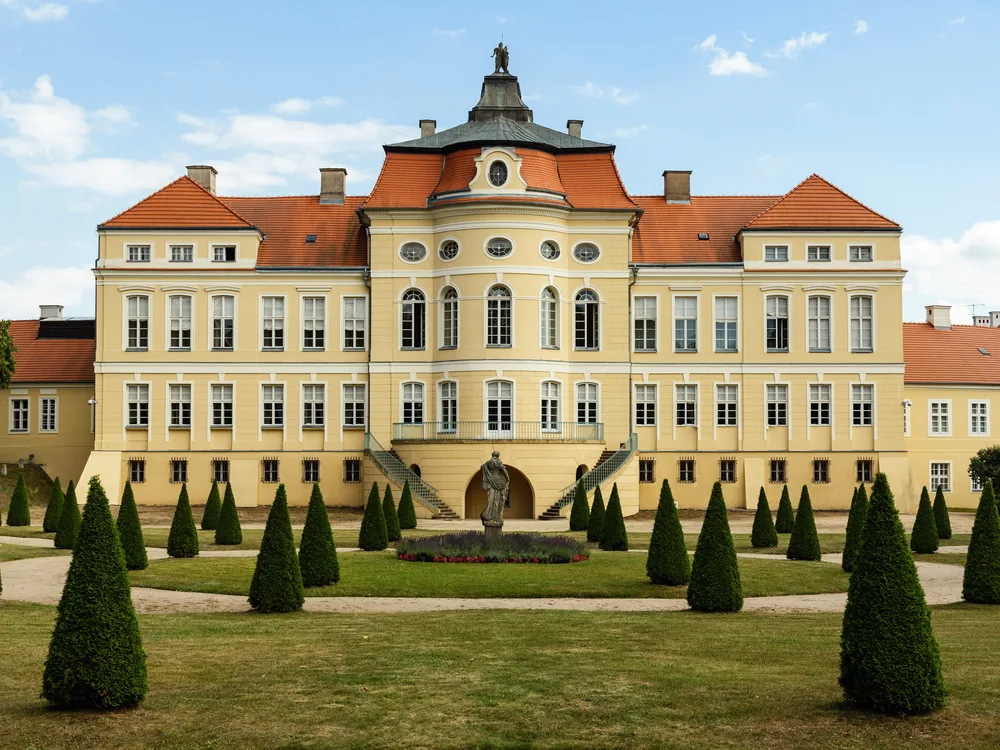
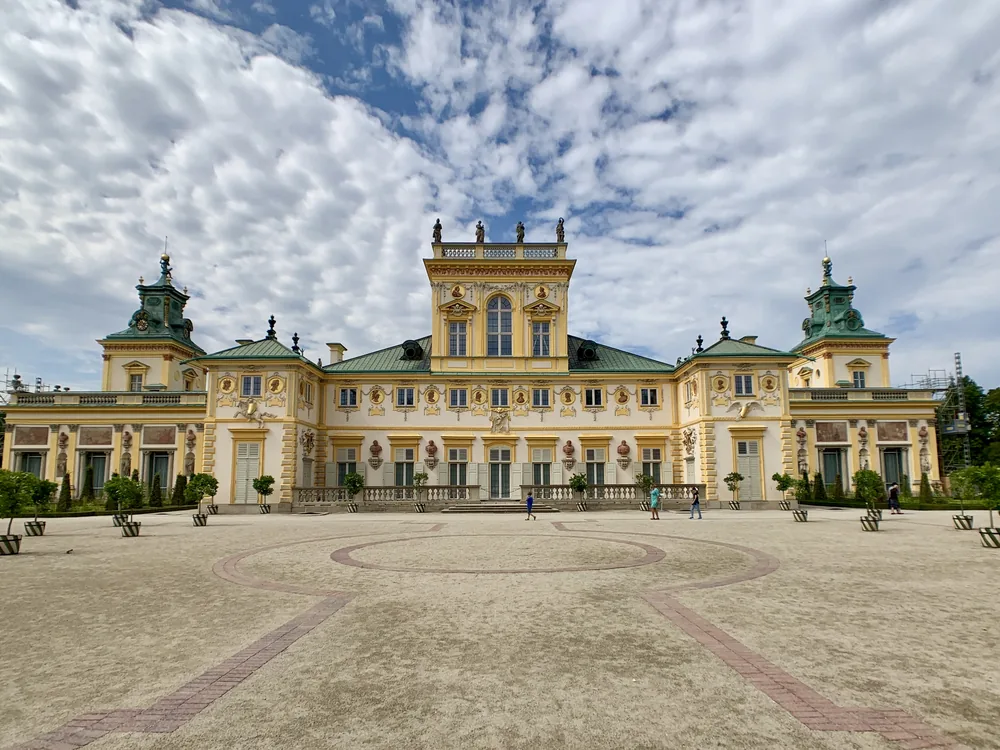
[Rogalin Palace](/castles/poland/rogalin-palace) — the 18th-century Baroque residence of the Raczyński family, famous for its art collection and its grove of ancient named oaks (Lech, Czech, and Rus), approximately 10km from Kórnik — is the natural same-day pairing for any visit to the Poznań area. [Wilanów Palace](/castles/poland/wilanow-palace) — the Baroque royal residence near Warsaw associated with King Jan III Sobieski, one of Poland's great Baroque palace-and-garden compositions — is a further reference point for readers exploring Poland's aristocratic palace circuit.
History
A castle at Kórnik is first documented in the 14th century, established on an island site in the lake south of Poznań. The Górka family and successive Polish noble families held it through the 14th to 18th centuries, with various modifications accumulating over the period. The building that visitors see today — the turrets, crenellated battlements, and Moorish interior — bears no resemblance to what the medieval castle looked like; it is entirely the product of 19th-century vision.
Tytus Działyński inherited Kórnik in 1826 and immediately set about transforming both the building and the grounds, working in collaboration with Karl Friedrich Schinkel on the neo-Gothic exterior. In the same year he founded the Kórnik Arboretum — one of the first scientific arboreta in Central Europe. The Moorish Hall (Sala Mauretańska), with its stalactite ceiling and orientalising ornament, was completed in the 1850s as the castle's signature interior space. Jan Działyński, Tytus's son, continued and completed the neo-Gothic project through the late 19th century. The estate passed to the Zamoyski family as the last private owners before Władysław Zamoyski donated Kórnik Castle and its collections to the Polish people in 1924; the Polish Academy of Sciences was established as administrator.
The castle survived the Second World War with its collections largely preserved. It is now a museum castle with a Polish Academy of Sciences library, open Tuesday to Sunday year-round.
How to Visit
Getting there: Kórnik is approximately 20 km south of Poznań by road (30–40 minutes by car). By bus from Poznań: bus 508 or 510 to Kórnik, approximately 45 minutes.
Tickets: Entry approximately 55 PLN adult. Open Tuesday–Sunday year-round. The 'Kornik Castle and Rogalin Palace Half-Day Private Tour' (t26512, 5.0★, 2 reviews, from €67, 4 hours) covers Kórnik Castle and Rogalin Palace with hotel pickup from Poznań, private transport, guide, and entrance tickets to both sites.
Practical tips: The Kórnik Arboretum (Poland's oldest, 40 hectares) has a separate entrance and ticket — allow an additional 1–2 hours. Spring visits (May–June) catch the rhododendron and magnolia flowering at their peak.
Combine with: [Rogalin Palace](/castles/poland/rogalin-palace) (10 km west — the Raczyński Baroque palace with the ancient named oaks Lech, Czech, and Rus; easily combined in the same half-day from Poznań).
Frequently Asked Questions
The Moorish Hall (Sala Mauretańska) is the most spectacular interior space in Kórnik Castle — a room decorated with elaborate stucco vaulting modelled directly on the geometric ornament of the Alhambra in Granada, Spain. Tytus Działyński had the room created in the 1850s, drawing on the Orientalist fashion that had swept European interior design following the publication of detailed Alhambra studies in the 1830s–40s. The combination of an English Gothic exterior and an Alhambra-inspired interior is architecturally eclectic by design: Działyński was collecting the most ambitious expressions of 19th-century romantic historicism, not limiting himself to one medieval source. The Moorish Hall is exceptional in the region for its quality of execution.
Location
Zamek Kórnik, Zamkowa 2, 62-035 Kórnik, Poland
Nearby Castles
Tours & Tickets
Powered by GetYourGuide
From
€67/ person