Olsztyn Castle — Castle of the Warmian Bishops
Zamek Kapituły Warmińskiej w Olsztynie
Poland · Warmia-Masuria · Near Olsztyn
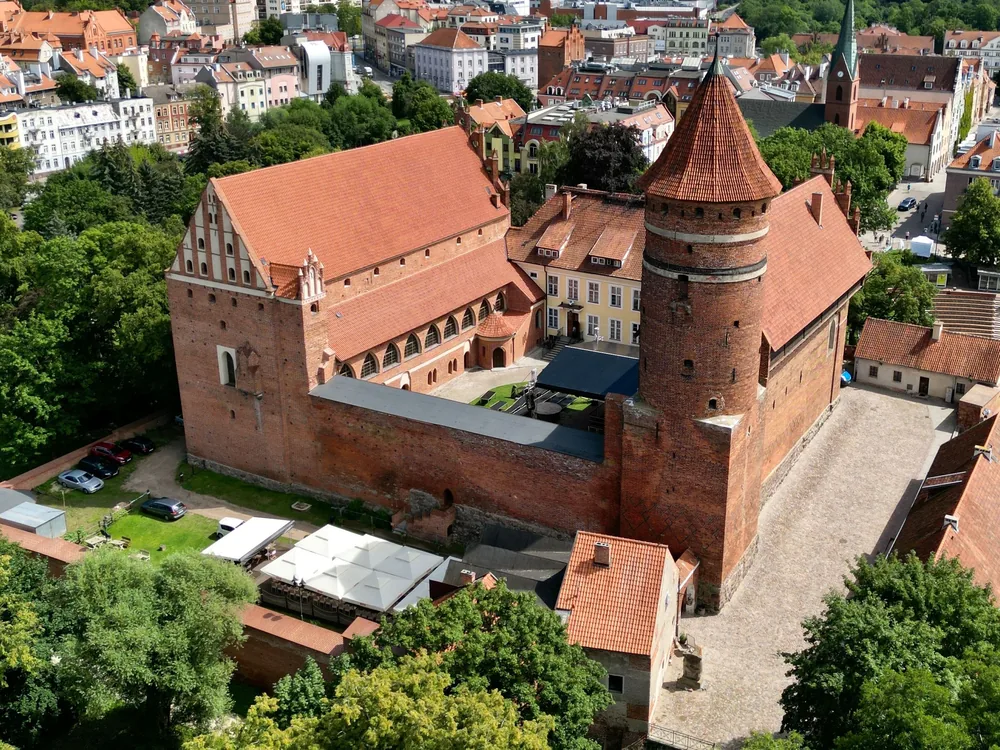
Built 1346 · Gothic brick castle; constructed 1346–1378 by the Warmian Chapter on a promontory above the River Łyna; rectangular courtyard plan with a surviving square tower (Bergfried); the arcaded courtyard gallery is one of the finest examples of late Gothic brickwork in Warmia; partially destroyed and rebuilt through the 17th–19th centuries; the main wing now houses the Museum of Warmia and Mazury
This page is part of an independent travel guide and is not affiliated with, endorsed by, or operated by Olsztyn Castle — Castle of the Warmian Bishops.
© Castles & Palaces
Quick Facts
- Hours
- Tue–Sun 10:00–17:00. Closed Mon
- Guided tour from
- €89
- Duration
- 1.5–2 hours
- Best time
- May to September
- Nearest city
- Olsztyn
Featured Tour
Olsztyn Old Town Highlights Private Walking Tour — includes castle exterior
Cancellation available · Instant confirmation
Highlights
- ✦Nicholas Copernicus's working residence — the castle was the administrative headquarters of the Warmian Chapter where Copernicus served as administrator (1516–1521) and developed his heliocentric theory; his astronomical table scratched into the cloister wall survives
- ✦Gothic brick courtyard arcade — one of the finest surviving examples of late Gothic brickwork in northeastern Poland, with an arcaded gallery running three sides of the rectangular courtyard
- ✦Museum of Warmia and Mazury — housed in the castle's main wing, covering the region's history from the Teutonic Knights through the Prussian period to the present
- ✦The castle tower (Bergfried) — the surviving medieval tower with views over the River Łyna and the old town
- ✦Historic setting above the Łyna — the castle promontory was chosen for its natural defensive position above a river bend; the path around the castle perimeter follows the original medieval line
Skip the queue with a guided tour
Skip-the-line tickets & expert guides
The Castle of the Warmian Chapter in Olsztyn is a 14th-century Gothic brick fortress — one of the best-preserved in the Warmia region — standing on a promontory above the River Łyna in the heart of the city. It was built between 1346 and 1378 by the Warmian Chapter (the cathedral chapter of the Diocese of Warmia, which exercised both ecclesiastical and secular authority over the region) as the administrative headquarters for the management of the chapter's extensive landholdings.
The castle's most significant historical association is with Nicholas Copernicus (1473–1543), who served as administrator (Factor) of the Warmian Chapter at Olsztyn on two separate occasions between 1516 and 1521. During these years he managed the chapter's accounts, oversaw grain stores, conducted land surveys — and in his spare time made the astronomical observations that would inform his revolutionary heliocentric model of the solar system. The evidence of his presence survives in the cloister: a vaulted arcade wall contains an astronomical table that Copernicus scratched directly into the plaster, used to track the path of the sun and refine his calculations. The table is one of the most important scientific artefacts in Poland.
**Note on the GYG walking tour:** The featured GetYourGuide product for this castle is the Olsztyn Old Town Highlights Private Walking Tour (t371665, €89) — a guided walk through the old town that includes views of the castle exterior and its setting above the river. The tour does not include admission to the castle museum interior. Visitors wishing to see the Copernicus astronomical table and museum exhibits should purchase a separate museum ticket on-site (PLN 15 adult).
History
Warmia was a unique political entity in medieval and early modern Europe: a prince-bishopric within the Kingdom of Poland, where the Bishop of Warmia exercised both spiritual and temporal authority over a territory roughly the size of a small German principality. The Warmian Chapter — the bishop's governing council — was the administrative core of this arrangement, and the Olsztyn castle was its working headquarters from 1378 onwards.
The castle's position on the Polish-Teutonic Knights frontier made it a military target throughout the 15th century. The Thirteen Years' War (1454–1466) ended with the incorporation of Warmia into the Kingdom of Poland under the Treaty of Toruń, but the Teutonic Knights continued to threaten the region. During the Polish-Teutonic War of 1519–1521, Copernicus was serving at the castle and took an active role in organising the defence of Olsztyn against a Teutonic siege — a less celebrated but historically significant episode in the career of a man better remembered for astronomy.
After the wars of the 17th century — in which Olsztyn was occupied by Swedish forces during the Deluge (1655) — the castle declined as an administrative centre and was used variously as a prison, a courthouse, and a grain store. The Museum of Warmia and Mazury was established in the restored castle buildings in 1921, initially as a regional museum of Prussian-era Warmia; it has operated continuously since, with significant expansions of the collection after 1945.
How to Visit
Castle museum: Enter from the main gate on ul. Zamkowa. The Museum of Warmia and Mazury is in the main wing; tickets at the entrance (PLN 15 adult, PLN 10 child). The Copernicus astronomical table is in the cloister arcade — follow the museum route to the courtyard. Allow 1.5–2 hours for the full museum circuit.
Old town walking tour (GYG): The private walking tour (t371665, €89) departs from a central meeting point and covers the old town highlights including the castle's exterior setting above the river, the High Gate, and the old town market square. The tour is a guided walk, not an interior museum visit — exterior and grounds only for the castle itself. Ideal for visitors wanting historical context without queueing.
Getting there: Olsztyn is 2 hours by train from Warsaw (PKP InterCity). The castle is 10 minutes on foot from the main train station through the old town. Driving: M7/S51 from Warsaw; parking available near the city centre.
Tickets: Walk-up entry PLN 15 adult, PLN 10 child. The GYG tour (t371665, 4.9★/7 reviews, from €89) — Olsztyn Old Town Highlights Private Walking Tour — includes castle exterior — offers a guided visit; book in advance.
Practical tips: May to September — the courtyard arcades and riverside setting are best in summer.
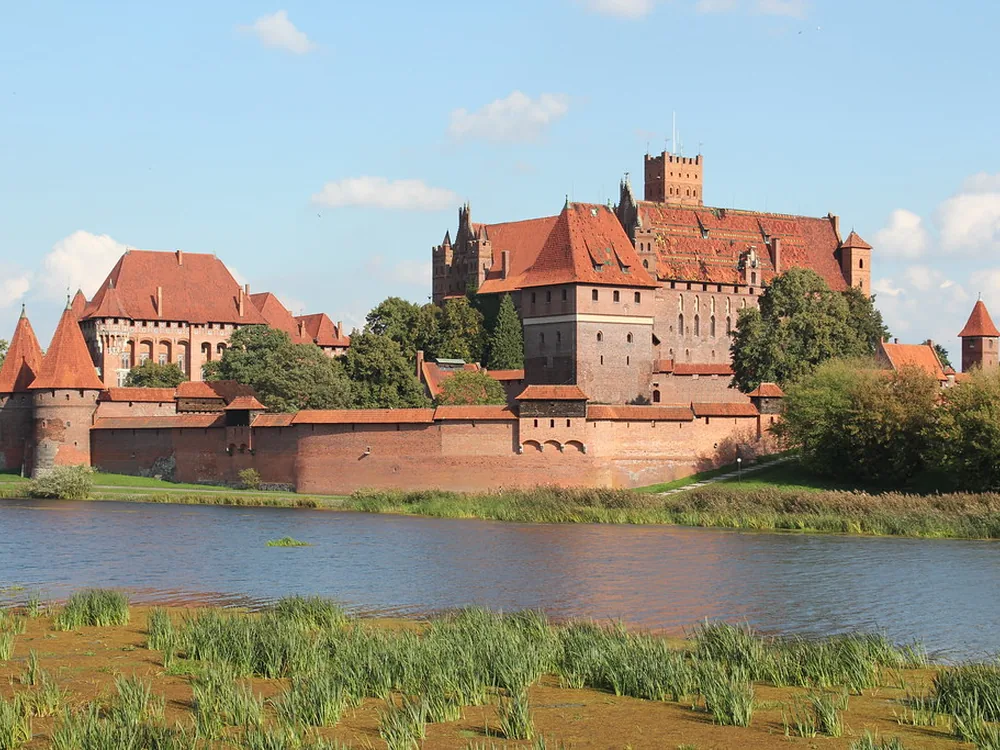
Combine with: [Malbork Castle](/castles/poland/malbork-castle).
Frequently Asked Questions
During his time at Olsztyn Castle (1516–1521), Nicholas Copernicus scratched an astronomical table directly into the plaster of the cloister arcade — a practical calculation tool used to track the sun's position at different times of year. The table survives in the cloister and is one of the few physical traces of Copernicus's working process. It predates the publication of De Revolutionibus (1543) by more than two decades, and the observations made at Olsztyn during this period contributed directly to the heliocentric model he would eventually publish. It is one of the most important scientific artefacts in Poland.
Location
ul. Zamkowa 2, 10-074 Olsztyn, Poland
Nearby Castles
Tours & Tickets
Powered by GetYourGuide
From
€89/ person