Arnóia Castle
Castelo de Arnóia
Portugal · Minho — Celorico de Basto, Braga District, north Portugal; also known as Castelo de Moreira or Castelo dos Mouros · Near Guimarães
Built 1200 · Romanesque military architecture; surviving elements: 17-metre keep (torre de menagem), square defensive tower, single gate, and cistern; classified Portuguese National Monument 1946; included in Rota do Românico
This page is part of an independent travel guide and is not affiliated with, endorsed by, or operated by Arnóia Castle.
© Castles & Palaces
Quick Facts
- Hours
- Check official website
- Guided tour from
- €193
- Duration
- 45 minutes – 1 hour
- Best time
- Spring and autumn
- Nearest city
- Guimarães
Featured Tour
Porto: Medieval Castles of Portugal — Full-Day Tour
Cancellation available · Instant confirmation
Highlights
- ✦Origins traced to the second half of the 10th century — one of the older military sites in the Minho — with surviving Romanesque stonework from the 12th and 13th centuries, when Portugal was establishing its frontier positions
- ✦Recorded in Portugal's 1258 Inquirições as a cabeça de terra — an administrative head-castle with formal jurisdiction over its surrounding territory, not merely a military outpost, under King Afonso III
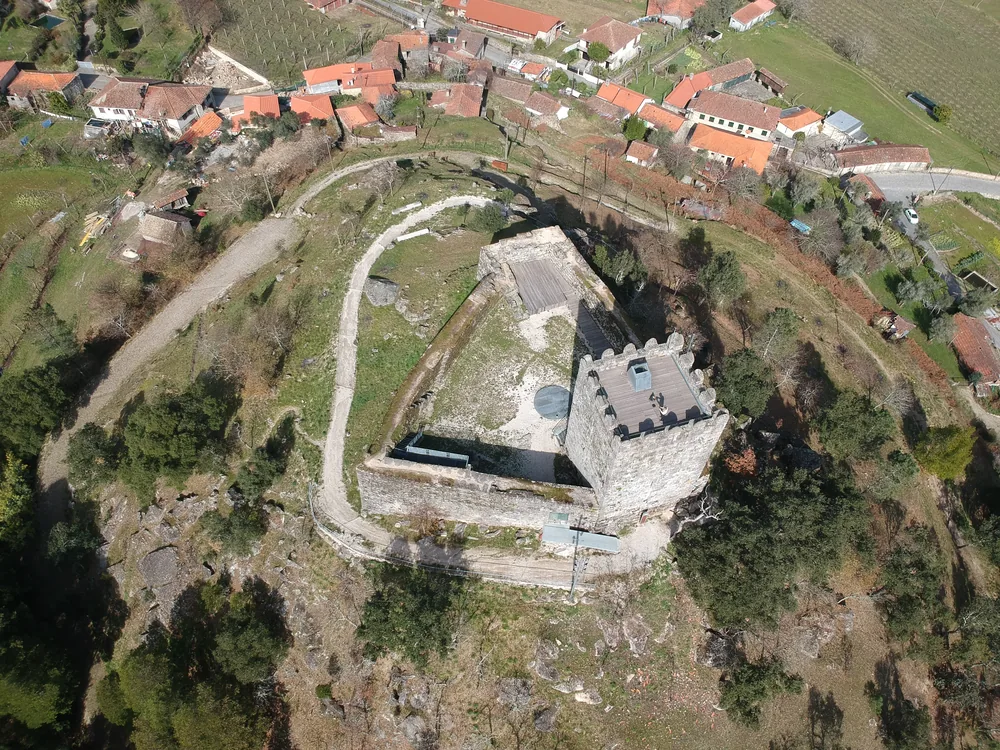
- ✦Four key elements survive: the 17-metre stone keep (torre de menagem), a square defensive tower, the original gateway, and a cistern that provided water independence during siege conditions
- ✦Classified a Portuguese National Monument in 1946 and integrated into the Rota do Românico — the cultural route linking Romanesque monuments across northern Portugal's Sousa Valley and Lower Tâmega regions
- ✦Known locally as Castelo dos Mouros (Castle of the Moors) and Castelo de Moreira — names reflecting the medieval Christian habit of attributing pre-Portuguese fortifications to Moorish builders regardless of actual origin
Skip the queue with a guided tour
Skip-the-line tickets & expert guides
Arnóia Castle stands on a granite hilltop above the Tâmega valley in Celorico de Basto — a landscape that was still a contested frontier zone in the second half of the 10th century, when the Reconquista was advancing north and the County of Portugal was establishing its defensive perimeter. The castle's position gave it command over the valley routes below, and its origins lie in precisely this moment of frontier consolidation, when permanent military infrastructure was being built across the nascent county to hold newly gained territory.
What survives today is a partial ruin, and honesty about this matters. Four structural elements remain: the 17-metre stone keep (torre de menagem), a square defensive tower, the original defensive gateway, and a cistern that would have given the garrison water independence during siege conditions. These are substantial remnants — enough to convey the castle's original scale and function — but Arnóia is not a complete fortified enclosure, and visitors expecting Guimarães will be disappointed. The interest here is historical and archaeological rather than spectacular.
The castle's administrative significance was formalised in Portugal's 1258 royal land inquiries, the Inquirições de 1258 — an ambitious survey commissioned by King Afonso III to assess landholdings across the kingdom. Arnóia appears in these records as a cabeça de terra — an administrative head-castle with formal jurisdiction over the surrounding territory, not merely a military outpost. This is a meaningful distinction: it confirms the castle's role in the governance of the early Portuguese state, functioning as much as an administrative node as a defensive position within the district.
The site is also known locally as Castelo dos Mouros (Castle of the Moors) and Castelo de Moreira — alternative names that reflect the medieval Christian habit of attributing older or unfamiliar fortifications to Moorish builders, regardless of actual construction date. Classified a National Monument in 1946 and integrated into the Rota do Românico — the cultural heritage route linking Romanesque monuments across northern Portugal — Arnóia is best approached as one stop among several, combined with Faria Castle or Guimarães on the same day rather than as a standalone destination.
History
The hilltop site above the Tâmega valley has been fortified since the second half of the 10th century, when the frontier between Christian-held territory and the Moorish south ran through this part of northern Portugal. The earliest defensive works were part of the broader Reconquista consolidation in the region — an effort to establish a continuous perimeter as the County of Portugal pushed its boundaries northward. The surviving Romanesque stonework dates mainly to the 12th and 13th centuries, when the castle was rebuilt and reinforced as Portugal emerged as a formal kingdom under Afonso Henriques and his successors. By 1258, the castle had acquired formal administrative standing: the Inquirições of King Afonso III recorded Arnóia as a cabeça de terra — an administrative head-castle with jurisdiction over the surrounding territory. From the 15th century, with Portugal's internal frontier stabilised and defensive priorities shifting to the eastern border with Castile, the castle gradually lost its strategic relevance. Abandonment followed. A National Monument classification in 1946 stabilised what remained, and integration into the Rota do Românico subsequently gave the site its current role as a recognised stop on northern Portugal's Romanesque heritage circuit.
How to Visit
Getting there: Arnóia Castle is in Celorico de Basto municipality, approximately 35 km from Guimarães and 55 km from Braga. A car is necessary for independent visits — the ruin is not served by regular public transport. The GetYourGuide Porto medieval castles day tour provides transport from Porto if you don't have your own vehicle.
Tickets: Entry to the ruins is free. The GetYourGuide 'Medieval Castles of Portugal' full-day tour from Porto — a guided day trip covering Arnóia Castle, Faria Castle, Guimarães Castle, and Barcelos, with transport from Porto included — is the main structured option for visitors without a car. Note: this is an optional organized day tour, not a required ticket; independent visitors can access the ruins directly and free of charge.
Practical tips: This is a partial ruin on exposed hilltop terrain — wear sturdy footwear and be aware that there are unfenced sections. The interpretive center has limited hours; check locally rather than counting on it being open. Combine with the Faria Castle stop on the same day if using the GetYourGuide tour — the two Portuguese ruins pair logically.
Combine with: Faria Castle (also a stop on the same GetYourGuide day tour — an Iron Age hillfort and medieval castle above Barcelos with one of Portugal's longest documented histories of human occupation, from 700 BC through the medieval period) and Guimarães Castle (~35 km southeast — the birthplace of Portugal, where the first king Afonso Henriques was born, and the most important medieval castle in the Minho).
Frequently Asked Questions
No — the ruins are free to visit at any time. Only organized tours such as the GetYourGuide Porto full-day medieval castles tour carry a cost. The on-site interpretive center may have limited hours and is separate from access to the ruins themselves.
Location
Arnóia, Celorico de Basto, Braga, Portugal
Nearby Castles
Tours & Tickets
Powered by GetYourGuide
From
€193/ person