Faria Castle
Castelo de Faria
Portugal · Minho — Monte da Franqueira, Barcelos Municipality, Braga District, north Portugal · Near Barcelos
Iron Age hillfort (castro) with three concentric defensive walls, round-plan dwellings, and a medieval castle keep; earliest occupation Bronze Age (~2nd millennium BC); classified Portuguese National Monument 1956
This page is part of an independent travel guide and is not affiliated with, endorsed by, or operated by Faria Castle.
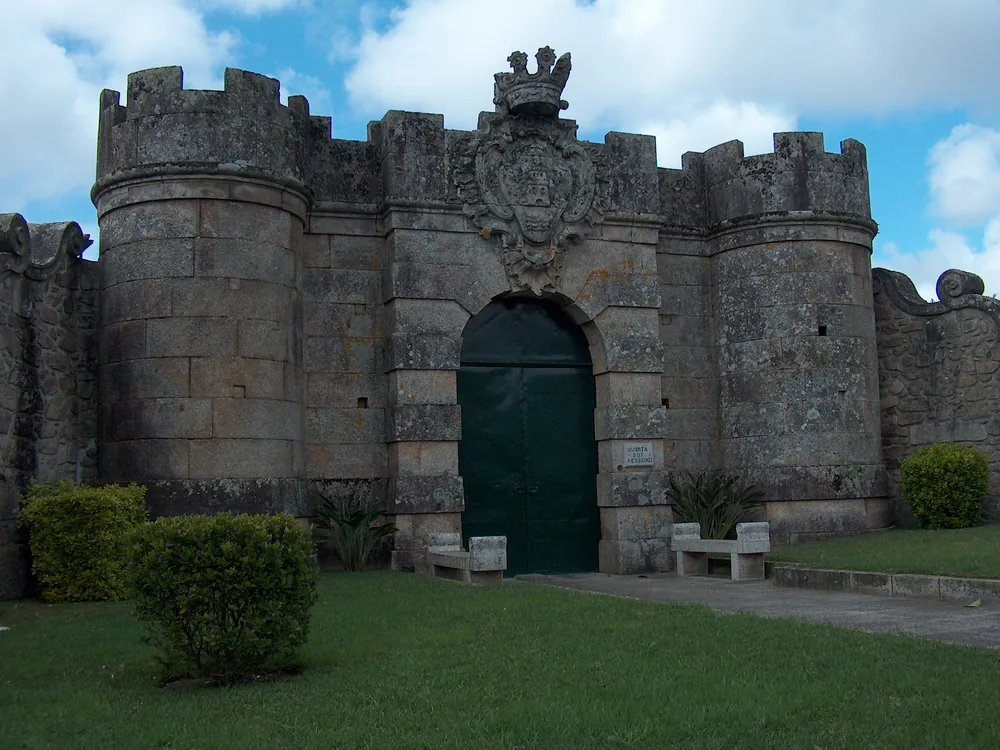
© Castles & Palaces
Quick Facts
- Hours
- Check official website
- Guided tour from
- €193
- Duration
- 1–1.5 hours (including the hike up)
- Best time
- Spring
- Nearest city
- Barcelos
Featured Tour
Porto: Medieval Castles of Portugal — Full-Day Tour
Cancellation available · Instant confirmation
Highlights
- ✦Documented evidence of occupation from the 3rd–2nd millennium BC, with the hill first fortified as an Iron Age castro around 700 BC — one of Portugal's most ancient continuously occupied defensive sites, predating the Roman conquest by centuries
- ✦Three concentric Iron Age defensive wall lines and round-plan dwellings survive on the same summit as the medieval castle keep — an unusual co-presence of Iron Age and medieval military architecture on a single hilltop
- ✦Tied to the legend of the Barcelos Rooster (Galo de Barcelos) — Portugal's most recognisable folk symbol — through the castle's surrounding territory and the founding mythology of the Barcelos region
- ✦The area of Barcelos and Faria formed part of the patrimony of the Counts of Portugal in the founding generation of Portuguese history, connected to the emergence of Afonso Henriques as the first King of Portugal
- ✦Classified a Portuguese National Monument in 1956, set on Monte da Franqueira alongside the Nossa Senhora da Franqueira sanctuary — combining three millennia of archaeological heritage with an active pilgrimage destination on the same hill
Skip the queue with a guided tour
Skip-the-line tickets & expert guides
Few sites in Portugal preserve evidence of fortification across as many distinct historical periods as the hill of Monte da Franqueira above Barcelos. Archaeological finds point to Bronze Age settlement from the 3rd–2nd millennium BC; the hill was first systematically fortified as an Iron Age castro around 700 BC; and a medieval castle keep was constructed on the same summit in the 11th or 12th century, at a time when Portugal had barely come into formal existence as a kingdom. The same elevated position that made Monte da Franqueira worth fortifying in the pre-Roman period made it worth fortifying again in the Middle Ages — and this continuity of function across more than three thousand years is Faria Castle's defining characteristic, and the reason it repays a visit that a more spectacular but historically shallower site might not.
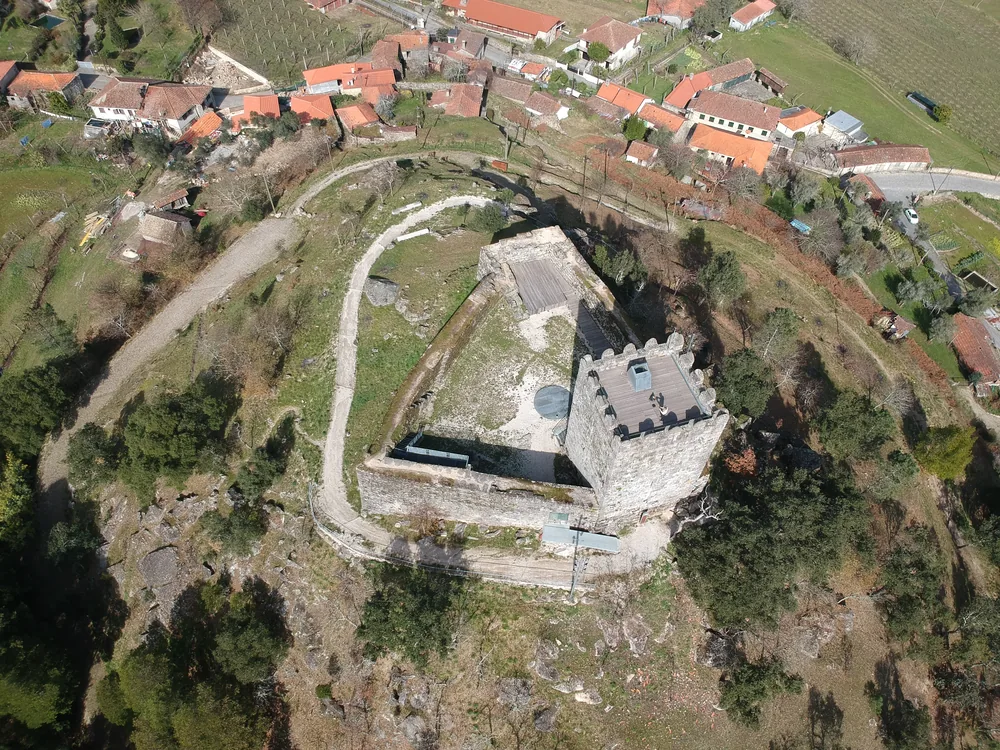
The summit retains three concentric defensive wall lines from the Iron Age phase, along with the foundations of round-plan dwellings inside the innermost enclosure — the characteristic domestic architecture of a northwestern Iberian castro. These structures coexist with the medieval castle keep constructed centuries later: at Faria, the Iron Age and medieval phases do not occupy different parts of the hill, they occupy the same terrace, layered across one another and requiring the visitor to look carefully to distinguish the periods. The three ring walls in particular are arguably the more remarkable feature, though they are less immediately legible than the standing medieval masonry.
Barcelos, 8 km below the hill, is the home of the Galo de Barcelos — the Barcelos Rooster — Portugal's most recognisable folk symbol, sold in ceramic form in gift shops across the country. The rooster represents a medieval legend of miraculous justice: a pilgrim unjustly condemned to death was saved when a roasted cockerel rose to crow as proof of his innocence. The castle's surrounding territory and the area of Barcelos are bound together in the founding mythology that produced this image, giving Faria a second layer of cultural resonance alongside its deep archaeological history.
From the parking area near the Nossa Senhora da Franqueira sanctuary — which shares the same hill and adds a pilgrimage dimension to the approach — the castle ruins are a short walk uphill through pine forest. Entry is free. The site is best appreciated on a clear spring morning, when the views across the Minho plain are at their sharpest and the forest path is at its most pleasant.
History
The hill of Monte da Franqueira has been occupied and fortified since at least the 3rd millennium BC, when Bronze Age settlers first established a presence on the summit. By around 700 BC the hill had been organised as a full Iron Age castro — a hilltop settlement enclosed by three concentric defensive ring walls, with round-plan stone dwellings inside the innermost enclosure. The Roman conquest of northwestern Iberia did not end the site's occupation; hillforts of this kind frequently continued in use through the Roman period and beyond. The medieval castle keep visible today dates to the 11th or 12th century, built during the period when the area around Barcelos was being incorporated into the patrimony of the Counts of Portugal — the comital family from which Afonso Henriques, the first King of Portugal, emerged. Faria and the surrounding territory of Barcelos were part of this founding generation's landholdings. From the 15th century, as Barcelos consolidated as the dominant administrative and market centre of its district, the castle's military relevance faded and gradual abandonment followed. In 1956 the site was classified a Portuguese National Monument, recognising its exceptional depth of occupation across periods from the Bronze Age through the medieval.
How to Visit
Getting there: Faria Castle is on Monte da Franqueira, approximately 8 km from Barcelos and 25 km from Braga. A car is the practical option for independent visits — follow signs for Monte da Franqueira from Barcelos town centre. The site is also accessible as part of the GetYourGuide Porto medieval castles day tour. From the parking area near the sanctuary, the castle ruins are a short walk uphill through pine forest.
Tickets: Entry is free — no ticket needed. The GetYourGuide 'Medieval Castles of Portugal' full-day tour from Porto — covering Faria Castle, Arnóia Castle, Guimarães Castle, and Barcelos with transport from Porto — is the main option for visitors without a car. This is an optional organized tour; independent visitors can access the ruins directly and free of charge.
Practical tips: Wear sturdy footwear — the forest path and hillfort terrain are uneven and can be slippery after rain. The Nossa Senhora da Franqueira sanctuary is on the same hill and worth combining for an understanding of the site's dual heritage and pilgrimage role. Look carefully for the three Iron Age defensive wall rings on the summit — they are less immediately obvious than the medieval keep but are arguably the more remarkable feature, showing the original scale of the Bronze-to-Iron Age hillfort. Barcelos town centre (8 km) is the natural complement for the day — the town is the home of the Barcelos Rooster legend, with a dedicated museum.
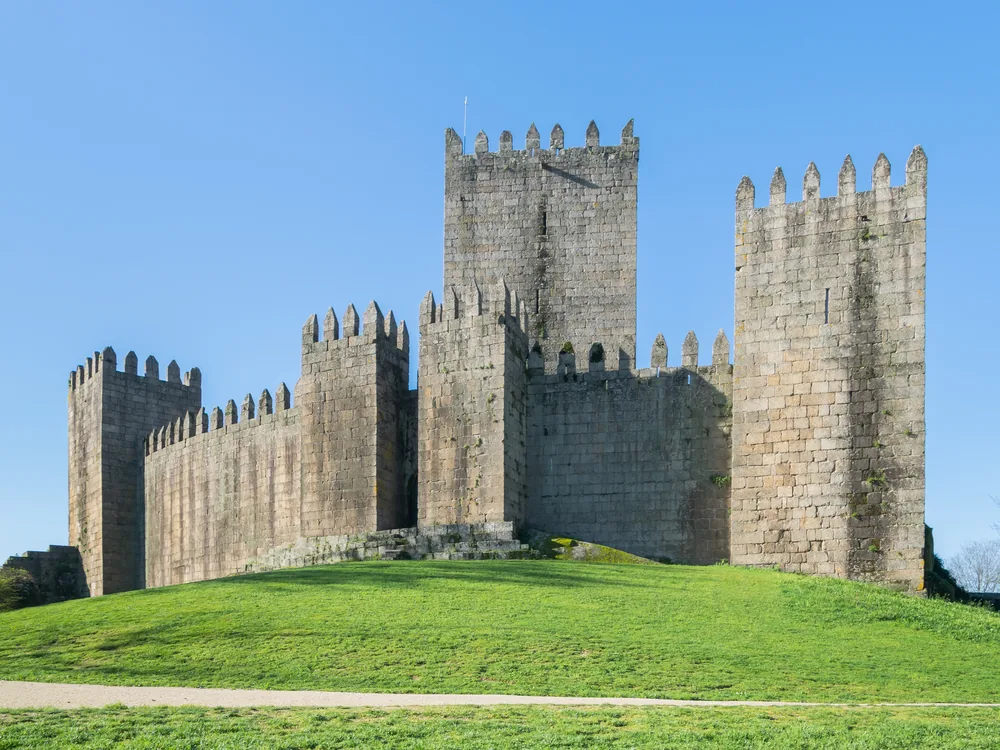
Combine with: Arnóia Castle (also part of the same GetYourGuide day tour — a 10th-century Romanesque frontier castle in Celorico de Basto with a 17-metre keep and views over the Tâmega valley, classified as a National Monument in 1946) and Guimarães Castle (~25 km east — the birthplace of Portugal and the most celebrated medieval castle in the Minho region).
Frequently Asked Questions
The site has evidence of occupation from the 3rd–2nd millennium BC; the Iron Age hillfort was systematically fortified around 700 BC with three concentric defensive ring walls; and the medieval castle keep dates to the 11th or 12th century. The total span of documented human occupation on Monte da Franqueira is more than 3,000 years, making it one of Portugal's oldest continuously fortified sites.
Location
Monte da Franqueira, Barcelos, Braga, Portugal
Nearby Castles
Tours & Tickets
Powered by GetYourGuide
From
€193/ person