
Castro Marim Castle
Castelo de Castro Marim
Portugal · Algarve — eastern Algarve, Castro Marim municipality, Rio Guadiana (Portugal–Spain border) · Near Faro
Built 1277 · Moorish / Medieval Portuguese — hilltop curtain-wall castle with rectangular towers; built on earlier Moorish and Roman foundations; the nearby 17th-century Fort of São Sebastião reflects the Restoration-era defensive upgrades of the same frontier site
This page is part of an independent travel guide and is not affiliated with, endorsed by, or operated by Castro Marim Castle.
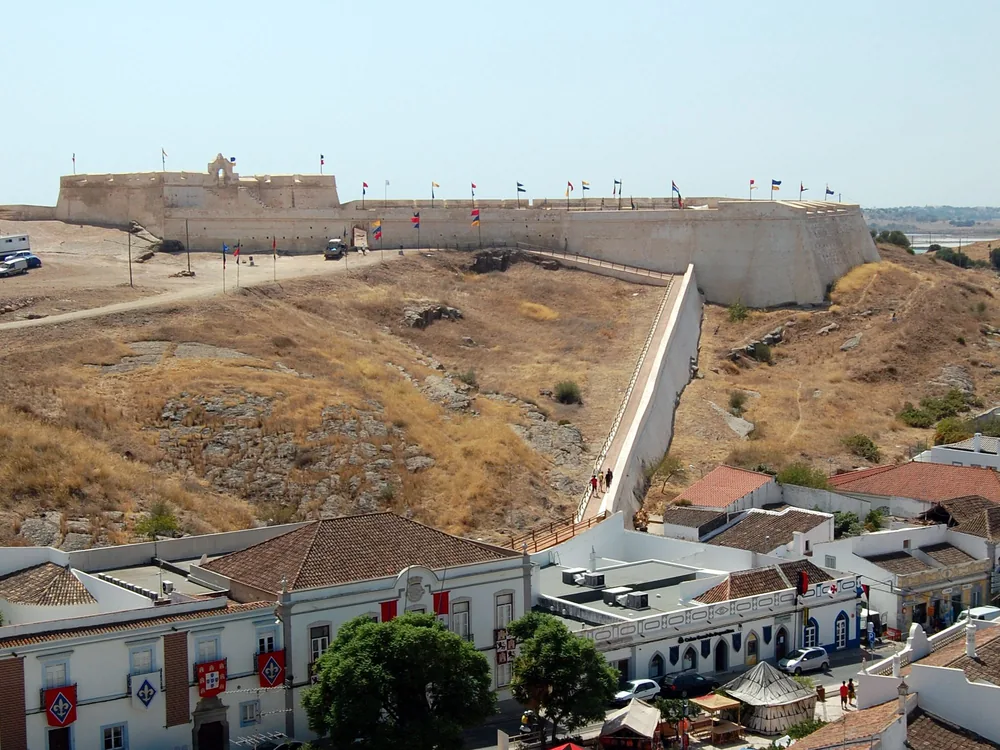
© Castles & Palaces
Quick Facts
- Hours
- Daily 09:30–13:00, 14:00–17:30
- Guided tour from
- €45
- Duration
- 1–1.5 hours (castle grounds + museum) — 3 hours for the full GetYourGuide medieval experience
- Best time
- October to April
- Nearest city
- Faro
Featured Tour
Castro Marim: Medieval Trip — Visit Castle & Medieval Tavern
Cancellation available · Instant confirmation
Highlights
- ✦First headquarters of the Order of Christ (1321) — the military-religious order that succeeded the Knights Templar in Portugal and funded Vasco da Gama's voyage to India; Castro Marim is where the Order was established before relocating to Tomar, making this hilltop a direct origin point of the Age of Discovery
- ✦The Guadiana frontier panorama — from the castle walls the view extends across the Rio Guadiana to Ayamonte in Andalusia; this international border has existed since 1297, one of the oldest in Europe, and the castle has watched over the crossing since before the river became a national frontier
- ✦The Castro Marim and Vila Real de Santo António Nature Reserve — the castle overlooks nearly 2,000 hectares of protected salt marshes, rice paddies, and estuarine wetland; flamingos and spoonbills feed in the salt pans below, and migratory waders cross the Guadiana estuary in large numbers during spring and autumn
- ✦The Fort of São Sebastião — a second, larger 17th-century fortification stands on a neighbouring hill, built during Portugal's Restoration Wars with Spain and visible from the medieval castle; the two structures together constitute one of the most historically layered military landscapes in the Algarve
- ✦August Medieval Days (Dias Medievais) — the castle hosts one of the Algarve's largest annual medieval festivals, with jousting, crafts, food stalls, and period entertainment within the castle walls; the most theatrical way to experience the site, if visiting in summer heat is acceptable
Skip the queue with a guided tour
Skip-the-line tickets & expert guides
Castro Marim Castle rises from a bare hilltop at the easternmost edge of the Portuguese Algarve, looking out across the broad estuary of the Rio Guadiana to the whitewashed rooftops of Ayamonte in Andalusia. The river below has marked an international border since 1297 — one of Europe's oldest — and the castle that guards it carries a correspondingly long history in its stones: Phoenician traders, Roman administrators, Moorish governors, and Portuguese crusading knights have all held this hill at different moments across two and a half millennia.
The castle we see today is largely a 13th-to-14th-century Portuguese construction, built on the foundations of an earlier Moorish fortification that was itself raised on a site the Romans had used before them. Its most consequential chapter came in 1321, when King Dinis I of Portugal granted Castro Marim to the newly founded Order of Christ — the successor organisation to the Knights Templar, whose suppression by Pope Clement V in 1312 had left a void in Iberian military-religious organisation. The Order of Christ absorbed the Templar inheritance almost intact: their wealth, their personnel, their military mission, and their extraordinary expertise in maritime navigation and exploration. Castro Marim served as the Order's first headquarters, the hilltop castle the base of operations for an institution that would go on to fund Vasco da Gama's voyage to India, Bartolomeu Dias's rounding of the Cape of Good Hope, and the systematic Portuguese exploration of the African coast. The Order eventually relocated to Tomar in central Portugal, where it built the great Convento de Cristo; but Castro Marim was where it began.
The castle today encloses a modest archaeological museum displaying finds from the various civilisations that have occupied the hill — Roman ceramics, Moorish metalwork, medieval Portuguese stonework — and a room dedicated to instruments of torture and punishment, a remnant of the castle's function as a seat of justice in the Order of Christ period. A second, larger fortification — the Fort of São Sebastião — crowns a neighbouring hill, built in the 17th century during Portugal's Restoration Wars against Spain, when the Guadiana frontier became a genuine front line after sixty years of Iberian union. Both castles are visible from each other and together constitute one of southern Portugal's most historically layered military landscapes.
The wider setting amplifies the experience considerably. The hill sits above the Castro Marim and Vila Real de Santo António Nature Reserve, a protected wetland of salt marshes, rice paddies, and estuarine habitats covering nearly 2,000 hectares. From the castle walls, the views extend not just into Spain but across a landscape of extraordinary ecological richness: flamingos feeding in the salt pans, spoonbills in the reed beds, the broad silver reach of the Guadiana below. In October and April — the most comfortable months to visit — migrating birds cross the estuary in remarkable numbers, and the early-morning light over the salt marshes is among the most beautiful in the Algarve.
At €2 entry, Castro Marim is one of the most affordable castle visits in Portugal, and its near-total absence from the standard Algarve tourist circuit means the hilltop is almost always uncrowded. The August Dias Medievais festival transforms it into a living medieval encampment — the most atmospheric way to see it, if the Algarve summer heat is not a deterrent.
History
The hill at Castro Marim has drawn settlement since antiquity, its commanding position above the Guadiana estuary making it a natural strategic point for the Phoenician traders who used the river as a route into the Iberian interior. Roman occupation followed, and the site passed through Visigothic hands before the Moors built the fortifications that form the nucleus of the present castle. Castro Marim remained under Moorish rule as part of the taifa territory centred on Silves and Faro until 1242, when Portuguese forces completed the Reconquista of the Algarve — the last region of Portugal to be recovered from Moorish control.
The castle's defining moment came in 1321, when King Dinis I granted it to the newly established Order of Christ. Pope Clement V had suppressed the Knights Templar in 1312, and Portugal's response was to reconstitute the order's Portuguese branch under a new name, preserving its assets, personnel, and maritime expertise almost without interruption. Castro Marim was where the Order established its first base before relocating to Tomar, making the castle a direct precursor to the institution that would drive the Portuguese Age of Discovery. In subsequent centuries the castle's frontier role remained significant: the Guadiana formed the natural boundary between Portugal and Castile, and when Portugal reasserted its independence from Spain in 1640, the Restoration Wars that followed brought renewed military investment to the border. The Fort of São Sebastião on the adjacent hill dates from this period, and together the two fortifications defined the Guadiana crossing through the early modern era.
How to Visit
Getting there: Castro Marim lies 50 km east of Faro, immediately north of the Spanish border crossing at Ayamonte. By car from Faro, take the A22 motorway east (Via do Infante) and exit at Castro Marim — approximately 35 minutes. From Seville, cross the international bridge at Ayamonte and drive north through Vila Real de Santo António to Castro Marim (30 minutes). No practical public transport serves the castle directly; the nearest rail connection is Vila Real de Santo António (8 km south), from which a taxi is the only realistic option.
Tickets: Walk-up entry ~€2 adult, €1 child. The GetYourGuide medieval experience — a 3-hour small-group visit (max 8) with a multilingual guide covering the castle, its archaeological museum, a torture-instruments exhibit, a medieval tavern meal, and a visit to a local craft brewery and Templar shop; castle entrance included — is the fully immersive option; book in advance.
Practical tips: The hilltop is fully exposed with no shade — in summer the heat is intense by mid-morning and the visit becomes genuinely uncomfortable; schedule early (before 09:30) or late (after 17:00) if visiting July–August. Binoculars are worth bringing for birdwatching over the nature reserve below. The Fort of São Sebastião on the neighbouring hill is included in a combined visit and should not be skipped — the view back to the medieval castle from the fort's ramparts is the best available.
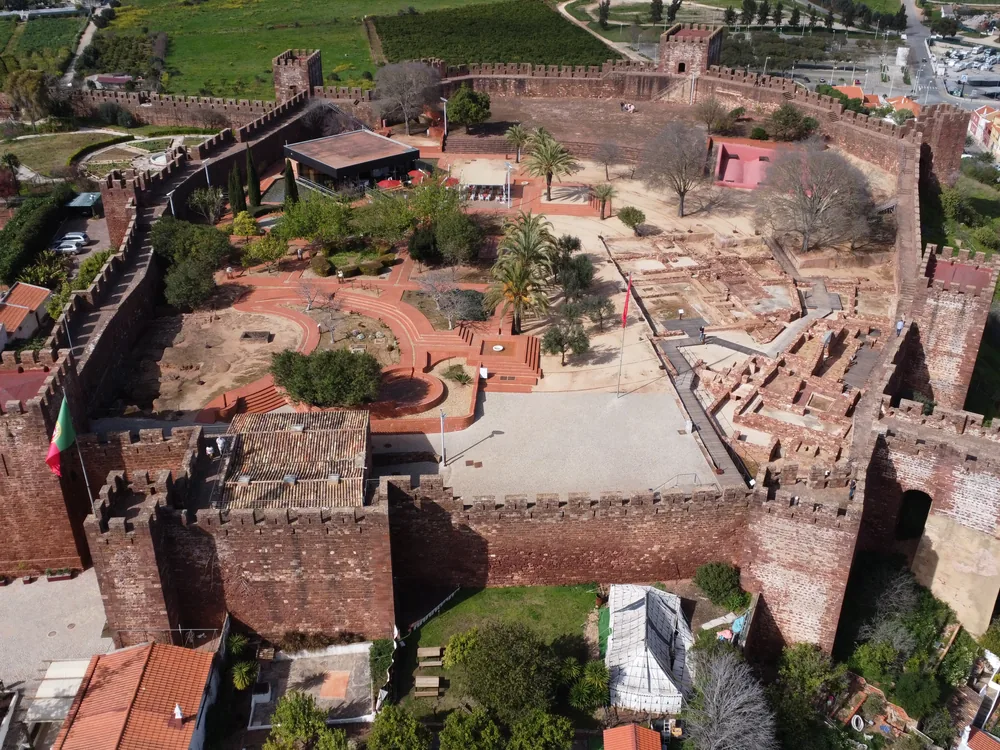
Combine with: Silves Castle (65 km northwest — the best-preserved Moorish castle in the Algarve, built in red sandstone above the medieval episcopal capital of the region; the natural Algarve medieval circuit).
Frequently Asked Questions
In 1321, King Dinis I granted Castro Marim to the Order of Christ — the organisation founded to absorb the Portuguese assets of the suppressed Knights Templar. The castle served as the Order's first headquarters before it relocated to Tomar. The Order of Christ became the primary institutional backer of Portugal's Age of Discovery, funding Vasco da Gama's voyage to India in 1498 and Bartolomeu Dias's rounding of the Cape of Good Hope in 1488.
Location
Castelo de Castro Marim, 8950 Castro Marim, Portugal
Nearby Castles
Tours & Tickets
Powered by GetYourGuide
From
€45/ person