
Sagres Fortress
Fortaleza de Sagres
Portugal · Algarve · Near Sagres
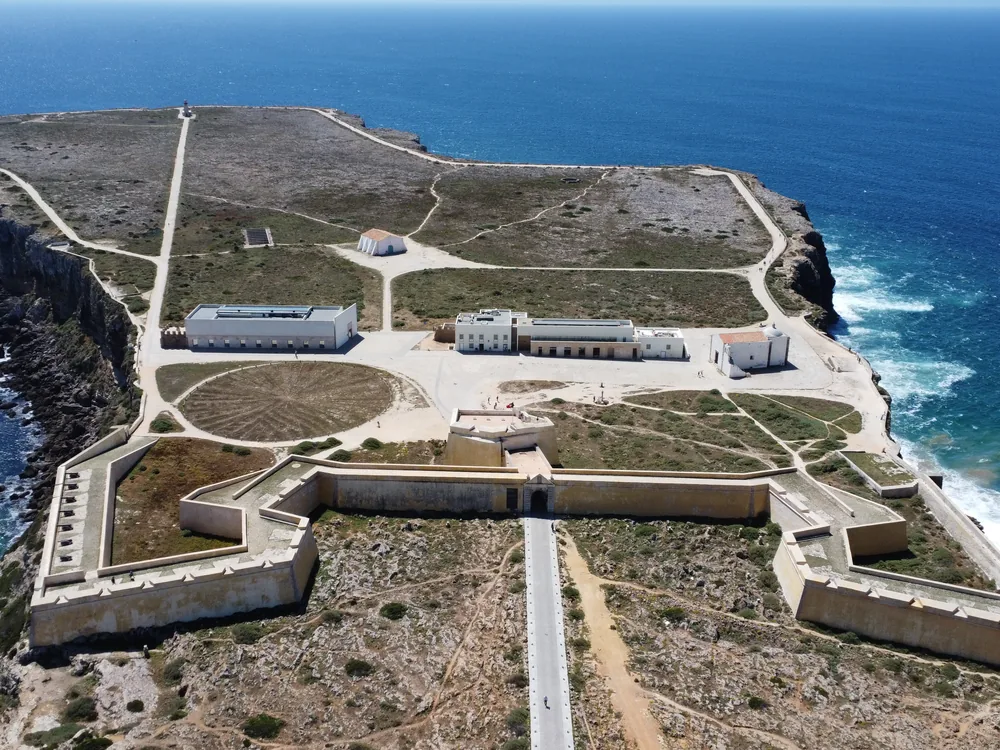
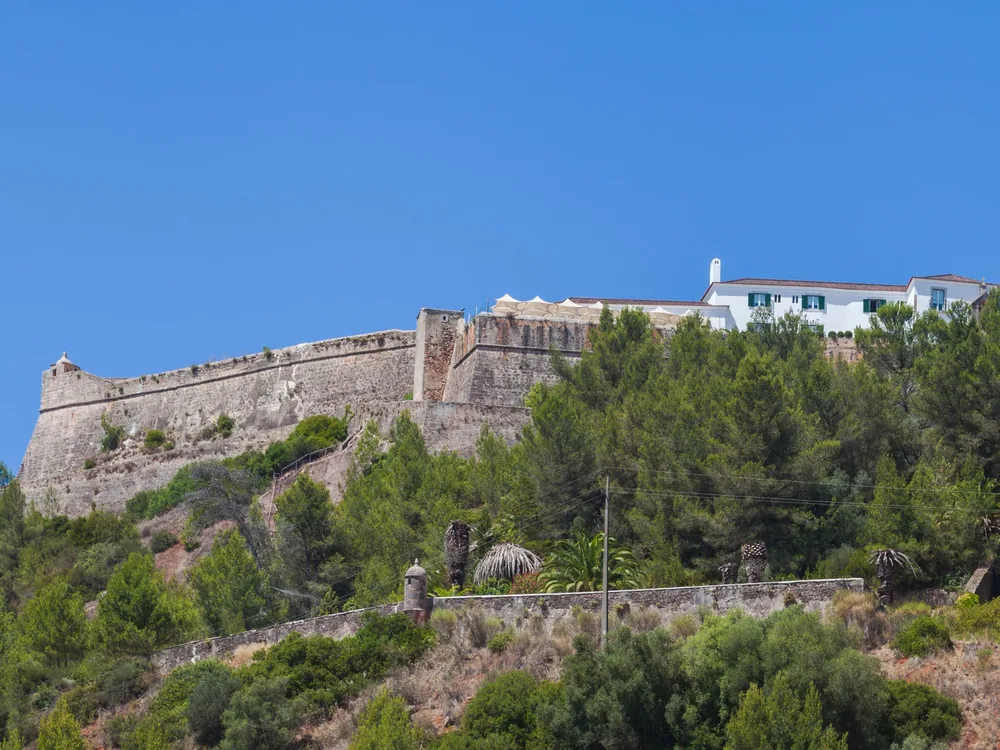
Built 1443 · Coastal bastioned fortress occupying a dramatic flat-topped promontory at the southwesternmost point of continental Europe; the fortification as it stands today is primarily 16th- and 17th-century construction — a bastioned curtain wall, the Church of Our Lady of Grace, and former governor's residence — built on and largely replacing Henry the Navigator's earlier 15th-century Vila do Infante; one surviving element likely from the Henry period is the mysterious rosa dos ventos (wind rose), an enormous pattern of stones set into the ground within the fortress whose exact age and purpose remain subjects of debate
This page is part of an independent travel guide and is not affiliated with, endorsed by, or operated by Sagres Fortress.
© Castles & Palaces
Quick Facts
- Hours
- Daily 09:30–17:30
- Entry via GetYourGuide
- €10
- Duration
- 1.5–2 hours
- Best time
- March to October
- Nearest city
- Sagres
Featured Tour
Sagres: Sagres Fortress Entry Ticket
Cancellation available · Instant confirmation
Highlights
- ✦Positioned on a flat-topped promontory at the southwesternmost edge of continental Europe, where the Atlantic meets the dramatic sea cliffs of the Costa Vicentina in a setting that was genuinely understood, in the 15th century, as the edge of the known world
- ✦Closely associated with Prince Henry the Navigator, who in 1443 established the Vila do Infante at Sagres and made it Portugal's maritime command point for the Age of Discoveries — though the popular 'navigation school' legend is more myth than documented fact
- ✦The rose dos ventos (wind rose) — a mysterious pattern of stones set into the ground within the fortress, approximately 43 metres in diameter — is probably the most genuinely puzzling physical object at the site; its age, original purpose, and relationship to Henry's activities remain subjects of scholarly debate
- ✦The fortress's main standing structures — the Church of Our Lady of Grace, the bastioned curtain wall, the governor's residence — are primarily 16th and 17th century, not Henry's era; the building history rewards attention as a study in how mythologized sites sometimes preserve less of their founding moment than visitors expect
- ✦Note on the GetYourGuide ticket: reviews are mixed, including one report from a verified booking that the ticket 'was not accepted' on site. The provider is GetYourGuide Tours & Tickets GmbH (GetYourGuide's own first-party ticket), so this appears to be an isolated access incident rather than a systemic issue
Skip the queue with a guided tour
Skip-the-line tickets & expert guides
At the far southwestern edge of continental Europe, where the land runs out and the Atlantic begins in earnest, a bastioned fortress sits on a flat-topped cliff above sea that can be calm and blue in October and genuinely frightening by November. Sagres Fortress is one of those sites whose symbolic weight far exceeds its physical scale. The promontory on which it stands was understood, by 15th-century Europeans, as essentially the last solid ground before the oceanic unknown — a belief that gave it a charged meaning during the Age of Discoveries that the physical structures within the fortress walls only partially explain.
The central figure in Sagres's historical importance is Prince Henry, Duke of Viseu, known in English as Henry the Navigator. In 1443, Henry established the Vila do Infante on this promontory — a settlement and military-maritime command centre from which Portugal's expeditions down the African coast were organised, supplied, and directed. The connection is genuine and well-documented: Sagres was Henry's operational base, the point from which expeditions to Madeira, the Azores, and progressively further down the West African coast were launched across the middle decades of the 15th century. The cumulative result of those expeditions — the eventual rounding of the Cape of Good Hope by Bartolomeu Dias in 1488, Vasco da Gama's opening of the sea route to India in 1498 — was the Portuguese oceanic empire that reshaped global trade patterns, established the first sustained contact between Europe and sub-Saharan Africa, and initiated the era of European maritime dominance.
The caveat that serious guidebooks have often fumbled is that the physical Sagres visible today is mostly not Henry's Sagres. The popular narrative of a 'navigation school' — a formalised institution where navigators, cartographers, and astronomers gathered under Henry's direction to pool their knowledge — is a later literary construction, not a documented historical reality. What Henry built here was a military and maritime supply base, not an academy; the sophisticated collaboration that drove Portuguese navigation was institutional in a different sense, spread across the royal court, merchant networks, and the accumulated practical knowledge of sailors who learned by sailing. The standing structures within the fortress — the Church of Our Lady of Grace, the bastioned curtain wall, the governor's residence — are primarily 16th- and 17th-century construction, built after Henry's death in 1460 on and mostly replacing whatever he built in his lifetime.
What does survive from something like Henry's era is the rosa dos ventos — an enormous pattern of stones set into the ground within the fortress, approximately 43 metres in diameter, its rays pointing to the compass directions. Its age is disputed: some scholars associate it with Henry's period, others with the 16th-century rebuilding, and the latest scientific investigations have added more questions than answers. Its purpose is equally unclear — it could have been a navigational teaching tool, a decorative feature, a surveying instrument, or something else entirely. The uncertainty is genuine, and the rosa dos ventos rewards time spent looking at it rather than trying to force it into the navigation-school legend.
The surrounding landscape is the strongest argument for making the trip. The flat promontory, the curtain wall dropped directly at the edge of sea cliffs, the wide Atlantic horizon, and the quality of the light in the late afternoon — these are not things that photographs capture accurately. The Cabo de São Vicente, 6 km along the coast road to the northwest, is the actual westernmost point of continental Europe and a natural companion visit. The fishermen who use a separate access gate to the fortress at 8 am have been fishing from the fortress cliffs for generations; their presence gives the site something no museum display can replicate.
A note on the GetYourGuide ticket: reviews are mixed, including one report from a verified booking that the ticket was not accepted on site. The ticket provider is GetYourGuide Tours & Tickets GmbH — GetYourGuide's own first-party ticket operation — which makes a systemic fraud scenario implausible; this appears to be an isolated access incident.
History
The headland at Sagres has been used by mariners since antiquity. In 1443, Prince Henry the Navigator established the Vila do Infante on this promontory, making it Portugal's primary maritime command base for the expeditions down the African coast that would eventually open the sea route to India and establish the Portuguese oceanic empire.
Henry died in 1460. The Vila do Infante was sacked by Francis Drake in 1587 during his pre-Armada campaign along the Iberian coast. The fortress in its current form — the Church of Our Lady of Grace, the bastioned curtain wall, the governor's residence — is primarily 16th- and 17th-century reconstruction. The Portuguese state restored the complex in the 1990s, adding a modern interpretation centre in the Correnteza area without substantially altering the fortress perimeter.
How to Visit
Getting there: Sagres is at the southwestern tip of Portugal's Algarve, about 30 km west of Lagos. By car from Lagos via N125-10, roughly 25 minutes — this is the practical option as public bus schedules are limited outside summer. From Faro airport, the drive is approximately 100 km (1 hour 15 minutes). Summer hours extend to 20:00; winter hours close at 17:30.
Tickets: Walk-up entry €11 adult, children free. The GetYourGuide tour — official entry ticket for the fortress — book in advance; note that one verified review reported a ticket rejected on site (an isolated incident, not systemic, but carry a backup payment option as standard practice).
Practical tips: Allow at least 15 minutes at the rosa dos ventos (wind rose) — it is more visually striking and intellectually ambiguous in person than photographs suggest, and the scholarly debate about its age and purpose rewards reading the site panels. Combine the fortress with Cabo de São Vicente (6 km northwest), the actual westernmost point of continental Europe: the lighthouse, cliff walk, and Atlantic wind complete the visit. Bring a windproof layer regardless of season — the promontory is exposed on all sides.
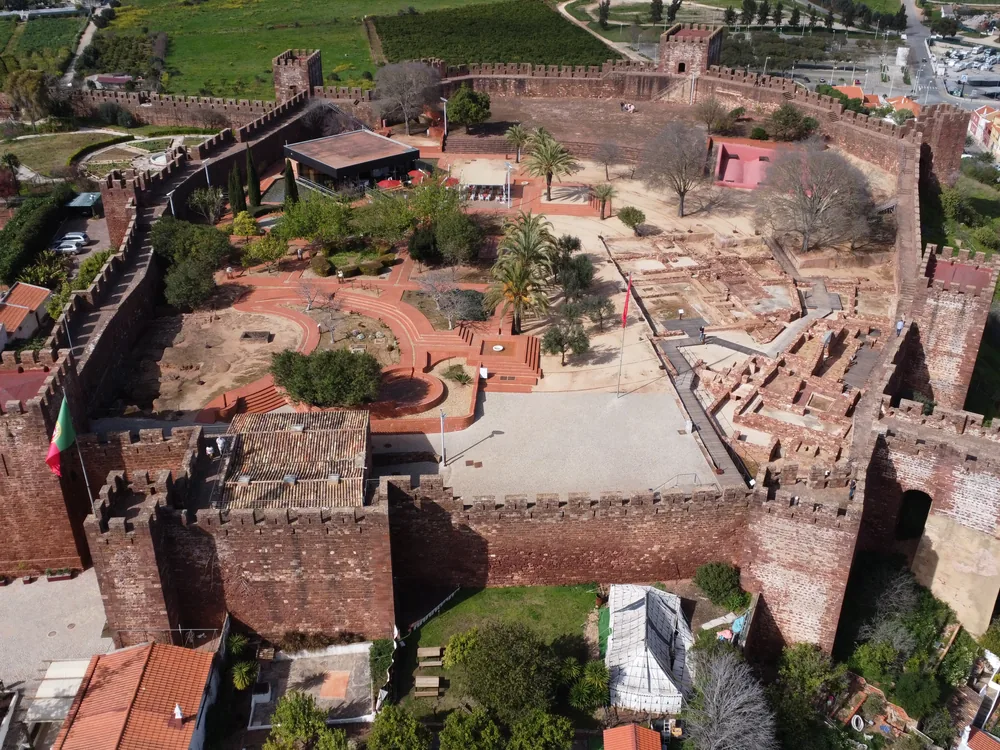
Combine with: Silves Castle — the Algarve's major medieval Moorish fortress, 60 km east — for a full Algarve heritage day from a Lagos base.
Frequently Asked Questions
The 'navigation school' legend is a later literary construction rather than a documented historical reality. Henry did establish the Vila do Infante at Sagres in 1443 as a maritime command base for Portugal's African expeditions, and the connection to the Age of Discoveries is genuine. But the formalised institution of a school — with navigators, cartographers, and astronomers teaching and learning under Henry's direction — is not supported by contemporary documentation. The collaboration that drove Portuguese navigation was organisational in a different sense: royal patronage, merchant networks, and the accumulated practical knowledge of sailors who learned by sailing, not a single campus institution.
Location
Fortaleza de Sagres, 8650-357 Sagres, Portugal
Nearby Castles
Tours & Tickets
Powered by GetYourGuide
From
€10/ person