
Ducal Palace of Vila Viçosa
Paço Ducal de Vila Viçosa
Portugal · Alentejo, Évora District — Vila Viçosa · Near Évora
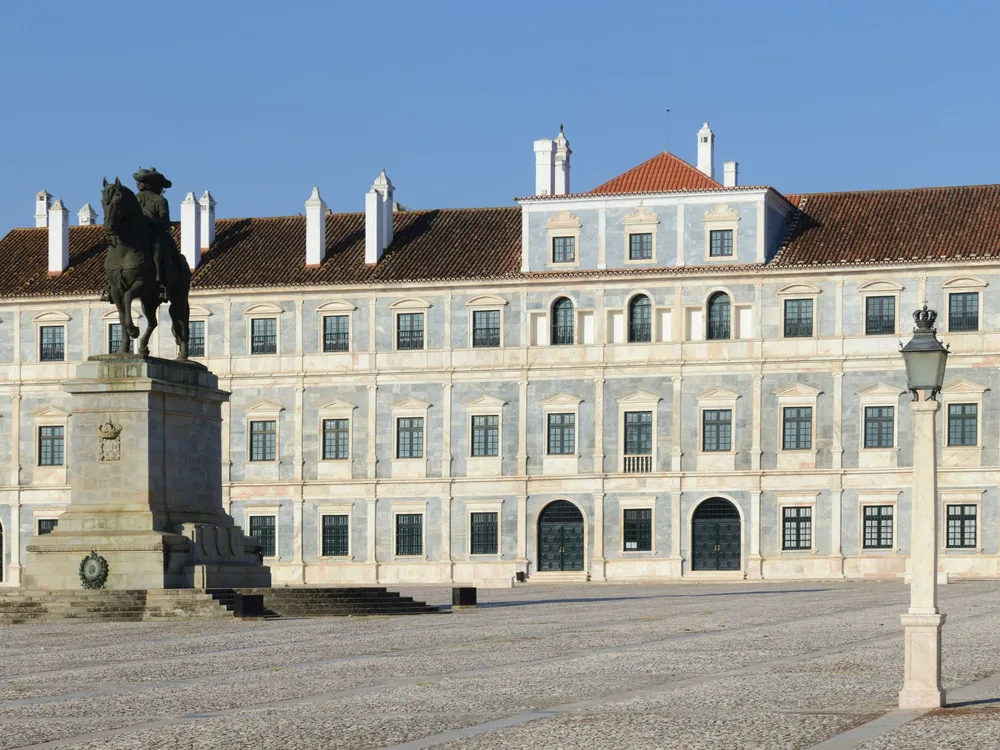
Built 1501 · Portuguese Renaissance ducal palace with a long marble facade — construction began in 1501 under Jaime, 1st Duke of Braganza, on a site adjacent to the family's earlier medieval fortress; the palace grew across six successive dukes in a series of additions and renovations spanning the 16th century; the principal elevation is a long, low Renaissance facade in local white marble — Vila Viçosa sits in the heart of Portugal's marble-quarrying region, where the stone was extracted from antiquity, and the palace's builders used it in such quantities that the entire facade and much of the interior flooring and detailing is in the same warm local white; the interior encompasses state rooms, a library, a treasury, an armory, a chapel, and a coach museum housing one of the finest collections of royal carriages in Europe; the palace remained in the ownership of the House of Braganza and its successor foundation until the present
This page is part of an independent travel guide and is not affiliated with, endorsed by, or operated by Ducal Palace of Vila Viçosa.
© Castles & Palaces
Quick Facts
- Hours
- Tue–Sat 09:30–17:00. Sun 09:30–13:00. Closed Mon
- Guided tour from
- €30
- Duration
- 1.5–2 hours (palace interior guided tour + coach museum); 3 hours (GetYourGuide full walking tour of Vila Viçosa including palace)
- Best time
- April to October
- Nearest city
- Évora
Featured Tour
Walking Tour in Vila Viçosa
Cancellation available · Instant confirmation
Highlights
- ✦December 1, 1640: João IV departs Vila Viçosa — on the morning of December 1, 1640, the 8th Duke of Braganza left the Paço Ducal for Lisbon to be acclaimed João IV, ending 60 years of Spanish Habsburg rule over Portugal in the Restoration of Independence; the palace the duke left behind remained the House of Braganza's emotional home and summer residence throughout their 270-year reign as Portugal's royal family, even as Lisbon's royal palaces became the primary official seats
- ✦A long marble facade in the marble heartland — the palace's principal elevation is a 110-metre facade in the white marble quarried in the hills immediately surrounding Vila Viçosa; Portugal's Alentejo marble has been extracted since Roman times from the same outcrops that supplied Roman columns and thresholds; the Braganza dukes used local marble in such quantities that the town itself reads as a marble environment — the facades, the church floors, the street edges, the fountains all in the same white stone
- ✦One of Europe's great coach museums — the Fundação da Casa de Bragança operates the coach museum in the former riding hall adjacent to the palace, housing a collection of royal carriages, sedans, and state vehicles accumulated by the House of Braganza across three centuries of royal use; the collection covers vehicles from the 17th through the early 20th century and is one of the most complete royal carriage collections in Europe, comparable to the Museu Nacional dos Coches in Lisbon
- ✦140 years of ducal residence before becoming a royal palace — from the construction's start in 1501 until João IV's departure in 1640, the Paço Ducal was the working residence of Portugal's wealthiest noble family: their archive, their treasury, their library, and the headquarters of their extensive agricultural and administrative estates across the Alentejo; the palace's scale and quality reflect the Braganza dukes' status as the richest private landholders in Portugal at a time when 'private' and 'near-royal' were almost the same thing
- ✦The treasury, armory, and state rooms — the guided interior tour covers a selection of the state rooms furnished in period style, the treasury with its jewels and silver, the armory with the Braganza family's historical weapons collection, the palace chapel, and the royal kitchen whose scale reflects the household numbers required to maintain a ducal court
- ✦GetYourGuide 3-hour walking tour of Vila Viçosa including Ducal Palace entry — includes palace ticket and guided visit
Skip the queue with a guided tour
Skip-the-line tickets & expert guides
The marble begins before you reach the palace. Vila Viçosa sits in the centre of Portugal's marble-quarrying zone — the triangle of towns between Estremoz, Borba, and Vila Viçosa that has supplied Portuguese construction from Roman times onward, where the white stone comes from open quarries visible from the roads, used in local building with the same casual abundance that limestone is used in Normandy. By the time you reach the Terreiro do Paço — the great forecourt that faces the palace's main facade — you have already walked through streets where the kerbs, thresholds, window surrounds, and church fronts are all in the same warm white marble. The palace facade, 110 metres of Renaissance elevation in the same stone, reads not as imposing but as continuous with its environment.
The House of Braganza had been the most powerful noble family in Portugal for two centuries before they built this palace. Their origin was the illegitimate branch of the Avis dynasty — João I of Portugal had legitimized his natural son Afonso, granting him vast estates in Trás-os-Montes in the north; Afonso became the 1st Duke of Braganza in 1442, and the family took its name from the town of Bragança and its castle in the far northeast. Over the following century they accumulated such landholdings, income, and military retainers that they were in practical terms a parallel power to the Portuguese crown — close enough to royal in status that they habitually married into the ruling Avis line, and dangerous enough that King João II had the 2nd Duke of Braganza executed in 1483 to diminish the family's power.
The power came back. Jaime, 1st Duke of Braganza under the restored family (his grandfather had been rehabilitated after João II's death), began construction of the Paço Ducal in 1501 as the new primary seat of the family. The choice of Vila Viçosa rather than Bragança was deliberate: the Alentejo was the heart of the family's agricultural estates, the centre of their practical wealth, and a warmer and more productive region than the cold uplands of Trás-os-Montes. The palace grew through Jaime's successors — each duke adding wings, state rooms, and collections across the 16th century — until it reached its current form as one of the largest Renaissance palace complexes in Portugal.
For 139 years, the Paço Ducal was the working residence of Portugal's premier noble family. Their archive was here, their library, their treasury, and the administrative centre of estates that covered much of the Alentejo. The palace's interior reflected their status: state rooms furnished at the scale of a royal court, an armory holding weapons collected from campaigns and gifts, a chapel serving as the family's primary place of worship, kitchens staffed for the retinue of a major household.
The departure changed everything. On December 1, 1640, the 8th Duke of Braganza — João, known as João IV — left the Paço Ducal for Lisbon to be acclaimed king of Portugal, ending the 60-year personal union with the Spanish crown that had begun in 1580 when Felipe II of Spain inherited the Portuguese throne. The Restoration of Independence gave Portugal back its sovereignty and gave the Braganza family the throne they had long been adjacent to. João IV and his successors moved the primary royal residence to Lisbon, but Vila Viçosa remained the House of Braganza's sentimental home — the palace they returned to for summer residences, hunting, and retreat across their 270-year reign, down to the last king Manuel II who spent his final Portuguese hours here before leaving the country following the proclamation of the Republic in 1910.
The palace and its collections are now administered by the Fundação da Casa de Bragança. The guided interior tour covers the state rooms, treasury, armory, and the royal kitchen. The coach museum in the adjacent former riding hall houses one of Europe's most significant collections of royal carriages — a span from 17th-century sedans to early 20th-century automobiles used by the Braganza family during their reign.
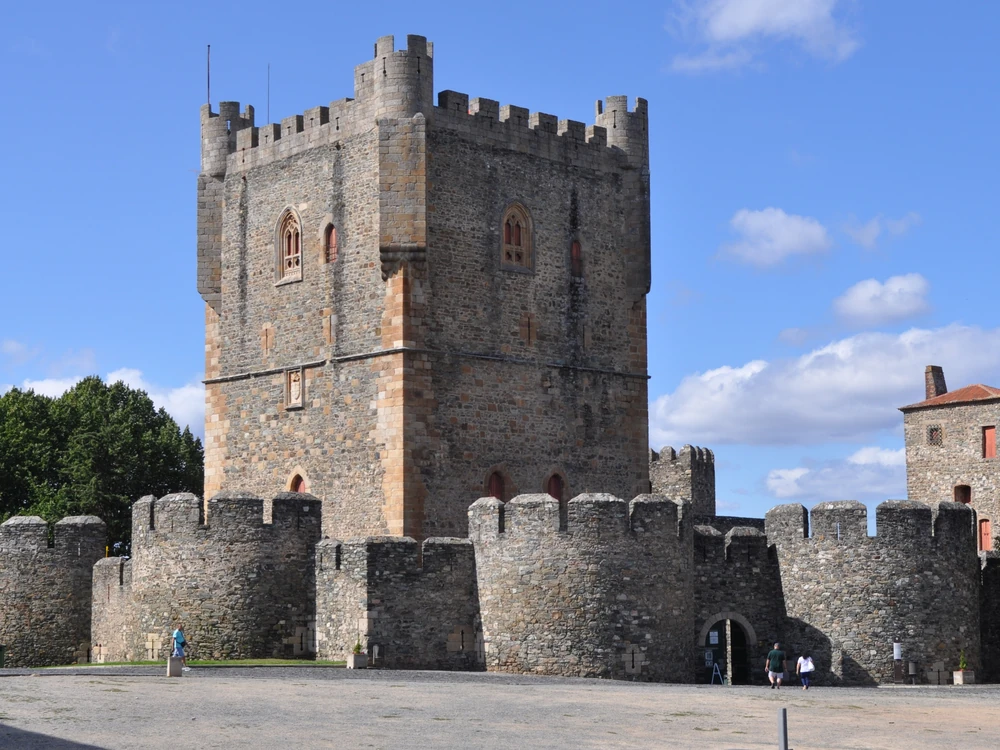
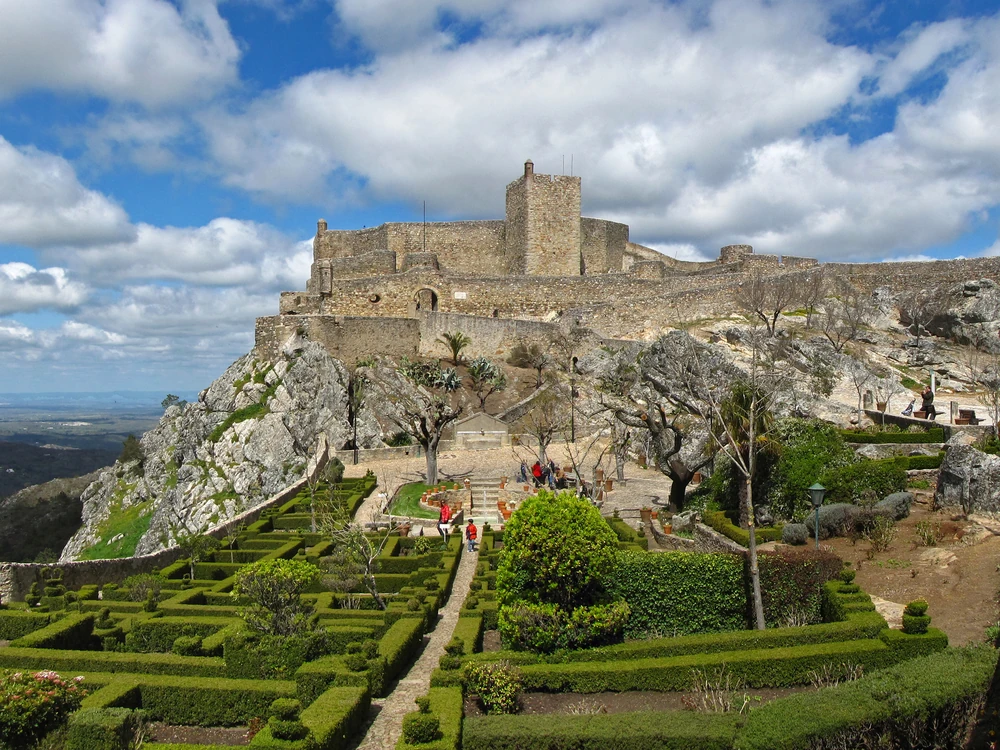
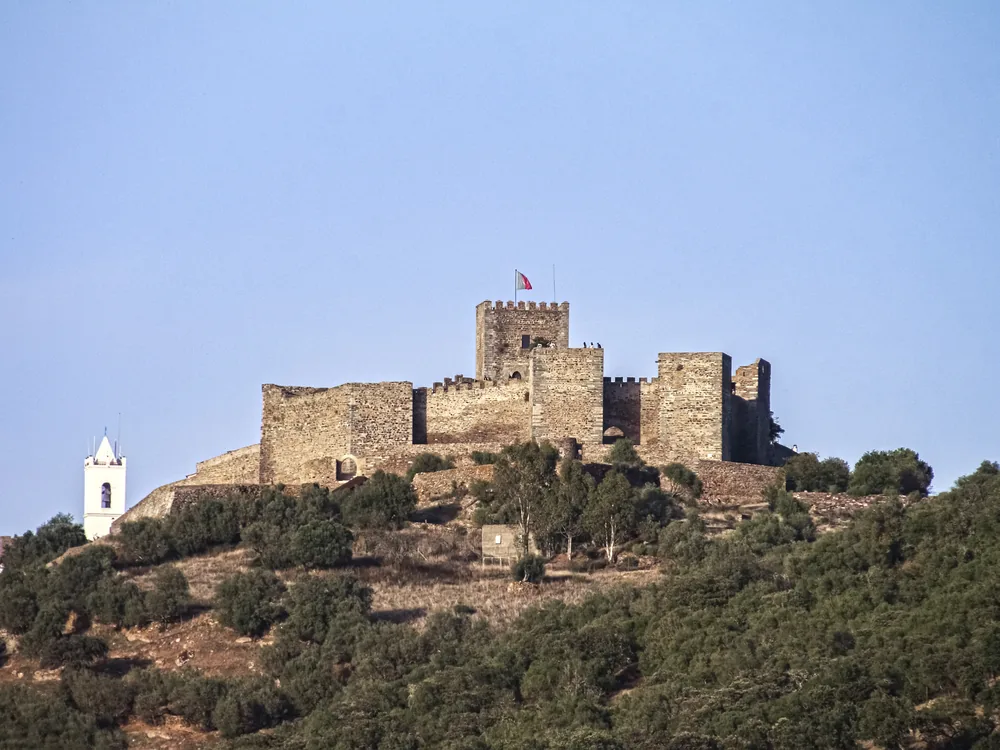
[Bragança Castle](/castles/portugal/braganca-castle), 450 kilometres north in Trás-os-Montes, is where the House of Braganza took its name in the 15th century — a complement to Vila Viçosa as the family's northern origin versus their Alentejo primary seat. [Marvão Castle](/castles/portugal/marvao-castle) and [Monsaraz Castle](/castles/portugal/monsaraz-castle), both in the Alentejo, are the region's medieval fortifications on dramatic hilltop sites within the same broad territory the Braganza family administered from Vila Viçosa.
History
Afonso, the legitimised natural son of João I of Portugal, became the 1st Duke of Braganza in 1442, taking the family name from Bragança castle in Trás-os-Montes. The dynasty's early trajectory was not smooth: João II had the 2nd Duke executed in 1483 to reduce the family's power, temporarily confiscating the estates. Recovery came when Jaime, 1st Duke under the restored family, began construction of the Paço Ducal at Vila Viçosa in 1501, relocating the primary family seat from Trás-os-Montes to the Alentejo — a shift south that reflected both the warmer climate and the marble wealth of the region.
Successive dukes — Jaime, Teodósio I, and João I — added wings and state rooms through the 16th century until the palace reached its present scale: a 110-metre Renaissance facade in the local white marble, the raw material of the surrounding quarries. The Iberian Union of 1580, which united the Portuguese and Spanish crowns under Felipe II, left the Braganzas as powerful subjects of a Spanish king. On 1 December 1640, João, 8th Duke of Braganza, departed Vila Viçosa to be acclaimed João IV of Portugal — the Restoration of Independence that made the Braganzas Portugal's monarchs rather than its grandest noble family. The date is still marked as Portugal's national holiday.
From 1640 to 1910 the palace served as the summer residence and sentimental dynastic home of the Braganza royal family, while primary royal operations were based in Lisbon. King Manuel II departed from Vila Viçosa in 1910 as the Republic was proclaimed. The Fundação da Casa de Bragança has administered the palace and its collections since. Open Tuesday to Sunday by guided tour.
How to Visit
Getting there: Vila Viçosa is approximately 60 km east of Évora (45 minutes by car) and 200 km from Lisbon via the A6 (around 2 hours by car). Limited public transport from Lisbon — a rental car or organised tour is the practical option. From Évora, local taxis cover the route.
Tickets: Entry to the palace interior is by guided tour only at fixed intervals — no free-roam access; confirm current prices at fcbraganca.pt. The GetYourGuide tour — a 3-hour guided walking circuit of Vila Viçosa including the palace ticket and interior visit, the medieval castle, Terreiro do Paço, and the Sanctuary of Our Lady of Conception — book in advance. Closed Mondays.
Practical tips: Guided palace tours run at fixed times — arrive early enough to join the next scheduled slot rather than waiting. The coach museum in the adjacent former riding hall adds up to an hour and is worth including. Alentejo summer heat (July–August) regularly exceeds 35°C; spring and early autumn are considerably more comfortable for exploration of the open Terreiro do Paço.
Combine with: Marvão Castle in the Serra de São Mamede (80 km north) and Monsaraz Castle in the Guadiana valley (50 km southeast) for a full Alentejo medieval circuit.
Frequently Asked Questions
Portugal had been under the personal rule of the Spanish Habsburg monarchs since 1580, when Felipe II of Spain inherited the Portuguese throne after the death of the young King Sebastião at the Battle of Alcácer Quibir (1578) without an heir. The 60-year period of Iberian Union (1580–1640) maintained Portuguese laws and institutions nominally intact but was deeply unpopular, associated with Portuguese involvement in Spanish wars and the neglect of Portuguese colonial interests. On December 1, 1640, a Portuguese faction including the major noble families staged a coup in Lisbon, eliminating the Spanish-appointed regent, and proclaimed the 8th Duke of Braganza — João, who had been living at the Paço Ducal in Vila Viçosa — as king. João IV accepted the acclamation, departing Vila Viçosa that morning for Lisbon. Portugal and Spain recognized each other's independence only with the Treaty of Lisbon in 1668, ending a 28-year war. December 1 is still celebrated as Portugal's Restoration Day, a national holiday.
Location
Terreiro do Paço, 7160-251 Vila Viçosa, Portugal
Nearby Castles
Tours & Tickets
Powered by GetYourGuide
From
€30/ person