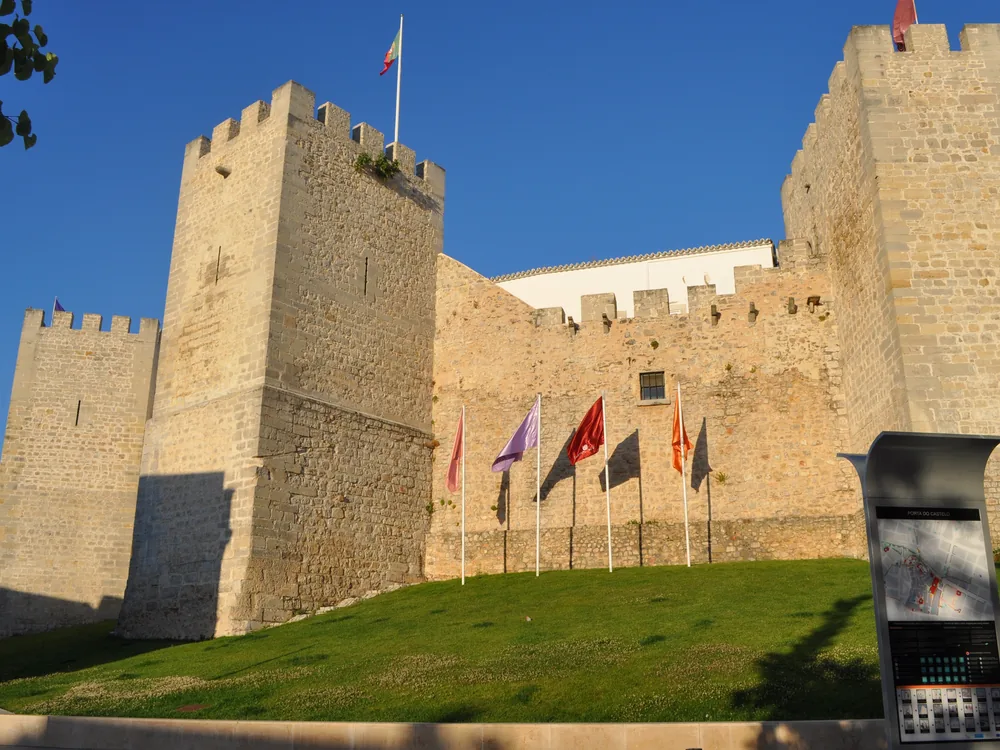
Loulé Castle
Castelo de Loulé
Portugal · Algarve — Loulé, Barrocal zone, inland Algarve, Faro District · Near Faro
Built 1200 · Medieval Islamic-era castle and tower complex, 12th–13th century with Portuguese modifications — the castle at Loulé preserves the principal surviving elements of the Islamic fortification (qal'a) that formed the military core of the Moorish town before the Portuguese Reconquista; the surviving elements consist primarily of the main square tower (keep), a stretch of curtain wall on the southwest corner of the medieval circuit, and two flanking round towers; the walls are constructed in the local limestone characteristic of the Barrocal zone of the central Algarve; subsequent Portuguese modifications after the reconquest by Afonso III (1249) reinforced and adapted the Islamic structure without fundamentally altering the plan; the castle today houses a small municipal museum within the tower, with exhibits on Islamic-era Loulé and archaeological finds from the castle excavations; the wider town retains a significant Islamic heritage presence — the Hammam (Arab Baths), a 12th-century Islamic bathhouse, is within walking distance of the castle, and the Municipal Market (Mercado Municipal de Loulé, 1908) was designed in a neo-Moorish architectural style as a deliberate reference to the town's Islamic past
This page is part of an independent travel guide and is not affiliated with, endorsed by, or operated by Loulé Castle.
© Castles & Palaces
Quick Facts
- Hours
- Mon–Fri 09:00–17:30. Sat 09:00–13:00. Closed Sun
- Guided tour from
- €190
- Duration
- 45 minutes–1 hour (castle museum and walls); allow 1.5–2 hours for the full town circuit including the Hammam (Arab Baths) and the Municipal Market
- Best time
- October to May
- Nearest city
- Faro
Featured Tour
Loulé: Guided City Tour with Hotel Transfer
Cancellation available · Instant confirmation
Highlights
- ✦Islamic-period castle walls and towers — the physical remains of Moorish Loulé — the surviving tower, curtain wall, and flanking round towers at Loulé represent the best-preserved remains of the Islamic qal'a (fortified town centre) in inland Algarve; most of the Algarve's Moorish urban fabric was demolished, absorbed, or radically altered after the Portuguese reconquest; Loulé's castle walls survive because the Portuguese crown chose to adapt rather than demolish the Islamic fortification, reinforcing and modifying the existing structure rather than building from scratch; the result is a physical connection to the Moorish town — its limestone courses, its tower dimensions, its spatial logic — that is rare in the central Algarve
- ✦The Hammam — one of Portugal's best-preserved Arab baths — within walking distance of the castle, Loulé's Hammam is a 12th-century Islamic bathhouse in exceptional preservation; Arab baths (hammams) were central to Islamic urban culture — both a hygienic institution and a social space for the Muslim community — and their survival in Portuguese cities after the Reconquista is rare; Loulé's example preserves the basic tripartite hammam structure (cold, warm, and hot rooms) with its characteristic star-shaped skylight apertures that filtered light into the bathing chambers; the Hammam visit, included in the GYG private city tour, gives direct physical encounter with the Islamic town's civic infrastructure alongside the military remains of the castle
- ✦The Municipal Market — neo-Moorish architecture as a statement of civic identity — the Mercado Municipal de Loulé, built in 1908, was designed in a neo-Moorish architectural style whose arches, towers, and ornamental vocabulary consciously reference the town's Islamic heritage; the market's architectural decision — to build a modern commercial building in a 'Moorish' style that references the pre-Reconquista town — reflects a 19th and early 20th-century Portuguese reappraisal of the country's Moorish past; Loulé's market is the most complete example of this neo-Moorish civic architecture in the Algarve, and its interior — still a working fresh produce market selling local Algarve specialties — gives the architectural statement a practical function unchanged since 1908
- ✦Loulé's Carnaval and the Algarve's most living medieval town — Loulé's inland position, away from the coastal resort strip, has preserved a civic life and urban character more continuous with its medieval past than any of the Algarve's beach towns; the town's annual Carnaval (February/March) is one of the largest and most celebrated in Portugal, with a tradition that reflects the town's continued importance as the Barrocal zone's commercial and administrative centre; the castle, the Hammam, the market, and the Carnaval together give Loulé a historical density that the coastal Algarve — restructured entirely by beach tourism since the 1960s — largely cannot offer
Skip the queue with a guided tour
Skip-the-line tickets & expert guides
The Algarve's coastline needs no introduction — its beaches have defined Portugal's international tourist image for half a century. The inland Algarve is a different matter. The Barrocal zone, a band of limestone hills between the coastal plain and the Serra de Monchique, is a landscape of almond trees, carob, fig, and cork oak, punctuated by small market towns whose identity is rooted in a history that predates the beach economy by several centuries. Loulé, the largest of these towns, sits in the Barrocal at the geographical centre of the Algarve, and its castle, market, and Arab baths form the most concentrated cluster of Islamic-period heritage in the region's interior.
The Moors — Arab and Berber Muslim forces who crossed from North Africa in 711 and established Andalusi rule across most of the Iberian Peninsula — held Loulé until 1249, when Afonso III of Portugal completed the last stage of the Portuguese Reconquista in the Algarve by taking the remaining Moorish-held towns. Loulé was among the last: the Algarve was the final frontier of the Portuguese Reconquista, and its capture in the 1240s completed the territorial boundaries of Portugal that have remained essentially unchanged to the present day.
The castle that Afonso III captured was a qal'a — the Islamic term for a fortified urban core, distinct from a European-style castle in that it was integrated into the town's fabric rather than separate from it. The surviving elements at Loulé — the square keep, the curtain wall section on the southwest, the two flanking round towers — represent the principal military components of this Islamic urban fortification, built in limestone from the Barrocal hills and preserved largely intact through the Portuguese period by the pragmatic policy of adaptation rather than demolition. The castle's small municipal museum, housed within the tower, presents the results of archaeological excavations on the site and exhibits on Islamic-era Loulé — pottery, architectural fragments, and material culture from the Moorish town that the Portuguese inherited and modified.
The Islamic heritage does not end with the castle walls. Within walking distance of the castle, Loulé's Hammam is a 12th-century Islamic bathhouse — one of the best-preserved examples of this building type in Portugal. The hammam was a central institution of Islamic urban life: part hygienic facility, part social space, part religious preparation for prayer. The Loulé Hammam preserves the basic tripartite structure of the Islamic bathing tradition — cold room, warm room, hot room — with the characteristic star-shaped apertures in the vaulted ceiling that filtered light and ventilation into the bathing chambers. The combination of castle and hammam in a single Loulé visit gives physical encounter with two distinct layers of the Islamic town's infrastructure — military and civic — that survive in no other Algarve inland town with this degree of integrity.
The Mercado Municipal de Loulé, a short walk from both the castle and the Hammam, adds a third layer. Built in 1908, the market was designed in a neo-Moorish architectural style — its arched facades, decorative towers, and ornamental vocabulary consciously referencing the Islamic past of the town it serves. The decision to build a modern commercial building in a 'Moorish' style reflects the late 19th-century Portuguese cultural reassessment of the country's Arab heritage, the same romantic orientation that was producing Moorish Revival interiors across Europe (including the Arab Room of Porto's Palácio da Bolsa). Loulé's market, however, is a living institution: its interior is a working fresh produce market selling Algarve almonds, figs, olives, carob, dried fruits, and the local specialties of the Barrocal zone — a market doing what it has done since 1908, in a building that insists on remembering what stood here before 1249.
The GYG private city tour (t1177871, approximately 3 hours) covers all three sites — the castle, the Hammam, and the Municipal Market — with round-trip transportation from the visitor's hotel and a private guide. The price (€190) is per group of up to three people, not per person; for a party of two or three, the per-head cost is comparable to a quality restaurant dinner, and the tour covers ground that would take half a day to organise independently.
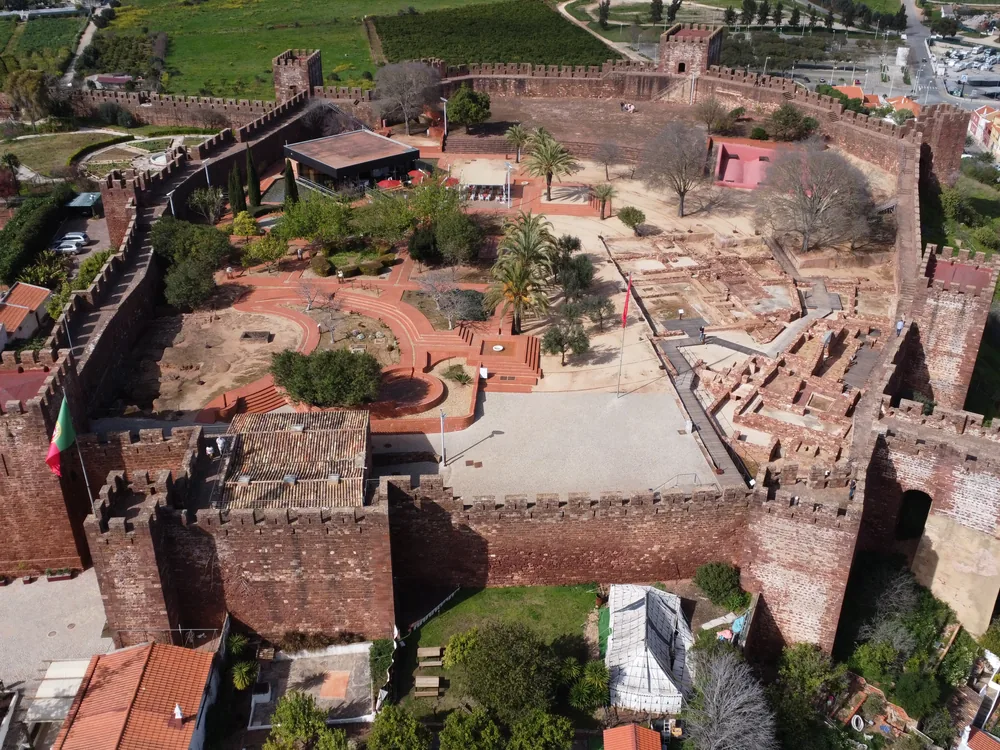
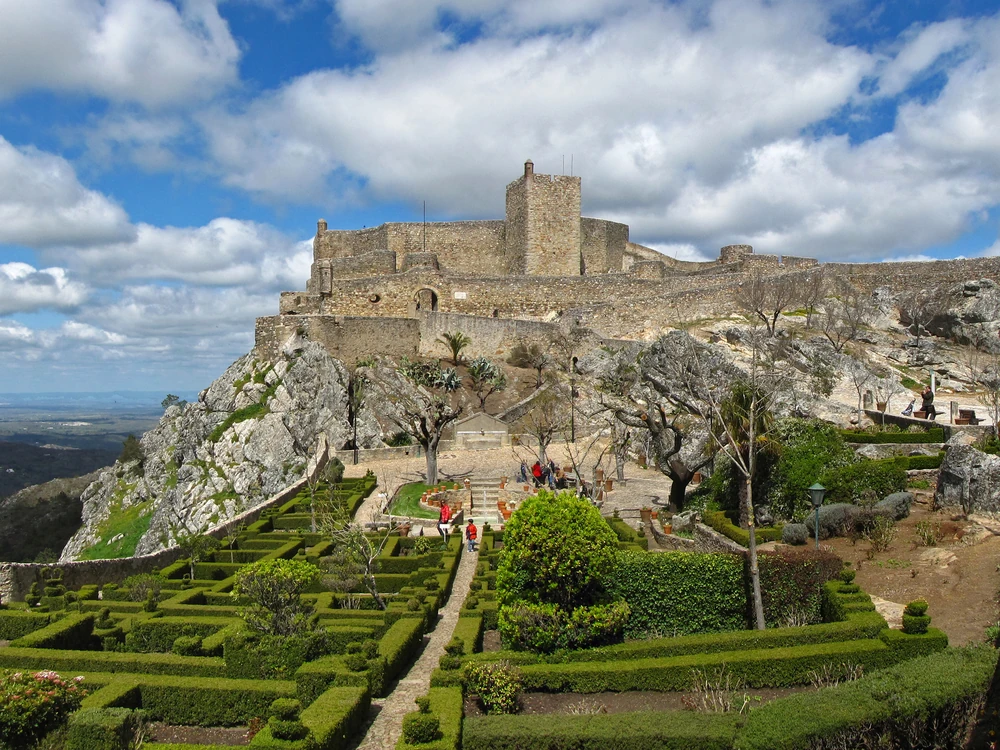
[Silves Castle](/castles/portugal/silves-castle) — the great red sandstone Moorish fortress of the former Algarve capital, approximately 35km to the west — is the major Algarve castle site for visitors extending the region's Islamic heritage circuit. [Marvão Castle](/castles/portugal/marvao-castle) — the clifftop medieval fortress on the Alentejo-Spanish border — and the [Ducal Palace of Vila Viçosa](/castles/portugal/ducal-palace-of-vila-vicosa) extend the southern Portugal heritage circuit northward for visitors with more time.
History
Loulé's fortified urban core — the qal'a — was established under Islamic Moorish rule in the 12th century, with the castle tower, curtain walls, and flanking towers constructed in local limestone, and the Hammam (Arab baths) built within the Islamic town below. King Afonso III of Portugal captured Loulé in 1249 as part of the final stage of the Algarve Reconquista — the completion of Portugal's territorial boundaries as the last Moorish towns south of the Tagus fell within a concentrated campaign. The Portuguese crown adapted the Islamic castle for its own administrative use in the late 13th century, modifying the walls and towers and integrating the site into the Portuguese order without demolishing the Islamic fabric.
Loulé Castle served as the principal fortification of the inland Algarve Barrocal zone through the 14th to 16th centuries. The great Lisbon earthquake of 1 November 1755 caused significant damage to buildings across the Algarve, affecting some castle elements. The military function diminished through the 18th and 19th centuries, and the walls and tower were preserved but no longer garrisoned. The Mercado Municipal de Loulé, built in 1908 in a neo-Moorish architectural style, referenced the town's Islamic heritage in the manner common to late 19th and early 20th century Portuguese revivalism.
The castle tower was converted to a municipal museum with archaeological collections in the 20th century, and the Hammam was restored and opened to visitors. The castle, museum, Hammam, and market are all open to visitors.
How to Visit
Getting there: Loulé is approximately 15 km northwest of Faro via the A22 and EN125 (around 20 minutes by car). By train from Faro, the journey takes 30–40 minutes to Loulé station; the castle is a 10-minute walk uphill from the station. From Albufeira or Vilamoura, local taxis and buses connect to Loulé.
Tickets: Walk-up entry €2 adult, €1 child. The GYG tour (t1177871, from €190) — a private 3-hour guided city tour of Loulé for up to 3 people (price is per group, not per person) including round-trip hotel transfer and visits to the castle, Hammam (Arab Baths), and Municipal Market — book in advance.
Practical tips: The castle and museum close on Sundays and Saturday afternoons — confirm hours before travelling. The Hammam is within easy walking distance of the castle and is separately ticketed; allow 1.5–2 hours for the full circuit of all three sites. Inland Algarve summer heat (July–August) is intense; October–May is considerably more comfortable.
Combine with: [Silves Castle](/castles/portugal/silves-castle) (35 km west), the dramatic red-sandstone Moorish fortress of the former Algarve capital, and [Marvão Castle](/castles/portugal/marvao-castle) in the Alentejo for a broader southern Portugal heritage circuit.
Frequently Asked Questions
The Hammam at Loulé is a 12th-century Islamic bathhouse — one of Portugal's best-preserved examples of this building type. Arab baths (hammams) were a central institution of Islamic urban life: a hygienic facility, a social space, and a place of ritual purification before prayer. The Loulé Hammam preserves the classic tripartite structure of the Islamic bathing tradition — cold, warm, and hot rooms — with the characteristic star-shaped ceiling apertures that filtered light and ventilation into the bathing chambers. Its survival in intact form is rare in Portugal: most hammams were converted, demolished, or absorbed into later buildings after the Reconquista. The Loulé example, within walking distance of the castle, gives direct physical encounter with the Islamic town's civic infrastructure alongside the military remains.
Location
Castelo de Loulé, Rua Dom Paio Peres Correia, 8100-781 Loulé, Portugal
Nearby Castles
Tours & Tickets
Powered by GetYourGuide
From
€190/ group