
Monserrate Palace
Palácio de Monserrate
Portugal · Sintra, Lisbon District · Near Sintra
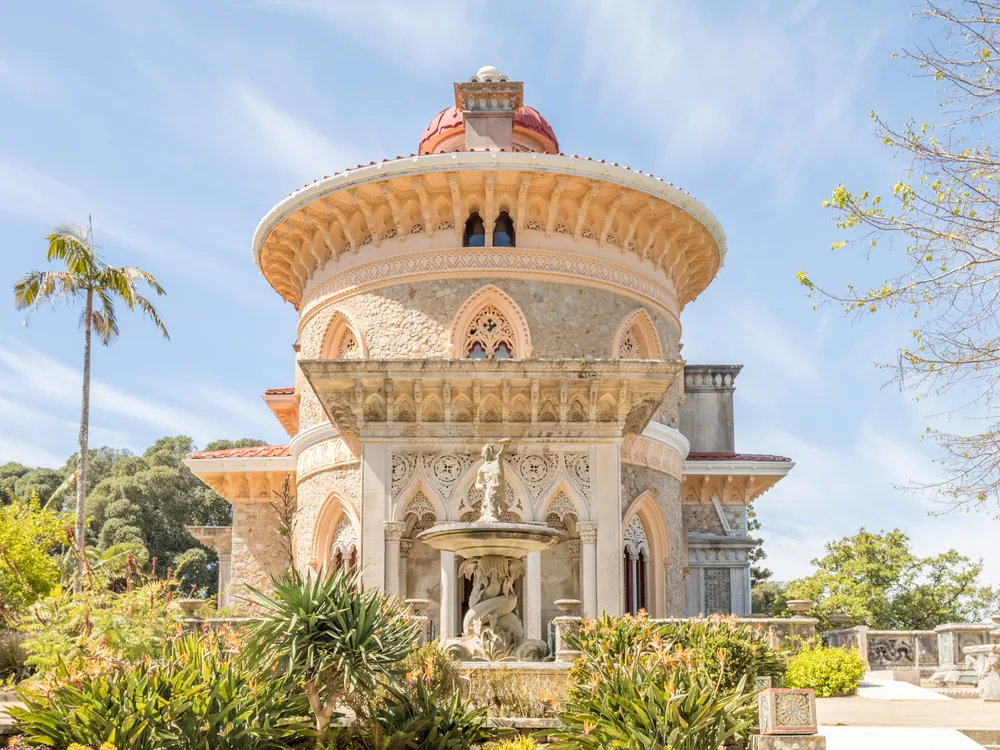
Built 1858 · Romantic eclectic fusion of Moorish, Gothic, and Indian architectural vocabularies — designed by the British architect James Thomas Knowles Jr. for Sir Francis Cook (1st Baronet Cook), 1858–1865; the palace's three distinctive domes combine Mughal Indian bulbous profiles with Gothic tracery windows and Moorish muqarnas detailing; the exterior is rendered in a pale cream limestone stucco; the interior features highly decorated plasterwork ceilings, Moorish horseshoe arches, and a central circular salon under a perforated dome that filters light in changing patterns throughout the day
This page is part of an independent travel guide and is not affiliated with, endorsed by, or operated by Monserrate Palace.
© Castles & Palaces
Quick Facts
- Hours
- Daily 09:30–18:00
- Skip-the-line from
- €12
- Duration
- 2–3 hours (palace interior + 30-hectare park; the park alone requires 1 hour to explore adequately)
- Best time
- March to June and September to November
- Nearest city
- Sintra
Featured Tour
Sintra: Monserrate Palace & Park Skip-the-Line Ticket
Cancellation available · Instant confirmation
Highlights
- ✦The three domes — Monserrate's most photographed feature: three Mughal-profile domes with Gothic tracery windows and Moorish muqarnas at their bases, combining three distinct architectural vocabularies in a fusion that has no direct historical precedent; the central dome's perforated interior filters light through geometric patterns that shift through the day
- ✦UNESCO Cultural Landscape of Sintra (1995) — Monserrate is part of the broader Sintra UNESCO inscription alongside Pena Palace, Castle of the Moors, and the Sintra National Palace; the inscription recognises the Sintra hills as an exceptional example of 19th-century Romantic landscape design and the eclectic palace-building that transformed the Serra de Sintra into Europe's pre-eminent Romantic destination
- ✦30-hectare botanical park — one of the most important collections of exotic plant species assembled in 19th-century Europe: Sir Francis Cook imported specimens from Australia, New Zealand, Mexico, Brazil, South Africa, and India, creating a park whose tree canopy includes species not commonly found anywhere else in Portugal; the park's three interlinking valley routes can be walked independently at your own pace
- ✦Sir Francis Cook and the Victorian Romanticism context — Cook was a textile merchant who became one of Britain's wealthiest men and used Monserrate to construct the definitive expression of Victorian Romantic fantasy: a palace that quoted every exotic architectural tradition simultaneously, in a garden that contained every exotic plant species procurable. The result was controversial in its time and admired now
- ✦The circular central salon — the interior's defining space, a round room under a perforated dome with Moorish muqarnas plasterwork and a floor-level fountain; the filtered light through the dome's geometric perforations creates a visual effect of extraordinary subtlety and changes character completely between morning and afternoon visits
- ✦Sintra cluster context — Monserrate is the quietest of Sintra's major palaces; it receives roughly one-fifth of Pena Palace's visitor numbers, has no significant queuing, and provides the best architectural photography in Sintra in morning light; combine with [Pena Palace](/castles/portugal/pena-palace) and the [Castle of the Moors](/castles/portugal/castle-of-the-moors) for a complete Sintra day
Skip the queue with a guided tour
Skip-the-line tickets & expert guides
Monserrate Palace sits on the western slope of the Serra de Sintra, 3 kilometres west of Sintra town, in a 30-hectare botanical park that its Victorian creator assembled from plant specimens shipped from five continents. It is the least-visited of Sintra's four major historic properties and consistently the most architecturally distinctive: a palace that fuses Mughal Indian dome profiles, Gothic tracery windows, and Moorish muqarnas plasterwork in a fusion with no direct historical precedent, designed for a British textile baron at the height of Victorian Romantic fantasy.
The site has a longer history than its current building suggests. A Moorish house stood here during the Islamic period; after the Christian reconquest of Sintra, it passed through a series of owners including a 17th-century English merchant who built a substantial villa. William Beckford — the author of the Gothic novel Vathek and one of the wealthiest men in England — leased the property in 1793 and 1794 and described spending his days weeping at the beauty of the landscape while installing gardens that became a foundation for everything that followed. Beckford is a significant figure in the European Romantic tradition, and his enthusiasm for Sintra contributed to the cultural reputation that attracted subsequent buyers to invest so heavily in the Serra.
The current palace was built between 1858 and 1865 by Sir Francis Cook, 1st Baronet Cook, to designs by the British architect James Thomas Knowles Jr. Cook was a textile merchant whose fortune derived from the Victorian dry-goods trade and who used Monserrate to construct his definitive self-expression: a palace that quoted simultaneously from Moorish Andalusia, Mughal India, and English Gothic, without committing to any single reference. The effect, from the exterior, is of architectural exuberance barely held in check by its own internal logic — three domes of Indian profile with Gothic windows and Moorish base ornament, arranged around a central block whose every surface carries carved or modelled ornamentation in a cream limestone stucco. Contemporary reactions were mixed: some critics found the eclecticism incoherent; subsequent generations have found it one of the most successful examples of High Victorian Romantic architecture.
The interior is the palace's most extraordinary surprise. The entrance leads through progressively more ornate Moorish rooms to the central salon: a circular space under a perforated dome, with muqarnas plasterwork, horseshoe arches, and a floor-level fountain whose water sound fills the room. The dome's perforation pattern filters the sunlight into shifting geometric patches that move slowly across the walls and floor. This central room is as close to the spatial sensibility of the Alhambra as any building outside Andalusia — its designer was clearly working from the same Moorish architectural inspiration, filtered through Victorian Romantic interpretation. The effect in late-morning light is remarkable.
The 30-hectare park is the other major element of the Monserrate experience. Cook spent decades importing plant specimens: tree ferns from Australia, Norfolk Island pines, giant bamboos from China, camellias from Japan, rhododendrons from the Himalayas, cork oaks and bay laurels from the local Serra ecosystem. The park is now a mature botanical collection of considerable scientific and aesthetic interest, its three linked valley routes passing from open formal gardens near the palace to dense subtropical forest in the deeper valleys. Spring is the peak season for the camellias and rhododendrons; the tree ferns provide a prehistoric atmosphere year-round.
A practical note for current visitors: exterior restoration work is ongoing on parts of the palace facade, and scaffolding is visible on portions of the exterior in recent visitor photographs. This does not affect the interior visit or the park experience, but visitors planning to photograph the palace's iconic domed exterior should check current restoration status at parquesdesintra.pt before visiting. The restoration will eventually produce a fully unobstructed facade; timing is uncertain.
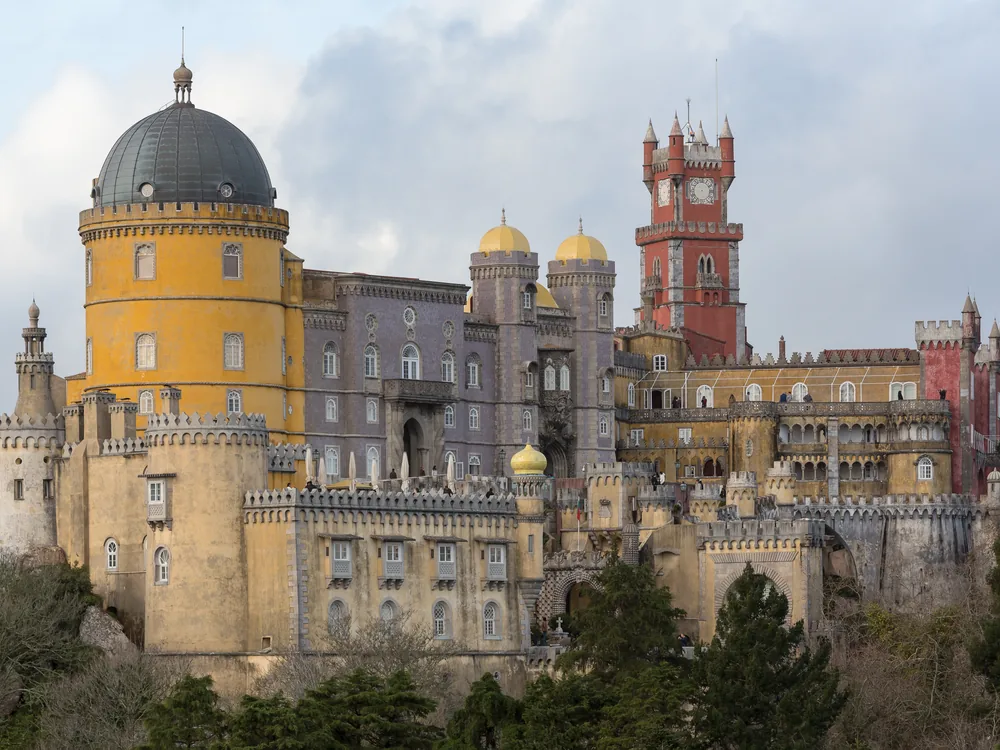
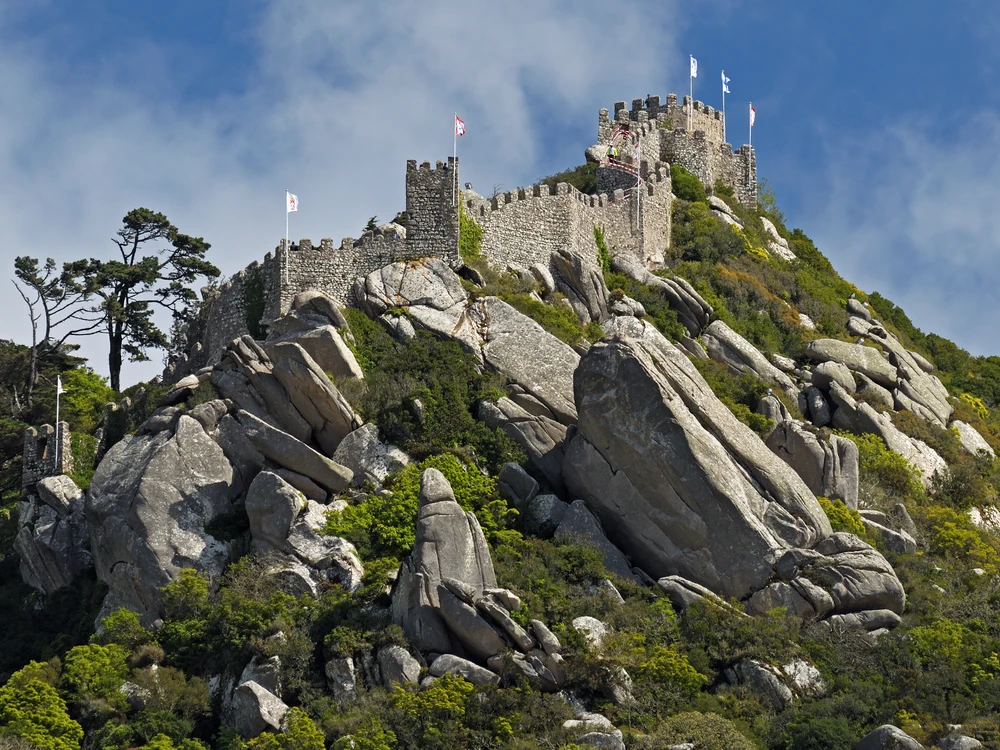
Monserrate is consistently described by repeat Sintra visitors as their favourite palace precisely because it receives far fewer visitors than Pena, has no significant queuing, and produces the best architectural photography of any property on the Serra. It is the right choice for a second Sintra visit after the main circuit, or for visitors who specifically seek less crowded heritage experiences. The combination with [Pena Palace](/castles/portugal/pena-palace) and the [Castle of the Moors](/castles/portugal/castle-of-the-moors) makes for a complete Sintra day that covers three different architectural visions of the same Romantic landscape — Gothic Revival at Pena, medieval fortification at the Moors, and eclectic exoticism at Monserrate.
History
Moorish house on site during Islamic period. Post-Reconquista ownership succession through Portuguese nobility and English merchants. William Beckford leases the property 1793–1794; establishes gardens and contributes to Sintra's Romantic reputation. Subsequent owners build and modify. Sir Francis Cook purchases 1856; commissions James Thomas Knowles Jr. to design the current palace, 1858–1865. Cook imports botanical specimens over decades, creating the 30-hectare park. Cook family owns until early 20th century. Portuguese State acquires; Parques de Sintra takes over management. UNESCO Cultural Landscape of Sintra inscription 1995 (alongside Pena Palace, Castle of the Moors, National Palace). Restoration work ongoing.
How to Visit
Getting there: From Sintra town (3 km west), take Bus 435 or 439 from Sintra station — about 15 minutes. Taxis and rideshares from Sintra town cost roughly €10. From Lisbon, take the train from Rossio station to Sintra (40 minutes, regular departures) then connect by bus or taxi. By car from Lisbon via A37/IC19, approximately 30 minutes; paid parking is available near the palace.
Tickets: Walk-up entry €13 adult, children free. The GetYourGuide tour — official Parques de Sintra skip-the-line ticket with palace interior access, the full 30-hectare botanical park, and audio guide via the Sintra park app — book in advance, especially for summer visits.
Practical tips: Arrive at opening (09:30) to photograph the domed exterior in morning light and beat midday heat in the park — the central salon's filtered dome light is also best in late morning. Wear comfortable shoes: the 30-hectare park covers hilly terrain with steep and uneven paths, requiring 1.5–2 hours for a full circuit. Check parquesdesintra.pt before visiting for current scaffolding status, as ongoing facade restoration may obscure portions of the exterior.
Combine with: Pena Palace and Castle of the Moors — all three share the same UNESCO inscription and can be covered in a full Sintra day.
Frequently Asked Questions
Exterior restoration work is ongoing on parts of the Monserrate facade, and scaffolding is visible on portions of the building in recent visitor photographs. This does not affect the interior visit or the park. The restoration is improving the long-term condition of the building; the fully unobstructed exterior facade is not currently guaranteed. Check current status at parquesdesintra.pt before visiting if exterior photography is your primary purpose.
Location
Estrada de Monserrate, 2710-405 Sintra, Portugal
Nearby Castles
Tours & Tickets
Powered by GetYourGuide
From
€12/ person