
National Palace of Ajuda
Palácio Nacional da Ajuda
Portugal · Lisbon · Near Lisbon
Built 1802 · Neoclassical palace begun in 1802 to replace the temporary wooden royal residence built after the 1755 Lisbon earthquake; construction proceeded in phases and was never completed — the projected main wing and entrance facade remain unbuilt, giving the palace an unfinished quality that distinguishes it from any other European royal palace; the completed interior includes Neoclassical and Romantic state apartments used for official Portuguese state functions; houses the National Treasury Museum and an important collection of decorative arts from the Portuguese crown
This page is part of an independent travel guide and is not affiliated with, endorsed by, or operated by National Palace of Ajuda.
© Castles & Palaces
Quick Facts
- Hours
- Tue–Sun 10:00–18:00. Closed Mon
- Entry via GetYourGuide
- €21
- Duration
- 1.5–2 hours
- Best time
- Year-round
- Nearest city
- Lisbon
Featured Tour
National Palace of Ajuda E-Ticket & City Audio Guide
Cancellation available · Instant confirmation
Highlights
- ✦The National Palace of Ajuda was never finished: the main wing and entrance facade projected in the original plan remain unbuilt to this day, leaving the palace with an abrupt edge where its grand neoclassical front should be — a visible reminder of the disruptions that defined 19th-century Portuguese royal history, from the Napoleonic invasion to the Brazilian exile to the constitutional crisis that consumed the final decades of the monarchy
- ✦The palace was built to replace what the 1755 Lisbon earthquake destroyed: the original Ribeira Palace, the primary royal residence in Lisbon since the early 16th century, collapsed in the earthquake and subsequent fires; the temporary wooden palace built in its place at Ajuda served the royal family for nearly fifty years before permanent construction began, and even the permanent replacement was never completed
- ✦When Napoleon's army entered Portugal in November 1807, the Portuguese royal family embarked on British warships in Lisbon harbour and sailed to Brazil — taking the court, the treasury, and the royal library — becoming the first European royal family to govern an empire from its colony; the palace construction they had interrupted did not resume properly until 1821, after the family returned to a fundamentally changed Portugal
- ✦The palace's Throne Room and Banqueting Hall are among the finest examples of Romantic-era royal interior design in Portugal, and both remain in active use for Portuguese state functions — the palace is not merely a museum but a working ceremonial building, which gives the visit a different quality from most European royal palace tours
- ✦The National Treasury Museum housed in the palace holds the Portuguese crown's accumulated jewellery and ceremonial objects, including pieces that survived both the 1755 earthquake and the 1807 flight to Brazil — among the most significant collections of European royal regalia still held by a national state
Skip the queue with a guided tour
Skip-the-line tickets & expert guides
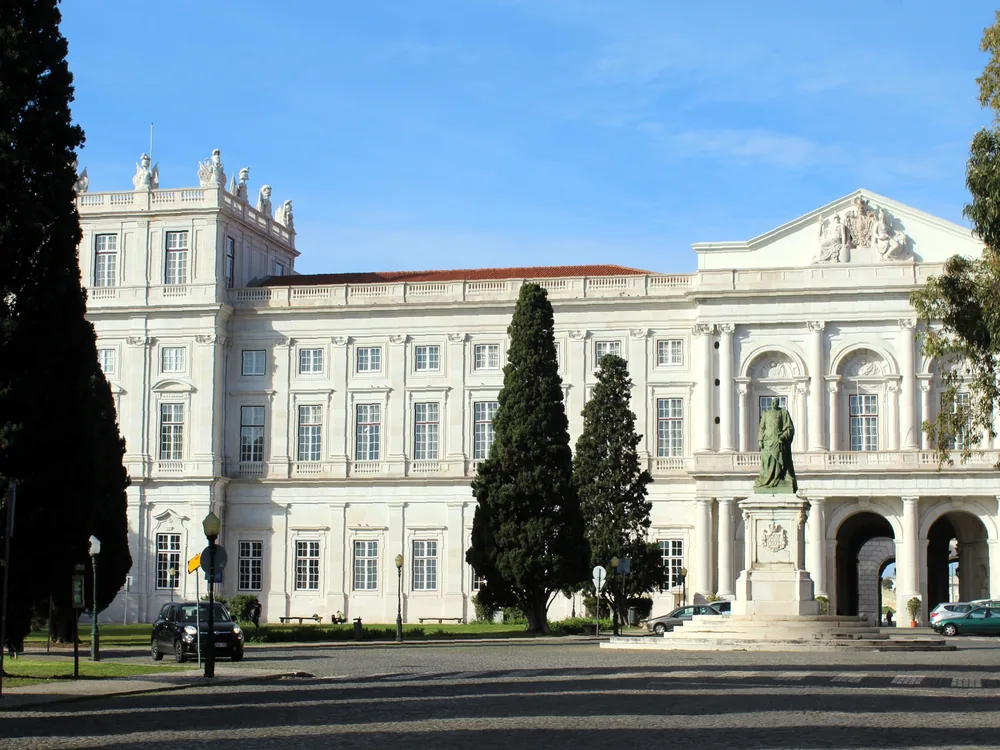
The National Palace of Ajuda is honest about what it is in a way that most European royal palaces are not. The western end of the building simply stops — the projected main wing and ceremonial entrance facade that the original plans called for were never built, and the structure ends in an abrupt wall that makes the incompleteness impossible to miss or explain away. This unfinished condition is not a result of later damage or subsequent demolition; it is the condition the palace has been in since work halted, and it has remained so through two centuries of Portuguese national life. Visiting the Ajuda Palace means visiting a building that is simultaneously one of Portugal's most significant royal monuments and a monument to a royal history repeatedly interrupted by catastrophe.
The story begins in 1755, not 1802. The All Saints' Day earthquake of November 1, 1755 — striking while much of Lisbon was at church for the feast day — was one of the most destructive earthquakes in European history, with estimates of casualties ranging from 10,000 to 100,000 depending on source and methodology. The fires that followed burned for several days and destroyed perhaps 85 percent of Lisbon's buildings. Among the structures lost was the Ribeira Palace, the primary royal residence in Lisbon since the early 16th century, which collapsed and burned in the combined disaster. The royal family, who had been at Belém rather than in the city for the holiday, survived; their palace did not.
The Marquis of Pombal, who took emergency control of Portugal's recovery in the aftermath and effectively governed the country until 1777, gave priority to rebuilding Lisbon's commercial districts and public infrastructure rather than the royal residence. The royal family moved to a temporary wooden palace built at Ajuda, on the hill west of the city above what is now the Tagus waterfront, and remained there for nearly fifty years. The temporary wooden structure was finally demolished when construction of a permanent replacement began in 1802 under the direction of architects Manuel Caetano de Sousa and José da Costa e Silva.
Construction barely had time to begin before the second catastrophe arrived. In November 1807, Napoleon's army under General Junot entered Portugal, having been granted transit rights by Spain in the Treat of Fontainebleau. The Portuguese royal family had advance warning: British diplomatic pressure and the presence of British warships in Lisbon harbour gave them a narrow window. On November 29, 1807, the day before Junot's troops entered Lisbon, the royal family — Queen Maria I, the Prince Regent João (later João VI), and the entire court — embarked on a fleet of approximately 40 ships and sailed for Brazil. They took with them the royal library, the contents of the treasury, and the administrative apparatus of the Portuguese state. Construction at Ajuda stopped.
The Brazilian episode lasted from 1808 to 1821 and created consequences that outlasted Napoleon. Rio de Janeiro became, briefly, the capital of the Portuguese empire — the first and only time a European colonial capital was relocated to its colony. When the family finally returned to Portugal after the 1820 liberal revolution, they returned to a changed country with a newly assertive liberal parliament and a Portuguese-Brazilian relationship in fundamental tension. João VI returned; his son Pedro I declared Brazilian independence in 1822 and stayed, founding the Brazilian imperial dynasty. Construction at Ajuda resumed in the 1820s, but the palace's intended scale was revised downward as political and financial constraints multiplied.
What was built — the eastern wing that visitors walk through today — is a genuine achievement in Romantic Neoclassical royal interior design. The Throne Room is the most formally impressive space: gilded furnishings, painted ceiling, and the red-and-gold colour scheme of Braganza ceremonial decoration create a room that functions as it was always intended to, and still does. The palace is a working ceremonial building: Portuguese state functions, receptions, and official events take place in the Throne Room and the Banqueting Hall today, as they did under the monarchy. This active use is apparent in the condition and presentation of the rooms — they are maintained as functional spaces rather than as museum displays, which gives the tour a different quality from the static preservation of most European royal palaces.
The National Treasury Museum, housed in the palace, holds the Portuguese crown's accumulated jewellery and ceremonial objects, including pieces that survived both the 1755 earthquake and the 1807 flight to Brazil. The collection documents the material culture of the Braganza dynasty across three centuries of Portuguese royal history — coronation regalia, court jewellery, ceremonial weapons, and ecclesiastical objects that together constitute one of the most significant collections of European royal material culture held by a national state rather than a private collection or a museum trust.
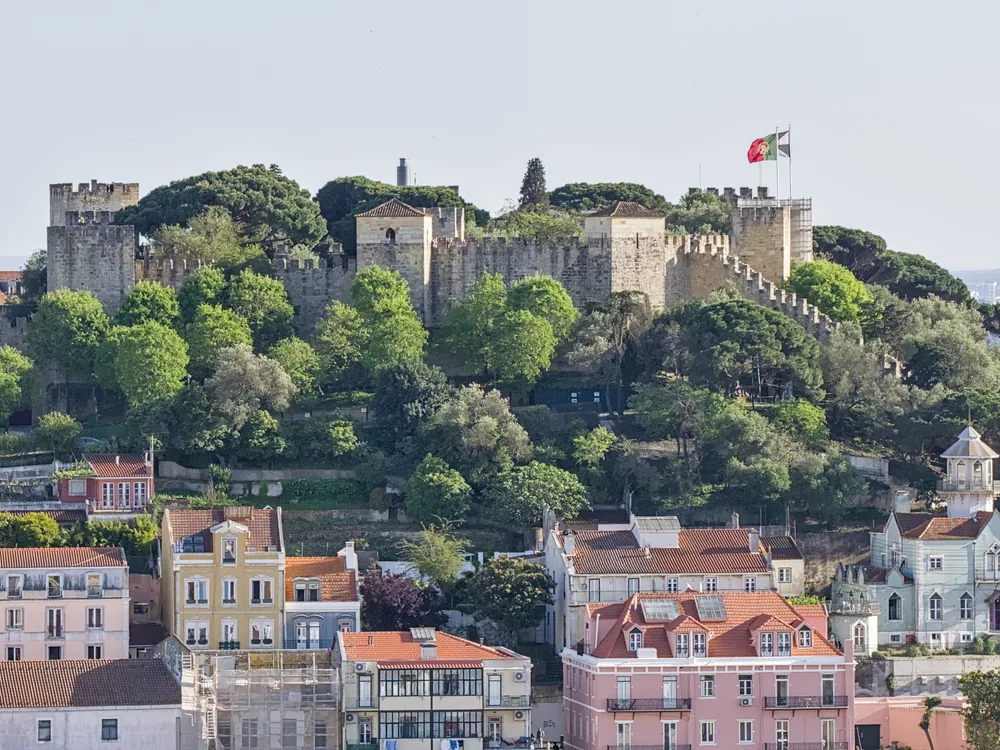
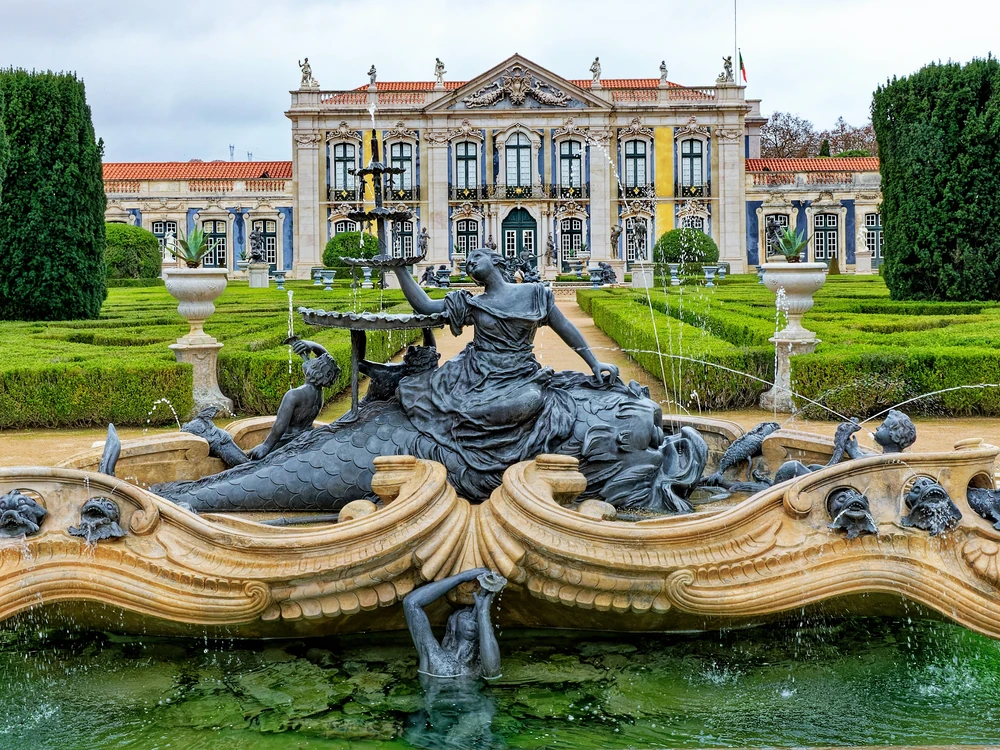
For visitors to Lisbon, the Ajuda Palace sits in the western part of the city above Belém, approximately 20 minutes from the city centre by tram or taxi. The GetYourGuide e-ticket is valid for 365 days from purchase and includes access to an optional city audio guide — the extended validity makes this one of the most flexible entry tickets of any European palace. The nearby São Jorge Castle, on the Alfama hill on the opposite side of the city, and Queluz National Palace, approximately 15 kilometres northwest of Lisbon in the suburb of Queluz, are both on this site and make natural pairings for visitors covering the full range of Portuguese royal architecture.
São Jorge Castle covers the medieval fortification period and the Islamic and early Christian history of Lisbon's hilltop. Queluz National Palace represents the Rococo high point of Portuguese 18th-century royal taste, an intimate Baroque-Rococo garden palace sometimes called the Portuguese Versailles. The Ajuda Palace adds the interrupted, unfinished, politically turbulent 19th-century chapter that completed the Braganza dynasty's arc — from the earthquake to the exile to the constitutional crisis to the republic that ended the monarchy in 1910, three years after the assassination of Carlos I and his heir in the same Praça do Comércio where Pombal had rebuilt Lisbon's commercial core after the disaster of 1755.
History
The National Palace of Ajuda was begun in 1802 to replace the wooden palace built at Ajuda after the 1755 Lisbon earthquake destroyed the Ribeira Palace. Construction halted when the royal family fled to Brazil ahead of Napoleon's invasion in 1807. After the family's return from Brazil in 1821, construction resumed on a reduced scale, with the eastern wing completed over the following decades. The palace served as the official royal residence under Luís I (from 1861) and was used for state functions through the end of the monarchy in 1910. The projected main wing and facade were never built. The palace is now administered as a national monument and continues to serve as the venue for Portuguese state ceremonies.
How to Visit
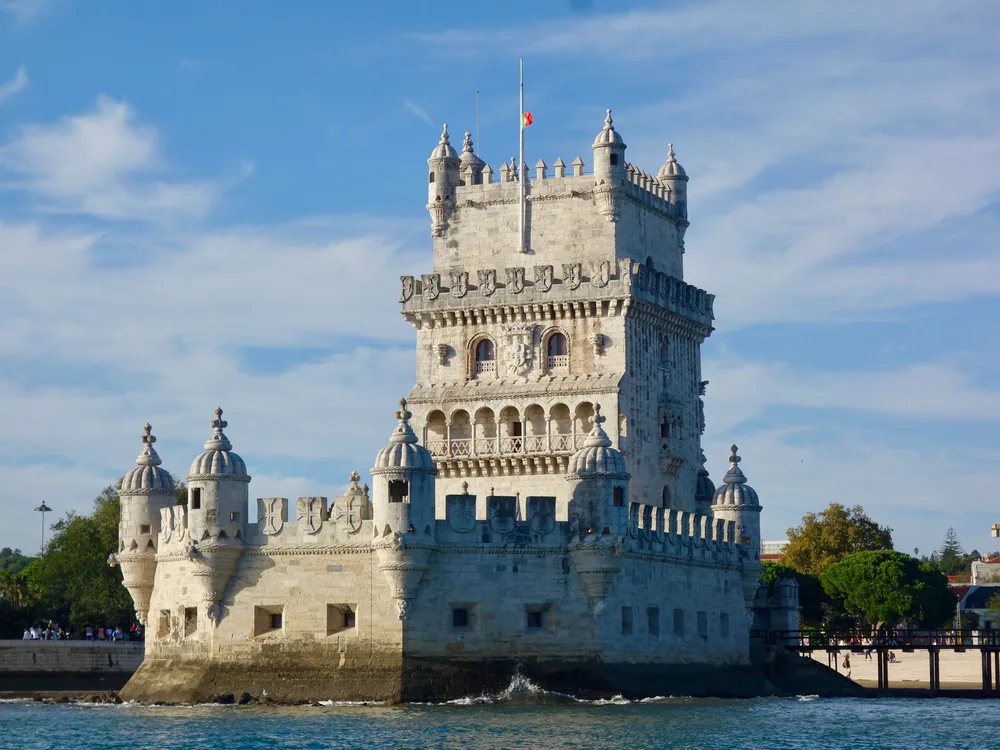
Getting there: The palace is in the Ajuda quarter of western Lisbon, above Belém. From the city centre, take tram 18E (from Cais do Sodré, approximately 25 minutes) or a taxi (20 minutes). The Belém cultural district — with the Jerónimos Monastery, the Tower of Belém, and the Monument to the Discoveries — is a 15-minute walk below the palace.
Tickets: The GetYourGuide e-ticket is valid for 365 days and includes an optional audio guide. Walk-up entry also available.
Visit length: 1.5–2 hours for the state apartments and Treasury Museum.
Practical tips: Allow 1.5–2 hours for the visit.
Combine with: The Belém cultural district below the palace is the natural pairing for a morning visit. São Jorge Castle and Queluz National Palace are both on this site and cover the medieval and Rococo periods of Lisbon royal architecture.
Frequently Asked Questions
The original 1802 plans called for a palace with a grand main wing and formal entrance facade facing west, which would have given the building the ceremonial frontage that royal palaces conventionally require. Construction was interrupted by the royal family's flight to Brazil in 1807 ahead of Napoleon's invasion, and when it resumed in the 1820s the revised plans were scaled back for financial and political reasons. The main wing and facade were simply never built. The eastern wing that was completed serves as the palace today, with its abrupt western end still visible.
Location
Largo da Ajuda, 1349-021 Lisboa, Portugal
Nearby Castles
Tours & Tickets
Powered by GetYourGuide
From
€21/ person